“We have the best economy in the world,” President Joe Biden proclaimed during his State of the Union address. But despite some encouraging economic trends over recent months, the economic challenges facing millions of American families are real, as they’re still paying more for everyday needs, facing economic uncertainty, and borrowing to make ends meet. A recent Federal Reserve Survey of Consumer Expectations found that the ability of an average household to come up with $2,000 to cover an unanticipated expense fell to a 10-year low. What’s more, the Federal Reserve just revealed that consumer credit rose more than predicted to $19.5 billion in January–a 4.7% annual rate on a seasonally adjusted basis, faster than the 0.4% rate in the previous month.
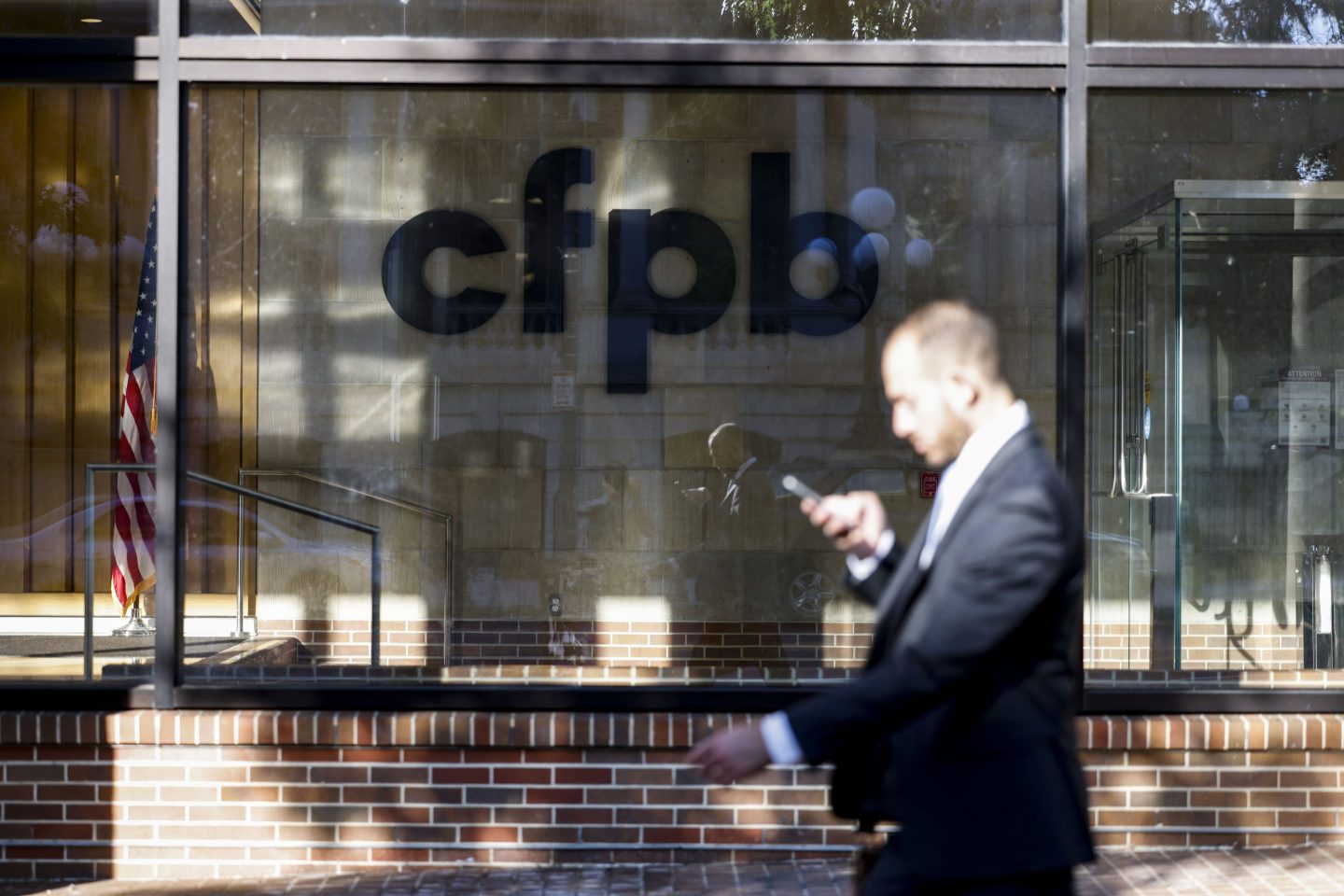
Consumers depend on credit for many things: to finance a home or a car, for large expenses like refrigerators, for unexpected repairs, and just for a little financial flexibility. Even the millions of U.S. households that don’t have established credit, have less-than-perfect credit, or don’t have savings or even a bank account still need access to some form of responsible, affordable credit. It’s an important financial tool, and policymakers should be looking for ways to ensure folks can access whatever forms of credit they choose or for which they can qualify. Yet the Consumer Financial Protection Bureau (CFPB) is doing the opposite.
For more than a century, my trade association’s members have provided many forms of credit to consumers, from installment loans and home mortgages to credit cards and auto financing.
Today, the policies and oversight at the CFPB of the financial services industry have become confusing, conflicting, and convoluted. The agency was created by the Dodd-Frank Act in 2010 and is charged with ensuring a well-functioning marketplace that works for borrowers and lenders alike, in addition to protecting consumers from bad actors. That’s not happening–and it threatens access to credit for tens of millions of Americans and small businesses, at a time when they need that credit more urgently than ever.
Frivolous rulemaking
The problem is that the CFPB has not set clear rules for the industry. Instead of using the well-established, formal rulemaking process, the agency has used blog posts, press releases, vague guidance, opinion letters, and enforcement actions to establish policies that deem common practices as grounds for legal action, often claiming that they present a risk to consumers. The CFPB has also gone beyond Congress’ directive and mandated that financial services companies ask for such personal information as customers’ sexual orientation and that they share that data with the government, even though it has no bearing on the business credit they are seeking.
Rulemaking isn’t a courtesy or a suggestion–it’s required under the federal Administrative Procedure Act. The agency creates a debilitating challenge when it doesn’t bother to write regulations using the process that includes an opportunity for notice and comment, questions, a review of underlying data and potential inconsistencies with other laws, and potential impacts on consumers and businesses.
Even when the CFPB does attempt rulemaking, the outcomes are conflicting and confusing. On one hand, the bureau proposed prohibiting medical debt from being considered when a lender is undertaking its standard ability-to-repay analysis. On the other, the agency penalized an auto lender for not considering costs like healthcare among a borrower’s debt obligations.
Why it matters
Every lending institution–from banks to auto finance companies to installment lenders–depends on clarity and certainty to serve consumers. They must factor into their risk analysis any unclear regulations or policies that might expose a company that provides credit to regulatory examination or investigation.
Today, access to credit is tightening because of the uncertainty of both the economy and the regulatory environment. The Federal Reserve reports that banks and other lenders have been less willing to make consumer installment loans (auto, student, personal) for six quarters since January 2024, and that nearly half of households reported that it was harder to obtain credit than a year ago.
The lack of clarity from a regulator that regularly demands clarity from the industry it oversees was enough to do something very rare in today’s Washington: inspire bipartisanship. In January, eight members of the House Financial Services Committee sent a letter to the CFPB expressing concerns that the agency had yet to define what “risk” means in the context of lending. The CFPB declaring a company’s business activity as “risky” without defining risk in advance is like a highway patrol pulling over cars for speeding without posting a speed limit.
Our industry shares the CFPB’s goal of making consumer credit markets work for consumers, responsible providers, and the overall economy. However, this goal is only achievable when the rules are easily understood and circumstances warrant them.
For decades, our association’s members have operated under a set of straightforward commitments: Consumers deserve choices in loan products that will provide benefits and meet their needs. Loans should be affordable and not trap borrowers in cycles of debt. Loan documents should be understandable and include all costs, and clear terms and conditions. And consumers should be confident that their personal information and sensitive data are protected and respected by both financial institutions and regulators.
We believe these principles are a good foundation for the CFPB to set clear rules of the road when needed. After all, consumers want to do business with financial services companies that treat them fairly, are transparent, and provide unambiguous terms. Shouldn’t businesses expect the same from the policymakers and regulators that oversee them?
Bill Himpler is the president and CEO of the American Financial Services Association, a national trade group representing the consumer credit industry.
More must-read commentary published by Fortune:
- Here’s how the U.S., Europe, and China are faring in the post-pandemic race for economic growth
- We analyzed 46 years of consumer sentiment data–and found that today’s ‘vibecession’ is just men starting to feel as bad about the economy as women historically have
- The U.S. housing market is headed into a pivotal spring season as home sellers wait for their sweet spot, according to Opendoor
- Russia and China are leading in hypersonic innovation. Here’s what’s holding the U.S. back
The opinions expressed in Fortune.com commentary pieces are solely the views of their authors and do not necessarily reflect the opinions and beliefs of Fortune.