The AI scene’s rapid development has led to significant new conflicts of interest on Big Tech boards, and corporate governance experts say some of the most powerful players in Silicon Valley should step down as a result.
But the West Coast’s tech sector doesn’t play by the same rules as everyone else.
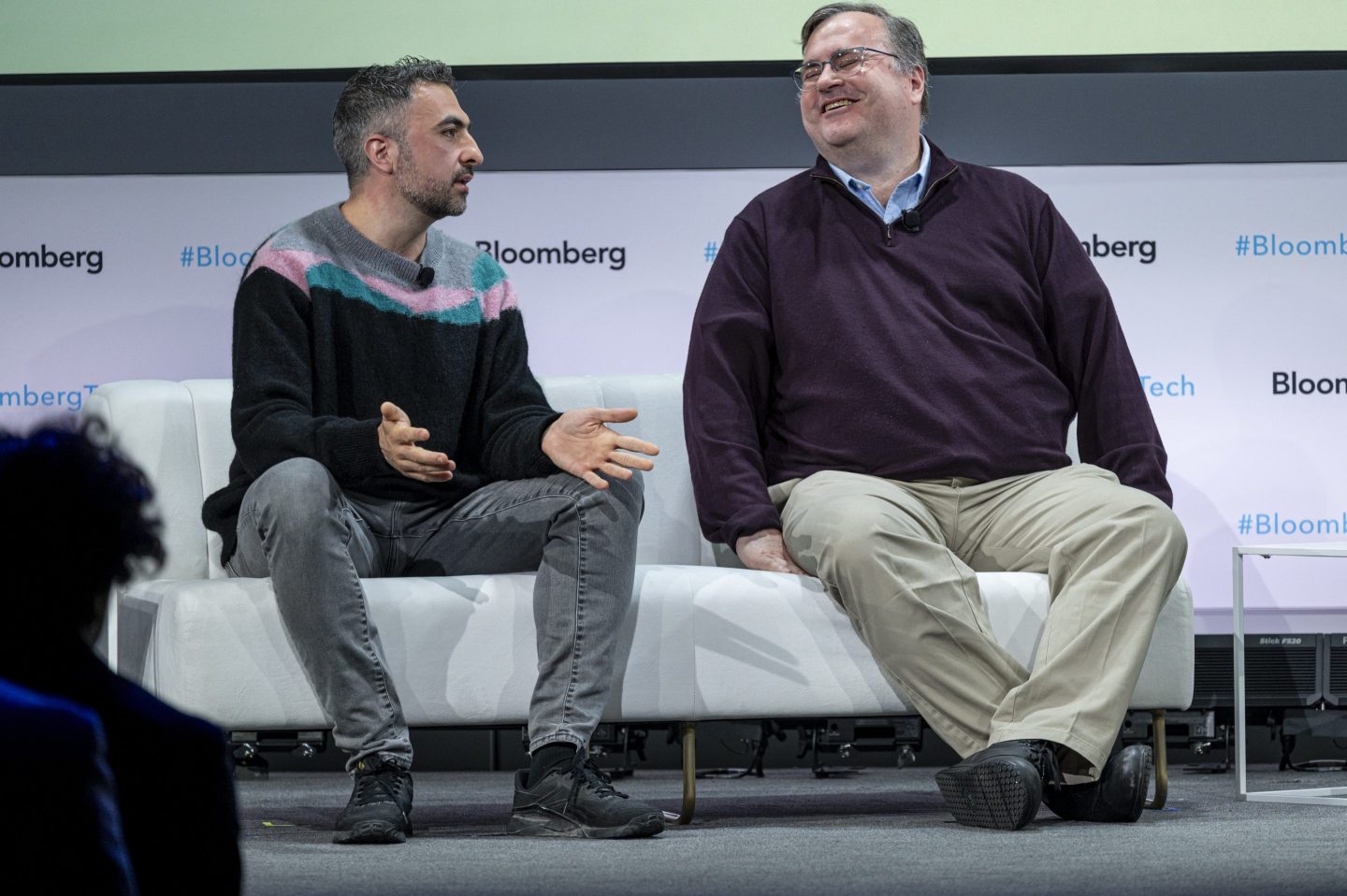
Microsoft’s big AI push centers on its Copilot “AI companions”, but board member and Greylock Partners venture capitalist Reid Hoffman last year co-founded Inflection AI, which makes a rival personal assistant called Pi. Inflection is also developing large language models that compete with OpenAI’s GPT series of models, which power Microsoft’s Copilots. Hoffman also joined the board of Greylock investment Tome AI during its 2021 seed round; Tome makes a presentation tool that competes with Microsoft’s venerable PowerPoint.
Andreessen Horowitz (a16z) general partner Marc Andreessen sits on Meta’s board, but his venture firm has participated in investment rounds worth hundreds of millions in OpenAI, Mistral AI, and chatbot maker Character AI, all of which compete with Meta’s AI efforts. Meanwhile, the venerable VC firm Kleiner Perkins is an investor in generative AI cloud platform Together AI, which competes with Google Cloud—despite the fact that Kleiner Perkins chair John Doerr sits on the board of Google parent Alphabet.
“Every one of these directors has to make a decision on which of these enterprises is a priority and give the other seat to someone who can be independent and objective,” said corporate governance veteran Nell Minow, the vice chair at ValueEdge Advisors.
“You cannot compete with the company on whose board you sit,” agreed Charles Elson, the founding director of the University of Delaware’s John L. Weinberg Center for Corporate Governance. “The greater the potential competition, the more the argument that you have to leave one or the other.”
Unlike Hoffman at Greylock, Inflection or Tome, or Andreessen at a16z, Doerr has a relatively hands-off role at Kleiner Perkins; he stepped back from involvement in new investments more than seven years ago. But the legendary Valley investor is still chair—Alphabet took care to flag up Kleiner Perkins’ co-investment in medical imaging company Viz.ai alongside Google Ventures in its 2023 proxy statement, because of Doerr’s roles at both companies.
“He is still paid by [Kleiner Perkins and is] their fiduciary,” said Elson.
Full disclosure
While the conflicts presented by Hoffman, Andreessen and Doerr may flout corporate governance principles, they aren’t illegal. U.S. antitrust law (specifically, Section 8 of the Clayton Act) only forbids interlocking directorates that involve publicly-traded corporations, not startups like Inflection AI and OpenAI. When former Google CEO and Chair Eric Schmidt was on Apple’s board, the overlapping roles at two public companies became a problem when they began to compete in the smartphone business, forcing Schmidt to resign from Apple’s board in 2009. When only one company is publicly listed, however, the rules don’t apply.
In practice, conflicts of interest often aren’t fatal to board membership, says Douglas Chia, a senior fellow at the Center for Corporate Law and Governance at Rutgers Law School.
“For boards, usually the protocol is that you disclose the conflict, it’s identified, and the board can then decide what it wants to do,” Chia said. “One option is having the person agree to step off the board or disengage from the other company, but usually they say: ‘Alright, you can do both and if there’s a point in time in the boardroom when the conflict really comes into play, then you recuse yourself. You step out of the room for the discussion; you don’t get to vote on anything relating to that matter or company.’ … But on the other hand, people would say that you still have all this information so you have to leave the board, otherwise you’re privy to too much confidential information for both companies.”
“These are significant conflicts that are unlikely to be mitigated with recusal from particular briefings or votes,” says Minow. “AI issues concern every aspect of operations and strategy.”
There are different kinds of potential conflict of interest that boards have to consider. A particularly sensitive variety, which companies disclose to their shareholders under Securities and Exchange Commission (SEC) regulations, involves situations where the company makes significant transactions with another firm in which one of its board members is involved.
Hoffman notably resigned from the OpenAI nonprofit board in March, because he wanted to invest in companies that use OpenAI’s technology. (In a LinkedIn post announcing the move, he also referred to his founding of Inflection AI, which was incubated at Greylock.)
Adam D’Angelo, the only OpenAI board member to survive the recent leadership turmoil at the company, is the CEO of Quora, which has a product called Poe that acts as an interface with various chatbots that are based on AI models including OpenAI’s ChatGPT. “Adam has always been very clear with me and the Board about the potential conflict and doing whatever he needed to do (recusing himself when appropriate and even offering to leave the Board if we ever thought it was necessary) to appropriately manage this situation and to avoid conflicted decision-making,” OpenAI CEO Sam Altman wrote in an X post at the end of November.
In the proxy statements through which publicly traded companies inform shareholders and regulators about their directors’ fitness for duty, there are often references to situations involving transactions. For example, Meta’s 2023 proxy statement, issued in April, flagged Andreessen’s interests in crypto exchange Coinbase and virtual-reality fitness firm Within via a16z. Coinbase purchased advertising from Meta, and Meta bought Within, but the Facebook parent advised its shareholders that neither relationship interfered with Andreessen’s independent judgement as a board director (the filing did not specify whether Andreessen recused himself on votes and discussions related to the acquisition of Within, a company in which Andreessen had less than 3% equity).
However, these documents don’t refer to competitive conflicts because, in the U.S., they don’t have to. “Proxy statements are very much written in accordance with what is required by the SEC. The first question on any disclosure issue is what do the rules require?” said David Berger, a veteran Silicon Valley lawyer who is a partner at Wilson Sonsini.
Who could say no?
Ignoring competitive conflicts of interest “will only create greater problems for all parties,” suggested Elson, because “at some point [they’ll get] in trouble with the shareholders.” But, as Chia noted: “It’s very rare that someone is going to get voted out. That accountability mechanism, while it exists in theory, usually does not hold anybody accountable.”
“This is not an issue generally that is top of mind for shareholders,” concurred Berger.
There are other risks to consider, particularly in situations where the corporation ends up buying the smaller rival. “If someone doesn’t like a transaction, they’re going to try find whatever they can to unravel the deal,” said Chia. “You do see this type of lawsuit when it comes to mergers and other big transactions, saying: ‘Clearly the people on the board were the ones who stood to benefit, and they were looking out for their own interests rather than the interests of their shareholders.’ You’re not breaking the rules, but you’re exposing yourself to these types of legal situations where people are going to start suing.”
But in Silicon Valley, few people seem to care about those risks. (Fortune invited Microsoft, Meta, Alphabet, Hoffman, Andreessen and Doerr to provide comments for this story, but none did.)
“California and Silicon Valley often take a different view than much of the rest of the world and believe that the general diffusion of knowledge from one company to another creates tremendous value—for this reason we have strong laws and policies prohibiting noncompete agreements,” said Berger, adding that he spends “a lot of time jumping between New York and Silicon Valley, and the gap of that cultural understanding is enormous.”
“Often that’s part of the reason they were invited [onto the board], because they have such deep knowledge about what’s going on in the sector,” Berger said. “Companies have to make a decision: Is the risk … worth losing the benefit of someone who’s so deeply knowledgeable in the industry, and do you have enough faith in the person’s character so that person won’t misuse information they’re gaining as a director?”
“There’s a different philosophy out there on these sorts of things than you would have in other places,” observed East-coaster Elson, “but from a strict governance standpoint you can’t serve two masters: yourself and the company.”
While Berger says Silicon Valley has always benefited from deep interconnection between its companies, he also acknowledges that these conflicts of interest present at least two clear downsides for the tech industry.
“One is the risk of monopolies; the other is the bubble situation,” he said. “We have super-rich folks who can lose touch with what is going on outside of their world. There are tremendous downsides and issues that may arise, but Silicon Valley’s growth has been fueled in part by this notion that people can be on different boards.”