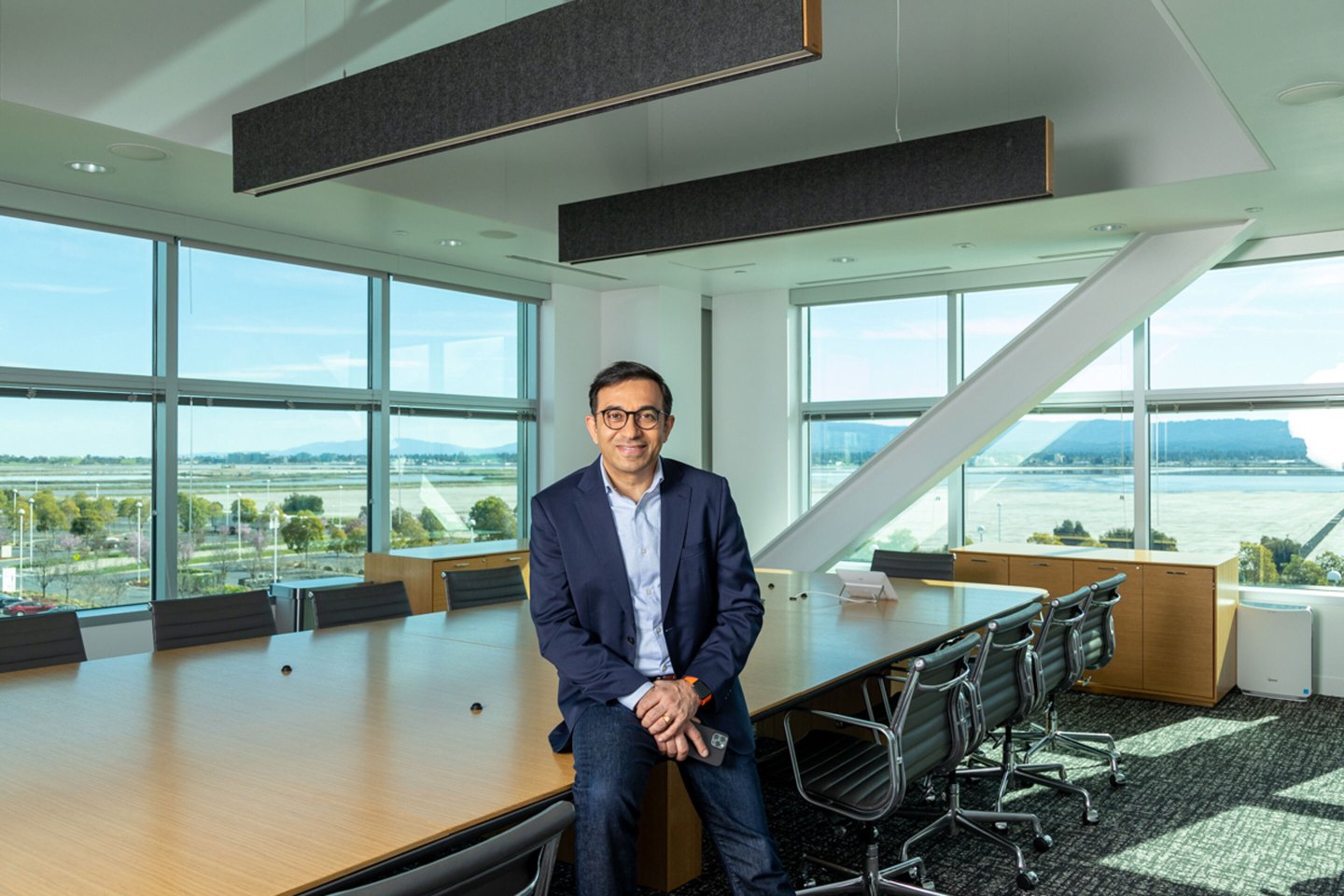

Zapier didn’t mean to be a remote-work pioneer, it just sort of happened that way. But in retrospect, cofounder and CEO Wade Foster wouldn’t have done it any differently. Zapier (rhymes with “happier”) has achieved an enviable feat in the tech startup world, reaching a $5 billion valuation as a fully remote company that is more than a decade old.
Founded in 2012, Zapier has neither a main office nor a sales team, although it regularly brings its employees together for off-site gatherings.
“Face time is still really important,” Foster says in an episode of The Logan Bartlett Show podcast released Friday. But as for how the company structures off-sites, while it’s tried “almost every permutation under the sun,” he notes, “it almost doesn’t matter… Just the act of getting people together goes such a long way.”
Zapier has succeeded for reasons beyond remote work, of course, among them good timing. The company’s software makes it easy for non-technical users to set up triggers so that an action in one application sets off an action in another—if an email with an attachment lands in the inbox, for instance, the attachment might be automatically saved in Dropbox. Zapier launched when many software-as-a-service (SaaS) firms, such as Stripe and Zendesk, were “just starting to open up their platforms” for integration, Foster told Bartlett, a software investor at VC firm Redpoint. Users yearned for the capability to work across such apps in an integrated way, meaning Zapier had good product fit from the start.
Zapier also succeeded by leveraging a community to build integrations among apps, and for user growth it relied heavily on landing page optimizations—search “integrate Slack and Gmail,” for instance, and a Zapier page is among the top results.
‘Side projects can’t afford offices’
But remote work gave Zapier a major boost, says Foster, who has proudly posted pics of employees’ home offices on the company’s blog. “We didn’t have to deal with having an office,” he says, which would have been a distraction when the startup’s focus should have been on making sure it had product-market fit.
Not that it started out as a fully remote company as part of a grand plan. Zapier began as a side project, Foster notes on the firm’s blog, and “side projects can’t afford offices.” But as the venture notched up one win after another without an office and workers distributed in different places, it decided to stick with remote and forgo real estate headaches.
Foster believes many startups that should be focused on what customers actually want instead end up dealing with needless distractions, with office leases being among them.
“Think of how many people in the last two years have gone and raised beaucoup of bucks and now the problems they’ve got is they’ve got investors at the table telling them what to do,” he says. “They might have an office that they may or may not need. They’ve got staff that they’re trying to figure out what they should do with, not do with.”
As founders deal with such time-consuming issues, they can fall into the trap of ignoring a more fundamental problem: not having product-market fit.
“You really should just be focused on shipping code, talking to customers,” Foster says, “and you got all these other things that you’ve signed yourself up for that just are a distraction from that, especially in the early stages.”
Earlier this year, Bartlett also hosted on his podcast the angel investor Elad Gil, who similarly emphasized the importance of product-market fit, noting that it fueled the meteoric rise of ChatGPT. If it’s missing, Gil said, “you’re chasing everybody and every sale is gruesome and everything is a grind…people end up spending years and years and years of life just grinding away on something that isn’t going to work.”
Remote work ‘forces you to have good habits early on’
For Zapier, not having office-related distractions helped it focus more on product-market fit. Still, as Foster notes on Zapier’s blog, “Remote work requires more discipline. You have to make sure that you’re documenting your work… But here’s the kicker: As any company gets to a certain size, you have to do this anyway, even if you’re not remote. So it forces you to have good habits early on.”
Meanwhile, having no office means spending nothing on real estate and saving money. “You can offer remote perks, and it’s still a fraction of the cost,” Foster notes. Plus, workers are better able to focus without office distractions, and a company can tap into a global talent pool, which also “adds a layer of diversity.”
Of course, many high-profile CEOs—among them Bob Iger at Disney and Howard Schultz at Starbucks—have this year been demanding that employees who were fully remote during the pandemic return to the office, typically three or four days a week. Amazon, notably, was unfazed by an employee walkout over its RTO mandate in late May, and this week it scolded employees in an email for not adhering to it.
“We are reaching out as you are not currently meeting our expectation of joining your colleagues in the office at least three days a week, even though your assigned building is ready,” read the email, which Amazon inadvertently sent to employees who’d actually heeded the mandate. “We expect you to start coming into the office three or more days a week now.”
But remote-work advocates contend the competitive advantages of a bigger talent pool and low or zero real estate costs will eventually win out, and that this scenario will become increasingly clear as office leases expire in the months and years ahead. Among them is Firstbase CEO Chris Herd, whose software startup helps companies set up, manage, and retrieve equipment for remote workers.
“Tell me when a company’s major offices leases expire and I’ll tell you when their CEO announces they are becoming a distributed company,” Herd tweeted last month. He described the office as a “distraction factory” and argued that remote work “means empowering employees with trust and responsibility, fostering a culture of accountability and initiative.”
Herd, like Foster, argues for using off-site gatherings to foster employee camaraderie and skipping the office leases.
Foster, however, does admit to one drawback to remote work, writing on the company blog:
“When there’s a big milestone, celebrating just isn’t the same. We can get 80% of the way there on Zoom, but when you can’t all get in a room and high-five and feel each other’s energy—it’s a bummer. But honestly, that’s really it.”