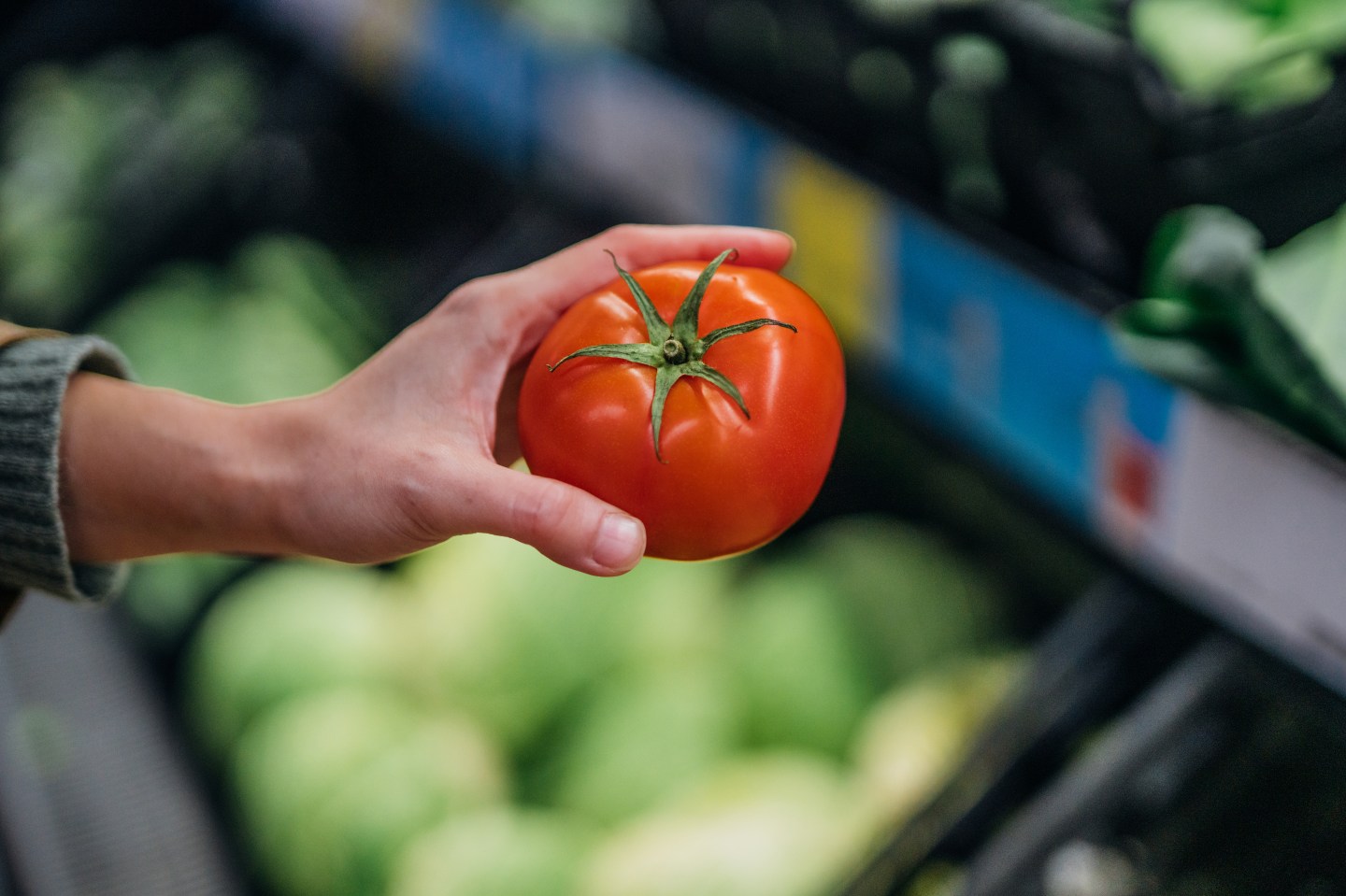
The small tomatoes on shelves of supermarkets in Japan may look like normal fruit, but they are actually genetic pioneers. In late 2021, Japanese company Sanatech Seed began selling special tomatoes that had been genetically modified to produce high levels of gamma-aminobutyric acid (GABA), a compound naturally found in the brain. GABA has been linked to stress reduction and is touted as a treatment for high blood pressure and insomnia. Rather than take GABA as a supplement, diners can simply incorporate it into their salads.
Sanatech used a revolutionary gene-editing technology called CRISPR to modify a tomato genome to reduce the production of enzymes that naturally break down GABA. Now a decade old, CRISPR is widely acknowledged as one of the most important technological breakthroughs in human history. It makes editing genetic material far simpler and more affordable.
The tomatoes are part of a pending onslaught of CRISPR-modified foodstuffs hitting the markets. Kale that lacks the bitter aftertaste, drought-resistant cattle and rice, and bananas that can better withstand viruses are all heading toward fields and shelves at a breakneck pace because of CRISPR. The technology is moving quickly, at times outpacing regulatory efforts. Many nations are setting up expedited approval processes for CRISPR products because the technique allows researchers to go from lab to field to shelf many times faster than by previous genetic-modification methods.
How to label and describe CRISPR products is also controversial. They often entail no introduction of genetic material from other organisms, instead replicating or switching existing genes. However, the speed and power of the modifications have some scientists concerned that CRISPR may have the potential to be a Pandora’s Box of unintended consequences let loose on the fields just when the world can poorly withstand shocks to the food system. CRISPR is here to stay–but are we ready to manage the risks?
Short for Clustered Regularly Interspaced Short Palindromic Repeats, CRISPR repurposes an ancient bacterial defense mechanism to simplify the editing of DNA and RNA. CRISPR lets researchers edit genes much as writers cut and paste words on a computer. That is an oversimplification, as CRISPR does require knowledge of genetics as well as laboratory infrastructure–but CRISPR is significantly faster, cheaper, and more flexible than previous types of genetic modifications.
CRISPR supporters claim that editing genes without inserting foreign DNA makes it less inherently risky than older forms of genetic engineering that involved moving DNA from one species to another. Thus, they say, CRISPR works just like traditional cross-hybridization agriculture methods. The key difference is that CRISPR methods can accomplish in a year or less what formerly required a decade or longer, and at a lower cost. That timetable could easily accelerate as tools for biological research combine with machine learning.
CRISPR crops present the world with both unprecedented opportunities and genuine risks. On the one hand, CRISPR can reset the balance of power in agricultural biotech. It is relatively cheap and relatively easy to learn. The types of modifications possible in CRISPR might allow countries and regions to take greater control of their food futures by modifying crops and animals specifically to try to meet regional and national conditions or tastes rather than pay steep fees to global agribusiness concerns for seeds and a steady stream of pesticides.
A country such as India, for example, might be able to use CRISPR to regain ownership of its food fate, producing and patenting new indigenous varieties that may support the needs of its farmers. There, locally engineered CRISPR-modified crops are already in the works for two popular crops, tomatoes and mustard greens.
With much CRISPR knowledge being public, scientists have far more freedom to research new cultivars than they do to research the safety of existing genetically modified crops. And this could alleviate the seed and pesticide “lock-in” that has left farmers around the world vulnerable to the oligopoly of global agtech giants such as Monsanto (now Bayer) and Syngenta who have patents on a significant percentage of common cultivars used for crops.
On the other hand, as we explained in The Driver in the Driverless Car, CRISPR poses both known risks and unknown hazards. Researchers can–as they did in rapidly developing mRNA gene-transfer technology against the COVID-19 virus–outpace Mother Nature, but unintended consequences can be brutal and swift. For example, a CRISPR crop might trigger new allergies, or a cultivar designed to combat an insect pest might cause ecosystem collapse, affecting or extinguishing species and preventing crop pollination. Improperly tested CRISPR cultivars may also incorporate vulnerabilities to diseases and pests that outstrip the problems they attempt to fix. In biology, environmental introductions are difficult to reverse without significant costs, such as mass crop destruction. A modified variety with harmful traits can escape into the wild and out-compete other varieties of a plant or destroy an entire insect species.
In the U.S., CRISPR-edited foods that do not contain alien genetic material are regulated just like cultivars generated by traditional hybridization. This means consumers may not know which foodstuffs have been modified unless the food company elects to create some labeling or differentiation at the retail level. The European Union has taken a more cautious approach, instituting regulations that subject CRISPR crops to greater scrutiny. This is important, because, once a CRISPR crop is in the wild, it is nearly impossible to put it back in the bottle unless scientists have first engineered a genetic kill switch–something that is not currently happening but is possible, as evidenced by the inclusion of this measure in so-called “gene drive” proposals to fight malaria by introducing mosquitoes resistant to the parasitic malaria protozoa.
For all of these reasons, although the technology promises quick rewards, governments need to proceed cautiously to mitigate its risks and respond quickly to signs of problems. This includes creating a smart regulatory structure to ensure that in a mad dash to boost food production we do not do irrevocable harm to our fragile agriculture ecosystems.
The Indian government has already taken steps in this direction. It has set up an infrastructure and review process for faster reviews of CRISPR-edited crops and created mechanisms for sharing knowledge on creating new CRISPR cultivars through open-source methods. It has also bifurcated its review and permit process, making it far easier, according to Rajesh Gokhale, the secretary of the Department of Biotechnology, to assess CRISPR crops that only edit the original genome rather than incorporate foreign genetic material.
As one of the most powerful technological developments of the past century, CRISPR presents a remarkable opportunity for the world to reset the global balance of power in food and to futureproof the food supply by making it more productive and more resilient. That said, failing to scrutinize CRISPR processes and products could be a recipe for ecosystem collapse and–considering that food is truly life and the most critical resource in the world alongside water–rapid extinction. Private industry could play a role in this regard, creating failsafe tools for managing CRISPR crops. And governments should consider CRISPR what it is: a novel, remarkable, but still unproven technology.
Vivek Wadhwa is an academic, entrepreneur, and author. Alex Salkever is an advisor to tech companies and author. Their book, From Incremental to Exponential, explains how large companies can see the future and rethink innovation.
The opinions expressed in Fortune.com commentary pieces are solely the views of their authors and do not necessarily reflect the opinions and beliefs of Fortune.
More must-read commentary published by Fortune:
- A soft landing is playing out—but optimism needs to be for the right reasons
- Overconfident tech CEOs have overpaid for ‘box tickers’ and ‘taskmasters.’ Here’s why the real ‘creators’ will survive the mass layoffs
- How the Russian economy self-immolated in the year since Putin invaded Ukraine
- I am a DoorDash driver who’s been elected to the Colorado State House. Food delivery companies are gamifying your tips and making it harder for drivers to earn a living wage. Here’s what you can do about it