• Home
  • News
  • Fortune 500
  • Tech
  • Finance
  • Leadership
  • Lifestyle
  • Rankings
  • Multimedia
Tech

Wall Street’s ‘Dr. Doom’ says Elon Musk is a ‘lunatic’ when it comes to social media regulation

By
Steve Mollman
Steve Mollman
and
Will Daniel
Will Daniel
Down Arrow Button Icon
By
Steve Mollman
Steve Mollman
and
Will Daniel
Will Daniel
Down Arrow Button Icon
November 6, 2022, 7:30 AM ET
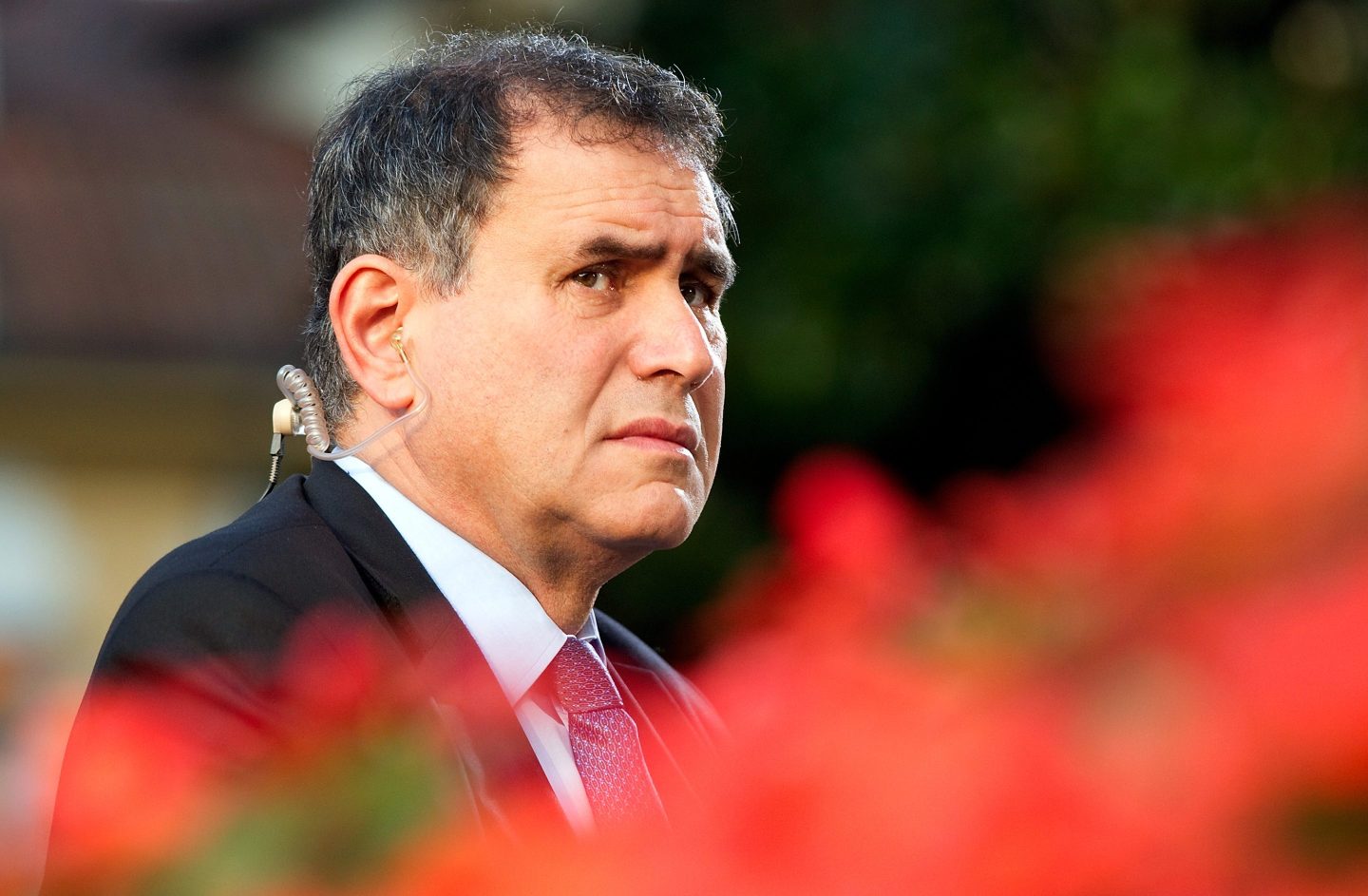
Nouriel Roubini worries about Elon Musk, a self-described “free-speech absolutist,” running Twitter.
Nouriel Roubini worries about Elon Musk, a self-described “free-speech absolutist,” running Twitter. Simon Dawson—Bloomberg/Getty Images

Nouriel Roubini believes Elon Musk’s decision to buy Twitter was “a very bad idea,” and he considers the Tesla CEO “a bit of a lunatic” when it comes to regulating—or not regulating—speech on the social network.

The New York University economist, known as “Dr. Doom” for his pessimistic economic views—he predicted the 2008 housing bust and subsequent crisis—sees problems with Musk, a self-described “free-speech absolutist,” controlling a major social media platform.

“I think, honestly, the guy is a bit of a lunatic when it comes to these views of what is the proper, I would say, regulation of these platforms,” Roubini said in an interview with Fortune. “There are certain things that are inappropriate, and the current Twitter does its best, not perfectly, to try to limit that stuff.”

Musk, in a note to advertisers on Oct. 27—the day his $44 billion takeover deal was finalized—said he bought Twitter to “try to help humanity, whom I love,” and that he wants to turn the platform into a “common digital town square, where a wide range of beliefs can be debated in a healthy manner, without resorting to violence.”

But Twitter experienced a surge in racial slurs and anti-Semitic remarks immediately after Musk took over, drawing complaints from NBA star LeBron James and other big names.

Roubini noted that “lots of anti-Semites, racists, white supremacists, and neo-Nazis are spreading misinformation that is fed by Russia, China, Iran, North Korea to try to destroy our liberal democracy. And now [Musk is] saying, ‘I want all these people to be allowed to have a platform and spread this misinformation.’”

Musk, in response to a surge in N-word usage on Twitter after his takeover, pointed to an employee’s explanation that “nearly all of these accounts are inauthentic. We’ve taken action to ban the users involved in this trolling campaign—and are going to continue working to address this in the days to come to make Twitter safe and welcoming for everyone.”

He also rushed to reassure advertisers, in his Oct. 27 note, that Twitter would not become a “free-for-all hellscape,” adding the company would form a content moderation council “with widely diverse viewpoints” and that “no major content decisions or account reinstatements will happen before that council convenes.” 

But some major companies are already leaving the platform. General Motors, Pfizer, Volkswagen, and others have paused their advertising on the social network.

While insisting that Twitter won’t become a place “where anything can be said with no consequences,” Musk has indicated that users will have more leeway to say what they want, however offensive or misleading, than they had before. And he heavily criticized the company’s former leaders—some of whom he immediately fired—for being too strict and suppressive. 

“By ‘free speech,’ I simply mean that which matches the law,” he tweeted in April. “I am against censorship that goes far beyond the law.”

Roubini said that Musk would, in principle, allow “any form [of] ‘free speech.’” But, he said, “there’s a limit even to free speech. You’re not allowed to go dressed as a Ku Klux Klan member in front of a Jewish or an African American family with guns threatening them. That’s not acceptable. You want to demonstrate, you’re allowed to demonstrate, but not to physically threaten other individuals in our society. So free speech is not unlimited.”

Shortly after taking over the platform, Musk dropped hints about how he might address the risk of Twitter becoming too toxic for some users. He suggested that, just as moviegoers use maturity ratings to decide which films to watch, Twitter users could pick their own levels of content moderation. 

Central to the issue is Section 230 of the Communications Decency Act (passed in 1996), which shields internet platforms from liability for content posted by third parties. 

Roubini takes issue with the legislation and believes it needs to be modified.

“We will have to rethink that particular section in a way that doesn’t eliminate some of the protection,” he said, “but doesn’t give protection to the extent that we have today, which essentially allows any type of…disgusting, criminal, violent, threatening messages to be broadcast. That’s not acceptable in any civil society, period.”

Twitter did not return Fortune’s request for comment.
Sign up for the Fortune Features email list so you don’t miss our biggest features, exclusive interviews, and investigations.

About the Authors
Steve Mollman
By Steve MollmanContributors Editor
LinkedIn iconTwitter icon

Steve Mollman is a contributors editor at Fortune.

See full bioRight Arrow Button Icon
Will Daniel
By Will Daniel
LinkedIn iconTwitter icon
See full bioRight Arrow Button Icon

Latest in Tech

satellite
AIData centers
Google’s plan to put data centers in the sky faces thousands of (little) problems: space junk
By Mojtaba Akhavan-TaftiDecember 3, 2025
6 hours ago
Mark Zuckerberg, chief executive officer of Meta Platforms Inc., during the Meta Connect event in Menlo Park, California, US, on Wednesday, Sept. 25, 2024.
AIMeta
Inside Silicon Valley’s ‘soup wars’: Why Mark Zuckerberg and OpenAI are hand-delivering soup to poach talent
By Eva RoytburgDecember 3, 2025
6 hours ago
Greg Abbott and Sundar Pichai sit next to each other at a red table.
AITech Bubble
Bank of America predicts an ‘air pocket,’ not an AI bubble, fueled by mountains of debt piling up from the data center rush
By Sasha RogelbergDecember 3, 2025
7 hours ago
Alex Karp smiles on stage
Big TechPalantir Technologies
Alex Karp credits his dyslexia for Palantir’s $415 billion success: ‘There is no playbook a dyslexic can master … therefore we learn to think freely’
By Lily Mae LazarusDecember 3, 2025
7 hours ago
Isaacman
PoliticsNASA
Billionaire spacewalker pleads his case to lead NASA, again, in Senate hearing
By Marcia Dunn and The Associated PressDecember 3, 2025
8 hours ago
Kris Mayes
LawArizona
Arizona becomes latest state to sue Temu over claims that its stealing customer data
By Sejal Govindarao and The Associated PressDecember 3, 2025
8 hours ago

Most Popular

placeholder alt text
North America
Jeff Bezos and Lauren Sánchez Bezos commit $102.5 million to organizations combating homelessness across the U.S.: ‘This is just the beginning’
By Sydney LakeDecember 2, 2025
1 day ago
placeholder alt text
Economy
Ford workers told their CEO 'none of the young people want to work here.' So Jim Farley took a page out of the founder's playbook
By Sasha RogelbergNovember 28, 2025
5 days ago
placeholder alt text
North America
Anonymous $50 million donation helps cover the next 50 years of tuition for medical lab science students at University of Washington
By The Associated PressDecember 2, 2025
2 days ago
placeholder alt text
C-Suite
MacKenzie Scott's $19 billion donations have turned philanthropy on its head—why her style of giving actually works
By Sydney LakeDecember 2, 2025
2 days ago
placeholder alt text
Innovation
Google CEO Sundar Pichai says we’re just a decade away from a new normal of extraterrestrial data centers
By Sasha RogelbergDecember 1, 2025
2 days ago
placeholder alt text
Law
Netflix gave him $11 million to make his dream show. Instead, prosecutors say he spent it on Rolls-Royces, a Ferrari, and wildly expensive mattresses
By Dave SmithDecember 2, 2025
1 day ago
Rankings
  • 100 Best Companies
  • Fortune 500
  • Global 500
  • Fortune 500 Europe
  • Most Powerful Women
  • Future 50
  • World’s Most Admired Companies
  • See All Rankings
Sections
  • Finance
  • Leadership
  • Success
  • Tech
  • Asia
  • Europe
  • Environment
  • Fortune Crypto
  • Health
  • Retail
  • Lifestyle
  • Politics
  • Newsletters
  • Magazine
  • Features
  • Commentary
  • Mpw
  • CEO Initiative
  • Conferences
  • Personal Finance
  • Education
Customer Support
  • Frequently Asked Questions
  • Customer Service Portal
  • Privacy Policy
  • Terms Of Use
  • Single Issues For Purchase
  • International Print
Commercial Services
  • Advertising
  • Fortune Brand Studio
  • Fortune Analytics
  • Fortune Conferences
  • Business Development
About Us
  • About Us
  • Editorial Calendar
  • Press Center
  • Work At Fortune
  • Diversity And Inclusion
  • Terms And Conditions
  • Site Map

© 2025 Fortune Media IP Limited. All Rights Reserved. Use of this site constitutes acceptance of our Terms of Use and Privacy Policy | CA Notice at Collection and Privacy Notice | Do Not Sell/Share My Personal Information
FORTUNE is a trademark of Fortune Media IP Limited, registered in the U.S. and other countries. FORTUNE may receive compensation for some links to products and services on this website. Offers may be subject to change without notice.