• Home
  • Latest
  • Fortune 500
  • Finance
  • Tech
  • Leadership
  • Lifestyle
  • Rankings
  • Multimedia
FinanceInflation

A major hedge fund just warned that hyperinflation could lead to ‘global societal collapse’—and it blames the central bank

Tristan Bove
By
Tristan Bove
Tristan Bove
Down Arrow Button Icon
Tristan Bove
By
Tristan Bove
Tristan Bove
Down Arrow Button Icon
November 3, 2022, 1:51 PM ET
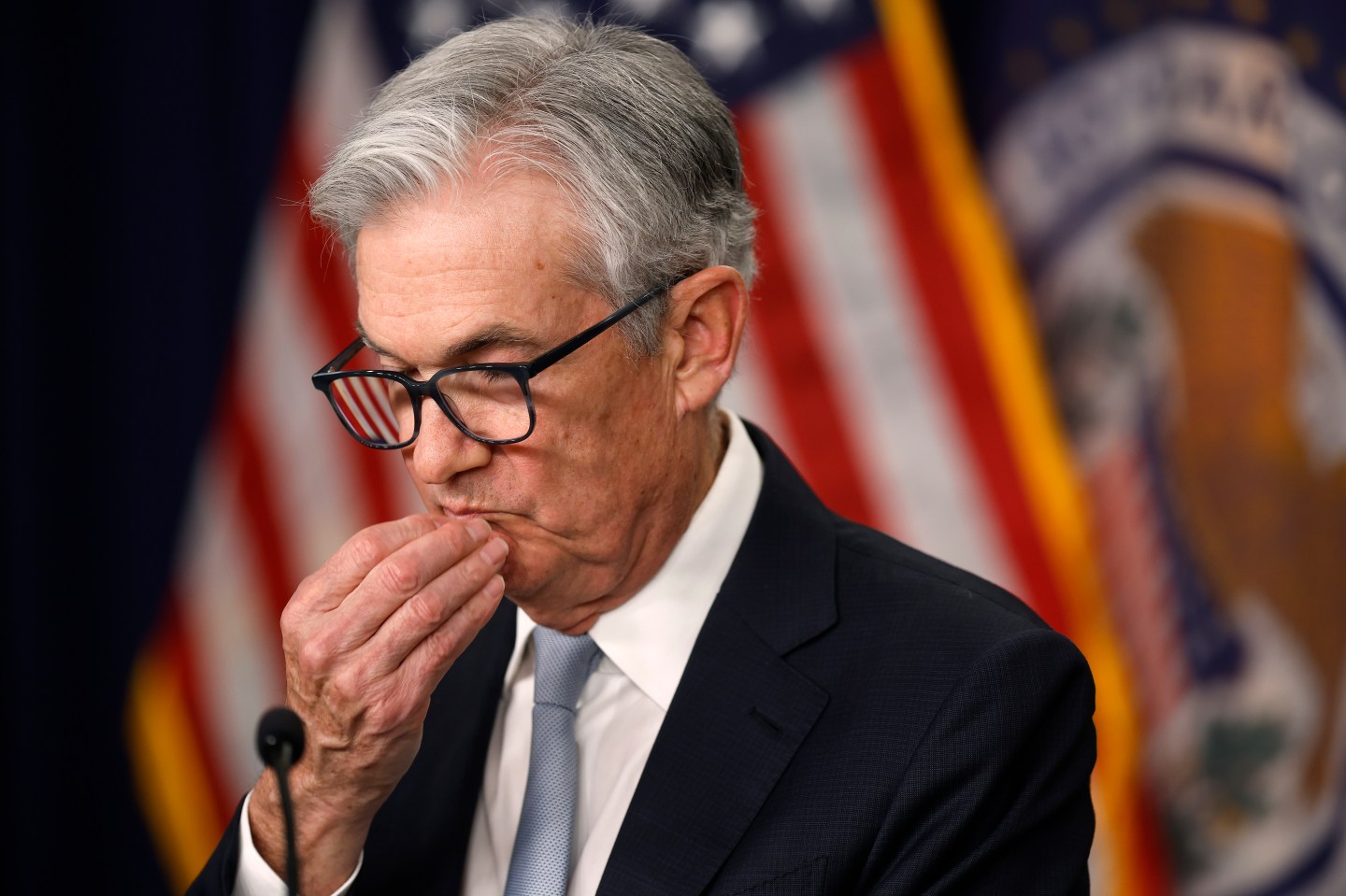
Shot of Jerome Powell, chairman of the US Federal Reserve, speaking on stage
Jerome Powell, chair of the U.S. Federal Reserve.Chip Somodevilla—Getty Images

The world’s worst financial crisis in decades may be right on our doorstep.

Rising inflation and the largest interest rate hikes globally in two decades have set the stage for the biggest economic upheaval since World War II, according to Elliott Management, a major hedge fund that manages nearly $56 billion in assets.

A unique and “extraordinary” set of economic conditions is steering the globe toward a crisis worse than any of the stock market crashes or energy shocks of the past 70 years, Elliott warned in a recent letter to clients, the Financial Times reported Wednesday.

The letter acknowledged, however, that the dire situation isn’t guaranteed. But some degree of economic downturn beginning next year is looking increasingly likely as central banks, including the U.S. Federal Reserve, have responded to rising inflation with aggressive interest rate hikes that international institutions including the World Bank and the UN have warned could trigger a global recession.

But the outcome could be even worse than that, according to Elliott, which claimed central banks sparked the inflation crisis when they loosened monetary policy in the early days of the COVID-19 pandemic.

The result of this looming economic spiral could even lead to “global societal collapse and civil or international strife,” according to Elliott. 

Elliott declined Fortune’s request for comment.

Central banks in the spotlight

In its letter, Elliott accused policymakers of being “dishonest” about the real cause behind rising inflation, and of not taking responsibility for the part central banks played in creating it.

In 2020, many central banks—including the Fed, the U.K.’s Bank of England, and the European Central Bank—all lowered their interest rates to record lows of near-zero in an attempt to spur growth, after interest rates had already spent a decade at historical lows following the 2008 financial crisis. 

That ultra-loose monetary policy countered the economic drag created by stay-at-home orders and business closures. But interest rates staying too low for too long can create additional economic risks if they ignite excessive growth and uncontrolled inflation.

The long-term consequence of the low-rate era could set the world on a “path to hyperinflation,” Elliott wrote, a rate of inflation that is rapid, self-sustaining, and largely uncontrolled, commonly defined as a monthly inflation rate of at least 50%.

Hyperinflation is extremely rare globally, as a monthly 50% inflation rate would translate to an annual rate of 12,875%, well above the current annual U.S. inflation rate of 8.2%. 

High-profile economists including Mohamed El-Erian, president of Queens’ College, Cambridge, criticized the Federal Reserve last year in a Washington Post op-ed for keeping interest rates at near-zero for too long. 

Low interest rates were “once needed and effective,” El-Erian wrote, but by the middle of 2021 they risked becoming “increasingly counterproductive for the economy” and could fuel a “perfect storm” of high inflation, slow growth, and financial instability. 

Former Treasury Secretary Larry Summers has also criticized the Fed’s monetary stance, warning last year that the central bank was at risk of “dangerous complacency” over inflation owing to the protracted period of record-low rates.

Both El-Erian and Summers warned that if rates were kept low for long enough, runaway inflation could force the Fed into a knee-jerk monetary tightening stance that could severely hurt the economy.

Sign up for the Fortune Features email list so you don’t miss our biggest features, exclusive interviews, and investigations.
About the Author
Tristan Bove
By Tristan Bove
LinkedIn iconTwitter icon
See full bioRight Arrow Button Icon

Latest in Finance

InvestingSports
Big 12 in advanced talks for deal with RedBird-backed fund
By Giles Turner and BloombergDecember 13, 2025
2 hours ago
Spanish Prime Minister Pedro Sánchez often praises the financial and social benefits that immigrants bring to the country.
EuropeSpain
In a continent cracking down on immigration and berated by Trump’s warnings of ‘civilizational erasure,’ Spain embraces migrants
By Suman Naishadham and The Associated PressDecember 13, 2025
4 hours ago
EconomyAgriculture
More financially distressed farmers are expected to lose their property soon as loan repayments and incomes continue to falter
By Jason MaDecember 13, 2025
5 hours ago
InvestingStock
There have been head fakes before, but this time may be different as the latest stock rotation out of AI is just getting started, analysts say
By Jason MaDecember 13, 2025
8 hours ago
Politicsdavid sacks
Can there be competency without conflict in Washington?
By Alyson ShontellDecember 13, 2025
8 hours ago
Investingspace
SpaceX sets $800 billion valuation, confirms 2026 IPO plans
By Loren Grush, Edward Ludlow and BloombergDecember 13, 2025
9 hours ago

Most Popular

placeholder alt text
Economy
Tariffs are taxes and they were used to finance the federal government until the 1913 income tax. A top economist breaks it down
By Kent JonesDecember 12, 2025
2 days ago
placeholder alt text
Success
Apple cofounder Ronald Wayne sold his 10% stake for $800 in 1976—today it’d be worth up to $400 billion
By Preston ForeDecember 12, 2025
1 day ago
placeholder alt text
Success
40% of Stanford undergrads receive disability accommodations—but it’s become a college-wide phenomenon as Gen Z try to succeed in the current climate
By Preston ForeDecember 12, 2025
1 day ago
placeholder alt text
Economy
The Fed just ‘Trump-proofed’ itself with a unanimous move to preempt a potential leadership shake-up
By Jason MaDecember 12, 2025
1 day ago
placeholder alt text
Economy
For the first time since Trump’s tariff rollout, import tax revenue has fallen, threatening his lofty plans to slash the $38 trillion national debt
By Sasha RogelbergDecember 12, 2025
1 day ago
placeholder alt text
Success
Apple CEO Tim Cook out-earns the average American’s salary in just 7 hours—to put that into context, he could buy a new $439,000 home in just 2 days
By Emma BurleighDecember 12, 2025
1 day ago
Rankings
  • 100 Best Companies
  • Fortune 500
  • Global 500
  • Fortune 500 Europe
  • Most Powerful Women
  • Future 50
  • World’s Most Admired Companies
  • See All Rankings
Sections
  • Finance
  • Leadership
  • Success
  • Tech
  • Asia
  • Europe
  • Environment
  • Fortune Crypto
  • Health
  • Retail
  • Lifestyle
  • Politics
  • Newsletters
  • Magazine
  • Features
  • Commentary
  • Mpw
  • CEO Initiative
  • Conferences
  • Personal Finance
  • Education
Customer Support
  • Frequently Asked Questions
  • Customer Service Portal
  • Privacy Policy
  • Terms Of Use
  • Single Issues For Purchase
  • International Print
Commercial Services
  • Advertising
  • Fortune Brand Studio
  • Fortune Analytics
  • Fortune Conferences
  • Business Development
About Us
  • About Us
  • Editorial Calendar
  • Press Center
  • Work At Fortune
  • Diversity And Inclusion
  • Terms And Conditions
  • Site Map

© 2025 Fortune Media IP Limited. All Rights Reserved. Use of this site constitutes acceptance of our Terms of Use and Privacy Policy | CA Notice at Collection and Privacy Notice | Do Not Sell/Share My Personal Information
FORTUNE is a trademark of Fortune Media IP Limited, registered in the U.S. and other countries. FORTUNE may receive compensation for some links to products and services on this website. Offers may be subject to change without notice.