• Home
  • Latest
  • Fortune 500
  • Finance
  • Tech
  • Leadership
  • Lifestyle
  • Rankings
  • Multimedia
FinanceHousing

The housing market enters into recession—here’s what to expect next

By
Lance Lambert
Lance Lambert
Former Real Estate Editor
Down Arrow Button Icon
By
Lance Lambert
Lance Lambert
Former Real Estate Editor
Down Arrow Button Icon
July 20, 2022, 4:13 AM ET

The housing cycle—which began its upward climb in 2011—has officially turned over. Simply put: We’ve moved into a housing recession.

On Tuesday, we learned that homebuilders broke ground on 982,000 single-family homes in June. That’s down 19% since February, and down 16% from the same month in 2021. While it’s hardly a “blow out,” it’s clear builders are cutting back. Historically speaking, that’s exactly what happens when a housing cycle turns over: As existing home inventory—which builders compete against—begins to spike, homebuilders start to cut back.

“Peak euphoria is behind us. We are giving back some of the euphoria [home] pricing that was rolling over every housing market,” says Rick Palacios Jr., head of research at John Burns Real Estate Consulting.

Existing home inventory will continue to rise, and homebuilding will continue to slow. At least that’s the view at John Burns Real Estate Consulting, which does consulting work for both builders and investors. As it does, the ongoing housing recession (i.e. a contracting housing market) could push home prices lower in bubbly regional housing markets. Indeed, many bubbly markets, Palacios says, are barreling toward price cuts in both 2023 and 2024. That includes markets like Phoenix, Nashville, West Palm Beach, Las Vegas, and Austin. In Boise, Palacios says, home prices could go negative on a year-over-year basis as soon as December.

“Builders are already [deciding] to not pour slabs in certain markets. Which is the technical trigger for a start for a home. In certain markets it will feel like [a housing bust],” Palacios says.

Soon after mortgage rates spiked this spring, the housing market slipped into a "housing correction." It's easy to see how those higher rates priced out many would-be buyers. If a borrower in December took out a $500,000 mortgage at a 3.1% rate, they'd owe a monthly principal and interest payment of $2,135. If a borrower took out a $500,000 mortgage at today's average 30-year fixed mortgage rate (5.51%), they'd get a $2,839 payment.

While this housing recession has hit markets coast to coast, it's hardly even. It's delivering a particularly hard blow to housing markets in the Mountain West, West Coast, and Southwest. Just look at the shift in inventory levels: Over the past six months, housing inventory has spiked 247% in Denver compared to just 18% in Pittsburgh. Not too far behind Denver are Austin (220%); Colorado Springs (195%); Stockton, Calif. (175%); and Boise (161%).

What's going on? These Western housing markets also happen to be among the most "overvalued" markets in the country. As the pandemic housing boom raged over the past two years, many of those markets—which were more constrained supply-wise—saw staggering home price appreciation. In Boise, home prices jumped 53% over the past two years. That took home prices there well beyond what economic fundamentals in the market would historically support. In fact, Moody's Analytics deems it the most "overvalued" market in the country.

Over the coming year, Moody's Analytics expects significantly "overvalued" housing markets like Boise and Austin to see home prices fall 5% to 10%. Nationally, Moody's Analytics expects year-over-year home price growth to be at 0%. However, if a recession hits, Moody's Analytics predicts significantly "overvalued" housing markets could see home prices drop by 15% to 20% while national home prices would fall by around 5%.

There's another reason bubbly markets like Austin and Phoenix are contracting faster: investors.

Investors poured into the U.S. housing market over the past two years. There were small players like Airbnb hosts and mom-and-pop landlords. Home flippers returned. There were also institutional types like Blackstone and iBuyer players like Zillow. Their favorite locales? Hot housing markets throughout the Mountain West, Southwest, and Southeast.

However, as housing markets in those boomtowns begin to contract, investors are the first ones who run for the exits.

"Investors sometimes move in a herd. If Phoenix real estate isn’t the cool investment anymore in 2022, it could have a big and quick impact on home sales. If a lot of investors decide to sell…yikes," John Wake, an independent real estate analyst based in Phoenix, told Fortune.

This housing recession, of course, is all by design.

Earlier this year, the Federal Reserve flipped from quantitative easing (i.e. buying bonds) to quantitative tightening (i.e. selling bonds). Immediately, financial markets pushed up both the 10-year Treasury and mortgage rates. That's exactly what the Fed wanted: If mortgage rates rose, it would cause the pandemic housing boom—which helped fuel higher inflation—to fizzle out.

"I'd say if you are a homebuyer, somebody or a young person looking to buy a home, you need a bit of a reset. We need to get back to a place where supply and demand are back together and where inflation is down low again, and mortgage rates are low again," Fed Chair Jerome Powell told reporters in June.

According to Palacios, that Fed housing "reset" actually means "falling home prices." While the Fed didn't directly say it, Palacios says many in the industry believe that's exactly what's coming next.

That ongoing housing contraction coupled with a determined Fed, Palacios says, is the perfect recipe for a recession. Historically speaking, Fed-induced recessions begin in rate-sensitive sectors like housing. It usually goes something like this: Spiking mortgage rates quickly translate into fewer home sales. Then inventory rises sharply and homebuilders scale back. Next, demand for both commodities and durable goods falls. Of course, a housing recession also brings with it layoffs.

"The lesson learned in reading [Paul] Volcker's piece, that’s where [the Fed] messed up [in the 1970s]. If you have this red-light, green-light mentality around inflation, then you’re going to allow the psychology of inflation to get out in front of you…If you listen to the Fed over the last month or so, that's what they’re so freaked out about," Palacios says.

Want to stay updated on the housing recession? Follow me on Twitter at @NewsLambert.

Sign up for the Fortune Features email list so you don’t miss our biggest features, exclusive interviews, and investigations.


About the Author
By Lance LambertFormer Real Estate Editor
Twitter icon

Lance Lambert is a former Fortune editor who contributes to the Fortune Analytics newsletter.

See full bioRight Arrow Button Icon

Latest in Finance

Finance
Lorem ipsum dolor sit amet, consectetur adipiscing elit, sed do eiusmod tempor incididunt ut labore et dolore magna aliqua. Ut enim ad minim veniam
By Fortune Editors
October 20, 2025
Finance
Lorem ipsum dolor sit amet, consectetur adipiscing elit, sed do eiusmod tempor incididunt ut labore et dolore magna aliqua. Ut enim ad minim veniam
By Fortune Editors
October 20, 2025
Finance
Lorem ipsum dolor sit amet, consectetur adipiscing elit, sed do eiusmod tempor incididunt ut labore et dolore magna aliqua. Ut enim ad minim veniam
By Fortune Editors
October 20, 2025
Finance
Lorem ipsum dolor sit amet, consectetur adipiscing elit, sed do eiusmod tempor incididunt ut labore et dolore magna aliqua. Ut enim ad minim veniam
By Fortune Editors
October 20, 2025
Finance
Lorem ipsum dolor sit amet, consectetur adipiscing elit, sed do eiusmod tempor incididunt ut labore et dolore magna aliqua. Ut enim ad minim veniam
By Fortune Editors
October 20, 2025
Finance
Lorem ipsum dolor sit amet, consectetur adipiscing elit, sed do eiusmod tempor incididunt ut labore et dolore magna aliqua. Ut enim ad minim veniam
By Fortune Editors
October 20, 2025

Most Popular

Finance
Lorem ipsum dolor sit amet, consectetur adipiscing elit, sed do eiusmod tempor incididunt ut labore et dolore magna aliqua. Ut enim ad minim veniam
By Fortune Editors
October 20, 2025
Finance
Lorem ipsum dolor sit amet, consectetur adipiscing elit, sed do eiusmod tempor incididunt ut labore et dolore magna aliqua. Ut enim ad minim veniam
By Fortune Editors
October 20, 2025
Finance
Lorem ipsum dolor sit amet, consectetur adipiscing elit, sed do eiusmod tempor incididunt ut labore et dolore magna aliqua. Ut enim ad minim veniam
By Fortune Editors
October 20, 2025
Finance
Lorem ipsum dolor sit amet, consectetur adipiscing elit, sed do eiusmod tempor incididunt ut labore et dolore magna aliqua. Ut enim ad minim veniam
By Fortune Editors
October 20, 2025
Finance
Lorem ipsum dolor sit amet, consectetur adipiscing elit, sed do eiusmod tempor incididunt ut labore et dolore magna aliqua. Ut enim ad minim veniam
By Fortune Editors
October 20, 2025
Finance
Lorem ipsum dolor sit amet, consectetur adipiscing elit, sed do eiusmod tempor incididunt ut labore et dolore magna aliqua. Ut enim ad minim veniam
By Fortune Editors
October 20, 2025
Rankings
  • 100 Best Companies
  • Fortune 500
  • Global 500
  • Fortune 500 Europe
  • Most Powerful Women
  • Future 50
  • World’s Most Admired Companies
  • See All Rankings
Sections
  • Finance
  • Leadership
  • Success
  • Tech
  • Asia
  • Europe
  • Environment
  • Fortune Crypto
  • Health
  • Retail
  • Lifestyle
  • Politics
  • Newsletters
  • Magazine
  • Features
  • Commentary
  • Mpw
  • CEO Initiative
  • Conferences
  • Personal Finance
  • Education
Customer Support
  • Frequently Asked Questions
  • Customer Service Portal
  • Privacy Policy
  • Terms Of Use
  • Single Issues For Purchase
  • International Print
Commercial Services
  • Advertising
  • Fortune Brand Studio
  • Fortune Analytics
  • Fortune Conferences
  • Business Development
About Us
  • About Us
  • Editorial Calendar
  • Press Center
  • Work At Fortune
  • Diversity And Inclusion
  • Terms And Conditions
  • Site Map
  • Facebook icon
  • Twitter icon
  • LinkedIn icon
  • Instagram icon
  • Pinterest icon

Latest in Finance

EconomyAerospace and defense
France’s Thales ‘extensively’ ramps up production to meet a global boom in defense spending, says international CEO Pascale Sourisse
By Angelica AngFebruary 10, 2026
45 minutes ago
Eddie Bauer
RetailRetail
Eddie Bauer’s retail operator declares bankruptcy as younger shoppers view the brand as ‘old-fashioned and a bit irrelevant’
By Anne D'Innocenzio and The Associated PressFebruary 9, 2026
9 hours ago
Personal FinanceSavings
Best money market accounts of February 2026
By Glen Luke FlanaganFebruary 9, 2026
9 hours ago
CryptoDonald Trump
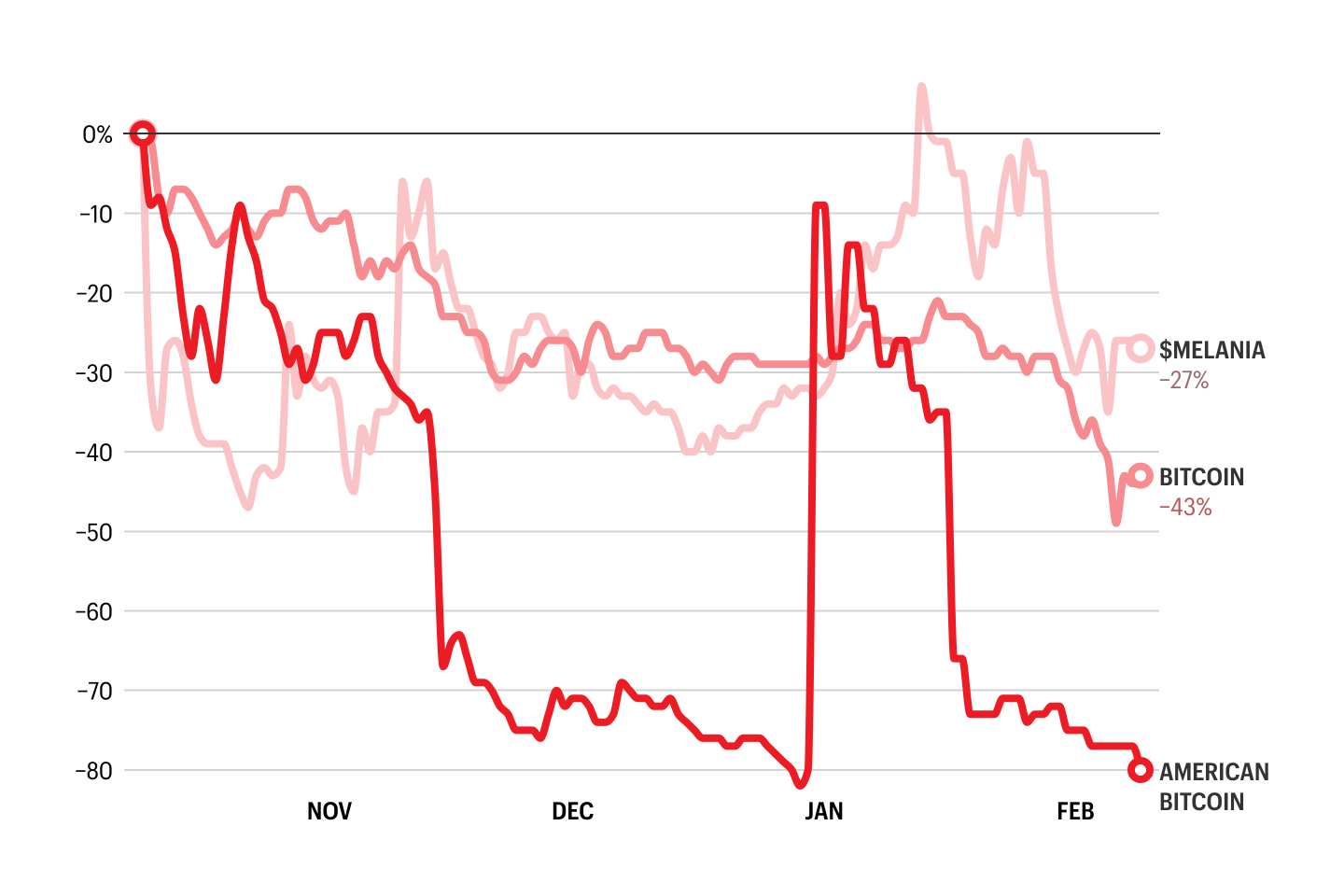
The Trump family’s crypto portfolio is getting battered with the rest of the industry—but Melania’s memecoin has fared surprisingly well
By Ben WeissFebruary 9, 2026
9 hours ago
Personal Financechecking accounts
Best checking account bonuses for February 2026
By Glen Luke FlanaganFebruary 9, 2026
10 hours ago
take off
InvestingMarkets
Why you shouldn’t worry about AI eating the stock market, top analyst says. The U.S. economy is ‘about to take off’
By Nick LichtenbergFebruary 9, 2026
11 hours ago

Most Popular

placeholder alt text
C-Suite
Meet Jody Allen, the billionaire owner of the Seattle Seahawks, who plans to sell the team and donate the proceeds to charity
By Jake AngeloFebruary 9, 2026
11 hours ago
placeholder alt text
AI
As billionaires bail, Mark Zuckerberg doubles down on California with $50 million donation
By Sydney LakeFebruary 9, 2026
14 hours ago
placeholder alt text
Economy
China might be beginning to back away from U.S. debt as investors get nervous about overexposure to American assets
By Eleanor PringleFebruary 9, 2026
19 hours ago
placeholder alt text
Economy
Elon Musk warns the U.S. is '1,000% going to go bankrupt' unless AI and robotics save the economy from crushing debt
By Jason MaFebruary 7, 2026
2 days ago
placeholder alt text
Commentary
America marks its 250th birthday with a fading dream—the first time that younger generations will make less than their parents
By Mark Robert Rank and The ConversationFebruary 8, 2026
2 days ago
placeholder alt text
Economy
Russian officials are warning Putin that a financial crisis could arrive this summer, report says, while his war on Ukraine becomes too big to fail
By Jason MaFebruary 8, 2026
1 day ago

© 2026 Fortune Media IP Limited. All Rights Reserved. Use of this site constitutes acceptance of our Terms of Use and Privacy Policy | CA Notice at Collection and Privacy Notice | Do Not Sell/Share My Personal Information
FORTUNE is a trademark of Fortune Media IP Limited, registered in the U.S. and other countries. FORTUNE may receive compensation for some links to products and services on this website. Offers may be subject to change without notice.