• Home
  • News
  • Fortune 500
  • Tech
  • Finance
  • Leadership
  • Lifestyle
  • Rankings
  • Multimedia
FinanceEconomy

Inflation is now ‘deeply entrenched’ in the economy and more volatility lies ahead, Goldman Sachs’ CEO David Solomon says

Will Daniel
By
Will Daniel
Will Daniel
Down Arrow Button Icon
Will Daniel
By
Will Daniel
Will Daniel
Down Arrow Button Icon
July 18, 2022, 12:06 PM ET
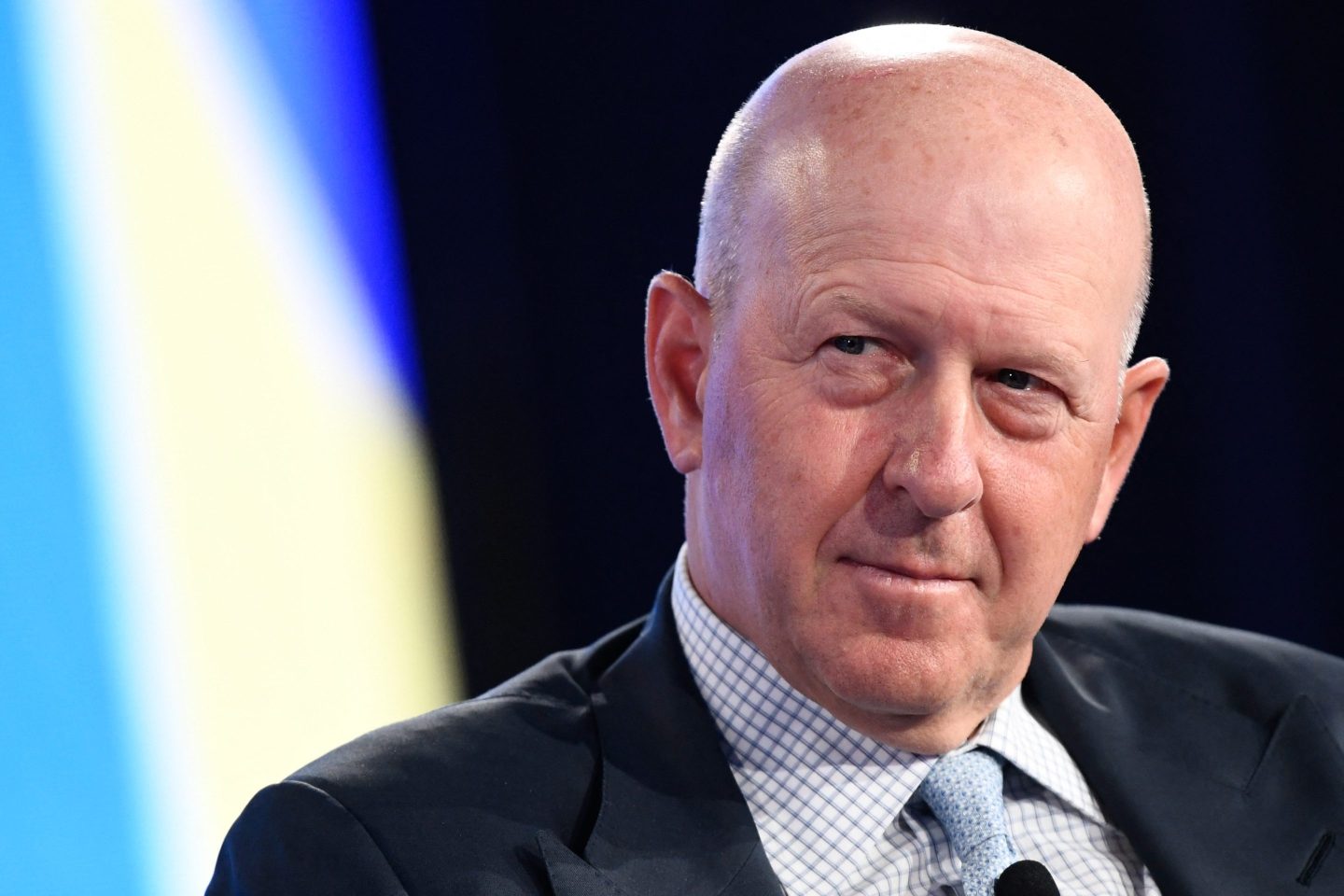
David Solomon, Chairman and CEO of Goldman Sachs at a conference.
David Solomon, Chairman and CEO, Goldman Sachs, listens during the Milken Institute Global Conference on May 2, 2022 in Beverly Hills, California.Patrick T. Fallon—AFP/Getty Images

Inflation hit another four-decade high in June, rising 9.1% from a year ago and handily topping economists’ expectations.

Now, Wall Street is arguing it could be here to stay.

David Solomon, the CEO of Goldman Sachs, said on Monday that he believes inflation is now entrenched in the economy and it may not come down in the second half of the year as some on Wall Street have predicted.

“We see inflation deeply entrenched in the economy, and what’s unusual about this particular period is that both demand and supply are being affected by exogenous events, namely the pandemic and the war on Ukraine,” Solomon said during Goldman’s second-quarter earnings call with investors. 

The CEO added that in conversations with executives from around the world he has found that inflation remains a “persistent” issue in supply chains. However, he noted that Goldman’s economists believe inflation will “move lower in the second half of the year.”

So, what’s the path forward when it comes to consumer prices in 2022?

“The answer is uncertain and we will all be watching it very closely,” Solomon said. “I expect there’s going to be more volatility and there’s going to be more uncertainty. And in light of the current environment, we will manage all our resources cautiously.”

Solomon’s comments come just weeks after Federal Reserve officials warned that entrenched inflation poses a “significant risk” to the U.S. economy. 

Entrenched inflation, unlike “transitory” inflation, occurs when consumers’ expectations for inflation rise, and price increases hit “sticky” categories like rent or medical services where they aren’t likely to come down soon.

When this happens, it can lead to a wage-price spiral where workers demand wage increases to preserve their incomes as the cost of living soars. This then increases operational costs for companies, which, in turn, raise their prices to maintain profitability, thereby exacerbating inflation. 

It’s a vicious cycle that some economists argue is already here. After all, Americans expect inflation to remain well above the Fed’s 2% target rate in 2022, according to The University of Michigan’s June Surveys of Consumers. On average, consumers surveyed last month said they believe inflation will hit a 5.3% annual rate by the end of the year.

 “I think we are in a wage-price spiral right now,” Columbia University economist and former Federal Reserve Gov. Frederic Mishkin told MarketPlace last week. “If workers start to expect inflation to be higher, they have to ask for higher wages in order not to fall behind the eight ball.”

With inflation continuing to be an issue, Goldman’s Solomon added that he worries the Federal Reserve will be forced into more aggressive interest rate hikes that could begin to hurt “corporate confidence and also consumer activity in the economy.”

If that happens, we could be in for a recession, according to some Wall Street economists.
Bank of America’s new head of U.S. economics, Michael Gapen, said last week that he now expects a “mild recession” this year as persistent inflation and the Fed’s aggressive monetary policy are causing consumers to reduce their spending.

Sign up for the Fortune Features email list so you don’t miss our biggest features, exclusive interviews, and investigations.


About the Author
Will Daniel
By Will Daniel
LinkedIn iconTwitter icon
See full bioRight Arrow Button Icon

Latest in Finance

RetailConsumer Spending
U.S. consumers are so financially strained they put more than $1 billion on buy-now, pay later services during Black Friday and Cyber Monday
By Jeena Sharma and Retail BrewDecember 5, 2025
6 hours ago
Elon Musk
Big TechSpaceX
Musk’s SpaceX discusses record valuation, IPO as soon as 2026
By Edward Ludlow, Loren Grush, Lizette Chapman, Eric Johnson and BloombergDecember 5, 2025
6 hours ago
data center
EnvironmentData centers
The rise of AI reasoning models comes with a big energy tradeoff
By Rachel Metz, Dina Bass and BloombergDecember 5, 2025
6 hours ago
Personal FinanceLoans
5 ways to use a home equity line of credit (HELOC)
By Joseph HostetlerDecember 5, 2025
6 hours ago
Netflix
InvestingAntitrust
Netflix–Warner Bros. deal sets up $72 billion antitrust test
By Josh Sisco, Samuel Stolton, Kelcee Griffis and BloombergDecember 5, 2025
6 hours ago
Schumer
Politicsnational debt
‘This is a bad idea made worse’: Senate Dems’ plan to fix Obamacare premiums adds nearly $300 billion to deficit, CRFB says
By Nick LichtenbergDecember 5, 2025
6 hours ago

Most Popular

placeholder alt text
Economy
Two months into the new fiscal year and the U.S. government is already spending more than $10 billion a week servicing national debt
By Eleanor PringleDecember 4, 2025
2 days ago
placeholder alt text
Success
‘Godfather of AI’ says Bill Gates and Elon Musk are right about the future of work—but he predicts mass unemployment is on its way
By Preston ForeDecember 4, 2025
1 day ago
placeholder alt text
Success
Nearly 4 million new manufacturing jobs are coming to America as boomers retire—but it's the one trade job Gen Z doesn't want
By Emma BurleighDecember 4, 2025
2 days ago
placeholder alt text
Success
Nvidia CEO Jensen Huang admits he works 7 days a week, including holidays, in a constant 'state of anxiety' out of fear of going bankrupt
By Jessica CoacciDecember 4, 2025
1 day ago
placeholder alt text
Real Estate
‘There is no Mamdani effect’: Manhattan luxury home sales surge after mayoral election, undercutting predictions of doom and escape to Florida
By Sasha RogelbergDecember 4, 2025
1 day ago
placeholder alt text
Economy
Tariffs and the $38 trillion national debt: Kevin Hassett sees ’big reductions’ in deficit while Scott Bessent sees a ‘shrinking ice cube’
By Nick LichtenbergDecember 4, 2025
1 day ago
Rankings
  • 100 Best Companies
  • Fortune 500
  • Global 500
  • Fortune 500 Europe
  • Most Powerful Women
  • Future 50
  • World’s Most Admired Companies
  • See All Rankings
Sections
  • Finance
  • Leadership
  • Success
  • Tech
  • Asia
  • Europe
  • Environment
  • Fortune Crypto
  • Health
  • Retail
  • Lifestyle
  • Politics
  • Newsletters
  • Magazine
  • Features
  • Commentary
  • Mpw
  • CEO Initiative
  • Conferences
  • Personal Finance
  • Education
Customer Support
  • Frequently Asked Questions
  • Customer Service Portal
  • Privacy Policy
  • Terms Of Use
  • Single Issues For Purchase
  • International Print
Commercial Services
  • Advertising
  • Fortune Brand Studio
  • Fortune Analytics
  • Fortune Conferences
  • Business Development
About Us
  • About Us
  • Editorial Calendar
  • Press Center
  • Work At Fortune
  • Diversity And Inclusion
  • Terms And Conditions
  • Site Map

© 2025 Fortune Media IP Limited. All Rights Reserved. Use of this site constitutes acceptance of our Terms of Use and Privacy Policy | CA Notice at Collection and Privacy Notice | Do Not Sell/Share My Personal Information
FORTUNE is a trademark of Fortune Media IP Limited, registered in the U.S. and other countries. FORTUNE may receive compensation for some links to products and services on this website. Offers may be subject to change without notice.