Women who have been on the sidelines of their financial lives are getting ready to jump in, and it’s about time. According to our latest survey, 64% of women said that improving at least one aspect of their finances was among their new year’s resolutions, compared with only 54% of men.
That makes sense: From the C-suite to Main Street women are taking control of the conversation—and their finances. Take Rent the Runway, for example, the women-led brand that made history by going public with a female founder-CEO, COO, and CFO last year; or finance guru Lauren Simmons, who, at 22, became the youngest full-time female trader at the New York Stock Exchange in 2017; or any of the 41 women-run companies on the Fortune 500 list.
All women should seize this moment in history when so many are more empowered than ever and consider finally investing in themselves in both traditional and innovative ways—from investing in their skill sets to putting their cash to work.
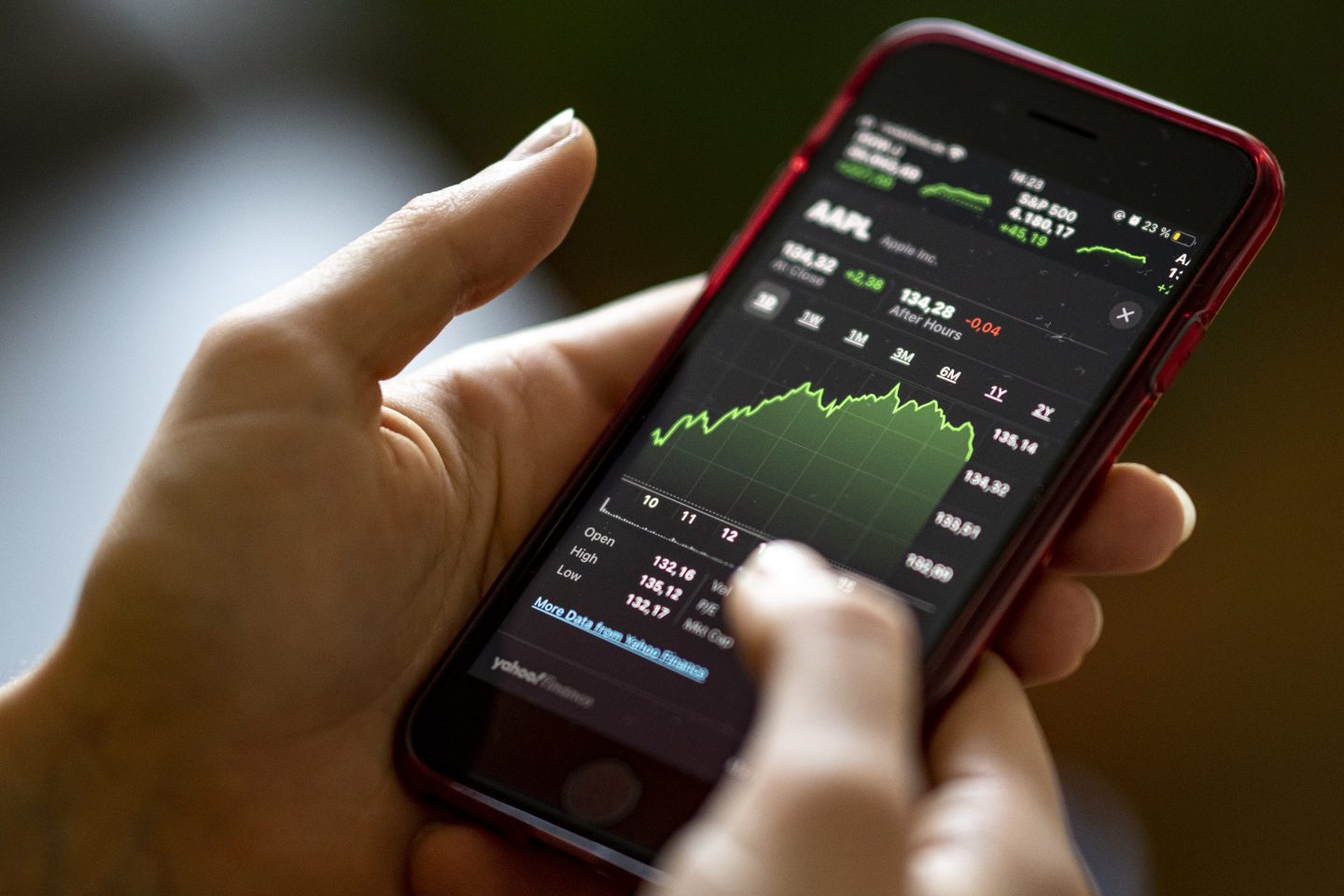
Investing in the stock market can be a great place to start. The S&P finished 2021 up 27% and has experienced an average annualized return of about 10% since it was founded. Yet, according to new Stash data, men are nearly three times as likely as women to want to invest more money in the U.S. stock market in 2022—the biggest wealth-generating machine in America.
When it comes to corners of the financial world like cryptocurrency, where investing strategies can be more opaque and long-term outcomes are less proven, women are again less likely to seize the opportunity. Women are half as likely to have used crypto, according to Pew Research.
However, according to Grayscale, 53% of a surveyed portion of interested women investors would consider investing in Bitcoin, up from 47% last year—and still trailing men by 12 percentage points.
These stats are not surprising. With crypto and the stock market having such a volatile start to the new year, it makes sense for women to be concerned about risk. However, that doesn’t mean we should sit on the sidelines and wait.
In fact, the discipline and long-term approach women tend to take when investing in the market is exactly why we are generally more successful investors than men. This mindset also puts women in the best position to realize the long-term returns of any type of investment. Women are more likely to keep their cool during turbulent times in the market. During the first peak of the pandemic, men were 17% more likely to “panic sell” compared with women. Women were also almost 10% more likely to make investments during the early phases of COVID-19, and they took a more diversified approach to investing.
Despite crypto’s risk profile, adoption continues to increase every year, along with the rest of the digital economy’s growth. Over time, as the drivers and patterns of volatility become more clear, crypto will increasingly be viewed as an essential part of a diversified, future-proofed portfolio. As we’ve seen before, the tenacity of women who persevere through market ups and downs is one important factor that brings them success—and could benefit the crypto space.
Several platforms, including Stash, enable new investors to start small by investing as little as $5 or $10 into either fractional shares or a managed portfolio. Stash, in particular, also includes exposure to crypto trusts.
By discussing a topic formerly thought of as taboo, women promote a more collaborative approach and ensure accountability. A great way to achieve that is to find a budget buddy to discuss your investments.
Women must stay committed to learning about the financial world. Finance is always changing and adapting. I am constantly looking for new ways to learn and educate myself through reputable sources, and I encourage others to do the same.
The power of women taking control of their finances is strong—and growing rapidly. All of us have more to learn, conversations to have, and investments to make.
Lauren Anastasio is a certified financial planner and the director of financial advice at Stash.
This content is for informational purposes only. Investment advisory services offered by Stash Investments LLC, an SEC-registered investment adviser. Crypto is relatively new and can be volatile. Investments are Delaware Statutory Trusts and offer indirect exposure to Crypto. The survey was conducted online within the United States by Stash using SurveyMonkey technology in October 2021. The survey was completed by 1,114 people.
More must-read commentary published by Fortune:
- Corporations, not governments, can create a better world
- Former Ukraine prime minister: Only together can we defeat Putin’s plans for global autocracy
- The Biden administration: How not to impose sanctions
- How the European gas market fuels Putin’s obsession with Ukraine
- The Great Resignation calls for a Glorious Re-Engagement