• Home
  • Latest
  • Fortune 500
  • Finance
  • Tech
  • Leadership
  • Lifestyle
  • Rankings
  • Multimedia
CommentaryLeadership

Microsoft’s Nadella, Google’s Pichai, and now Twitter’s Agrawal: Why Indian-born leaders dominate American tech’s top ranks

By
Vivek Wadhwa
Vivek Wadhwa
Down Arrow Button Icon
By
Vivek Wadhwa
Vivek Wadhwa
Down Arrow Button Icon
December 3, 2021, 1:01 PM ET
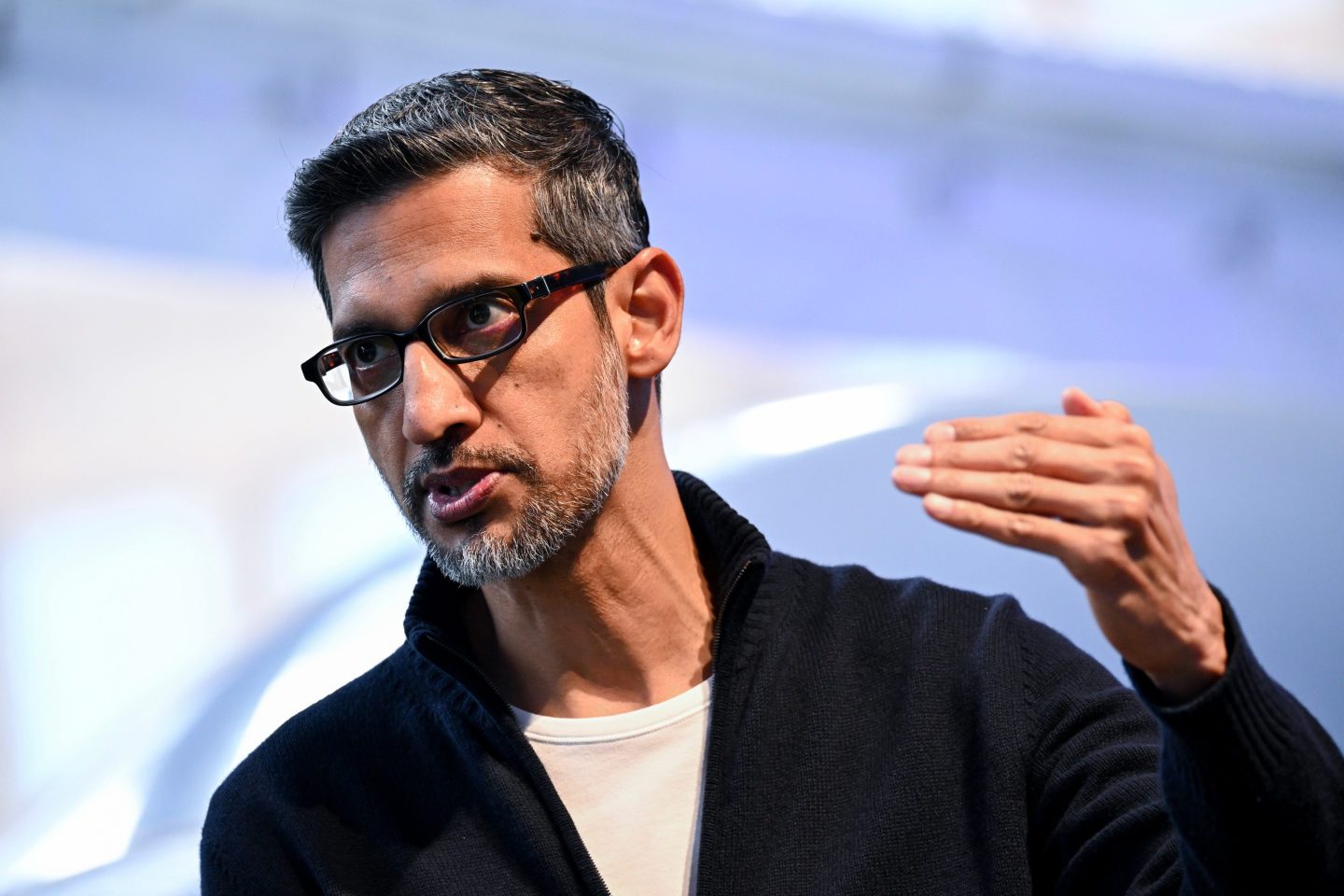
Twitter’s new CEO, Parag Agrawal, is the latest Indian-born leader to rise to the top spot at a U.S. tech company. The traits that enable Indian immigrants to succeed in the U.S. are also “the traits that enable a CEO to transform company culture,” writes Vivek Wadhwa.
Twitter’s new CEO, Parag Agrawal, is the latest Indian-born leader to rise to the top spot at a U.S. tech company. The traits that enable Indian immigrants to succeed in the U.S. are also “the traits that enable a CEO to transform company culture,” writes Vivek Wadhwa. Courtesy of Twitter

When Satya Nadella took over as CEO of Microsoft in February 2014, he inherited a toxic culture in a company considered a tech dinosaur. Bill Gates, its founder, had been known for berating employees, and Steve Ballmer, who succeeded Gates, continued the hardball business tactics that partners loathed. Microsoft had lost the battle for smartphones, and the technology platform its technologies were built for, the desktop, was giving way to the cloud.

As I explained in my book From Incremental to Exponential, Nadella chose to focus first on changing Microsoft’s culture. Indian by birth, and with Buddhist beliefs, he was determined to transform the company into one that embraced what he called “learn-it-all” curiosity, in contrast to its then “know-it-all” worldview. And he made clear that the old, aggressive behaviors were no longer welcome. Refusing to tolerate anger or yelling in executive meetings, never raising his own voice or showing overt anger toward employees or executives, never writing angry emails, he constantly worked to create a more comfortable environment.

As a result of the cultural shift and the strategy changes it enabled, Microsoft’s market capitalization increased from roughly $300 billion at Nadella’s ascension to $2.5 trillion today, making it one of the two most valuable companies in the world.

Sundar Pichai, too, inherited a company with cultural problems. Google was known for having a permissive workplace culture, where sexual relationships between top executives and employees generated internal tensions. In his gentle, humble Indian manner, Pichai navigated the company into calmer waters. He attained extraordinary success—as did Indian tech CEOs such as Shantanu Narayen of Adobe and Jayshree Ullal of Arista Networks. Beyond the tech sector, other Indian-born CEOs too have left their mark, including Indra Nooyi at PepsiCo and Ajay Banga at Mastercard.

But how do Indians come to be even considered for such senior positions? What accounts for their success as tech-company founders?

I came to the U.S. in 1980 and observed the evolution of the Valley’s leadership firsthand while founding two technology companies and taking one of them public. Later, at Duke University, I researched what had given Indians like me such an advantage.

According to research by University of California at Berkeley professor AnnaLee Saxenian, as of 1999 immigrants accounted for one-third of the scientific and engineering workforce in Silicon Valley, and Indian CEOs were running 7% of its high-technology firms. In 2006, my research team collaborated with Saxenian to update her work and found that the percentage of immigrant-founded startups had increased to 52.4%, with Indian-born executives having founded 15.5% of Silicon Valley tech firms—though they constituted only 6% of the Valley’s working population.

We found that 96% of the immigrant entrepreneurs involved in engineering and technology had completed a bachelor’s degree, and 74% held master’s or Ph.D. degrees. Within that group, Indian founders had been educated in a diverse set of universities; the famed Indian Institutes of Technology, for example, accounted for only 15% of the company founders.

Culture, as much as education, is key

There is no doubt that education gave the Indians an advantage. But this does not explain why the boards of companies such as Microsoft, Google, IBM, and Twitter would choose foreign-born technologists over equally qualified Americans. The answer may lie in cultural values, upbringing, and struggles. 

In a land of more than a billion people, most of whom are hampered by rampant corruption, weak infrastructure, and limited opportunities, it takes a lot to simply survive, let alone to get ahead. Indians learn to be resilient, battle endless obstacles, and make the most of what they have. In India, you learn to work around the problems that an unjust state and society create for you. Entrepreneurship, along with the creativity and resourcefulness required to deal with all the obstacles, is part of life.

In the absence of a social safety net, family values and support are everything, and the family takes on a very important role, family members providing all kinds of aid and guidance to those in need.

Indians have many ethnic, racial, gender, and caste biases—as do people all over the world. Yet in order to succeed, they learn to overlook or adapt these biases when necessary. There are six major religions in India, and the Indian constitution recognizes 22 regional languages. Every region in the country has its own customs and character, and people accept differences in attitudes and beliefs, especially in the context of business. 

Then there is the humility that comes from moving to new lands. Talk to almost any immigrant, regardless of origin, and he or she will share stories about leaving social status behind in their home country and working their way up from the bottom of the ladder in the adopted land. It’s a humbling process; you learn many valuable lessons when starting from scratch and working your way to success.

These are all traits that any board would recognize—and value—especially when the alternatives are arrogant company founders who believe they are entitled to their jobs. And it’s these traits that enable a CEO to transform company culture. This is what I believe has given the Indian CEOs the advantage. 

This may be why Twitter’s board unanimously approved the recommendation of Jack Dorsey to appoint Indian-born Parag Agrawal as his replacement. And it is such a cultural transformation that Twitter may need above all else. 

Twitter has received a barrage of justified criticism over a toxic work culture and insensitivity to abuses on its platform. Plus, Jack Dorsey was a part-time CEO, also running payments company Square and championing blockchains and cryptocurrencies. Dorsey’s predecessor, Dick Costolo, is someone I personally tangled with when I noted that there was a problem with the company’s chauvinistic culture and all-male board. As many tech CEOs do, his response was to publicly attack me, rather than listen to criticism. 

It’s a response that none of the Indian CEOs that I know would make—and that is why they are being chosen to run America’s leading technology companies. 

Vivek Wadhwa is the coauthor of From Incremental to Exponential: How Large Companies Can See the Future and Rethink Innovation, a new book on how companies can thrive in this era of rapid change.

More must-read commentary published by Fortune:

  • Conquering the metaverse: 3 ways that businesses can find real customers in virtual worlds
  • Why the U.K. doesn’t have its own Oprah
  • Beating COVID will require a 5-part strategy—including mandatory boosters and a drug we don’t have yet
  • Beijing and Washington grapple with crypto in their own unique fashion
  • Curtains for conglomerates: Will smaller companies drive bigger returns?

Subscribe to Fortune Daily to get essential business stories straight to your inbox each morning.
About the Author
By Vivek Wadhwa
See full bioRight Arrow Button Icon

Latest in Commentary

Finance
Lorem ipsum dolor sit amet, consectetur adipiscing elit, sed do eiusmod tempor incididunt ut labore et dolore magna aliqua. Ut enim ad minim veniam
By Fortune Editors
October 20, 2025
Finance
Lorem ipsum dolor sit amet, consectetur adipiscing elit, sed do eiusmod tempor incididunt ut labore et dolore magna aliqua. Ut enim ad minim veniam
By Fortune Editors
October 20, 2025
Finance
Lorem ipsum dolor sit amet, consectetur adipiscing elit, sed do eiusmod tempor incididunt ut labore et dolore magna aliqua. Ut enim ad minim veniam
By Fortune Editors
October 20, 2025
Finance
Lorem ipsum dolor sit amet, consectetur adipiscing elit, sed do eiusmod tempor incididunt ut labore et dolore magna aliqua. Ut enim ad minim veniam
By Fortune Editors
October 20, 2025
Finance
Lorem ipsum dolor sit amet, consectetur adipiscing elit, sed do eiusmod tempor incididunt ut labore et dolore magna aliqua. Ut enim ad minim veniam
By Fortune Editors
October 20, 2025
Finance
Lorem ipsum dolor sit amet, consectetur adipiscing elit, sed do eiusmod tempor incididunt ut labore et dolore magna aliqua. Ut enim ad minim veniam
By Fortune Editors
October 20, 2025

Most Popular

Finance
Lorem ipsum dolor sit amet, consectetur adipiscing elit, sed do eiusmod tempor incididunt ut labore et dolore magna aliqua. Ut enim ad minim veniam
By Fortune Editors
October 20, 2025
Finance
Lorem ipsum dolor sit amet, consectetur adipiscing elit, sed do eiusmod tempor incididunt ut labore et dolore magna aliqua. Ut enim ad minim veniam
By Fortune Editors
October 20, 2025
Finance
Lorem ipsum dolor sit amet, consectetur adipiscing elit, sed do eiusmod tempor incididunt ut labore et dolore magna aliqua. Ut enim ad minim veniam
By Fortune Editors
October 20, 2025
Finance
Lorem ipsum dolor sit amet, consectetur adipiscing elit, sed do eiusmod tempor incididunt ut labore et dolore magna aliqua. Ut enim ad minim veniam
By Fortune Editors
October 20, 2025
Finance
Lorem ipsum dolor sit amet, consectetur adipiscing elit, sed do eiusmod tempor incididunt ut labore et dolore magna aliqua. Ut enim ad minim veniam
By Fortune Editors
October 20, 2025
Finance
Lorem ipsum dolor sit amet, consectetur adipiscing elit, sed do eiusmod tempor incididunt ut labore et dolore magna aliqua. Ut enim ad minim veniam
By Fortune Editors
October 20, 2025
Rankings
  • 100 Best Companies
  • Fortune 500
  • Global 500
  • Fortune 500 Europe
  • Most Powerful Women
  • Future 50
  • World’s Most Admired Companies
  • See All Rankings
Sections
  • Finance
  • Leadership
  • Success
  • Tech
  • Asia
  • Europe
  • Environment
  • Fortune Crypto
  • Health
  • Retail
  • Lifestyle
  • Politics
  • Newsletters
  • Magazine
  • Features
  • Commentary
  • Mpw
  • CEO Initiative
  • Conferences
  • Personal Finance
  • Education
Customer Support
  • Frequently Asked Questions
  • Customer Service Portal
  • Privacy Policy
  • Terms Of Use
  • Single Issues For Purchase
  • International Print
Commercial Services
  • Advertising
  • Fortune Brand Studio
  • Fortune Analytics
  • Fortune Conferences
  • Business Development
About Us
  • About Us
  • Editorial Calendar
  • Press Center
  • Work At Fortune
  • Diversity And Inclusion
  • Terms And Conditions
  • Site Map
  • Facebook icon
  • Twitter icon
  • LinkedIn icon
  • Instagram icon
  • Pinterest icon

Latest in Commentary

super bowl
CommentaryAdvertising
The Super Bowl reveals a dangerous gap in corporate strategy 
By Christopher VollmerFebruary 9, 2026
5 hours ago
tara comonte
CommentaryAdvertising
Weight Watchers CEO: what the GLP-1 Super Bowl ads are missing
By Tara ComonteFebruary 9, 2026
5 hours ago
ceo
CommentaryLeadership
The next 18 months of the agentic era will feel like a slow-motion stress test for CEOs. Most will make the same critical mistake
By Amy Eliza WongFebruary 9, 2026
7 hours ago
CommentaryHealth
Patient private capital is needed to help Asia plug its healthcare gaps
By Abrar MirFebruary 8, 2026
19 hours ago
nfl
CommentaryTV
The Super Bowl was made for TV and instant replay was made for visual AI. Here’s how it could be better and what it would look like
By Jason CorsoFebruary 8, 2026
1 day ago
tipping
CommentaryTipping
I’m the chief growth officer at a payments app and I know how America really tips. Connecticut, I’m looking at you
By Ricardo CiciFebruary 8, 2026
1 day ago

Most Popular

placeholder alt text
Economy
Elon Musk warns the U.S. is '1,000% going to go bankrupt' unless AI and robotics save the economy from crushing debt
By Jason MaFebruary 7, 2026
2 days ago
placeholder alt text
Economy
Russian officials are warning Putin that a financial crisis could arrive this summer, report says, while his war on Ukraine becomes too big to fail
By Jason MaFebruary 8, 2026
22 hours ago
placeholder alt text
Commentary
America marks its 250th birthday with a fading dream—the first time that younger generations will make less than their parents
By Mark Robert Rank and The ConversationFebruary 8, 2026
1 day ago
placeholder alt text
Commentary
We studied 70 countries' economic data for the last 60 years and something big about market crashes changed 25 years ago
By Josh Ederington, Jenny Minier and The ConversationFebruary 8, 2026
1 day ago
placeholder alt text
Success
Gen Z Patriots quarterback Drake Maye still drives a 2015 pickup truck even after it broke down on the highway—despite his $37 million contract
By Sasha RogelbergFebruary 7, 2026
2 days ago
placeholder alt text
Economy
China might be beginning to back away from U.S. debt as investors get nervous about overexposure to American assets
By Eleanor PringleFebruary 9, 2026
7 hours ago

© 2026 Fortune Media IP Limited. All Rights Reserved. Use of this site constitutes acceptance of our Terms of Use and Privacy Policy | CA Notice at Collection and Privacy Notice | Do Not Sell/Share My Personal Information
FORTUNE is a trademark of Fortune Media IP Limited, registered in the U.S. and other countries. FORTUNE may receive compensation for some links to products and services on this website. Offers may be subject to change without notice.