• Home
  • Latest
  • Fortune 500
  • Finance
  • Tech
  • Leadership
  • Lifestyle
  • Rankings
  • Multimedia
CommentaryAdvertising

The Super Bowl reveals a dangerous gap in corporate strategy 

By
Christopher Vollmer
Christopher Vollmer
Down Arrow Button Icon
By
Christopher Vollmer
Christopher Vollmer
Down Arrow Button Icon
February 9, 2026, 9:30 AM ET

Christopher Vollmer is a partner at UTA where he advises media companies, technology platforms, major brands, and private equity investors on growth strategy and business transformation at the intersection of culture, entertainment, advertising, and commerce.

super bowl
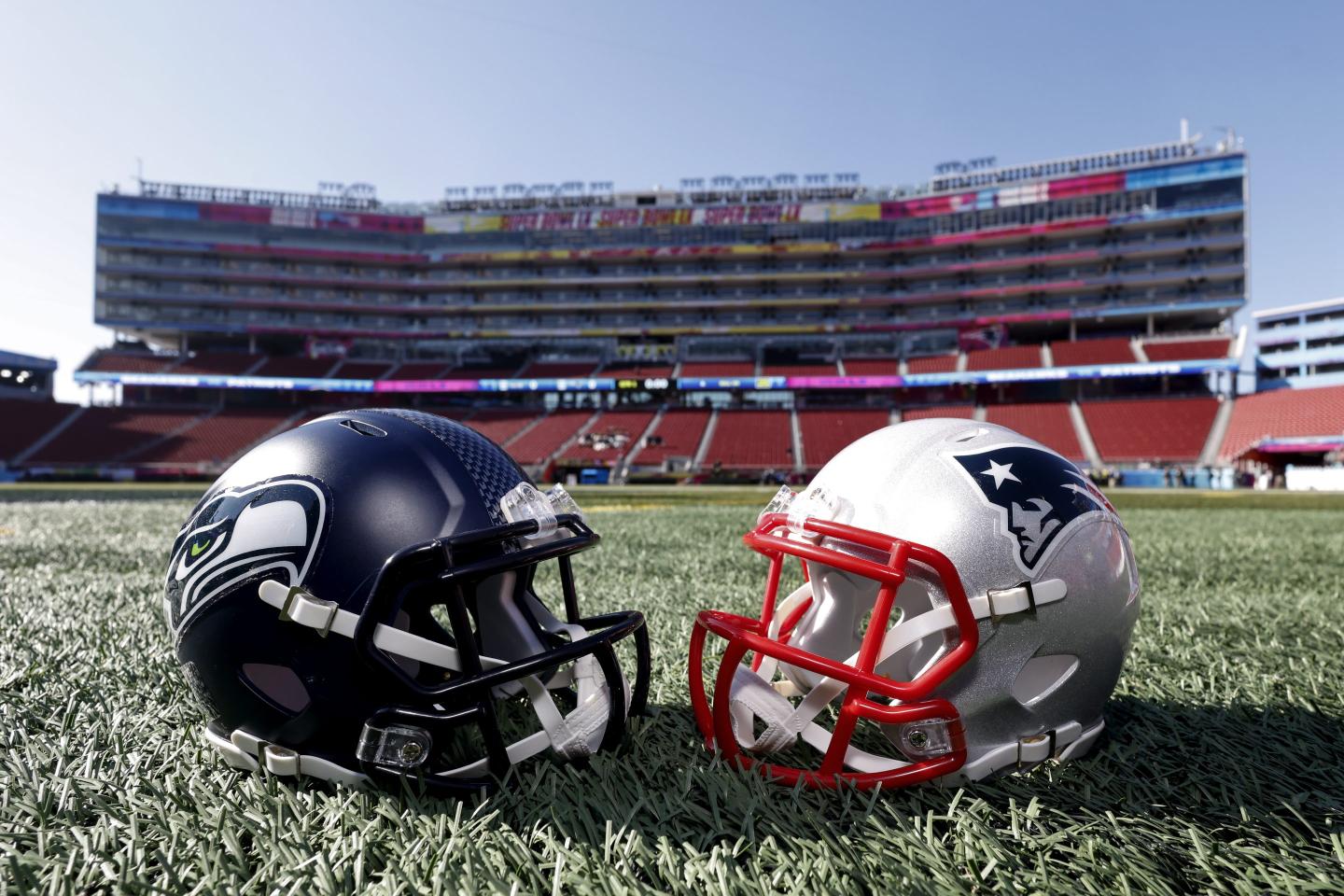
The Super Bowl and culture, it's a changing story.Don Juan Moore/Getty Images

This year’s Super Bowl highlighted a striking reality: companies are willing to spend record sums for cultural relevance they often lack the organizational capability to sustain.

Recommended Video

With viewership projected to rival last year’s 127-plus million U.S. audience, yesterday’s Super Bowl LX reinforced the event’s unrivaled power to concentrate mass attention as the Seahawks and Patriots took the field and Bad Bunny delivered a halftime performance engineered to dominate global conversation. Brands paid NBCUniversal as much as $10 million for just 30 seconds of airtime — the most expensive advertising real estate in the world. Roughly 40 percent of advertisers were first-time Super Bowl participants, underscoring how aggressively companies are pursuing cultural visibility — even as many organizations still struggle to translate cultural moments into sustained growth. 

For a few hours, those investments delivered exactly what marketers hoped for: attention, buzz, and viral engagement.

For most companies, however, the days following the Super Bowl reveal a predictable reality. Cultural momentum fades. Sales lift proves temporary. Leadership teams are left asking why the largest marketing stage in the world rarely produces lasting growth.

The answer has little to do with creative quality or breadth of media reach. It reflects a deeper structural problem inside the enterprise itself. Most companies have not built the capabilities required to convert cultural relevance into durable economic value.

For decades, companies believed growth followed a predictable formula: awareness, consideration, conversion. The marketing funnel made markets — and consumers — feel controllable. That era is over.

The infrastructure that supported it — cookies, stable audiences, and linear media consumption — is collapsing. Attention is now fragmented across creators, platforms, communities, and algorithms. Personalization technologies distribute content with extraordinary precision but rarely create shared and sustained demand at scale.

At the same time, trend cycles have accelerated dramatically, reshaping how consumers engage with brands. They engage from anywhere, exit unpredictably, and return only when meaning — not messaging — pulls them back. What has replaced the marketing funnel is something executives still underestimate: culture.

Culture is no longer a marketing input. It has become the operating system for growth.

Consider where investment is already moving. A November 2025 IAB study projects U.S. creator-economy advertising spend will reach $37 billion this year — growing roughly four times faster than overall media spending. Nearly half of major brands now treat creator partnerships as a mandatory channel rather than an experimental one.

This shift reflects a deeper truth. Consumer demand increasingly forms inside cultural ecosystems that compel participation. A tunnel walk during a major sporting event can sell out products in real time. A streaming franchise that integrates brands into characters, storylines, and social conversation can reset brand relevance overnight. A culturally fluent creator can outperform a multimillion-dollar media buy. The impact is already visible. New Balance’s sustained resurgence — fueled by its integration across sport, streetwear, and creator culture — has helped grow the company into a nearly $8 billion global business, roughly doubling revenue since 2020 while dramatically increasing relevance with Gen Z, illustrating how institutionalized cultural strategy can translate directly into sustained market share gains.

The Super Bowl represents the ultimate test of this reality. It remains the largest cultural stage in American commerce. But it also exposes a widening capability gap. Most companies treat cultural moments as campaigns. The companies winning today treat culture as a core enterprise capability. Brands such as New Balance, American Eagle, Gap Inc., Sephora, Liquid Death, and Spotify do not rely on sporadic cultural hits. They design their organizations to consistently sense cultural signals, create culturally resonant experiences, measure impact in real time, and scale demand across product, commerce, and community ecosystems.

This distinction is fast becoming one of the most consequential competitive fault lines in modern markets. Over the past two decades, most corporate transformation efforts have focused overwhelmingly on cost efficiency, scale-driven mergers and acquisitions, and digital modernization. Those initiatives often improved productivity and shareholder returns but left organizations structurally unprepared for markets shaped by fragmented attention, hyper-accelerated trend cycles, and nonlinear demand creation.

Too many companies remain trapped optimizing outdated growth systems designed for stability, predictability, and media scale rather than relevance, agility, and cultural fluency. This disconnect explains why culture has become a CEO-level priority — and why incumbents with strong legacies increasingly struggle to translate brand awareness into sustained growth.

Winning companies are redesigning their operating models around culture as a strategic growth engine. They are collapsing silos between storytelling and performance, brand and commerce, product and go-to-market execution, and between insight and action. Decision-making cycles are shortening. Teams are organized around fandoms, creators, and cultural moments rather than rigid functional structures or media channels. Data and analytics are tracking cultural signals alongside traditional performance metrics. Some companies are even elevating culture and entertainment leadership into the C-suite, reflecting how central these capabilities have become to growth.

Culture ignites attention. Content sparks participation. Creators accelerate credibility. Commerce validates relevance. Communities amplify meaning — and the cycle repeats. This is the new growth engine. It is what I call the Culture Flywheel — where growth compounds through feedback loops, not linear funnels.

Executives who dismiss culture as intangible or uncontrollable are misreading how today’s markets and consumers behave. Cultural signals are among the most powerful early indicators of future demand. But capturing and acting on those signals requires new capabilities, new ways of working across the enterprise, and often new partnerships.

Culture does not replace strategy. It reshapes how strategy is built and executed. Companies that institutionalize cultural relevance increasingly capture sustained market share.

The irony is that cultural advantage is becoming harder — not easier — to replicate. Artificial intelligence is rapidly commoditizing content production and distribution. What remains scarce is institutionalized cultural intelligence: the organizational ability to consistently interpret cultural signals and convert them into scalable business outcomes.

These capabilities cannot be purchased overnight or outsourced indefinitely. They must be deliberately built into how companies operate. In a business environment where traditional competitive advantages are increasingly fragile, culture is emerging as one of the few durable drivers of enterprise value.

The Super Bowl remains the most expensive megaphone in business. The real strategic question is which companies will still be culturally relevant — and commercially advantaged — long after the final whistle.

The opinions expressed in Fortune.com commentary pieces are solely the views of their authors and do not necessarily reflect the opinions and beliefs of Fortune.

Join us at the Fortune Workplace Innovation Summit May 19–20, 2026, in Atlanta. The next era of workplace innovation is here—and the old playbook is being rewritten. At this exclusive, high-energy event, the world’s most innovative leaders will convene to explore how AI, humanity, and strategy converge to redefine, again, the future of work. Register now.
About the Author
By Christopher Vollmer
See full bioRight Arrow Button Icon

Latest in Commentary

Finance
Lorem ipsum dolor sit amet, consectetur adipiscing elit, sed do eiusmod tempor incididunt ut labore et dolore magna aliqua. Ut enim ad minim veniam
By Fortune Editors
October 20, 2025
Finance
Lorem ipsum dolor sit amet, consectetur adipiscing elit, sed do eiusmod tempor incididunt ut labore et dolore magna aliqua. Ut enim ad minim veniam
By Fortune Editors
October 20, 2025
Finance
Lorem ipsum dolor sit amet, consectetur adipiscing elit, sed do eiusmod tempor incididunt ut labore et dolore magna aliqua. Ut enim ad minim veniam
By Fortune Editors
October 20, 2025
Finance
Lorem ipsum dolor sit amet, consectetur adipiscing elit, sed do eiusmod tempor incididunt ut labore et dolore magna aliqua. Ut enim ad minim veniam
By Fortune Editors
October 20, 2025
Finance
Lorem ipsum dolor sit amet, consectetur adipiscing elit, sed do eiusmod tempor incididunt ut labore et dolore magna aliqua. Ut enim ad minim veniam
By Fortune Editors
October 20, 2025
Finance
Lorem ipsum dolor sit amet, consectetur adipiscing elit, sed do eiusmod tempor incididunt ut labore et dolore magna aliqua. Ut enim ad minim veniam
By Fortune Editors
October 20, 2025

Most Popular

Finance
Lorem ipsum dolor sit amet, consectetur adipiscing elit, sed do eiusmod tempor incididunt ut labore et dolore magna aliqua. Ut enim ad minim veniam
By Fortune Editors
October 20, 2025
Finance
Lorem ipsum dolor sit amet, consectetur adipiscing elit, sed do eiusmod tempor incididunt ut labore et dolore magna aliqua. Ut enim ad minim veniam
By Fortune Editors
October 20, 2025
Finance
Lorem ipsum dolor sit amet, consectetur adipiscing elit, sed do eiusmod tempor incididunt ut labore et dolore magna aliqua. Ut enim ad minim veniam
By Fortune Editors
October 20, 2025
Finance
Lorem ipsum dolor sit amet, consectetur adipiscing elit, sed do eiusmod tempor incididunt ut labore et dolore magna aliqua. Ut enim ad minim veniam
By Fortune Editors
October 20, 2025
Finance
Lorem ipsum dolor sit amet, consectetur adipiscing elit, sed do eiusmod tempor incididunt ut labore et dolore magna aliqua. Ut enim ad minim veniam
By Fortune Editors
October 20, 2025
Finance
Lorem ipsum dolor sit amet, consectetur adipiscing elit, sed do eiusmod tempor incididunt ut labore et dolore magna aliqua. Ut enim ad minim veniam
By Fortune Editors
October 20, 2025
Fortune Secondary Logo
Rankings
  • 100 Best Companies
  • Fortune 500
  • Global 500
  • Fortune 500 Europe
  • Most Powerful Women
  • World's Most Admired Companies
  • See All Rankings
  • Lists Calendar
Sections
  • Finance
  • Fortune Crypto
  • Features
  • Leadership
  • Health
  • Commentary
  • Success
  • Retail
  • Mpw
  • Tech
  • Lifestyle
  • CEO Initiative
  • Asia
  • Politics
  • Conferences
  • Europe
  • Newsletters
  • Personal Finance
  • Environment
  • Magazine
  • Education
Customer Support
  • Frequently Asked Questions
  • Customer Service Portal
  • Privacy Policy
  • Terms Of Use
  • Single Issues For Purchase
  • International Print
Commercial Services
  • Advertising
  • Fortune Brand Studio
  • Fortune Analytics
  • Fortune Conferences
  • Business Development
  • Group Subscriptions
About Us
  • About Us
  • Lists Calendar
  • Press Center
  • Work At Fortune
  • Terms And Conditions
  • Site Map
  • About Us
  • Lists Calendar
  • Press Center
  • Work At Fortune
  • Terms And Conditions
  • Site Map
  • Facebook icon
  • Twitter icon
  • LinkedIn icon
  • Instagram icon
  • Pinterest icon

Latest in Commentary

one piece
CommentaryPersonal Finance
Gen Z is doing (almost) everything right with money—and still getting burned
By Beth KoblinerApril 22, 2026
4 hours ago
beard
CommentaryEducation
Yale asked the right question. Now the rest of higher education owes an answer
By Steve BeardApril 22, 2026
4 hours ago
trump
Commentarynational debt
America’s national debt is heading to 175% of GDP. Here’s why no president—including Trump—has the will to stop it
By Steve H. Hanke and David M. WalkerApril 22, 2026
5 hours ago
edelman
CommentaryHealth
70% of people believe at least one divisive health claim. Science needs a new playbook
By Richard EdelmanApril 22, 2026
6 hours ago
gas
CommentaryMiddle class
The $100 oil shock is hitting the middle class like a margin call
By Katica RoyApril 21, 2026
1 day ago
trump
CommentarySocial Security
What happens if nothing is done to fix Social Security by 2032?
By Martha SheddenApril 21, 2026
1 day ago

Most Popular

The tables have turned: Florida and Texas are the biggest losers in the housing market as Ohio emerges a surprise winner
Real Estate
The tables have turned: Florida and Texas are the biggest losers in the housing market as Ohio emerges a surprise winner
By Sydney LakeApril 21, 2026
21 hours ago
'Something sinister could be happening': FBI looks into dead or missing nuclear and space defense scientists tied to NASA, Blue Origin, and SpaceX
Politics
'Something sinister could be happening': FBI looks into dead or missing nuclear and space defense scientists tied to NASA, Blue Origin, and SpaceX
By Catherina GioinoApril 21, 2026
20 hours ago
$166 billion in tariff refunds just became available, but small businesses may already be at a disadvantage
Law
$166 billion in tariff refunds just became available, but small businesses may already be at a disadvantage
By Sasha RogelbergApril 20, 2026
2 days ago
Jeff Bezos once gave Eva Longoria and the admiral behind Osama bin Laden's capture $100 million—but she says you don't need wealth to give back
Success
Jeff Bezos once gave Eva Longoria and the admiral behind Osama bin Laden's capture $100 million—but she says you don't need wealth to give back
By Orianna Rosa RoyleApril 21, 2026
1 day ago
John Ternus, the man stepping into Tim Cook and Steve Jobs' shoes, is a 25-year Apple veteran with zero LinkedIn posts
C-Suite
John Ternus, the man stepping into Tim Cook and Steve Jobs' shoes, is a 25-year Apple veteran with zero LinkedIn posts
By Kelvin Chan and The Associated PressApril 21, 2026
23 hours ago
‘Something sinister’: What we know about the FBI probe into dead and missing scientists linked to space and military industries
Economy
‘Something sinister’: What we know about the FBI probe into dead and missing scientists linked to space and military industries
By Jim EdwardsApril 22, 2026
5 hours ago

© 2026 Fortune Media IP Limited. All Rights Reserved. Use of this site constitutes acceptance of our Terms of Use and Privacy Policy | CA Notice at Collection and Privacy Notice | Do Not Sell/Share My Personal Information
FORTUNE is a trademark of Fortune Media IP Limited, registered in the U.S. and other countries. FORTUNE may receive compensation for some links to products and services on this website. Offers may be subject to change without notice.