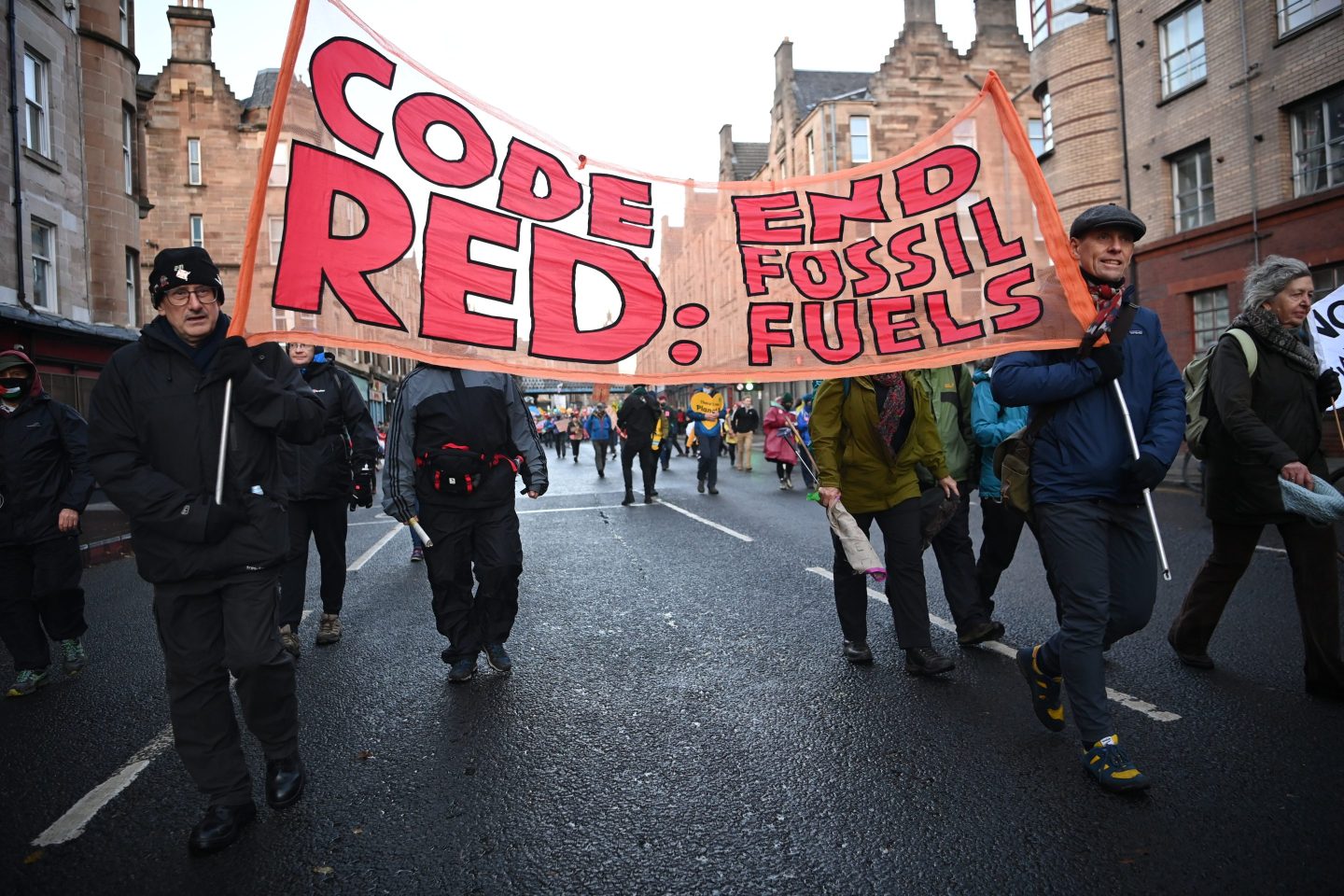
The United Nations has declared the climate crisis a “code red” for humanity, warning that the world must halve its carbon emissions by 2030 to avoid an irreversible rise in temperatures. Nevertheless, U.S. policies and corporate actions are on course for a nearly 3°C increase in global warming over pre-industrial levels —about double the 2015 Paris Agreement’s target of 1.5°C.
That means the crisis is also code red for CEOs. Business as usual is no longer tenable. Switching to renewable electricity will be the biggest contributor to reaching net zero, but it will account for less than a third of what will be required overall, we estimate. With COP26 in Glasgow well underway, now is the time to consider how businesses can not only protect their own bottom lines, but contribute to the global project to confront this global crisis.
There have been many promises and commitments, but action is harder, requiring long term planning, creativity and risk taking, including bold movements towards technologies and business models that may not have yet been invented.
But if companies do not embark rapidly on substantive change, they risk not only contributing to a climate disaster but also missing out on a new, green, front line for competition. They may face costs even higher than those involved in taking action now, including carbon taxes, more expensive financing, and declining demand for non-decarbonized products. Companies that do not move boldly may even lose their entire businesses to this existential threat.
Reaching net zero implies a redesign of a company’s entire business system. That means its own operations—but also how it works with and influences suppliers and customers to revamp the full range of activities needed to create a product or service. Many companies mistakenly assume they cannot transition their business systems to net zero within the normal pressures of sustaining and growing a profitable business. But leaders are already taking action, uncovering ways to transition to net zero profitably by identifying new possibilities in their operations, supply chains, and customer networks.
In fact, the more ambitious a company’s scope, the more prospects it finds, because it develops new perspectives on its future, research we recently conducted with the Climate Group shows. Businesses that invest now can ride a green wave – a rapid, pervasive transformation comparable to the digital, technological innovations that have washed over virtually every industry during the past half century, creating fortunes for the winners.
Opportunities for profitability—and value—will shift as the world moves to net zero. Some businesses that are currently low margin will become strategically valuable once revamped for a low-carbon future. Waste and scrap have long been seen as commodities, but repurposing scrap for another life will help reduce emissions, meaning that industry could undergo a metamorphosis. Energy and infrastructure companies that future-proof electricity grids so that they won’t be knocked out by extreme weather events have a chance to redefine the future of urban power distribution.
Financial services firms that successfully partner with the likely winners in a climate transition have a chance today to build businesses with the Big Green titans of tomorrow. U.S. loans with terms tied to ESG surged by nearly 300% since last year. Demand for sustainable financial products is booming, showing that there is great appetite in the market for both financing green assets (through instruments like green bonds) and playing an invaluable role in helping so-called “brown” companies turn green with sustainability-linked loans and bonds.
Building on this momentum, work is now under way to build climate considerations into the very heart of the mainstream financial system. At the COP26 conference, more than 450 financial institutions responsible for $130 trillion in assets have committed to align their businesses with Net Zero by 2050 under the banner of the Glasgow Financial Alliance for Net Zero. Yet in Europe, which has been at the vanguard on this topic, there is a €4 trillion mismatch between bank lending that aims to be “Paris-aligned” and the reality of where companies receiving that lending are today. As financial institutions seek to bridge this gap and meet their net zero commitments, they must find ways to drive finance to companies in high emitting sectors who have ambitious and credible transition plans.
Companies need to embrace a vision of a low-carbon future and work back. This can help to surface opportunities that they might not otherwise identify. For example, batteries and motors are the most obvious technologies in battery electric vehicles. But some automakers have also started to invest in software: That is where much of the product differentiation in performance and in the driving experience will come from.
Strong organizations establish investments and strategies that stretch decades into the future. Given the need to implement several decades of continuous decarbonization, this way of thinking will become universal. The first movers will be the ones that will determine the rules that others will follow.
Nick Studer is CEO of the Oliver Wyman Group
More must-read commentary published by Fortune:
- A.I. won’t break your company’s culture—and it might even boost morale
- The Fed isn’t likely to let inflation skyrocket, no matter what the doomsayers think
- How to get rid of waste and fraud in U.S. health care
- Tell your favorite celebrities deportation contractors don’t deserve their business
- Our autonomous future depends on educating drivers
Subscribe to Fortune Daily to get essential business stories straight to your inbox each morning.