• Home
  • Latest
  • Fortune 500
  • Finance
  • Tech
  • Leadership
  • Lifestyle
  • Rankings
  • Multimedia
CommentaryHealth Insurance

Health care sourcing for dummies: How to find the best benefits deals

By
Hans Dau
Hans Dau
Down Arrow Button Icon
By
Hans Dau
Hans Dau
Down Arrow Button Icon
October 14, 2021, 7:14 AM ET
Hospitals now have to publish the prices they negotiated with insurers.
Hospitals now have to publish the prices they negotiated with insurers.Apu Gomes—AFP/Getty Images

Health care buying is a mystery to the average business professional, with annual negotiations more reminiscent of the heydays of the De Beers diamond monopoly than the detailed analytical sourcing exercise that a massive expense representing 18% of GDP should warrant.

The typical annual renewal starts with HR professionals giving their insurance brokers a list of employees with basic demographics and the overall health care cost incurred over the last several years. The broker comes back with prices from a handful of insurers for administrative services, projected per employee costs of using their network, and risk products such as stop-loss for smaller employers. Unsurprisingly, most quotes are up vaguely outlined and cluster closely together. Everybody feels good and a deal is done, usually with the incumbent.

Insurers’ key selling point is to give access to their provider network at prices that companies presumably cannot obtain on their own. They also provide transaction processing and compliance services, make payments, interpret contracts, manage disputes, etc. It is fair to ask how well insurers source their network, but until now nobody really knew, as the industry put a tight lid on pricing data, even going to court to keep it secret.

This year the federal government ordered hospitals to begin publishing the actual prices negotiated with insurers. It is now abundantly clear that prices for identical services vary enormously not only by provider and location, but also by negotiator. Variances are huge and not always as expected, with large buyers not always paying the lowest price. Therefore, corporate benefits managers should investigate whether they can do better than their insurer in the subset of procedures that matter most to their covered population.
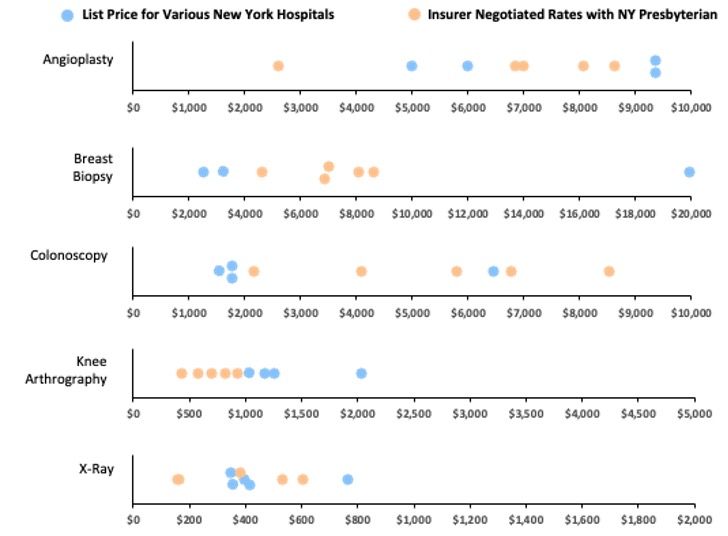
Leaving aside how this could have happened and what to do about it in the long term, we will go with Keynes’ observation that in the long run, we’re all dead, roll up our sleeves, and source health care like any other service.

We suggest the following strategic sourcing steps:

Buyer baseline. Establish a granular basis against which to compare bids and service performance, essentially the list of past and expected medical services by exact location and time preference, pharma, administrative services, and any risk products. Corporate buyers can easily obtain this data from their insurers.

Supplier universe. Understand suppliers’ capabilities by disaggregated value-add components and determine the most competitive players to include in a request for proposal (RFP) process. Even if the intention is to rebundle service components, it is critical that data collection takes place at the most granular level possible and includes all capable providers. 

Pricing basis. Determine the best way to compare prices among suppliers, maximizing information for negotiation, and aligning incentives between the parties. We suggest creating a prioritized list of most frequently used services by location and time preference (i.e., emergency vs. elective) representing roughly 80% of the total expense and obtaining actual “per procedure” prices. The less frequently used items may be priced as discounts off provider’s list prices or Medicare rates.

Request for proposal. The purpose of the RFP is to obtain the data necessary to make an optimal economic decision for the long haul. While tedious, the costs of running an RFP process are quite low compared to the potential benefits, as interesting local capabilities and pricing variances are likely to be discovered. 

Evaluation model. Sourcing health care is a network design problem: Providers deliver services to patients that are time and location dependent, while patients have service level requirements (immediate vs. elective care) and performance preferences (provider choice, co-pays, coverage limits, etc.). The goal is to create an employer-specific network of providers that is optimized for cost and employee satisfaction, rather than renting the generic national network of an insurance company.

HHS rules regarding pricing transparency and a dispersed post-COVID workforce have finally triggered the normalization of the health care services marketplace. It will take the better part of a decade to fully materialize, but leading employers of all sizes can take advantage of the shifting dynamics now. While it seems analytically complex, the rewards are very substantial, and the investment is well worth it.

Hans Dau is the CEO of the Mitchell Madison Group

More must-read commentary published by Fortune:

  • Pay streaming is about to upend salaries as we know them
  • Health care sourcing for dummies: How to find the best benefits deals
  • By standing up to China, Australia may end up standing alone
  • The tricky art of valuing next-gen media companies
  • Congress must reauthorize the Violence Against Women Act, and my company will help make it happen

Subscribe to Fortune Daily to get essential business stories straight to your inbox each morning.
About the Author
By Hans Dau
See full bioRight Arrow Button Icon

Latest in Commentary

Finance
Lorem ipsum dolor sit amet, consectetur adipiscing elit, sed do eiusmod tempor incididunt ut labore et dolore magna aliqua. Ut enim ad minim veniam
By Fortune Editors
October 20, 2025
Finance
Lorem ipsum dolor sit amet, consectetur adipiscing elit, sed do eiusmod tempor incididunt ut labore et dolore magna aliqua. Ut enim ad minim veniam
By Fortune Editors
October 20, 2025
Finance
Lorem ipsum dolor sit amet, consectetur adipiscing elit, sed do eiusmod tempor incididunt ut labore et dolore magna aliqua. Ut enim ad minim veniam
By Fortune Editors
October 20, 2025
Finance
Lorem ipsum dolor sit amet, consectetur adipiscing elit, sed do eiusmod tempor incididunt ut labore et dolore magna aliqua. Ut enim ad minim veniam
By Fortune Editors
October 20, 2025
Finance
Lorem ipsum dolor sit amet, consectetur adipiscing elit, sed do eiusmod tempor incididunt ut labore et dolore magna aliqua. Ut enim ad minim veniam
By Fortune Editors
October 20, 2025
Finance
Lorem ipsum dolor sit amet, consectetur adipiscing elit, sed do eiusmod tempor incididunt ut labore et dolore magna aliqua. Ut enim ad minim veniam
By Fortune Editors
October 20, 2025

Most Popular

Finance
Lorem ipsum dolor sit amet, consectetur adipiscing elit, sed do eiusmod tempor incididunt ut labore et dolore magna aliqua. Ut enim ad minim veniam
By Fortune Editors
October 20, 2025
Finance
Lorem ipsum dolor sit amet, consectetur adipiscing elit, sed do eiusmod tempor incididunt ut labore et dolore magna aliqua. Ut enim ad minim veniam
By Fortune Editors
October 20, 2025
Finance
Lorem ipsum dolor sit amet, consectetur adipiscing elit, sed do eiusmod tempor incididunt ut labore et dolore magna aliqua. Ut enim ad minim veniam
By Fortune Editors
October 20, 2025
Finance
Lorem ipsum dolor sit amet, consectetur adipiscing elit, sed do eiusmod tempor incididunt ut labore et dolore magna aliqua. Ut enim ad minim veniam
By Fortune Editors
October 20, 2025
Finance
Lorem ipsum dolor sit amet, consectetur adipiscing elit, sed do eiusmod tempor incididunt ut labore et dolore magna aliqua. Ut enim ad minim veniam
By Fortune Editors
October 20, 2025
Finance
Lorem ipsum dolor sit amet, consectetur adipiscing elit, sed do eiusmod tempor incididunt ut labore et dolore magna aliqua. Ut enim ad minim veniam
By Fortune Editors
October 20, 2025
Rankings
  • 100 Best Companies
  • Fortune 500
  • Global 500
  • Fortune 500 Europe
  • Most Powerful Women
  • Future 50
  • World’s Most Admired Companies
  • See All Rankings
Sections
  • Finance
  • Leadership
  • Success
  • Tech
  • Asia
  • Europe
  • Environment
  • Fortune Crypto
  • Health
  • Retail
  • Lifestyle
  • Politics
  • Newsletters
  • Magazine
  • Features
  • Commentary
  • Mpw
  • CEO Initiative
  • Conferences
  • Personal Finance
  • Education
Customer Support
  • Frequently Asked Questions
  • Customer Service Portal
  • Privacy Policy
  • Terms Of Use
  • Single Issues For Purchase
  • International Print
Commercial Services
  • Advertising
  • Fortune Brand Studio
  • Fortune Analytics
  • Fortune Conferences
  • Business Development
About Us
  • About Us
  • Editorial Calendar
  • Press Center
  • Work At Fortune
  • Diversity And Inclusion
  • Terms And Conditions
  • Site Map
  • Facebook icon
  • Twitter icon
  • LinkedIn icon
  • Instagram icon
  • Pinterest icon

© 2026 Fortune Media IP Limited. All Rights Reserved. Use of this site constitutes acceptance of our Terms of Use and Privacy Policy | CA Notice at Collection and Privacy Notice | Do Not Sell/Share My Personal Information
FORTUNE is a trademark of Fortune Media IP Limited, registered in the U.S. and other countries. FORTUNE may receive compensation for some links to products and services on this website. Offers may be subject to change without notice.


Most Popular

placeholder alt text
Future of Work
Ford CEO has 5,000 open mechanic jobs with up to 6-figure salaries from the shortage of manually skilled workers: 'We are in trouble in our country'
By Marco Quiroz-GutierrezJanuary 31, 2026
1 day ago
placeholder alt text
Economy
'I just don't have a good feeling about this': Top economist Claudia Sahm says the economy quietly shifted and everyone's now looking at the wrong alarm
By Eleanor PringleJanuary 31, 2026
2 days ago
placeholder alt text
Success
Ryan Serhant starts work at 4:30 a.m.—he says most people don’t achieve their dreams because ‘what they really want is just to be lazy’
By Preston ForeJanuary 31, 2026
1 day ago
placeholder alt text
Success
Alexis Ohanian walked out of the LSAT 20 minutes in, went to a Waffle House, and decided he was 'gonna invent a career.' He founded Reddit
By Preston ForeJanuary 31, 2026
1 day ago
placeholder alt text
Big Tech
The Chan Zuckerberg Initiative cut 70 jobs as the Meta CEO’s philanthropy goes all in on mission to 'cure or prevent all disease'
By Sydney LakeFebruary 1, 2026
11 hours ago
placeholder alt text
Economy
Meet the first CEO of the IRS: A Jamie Dimon protege facing a $5 trillion test this tax season
By Shawn TullyJanuary 31, 2026
1 day ago

Latest in Commentary

dewar
CommentaryLeadership
The AI adoption story is haunted by fear as today’s efficiency programs look like tomorrow’s job cuts. Leaders need to win workers’ trust
By Carolyn DewarFebruary 1, 2026
8 hours ago
CommentaryLeadership
How Trump helped Harvard: 5 ‘Crimson’ leadership lessons on standing up to bullies 
By Jeffrey Sonnenfeld, Steven Tian and Stephen HenriquesFebruary 1, 2026
11 hours ago
Economygeopolitics
BRICS could become a new pillar of global governance—if its rapid growth doesn’t erode its newfound clout
By Brian WongJanuary 31, 2026
23 hours ago
taxi
Commentaryregulation
America’s AI regulatory patchwork is crushing startups and helping China
By James Richardson and Eric TanenblattJanuary 30, 2026
2 days ago
EuropeLetter from London
Struggling to remain relevant during the AI watercooler chat? Talk about your latest ‘new collar’ hire
By Kamal AhmedJanuary 29, 2026
3 days ago
trump
Commentaryregulation
Trump is driving capital out of capitalism
By Andrew BeharJanuary 29, 2026
3 days ago