• Home
  • Latest
  • Fortune 500
  • Finance
  • Tech
  • Leadership
  • Lifestyle
  • Rankings
  • Multimedia
CommentaryAustralia

By standing up to China, Australia may end up standing alone

By
James Laurenceson
James Laurenceson
Down Arrow Button Icon
By
James Laurenceson
James Laurenceson
Down Arrow Button Icon
October 13, 2021, 8:30 PM ET
James Laurenceson writes that Canberra sees suffering economic repercussions for “standing up to China” as a badge of honor—and that such a decision would likely lead to Australia standing alone, pundit plaudits aside.
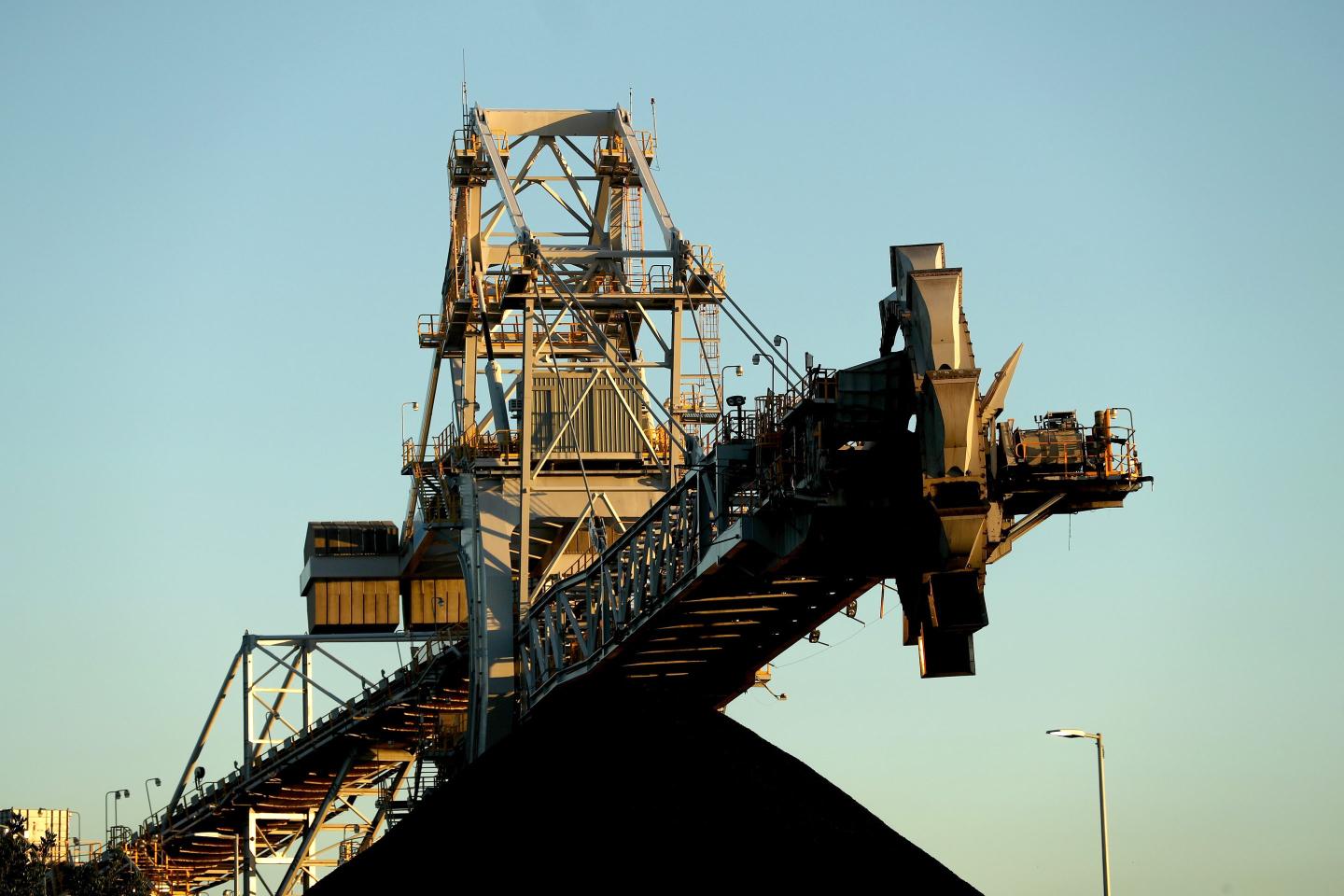
James Laurenceson writes that Canberra sees suffering economic repercussions for “standing up to China” as a badge of honor—and that such a decision would likely lead to Australia standing alone, pundit plaudits aside. Brendon Thorne—Bloomberg/Getty Images

Earlier this month, with great fanfare, Washington, London, and Canberra announced the AUKUS pact: a security arrangement meant to confront China. The deal was hailed as a “historic opportunity” by Australian Prime Minister Scott Morrison “to protect shared values and promote security and prosperity in the Indo-Pacific region.”

As the U.S.-China strategic rivalry intensifies, no other capital in the Asia-Pacific region has exceeded Canberra’s gumption in backing Washington, as well as trying to rally others to the cause. Security arrangements like the AUKUS deal might imply that these efforts are paying off, as America strongly supports Canberra’s efforts as relations with China worsen.

But the realm of trade tells a more complicated story. Canberra’s handling of superpower relations has provided a cost-free lesson for those elsewhere. Australia is the starkest example of a dilemma all countries in the region face: relying on China for economic growth, yet on the United States for security. Canberra’s choices reveal the mistakes behind a mindset that regards suffering economic repercussions for “standing up to China” as a badge of honor—and how a country that takes such an approach would likely stand alone, pundit plaudits aside.

Australia’s tilt against China began in the second half of 2016. But for the most part, Beijing limited its displeasure to the diplomatic realm. The last time a leader’s visit took place was in March 2017, and ministerial-level visits were few and far between.

This changed in April 2020 when Australian political leaders conveyed a distinct impression of coordinating with the Trump administration to attack China over the COVID-19 pandemic.

Beijing unleashed a campaign of trade disruption that now affects around a dozen Australian exports—everything from coal to wine.

Despite local boosters of Canberra’s “crazy-brave” approach emphasizing that officials in Tokyo and New Delhi have issued joint statements with Canberra “opposing coercive economic practices,” neither Tokyo nor New Delhi were prepared to even confront China by name.  

Indonesia, the indisputable center of economic and strategic gravity in Southeast Asia, declined altogether to sign up to any reference to economic coercion.

The fact is that plenty of capitals have serious concerns about China’s behavior under President Xi Jinping and have far more serious direct disputes with Beijing than does Canberra. But few appear convinced that the Australian government’s approach is preferable to a strategy of cautious hedging.

And why would they be?

Australia is now an outlier in having no senior political dialogue with China and in the breadth of trade disruption it is experiencing. 

In June, Singapore Prime Minister Lee Hsien Loong delivered pointed remarks while standing alongside Prime Minister Morrison at a joint press conference: “There will be rough spots [with China]…and you have to deal with that…But deal with them as issues in a partnership which you want to keep going and not issues which add up to an adversary which you are trying to suppress.”

The region also hasn’t missed that while U.S. Secretary of State Antony Blinken, insisted in May that the United States “will not leave Australia alone on the field,” Washington has yet to show any interest in bearing a cost to make good on that promise.

In March, the acting U.S. ambassador in Canberra, Mike Goldman, cheered Australia on: “I’d just say keep on doing what you’re doing but with confidence that the United States and other like-minded democracies see an interest in having Australia succeed.” Yet when presented with the latest trade data showing American companies were exporting more commodities to China, filling the gap left by barred Australian imports, the U.S. embassy declined to comment.

Six months after White House coordinator for the Indo-Pacific Kurt Campbell insisted that the U.S. was “not prepared to improve relations” with China so long as Australia was being hit with trade attacks, U.S. Commerce Secretary Gina Raimondo is now talking up increased trade with China: “It’s just an economic fact. I actually think robust commercial engagement will help to mitigate any potential tensions.”

After an eight-month review of the U.S.-China trade relationship, this week the U.S. Trade Representative, Katherine Tai, announced that the Biden administration was striving for a “recoupling” rather than decoupling. She said her intention was to advance this agenda and tackle ongoing U.S. concerns through direct dialogue and negotiations with the Chinese side.

Meanwhile, Australia’s trade minister, Dan Tehan, has not been able to secure even a phone call with his counterpart in Beijing since he took on the portfolio in December last year.

Ambassador Tai also emphasized that enforcement of the Phase One deal the Trump administration struck with Beijing in January 2020 was a priority. This deal contained numerous Chinese commitments to purchase American goods, putting producers in Australia at an unfair disadvantage.

To be clear: None of this excuses or deflects attention away from Beijing’s bad behavior toward Australia. And, for its part, Washington’s support for American producers and households is exactly what one should expect.

As Michèle Flournoy, a former senior Clinton and Obama administration official, stated last month: “I’m not sure that the White House can control Napa Valley exports of wines to China.”

This complicated balance is well understood in Australia’s region. The one exception, perhaps, is Canberra.

Professor James Laurenceson is director of the Australia-China Relations Institute at the University of Technology Sydney. 

More must-read commentary published by Fortune:

  • Pay streaming is about to upend salaries as we know them
  • Healthcare sourcing for dummies: How to find the best benefits deals
  • By standing up to China, Australia may end up standing alone
  • The tricky art of valuing next-gen media companies
  • Congress must reauthorize the Violence Against Women Act, and my company will help make it happen

Subscribe to Fortune Daily to get essential business stories delivered straight to your inbox each morning.

About the Author
By James Laurenceson
See full bioRight Arrow Button Icon

Latest in Commentary

Finance
Lorem ipsum dolor sit amet, consectetur adipiscing elit, sed do eiusmod tempor incididunt ut labore et dolore magna aliqua. Ut enim ad minim veniam
By Fortune Editors
October 20, 2025
Finance
Lorem ipsum dolor sit amet, consectetur adipiscing elit, sed do eiusmod tempor incididunt ut labore et dolore magna aliqua. Ut enim ad minim veniam
By Fortune Editors
October 20, 2025
Finance
Lorem ipsum dolor sit amet, consectetur adipiscing elit, sed do eiusmod tempor incididunt ut labore et dolore magna aliqua. Ut enim ad minim veniam
By Fortune Editors
October 20, 2025
Finance
Lorem ipsum dolor sit amet, consectetur adipiscing elit, sed do eiusmod tempor incididunt ut labore et dolore magna aliqua. Ut enim ad minim veniam
By Fortune Editors
October 20, 2025
Finance
Lorem ipsum dolor sit amet, consectetur adipiscing elit, sed do eiusmod tempor incididunt ut labore et dolore magna aliqua. Ut enim ad minim veniam
By Fortune Editors
October 20, 2025
Finance
Lorem ipsum dolor sit amet, consectetur adipiscing elit, sed do eiusmod tempor incididunt ut labore et dolore magna aliqua. Ut enim ad minim veniam
By Fortune Editors
October 20, 2025

Most Popular

Finance
Lorem ipsum dolor sit amet, consectetur adipiscing elit, sed do eiusmod tempor incididunt ut labore et dolore magna aliqua. Ut enim ad minim veniam
By Fortune Editors
October 20, 2025
Finance
Lorem ipsum dolor sit amet, consectetur adipiscing elit, sed do eiusmod tempor incididunt ut labore et dolore magna aliqua. Ut enim ad minim veniam
By Fortune Editors
October 20, 2025
Finance
Lorem ipsum dolor sit amet, consectetur adipiscing elit, sed do eiusmod tempor incididunt ut labore et dolore magna aliqua. Ut enim ad minim veniam
By Fortune Editors
October 20, 2025
Finance
Lorem ipsum dolor sit amet, consectetur adipiscing elit, sed do eiusmod tempor incididunt ut labore et dolore magna aliqua. Ut enim ad minim veniam
By Fortune Editors
October 20, 2025
Finance
Lorem ipsum dolor sit amet, consectetur adipiscing elit, sed do eiusmod tempor incididunt ut labore et dolore magna aliqua. Ut enim ad minim veniam
By Fortune Editors
October 20, 2025
Finance
Lorem ipsum dolor sit amet, consectetur adipiscing elit, sed do eiusmod tempor incididunt ut labore et dolore magna aliqua. Ut enim ad minim veniam
By Fortune Editors
October 20, 2025
Fortune Secondary Logo
Rankings
  • 100 Best Companies
  • Fortune 500
  • Global 500
  • Fortune 500 Europe
  • Most Powerful Women
  • World's Most Admired Companies
  • See All Rankings
  • Lists Calendar
Sections
  • Finance
  • Fortune Crypto
  • Features
  • Leadership
  • Health
  • Commentary
  • Success
  • Retail
  • Mpw
  • Tech
  • Lifestyle
  • CEO Initiative
  • Asia
  • Politics
  • Conferences
  • Europe
  • Newsletters
  • Personal Finance
  • Environment
  • Magazine
  • Education
Customer Support
  • Frequently Asked Questions
  • Customer Service Portal
  • Privacy Policy
  • Terms Of Use
  • Single Issues For Purchase
  • International Print
Commercial Services
  • Advertising
  • Fortune Brand Studio
  • Fortune Analytics
  • Fortune Conferences
  • Business Development
  • Group Subscriptions
About Us
  • About Us
  • Press Center
  • Work At Fortune
  • Terms And Conditions
  • Site Map
  • About Us
  • Press Center
  • Work At Fortune
  • Terms And Conditions
  • Site Map
  • Facebook icon
  • Twitter icon
  • LinkedIn icon
  • Instagram icon
  • Pinterest icon

Latest in Commentary

francis
CommentaryFlorida
Former Miami Mayor Francis Suarez: Why I’m joining Stephen Ross and Ken Griffin in betting big on ambitious business leaders
By Francis SuarezMay 1, 2026
5 hours ago
valerie
CommentaryLayoffs
Tesla’s former HR chief: the AI layoff panic Is built on a false premise—here’s what most workers need to know
By Valerie Capers WorkmanMay 1, 2026
6 hours ago
tamas
CommentaryPolymarket
SEON CEO: Prediction markets can forecast the future. Can they survive their own manipulation problem?
By Tamas KadarMay 1, 2026
9 hours ago
sundar
Commentary250 Years of Innovation
America at 250: immigration and the making of an innovative nation
By Nasser KazeminyMay 1, 2026
11 hours ago
Derek Kilmer
CommentaryEconomics
The U.S. economy is booming — just not where 50 million Americans live
By Derek KilmerMay 1, 2026
11 hours ago
hegseth
CommentaryMilitary
America shot its arsenal empty in 2 wars. Now it needs Beijing’s permission to reload
By Steve H. Hanke and Jeffrey WengApril 30, 2026
1 day ago

Most Popular

China dominates the world's lithium supply. The U.S. just found 328 years' worth in its own backyard
North America
China dominates the world's lithium supply. The U.S. just found 328 years' worth in its own backyard
By Jake AngeloApril 30, 2026
1 day ago
Accenture's Julie Sweet blew up 50 years of company history. She says the hardest part is still ahead
Conferences
Accenture's Julie Sweet blew up 50 years of company history. She says the hardest part is still ahead
By Nick LichtenbergApril 29, 2026
2 days ago
The U.S. economy is booming — just not where 50 million Americans live
Commentary
The U.S. economy is booming — just not where 50 million Americans live
By Derek KilmerMay 1, 2026
11 hours ago
Scott Bessent on financial literacy: 'it drives me crazy' to see young men in blue-collar construction jobs playing the lottery
Personal Finance
Scott Bessent on financial literacy: 'it drives me crazy' to see young men in blue-collar construction jobs playing the lottery
By Fatima Hussein and The Associated PressMay 1, 2026
6 hours ago
Apple cofounder Ronald Wayne—whose stake would be worth up to $400 billion had he not sold it in 1976—says that at 91, he has no regrets
Success
Apple cofounder Ronald Wayne—whose stake would be worth up to $400 billion had he not sold it in 1976—says that at 91, he has no regrets
By Preston ForeApril 27, 2026
4 days ago
Exclusive: America's largest Black-owned bank launches podcast with mission to unlock hidden shame holding back generational wealth
Banking
Exclusive: America's largest Black-owned bank launches podcast with mission to unlock hidden shame holding back generational wealth
By Nick LichtenbergApril 29, 2026
2 days ago

© 2026 Fortune Media IP Limited. All Rights Reserved. Use of this site constitutes acceptance of our Terms of Use and Privacy Policy | CA Notice at Collection and Privacy Notice | Do Not Sell/Share My Personal Information
FORTUNE is a trademark of Fortune Media IP Limited, registered in the U.S. and other countries. FORTUNE may receive compensation for some links to products and services on this website. Offers may be subject to change without notice.