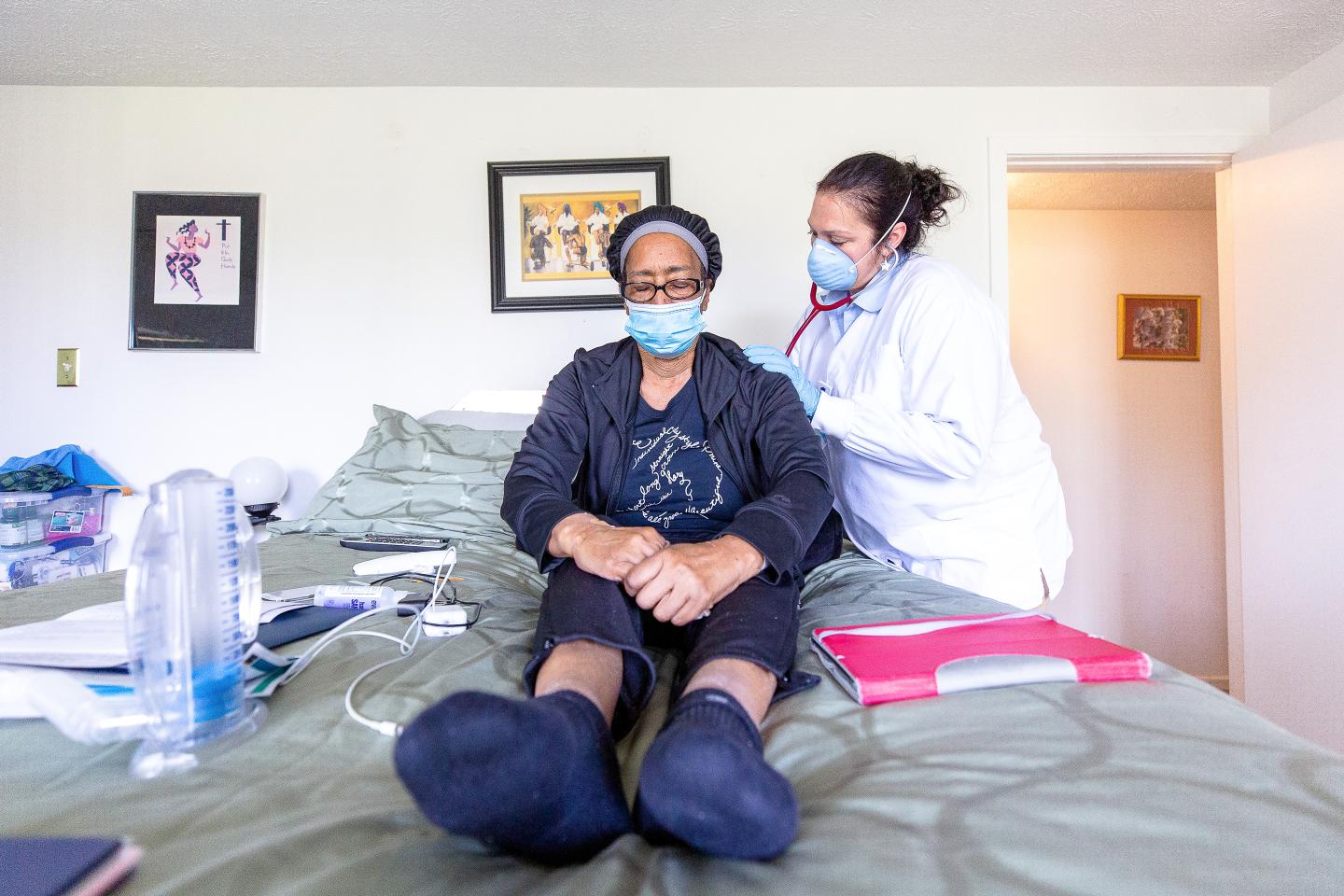
While the top health focus today is on the COVID-19 pandemic, heart disease remains the leading cause of death for all Americans. Cardiovascular disease and its risk factors (high blood pressure, diabetes, and obesity) disproportionately affect communities of color, rural populations, and other underserved groups. For example, Black Americans experience a 30% higher cardiovascular disease mortality rate than non-Hispanic white Americans, and the prevalence of obesity is highest among Black and Hispanic adults in the U.S. Rural communities experience higher rates of risk factors such as inadequate physical activity, tobacco use, obesity, and hypertension, which are associated with poor cardiovascular outcomes.
COVID-19 and its disproportionate consequences have exposed economic and health equity gaps and have surfaced the need for a national dialogue and a commitment to fundamentally reform the health system to equitably benefit all underrepresented and underserved communities.
This past week, the American Heart Association (AHA) issued an advisory that identifies structural racism as a barrier to improving the cardiovascular health of all people and declared structural racism as a fundamental driver of poor health and premature death. Earlier this year, with the generous support of numerous donors, the AHA created the Bernard J. Tyson Impact Fund to advance community-based interventions to reduce and eliminate health disparities. This long-standing commitment to heart health equity and community health was also highlighted in the 2015 Scientific Statement, where the AHA concluded that the circumstances in which people grow up, live, and work all contribute to cardiovascular and overall health.
For years, IBM has been leading an effort with health institutions to prioritize what’s known in technology circles as “TechQuity”—advancing fair, transparent, ethical, and equitable use of technology to achieve equity for health disparity populations. Earlier this year, IBM led an industrywide commitment to racial justice and responsible technology policies as the first major technology company to prohibit the use or export of facial recognition for mass surveillance, racial profiling, or violations of basic human rights and freedoms. These efforts are consistent with IBM’s perspective that there is reputational and business value in being a leader on issues of race and equity.
Most recently, IBM continued to advance health disparities science by publishing new findings on the impact of digital health in reducing cardiovascular health disparities, especially for conditions such as hypertension and heart failure. IBM is collaborating with leading academic medical centers like Brigham and Women’s Hospital, Vanderbilt University Medical Center, and Johns Hopkins University to address TechQuity. The collaborations aim to identify strategies to advance the need to collect race, ethnicity, and other health disparities and equity measures and produce targeted equity dashboards in collaboration with employers, health plans, and health systems.
We are encouraged by the growing dialogue surrounding health equity. And yet, we must accelerate the push for change. How? By addressing three core areas: teams, trust, and technology.
Teams: Building diverse talent and coalitions
Black and Hispanic workers are underrepresented in science, technology, engineering, and math (STEM) jobs in the U.S. It is imperative that we recruit, mentor, develop, and support students from underrepresented racial and ethnic groups to STEM careers to become the researchers, data scientists, primary care physicians, nurses, pharmacists, and community health workers of tomorrow.
As the use of technology becomes more relevant and widespread during the pandemic and future post-pandemic period, it is essential that technology and health organizations look in the mirror and look like the populations they serve, especially underserved and underrepresented communities. Having diversity in the teams that design technology solutions, develop A.I. algorithms, and deliver health and public health can help to assure benefits, impact, and accountability for all.
We must also build diverse coalitions to support the community. Health is a team sport. Partnerships across the health ecosystem, including providers, academia, employers, health plans, technology organizations, life sciences companies, public health agencies, government and municipal leaders, the media, and even community members can and should seek meaningful collective action to pursue health equity—to help reduce disease and mortality disparities. Greater collaboration and a commitment from all stakeholders to promote the health of their residents, employees, patients, members, and volunteers can help accelerate progress and serve as a model for change.
Trust: Embracing all communities
Building trust within communities of color and socially disadvantaged rural communities is an important step for successful diverse coalitions. Collecting, measuring, and reporting data on race, ethnicity, other sociodemographic factors (such as country of origin, primary language, immigration status, sexual orientation, and identity) and essential social determinants of health (educational attainment and income, for example) is imperative for advancing health equity.
Current cardiovascular disease data does not adequately characterize populations who are most impacted by heart disease. As a result, many important mechanisms for advancing treatments, including clinical trials for cardiovascular therapies, are not sufficiently representative of affected populations with implications for safety, efficacy, and trust in treatments. We must collaborate to collect data that is more relevant to historically marginalized populations, including social, environmental, and behavioral data.
Trust is also built through accountability. Hospitals and health systems, including those recognized by the AHA’s Get With the Guidelines registry and the Fortune/IBM Watson Health 50 Top Cardiovascular Hospitals list (which was released this morning), are trusted and essential pillars of their communities and have meaningful roles as change agents. Including equity in the evaluations of hospital performance generally, including cardiovascular hospital performance, is a necessary step in building community accountability. A recent collaboration between IBM Watson Health and the Johns Hopkins Bloomberg School of Public Health’s Bloomberg American Health Initiative and Center for Health Equity aims to identify meaningful measures of community health and equity for future rankings of hospitals and health systems.
Technology: Applying analytics and A.I.
Analytics and A.I. have the potential to provide powerful insights to help researchers, clinicians, policy-makers, and even communities help better predict and prevent illness, including cardiovascular disease. But the insights are only as good as the data used to derive them.
For example, if health databases do not adequately reflect all population groups—and accurately identify them—the insights derived by analytics and A.I. algorithms will be flawed. As we implement A.I. solutions in health, it is critical to ensure the highest levels of integrity, including extensive testing, monitoring, and evaluation of these tools with an emphasis on their impact on diverse populations. We must also ensure that we are supplying researchers, providers, payers, life sciences companies, and governmental entities utilizing A.I. with the tools they need to increase accountability for health equity through the use of robust dashboards.
Now more than ever, a united front is building in an effort to mitigate the unconscionable and unacceptable disparities in health among certain segments of the population. The AHA and IBM are organizations that are committed to addressing structural racism and health disparities to help accelerate our health equity efforts. As we do our work, diverse teams, trust, and leveraged technology will be among the building blocks to help achieve equity for all communities and broader society.
Kyu Rhee is vice president and chief health officer at IBM.
Irene Dankwa-Mullan is chief health equity officer at IBM Watson Health.
Eduardo Sanchez is chief medical officer for prevention at the American Heart Association.
All three authors are public health and primary care physicians.
More opinion from Fortune:
- Why business shouldn’t want a divided government under Biden
- In defense of pollsters
- If we don’t vaccinate the world quickly, all our COVID efforts will be a waste
- Purpose, or “purpose-washing”? A crossroads for business leaders
- Black women are missing from corporate leadership. The problem begins with the pipeline