• Home
  • Latest
  • Fortune 500
  • Finance
  • Tech
  • Leadership
  • Lifestyle
  • Rankings
  • Multimedia

Trendingnow

1

AI CEOs from OpenAI, Anthropic, and Microsoft set aside their rivalry to warn Congress AI is making it too easy to design and create bioweapons

2

MacKenzie Scott's approach to her $26 billion giving spree was inspired by a book she read in college about writing

3

Social Security faces a 24% cut in 2032—that's a $345 billion hit to retirees nationwide, watchdog says

1

AI CEOs from OpenAI, Anthropic, and Microsoft set aside their rivalry to warn Congress AI is making it too easy to design and create bioweapons

2

MacKenzie Scott's approach to her $26 billion giving spree was inspired by a book she read in college about writing

3

Social Security faces a 24% cut in 2032—that's a $345 billion hit to retirees nationwide, watchdog says
CommentaryCalifornia

I’ve sold property on California’s Central Coast for decades. The buyers chasing ranch and winery estates are after more than a lifestyle

By
Lindsey Harn
Lindsey Harn
Down Arrow Button Icon
By
Lindsey Harn
Lindsey Harn
Down Arrow Button Icon
June 6, 2026, 8:30 AM ET
Lindsey Harn has sold real estate on California's Central Coast for nearly two decades and is consistently ranked among the top agents in California. She specializes in lifestyle properties — ranch, equestrian, and winery estates — through the Lindsey Harn Group in San Luis Obispo County.
bs
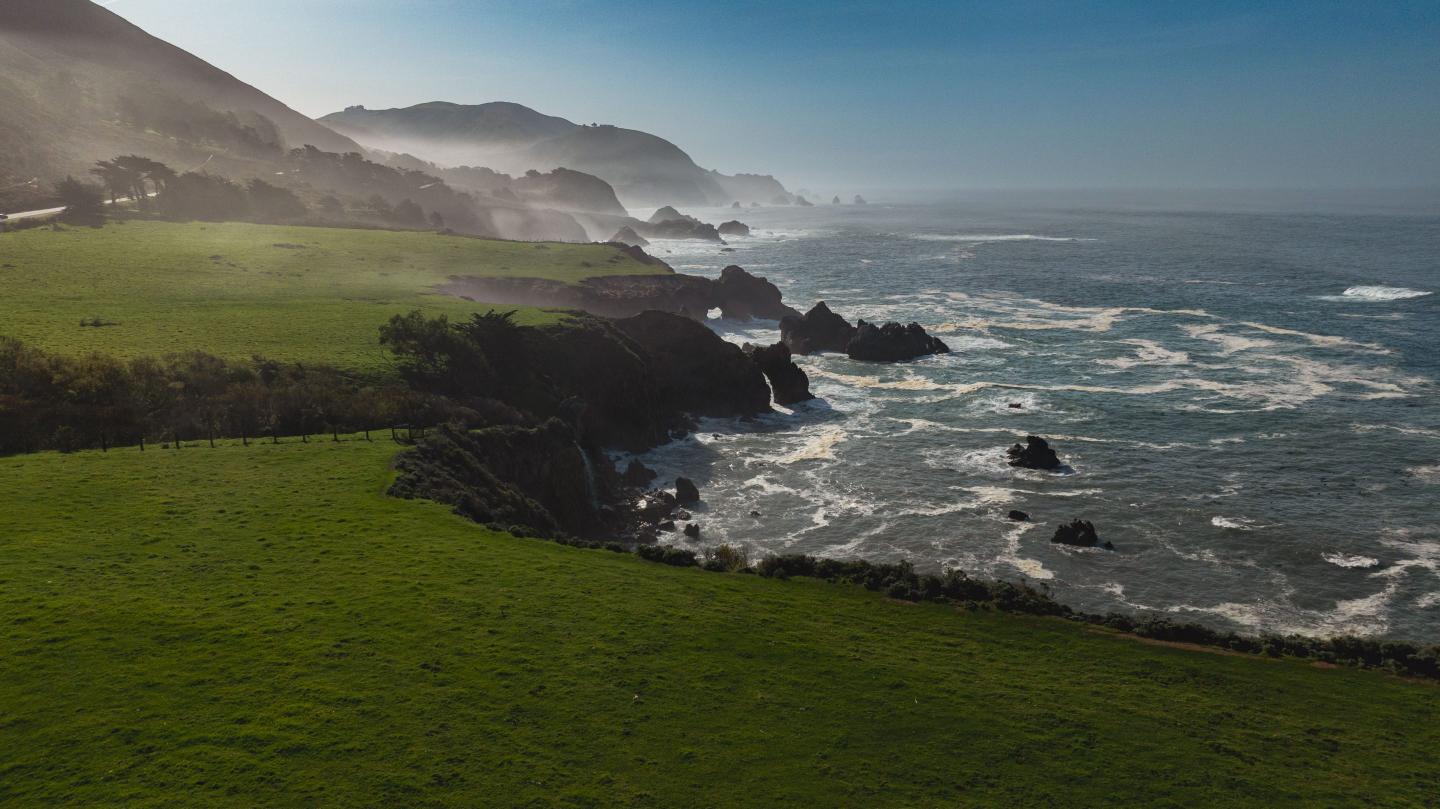
Buyers on the central coast of California are seeking something different.Joe Sohm/Visions of America/Universal Images Group via Getty Images

Ten years ago, I could have told you exactly who bought a working ranch or a winery estate on California’s Central Coast. A short list: retiring executives who wanted a hobby to show for forty years of building something; investors who ran the numbers on wine tourism; occasionally, someone whose inherited wealth made the whole thing more trophy than plan.

Recommended Video

What I couldn’t have told you is what I see now. The buyers showing up today are different in almost every way that matters, and what they’re actually after is something the real estate industry hasn’t quite found the vocabulary to describe yet.

I’ve been selling property in San Luis Obispo County for close to two decades. For most of that time, the ranch and winery segment of this market was a niche within a niche — beautiful properties that moved slowly, appealed to a narrow slice of buyers, and sat comfortably in a category most agents filed under “retirement project” or “passion purchase.” The mainstream market paid it little attention. Neither did most buyers under sixty.

That’s not what I’m seeing anymore.

The Secondary Home That Became the Only Home

The shift started during the pandemic, the way most people understand it. Buyers who’d been eyeing Central Coast properties for years suddenly had the flexibility, and the urgency, to act. Remote work removed the leash that kept them tethered to San Francisco or Los Angeles. The calculations changed overnight.

But most analysts stopped the story there: pandemic migration, temporary dislocation, people who’d eventually drift back. What actually happened is that a meaningful portion of those buyers never recalibrated. The property that was supposed to be a retreat became the primary residence. The lifestyle that was supposed to be a weekend option became the actual life. And that redefinition — of where someone lives versus where they occasionally escape to — turned out to be permanent in ways the broader market has been slow to absorb.

Rural purchase mortgage applications jumped nearly 80 percent above their pre-pandemic baseline in the summer of 2020, according to Fannie Mae data, and they’ve remained elevated ever since, well into a rate environment that cooled demand almost everywhere else. That’s not a blip. That’s a reset.

What “Luxury” Got Wrong

The real estate industry spent years defining luxury by a familiar set of signals: square footage, finishes, zip code, proximity to the right things. The Central Coast never fit that template neatly, which meant it was perpetually undervalued by the conventional framework. When buyers started arriving with a different checklist — privacy, acreage, self-sufficiency, and the capacity to produce something — the market had to catch up to what they were actually buying.

The properties getting attention now aren’t always the largest or the most refined. They’re the ones with functioning infrastructure. A winery with a tasting license. A ranch with water rights. Guest houses or outbuildings that could accommodate a parent, an adult child, a long-term family arrangement that didn’t exist when the property was originally built. These things used to be features. Now they’re the point.

What’s changed underneath this is harder to say out loud — but it’s there if you know what to listen for.

There’s a familiar archetype for this kind of purchase. Americans have been retiring to Tuscany or Provence for 30 years to run a small B&B or tend a few olive trees. Peter Mayle made a career out of describing it. That fantasy was always about escaping American pace — the commute, the density, the relentlessness of a career that consumed everything. The stone farmhouse and the Chianti were the point. The property was a reward, a soft landing, a final chapter written somewhere more human-scaled.

Nobody buying a Provençal farmhouse in 1995 asked whether it could function if the supply chain got complicated. That question didn’t exist yet.

What I’m watching now is the same surface transaction — land, production, self-sufficiency, beauty — but a categorically different underlying motivation. These buyers aren’t fleeing a life they found exhausting. They’re fortifying one they’re not sure will hold. The Tuscany dream was about opting out. This is something harder to name: a quiet hedge against a system these buyers spent their careers building and are no longer certain will hold.

A working property — one that produces food, generates income, sits on land with reliable water, and doesn’t depend on a dense supply chain to function — offers something a luxury condo in a high-rise simply can’t. Nobody frames it that way in the offer letter. But it’s there in the questions they ask, the contingencies they care about, and the features that move them from interested to committed.

The Inventory Problem Nobody’s Talking About

Here’s what this creates in a market like mine: a compression problem. The supply of properties that check all these boxes — functional ranch infrastructure, winery entitlements, the land and water profile that makes genuine self-sufficiency possible — is finite in ways that new construction can’t solve. You can build another luxury home. You can’t manufacture another sixty acres with an existing tasting room permit and a producing vineyard.

Buyers understand this. The urgency I’m watching now around these properties isn’t the urgency of a hot market — it’s something more considered. People who’ve done the work, know what they want, and have accepted that waiting just means watching fewer options.

This isn’t just a Central Coast phenomenon. It’s visible across every market where the land does something — the Willamette Valley, the Texas Hill Country, the Hudson Valley. The common thread is buyers who have stopped treating lifestyle properties as a category separate from their real life, and started treating them as the center of it.

What This Actually Reflects

The housing conversation is dominated by interest rates, inventory, and affordability — all real problems, all worth solving. But underneath those mechanics, something else is happening. A meaningful group of Americans has looked at what their life was structured around — long commutes, dense cities, careers that demanded geographic submission — and decided they’d rather not go back. The pandemic didn’t create that desire. It just gave people a window to act on it, and enough of them walked through it that the window stopped closing.

The question I get most often from buyers in this segment isn’t about financing or market timing. It’s some version of: is there anything left? They’re not asking about inventory in the abstract. They’re asking whether the specific kind of property they have in mind — one that can hold a life, not just house it — still exists at a price that makes sense.

Sometimes the answer is yes. Increasingly, the honest answer is: not for long.

The opinions expressed in Fortune.com commentary pieces are solely the views of their authors and do not necessarily reflect the opinions and beliefs of Fortune.

About the Author
By Lindsey Harn
See full bioRight Arrow Button Icon

Latest in Commentary

Finance
Lorem ipsum dolor sit amet, consectetur adipiscing elit, sed do eiusmod tempor incididunt ut labore et dolore magna aliqua. Ut enim ad minim veniam
By Fortune Editors
October 20, 2025
Finance
Lorem ipsum dolor sit amet, consectetur adipiscing elit, sed do eiusmod tempor incididunt ut labore et dolore magna aliqua. Ut enim ad minim veniam
By Fortune Editors
October 20, 2025
Finance
Lorem ipsum dolor sit amet, consectetur adipiscing elit, sed do eiusmod tempor incididunt ut labore et dolore magna aliqua. Ut enim ad minim veniam
By Fortune Editors
October 20, 2025
Finance
Lorem ipsum dolor sit amet, consectetur adipiscing elit, sed do eiusmod tempor incididunt ut labore et dolore magna aliqua. Ut enim ad minim veniam
By Fortune Editors
October 20, 2025
Finance
Lorem ipsum dolor sit amet, consectetur adipiscing elit, sed do eiusmod tempor incididunt ut labore et dolore magna aliqua. Ut enim ad minim veniam
By Fortune Editors
October 20, 2025
Finance
Lorem ipsum dolor sit amet, consectetur adipiscing elit, sed do eiusmod tempor incididunt ut labore et dolore magna aliqua. Ut enim ad minim veniam
By Fortune Editors
October 20, 2025

Most Popular

Finance
Lorem ipsum dolor sit amet, consectetur adipiscing elit, sed do eiusmod tempor incididunt ut labore et dolore magna aliqua. Ut enim ad minim veniam
By Fortune Editors
October 20, 2025
Finance
Lorem ipsum dolor sit amet, consectetur adipiscing elit, sed do eiusmod tempor incididunt ut labore et dolore magna aliqua. Ut enim ad minim veniam
By Fortune Editors
October 20, 2025
Finance
Lorem ipsum dolor sit amet, consectetur adipiscing elit, sed do eiusmod tempor incididunt ut labore et dolore magna aliqua. Ut enim ad minim veniam
By Fortune Editors
October 20, 2025
Finance
Lorem ipsum dolor sit amet, consectetur adipiscing elit, sed do eiusmod tempor incididunt ut labore et dolore magna aliqua. Ut enim ad minim veniam
By Fortune Editors
October 20, 2025
Finance
Lorem ipsum dolor sit amet, consectetur adipiscing elit, sed do eiusmod tempor incididunt ut labore et dolore magna aliqua. Ut enim ad minim veniam
By Fortune Editors
October 20, 2025
Finance
Lorem ipsum dolor sit amet, consectetur adipiscing elit, sed do eiusmod tempor incididunt ut labore et dolore magna aliqua. Ut enim ad minim veniam
By Fortune Editors
October 20, 2025
Fortune Secondary Logo
Rankings
  • 100 Best Companies
  • Fortune 500
  • Global 500
  • Fortune 500 Europe
  • Most Powerful Women
  • World's Most Admired Companies
  • See All Rankings
  • Lists Calendar
Sections
  • Finance
  • Fortune Crypto
  • Features
  • Leadership
  • Health
  • Commentary
  • Success
  • Retail
  • Mpw
  • Tech
  • Lifestyle
  • CEO Initiative
  • Asia
  • Politics
  • Conferences
  • Europe
  • Newsletters
  • Personal Finance
  • Environment
  • Magazine
  • Education
Customer Support
  • Frequently Asked Questions
  • Customer Service Portal
  • Privacy Policy
  • Terms Of Use
  • Single Issues For Purchase
  • International Print
Commercial Services
  • Advertising
  • Fortune Brand Studio
  • Fortune Analytics
  • Fortune Conferences
  • Business Development
  • Group Subscriptions
About Us
  • About Us
  • Press Center
  • Work At Fortune
  • Terms And Conditions
  • Site Map
  • About Us
  • Press Center
  • Work At Fortune
  • Terms And Conditions
  • Site Map
  • Facebook icon
  • Twitter icon
  • LinkedIn icon
  • Instagram icon
  • Pinterest icon

Latest in Commentary

bs
CommentaryCalifornia
I’ve sold property on California’s Central Coast for decades. The buyers chasing ranch and winery estates are after more than a lifestyle
By Lindsey HarnJune 6, 2026
1 hour ago
home
CommentaryHousing
One in five homebuyers is a single woman – here’s what’s driving the shift
By Kathy CollinsJune 6, 2026
2 hours ago
sa
CommentaryIPOs
When good money goes bad: the question SpaceX and OpenAI investors aren’t asking
By Rory McDonaldJune 6, 2026
3 hours ago
denton
CommentaryIran
ICC Secretary General: The Hormuz clock that matters isn’t diplomatic — it’s agricultural
By John W.H. Denton AOJune 6, 2026
7 hours ago
wc
CommentaryWorld Cup
The World Cup is coming to the U.S. — so where are the international travelers?
By Evan SaundersJune 5, 2026
1 day ago
mc
Commentarydisruption
What AI is actually good for
By Maria ColacurcioJune 5, 2026
1 day ago

Most Popular

AI CEOs from OpenAI, Anthropic, and Microsoft set aside their rivalry to warn Congress AI is making it too easy to design and create bioweapons
AI
AI CEOs from OpenAI, Anthropic, and Microsoft set aside their rivalry to warn Congress AI is making it too easy to design and create bioweapons
By Marco Quiroz-GutierrezJune 5, 2026
1 day ago
MacKenzie Scott's approach to her $26 billion giving spree was inspired by a book she read in college about writing
Success
MacKenzie Scott's approach to her $26 billion giving spree was inspired by a book she read in college about writing
By Sydney LakeJune 5, 2026
1 day ago
Social Security faces a 24% cut in 2032—that's a $345 billion hit to retirees nationwide, watchdog says
Economy
Social Security faces a 24% cut in 2032—that's a $345 billion hit to retirees nationwide, watchdog says
By Nick LichtenbergJune 5, 2026
1 day ago
Current price of oil as of June 5, 2026
Personal Finance
Current price of oil as of June 5, 2026
By Joseph HostetlerJune 5, 2026
1 day ago
Ohio city workers are covering automated license plate readers with trash bags as officials sound the alarm on 'egregious violations' of privacy
Cybersecurity
Ohio city workers are covering automated license plate readers with trash bags as officials sound the alarm on 'egregious violations' of privacy
By Sasha RogelbergJune 3, 2026
3 days ago
'Big Tech is desperate': Amazon engineers are calling out the tech giant for its $200 billion in data center spending after slashing 30,000 workers
Environment
'Big Tech is desperate': Amazon engineers are calling out the tech giant for its $200 billion in data center spending after slashing 30,000 workers
By Sasha RogelbergJune 5, 2026
1 day ago

© 2026 Fortune Media IP Limited. All Rights Reserved. Use of this site constitutes acceptance of our Terms of Use and Privacy Policy | CA Notice at Collection and Privacy Notice | Do Not Sell/Share My Personal Information
FORTUNE is a trademark of Fortune Media IP Limited, registered in the U.S. and other countries. FORTUNE may receive compensation for some links to products and services on this website. Offers may be subject to change without notice.