• Home
  • Latest
  • Fortune 500
  • Finance
  • Tech
  • Leadership
  • Lifestyle
  • Rankings
  • Multimedia
Commentary

It may sound far-fetched, but businesses need to be ready for an election-related disaster

By
Gleb Tsipursky
Gleb Tsipursky
Down Arrow Button Icon
By
Gleb Tsipursky
Gleb Tsipursky
Down Arrow Button Icon
October 28, 2020, 8:00 PM ET
Commentary-Election Disaster-I Voted Stickers
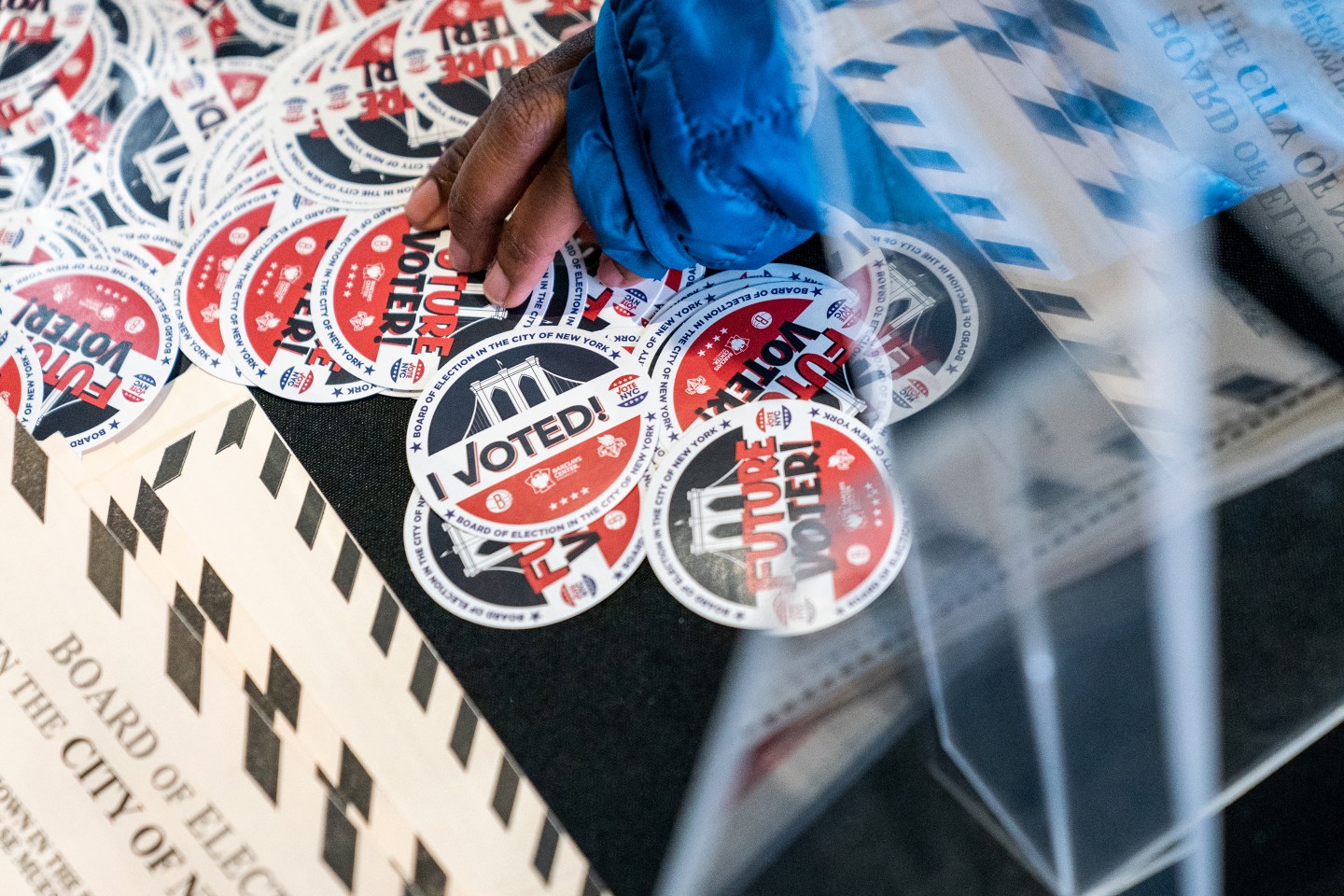
Stickers at an early voting polling location for the presidential election in New York City on Oct. 26, 2020. Given the chance that Election Day 2020 might turn into a disaster, leaders should be doing more crisis planning, writes Gleb Tsipursky.Jeenah Moon—Bloomberg/Getty Images

How can leaders prepare for the presidential election resulting in a disaster?

That possibility may sound unrealistic to many leaders. Yet it doesn’t sound so far-fetched to many top politicians and experts observing the run-up to the election. With many more mail-in ballots—which are much more vulnerable to legal challenges—than in previous elections, the counting might drag on for many weeks. It may well be accompanied by widespread civil disturbances, serious economic turmoil, and potentially a constitutional crisis.  

Is a voice deep inside your gut whispering, “An election disaster has never happened before, and so it won’t happen now”? Maybe it’s the same voice you heard when reading articles at the beginning of this year about the need to prepare for COVID-19 turning into a pandemic?

That’s why the vast majority of companies weren’t prepared for the pandemic. Our brains have a disastrous tendency to underestimate greatly low-probability and high-impact disruptors, events you might have recently heard referred to as “black swans.”

This disastrous tendency comes from dangerous judgment errors that researchers in cognitive neuroscience and behavioral economics call cognitive biases. These mental blind spots impact all areas of our life, from health to politics to even shopping.

Three cognitive biases bear the biggest fault for our failure to face the truth about the possibility of an election disaster.

Normalcy bias refers to our brains assuming things will keep going as they have been—normally—and evaluate the near-term future based on our short-term past experience. As a result, we underestimate drastically both the likelihood and impact of a serious disruption, such as a constitutional crisis.

Another major problem, confirmation bias, describes our strong preference to look only for information that already supports our preexisting beliefs and gut feelings, and ignore data that doesn’t. That includes the possibility of a major election disaster.

When we make plans, we naturally believe that the future will go according to plan. That wrong-headed mental blind spot, the planning fallacy, results in us not preparing sufficiently for contingencies and problems. The planning fallacy applies especially black swan–type low-probability, high-impact events such as an election catastrophe.

To address these cognitive biases, you need to use probabilistic thinking. First, assign a probability to various election disaster scenarios.

What’s the probability that mail-in ballots will take a long time to be processed due to legal challenges and civil strife, say stretching at least until the Electoral College vote on Dec. 14? Given the serious, costly, and truly unprecedented preparations for the post-election counting battle by top politicians, I’d say no less than 30%.

After that, what’s the likelihood that the Electoral College vote will not be decisive due to legal challenges? Perhaps only half of that, so we’re at 15%.

At that point, the House of Representatives gets to decide the President. Yet both parties have ways of stalemating the process, potentially resulting in a full-blown constitutional crisis with no clear legal resolution. I’d put the likelihood of that at two-thirds of 15%, so 10%.

Now imagine what the future would look like if the civil strife and legal challenges lasted only through the Electoral College vote. What kind of problems might come up for you as a leader and how can you solve them? (My firm, Disaster Avoidance Experts, advises organizations on how to prepare for unexpected crises, and therefore I could benefit financially from organizations following the advice outlined in this article.)

Revisit your business continuity plan: The large majority of organizations were seriously underprepared for the pandemic, for example. If you’re not working all virtually now, prepare if at all possible to go to all-virtual work. If you can’t, get extra security for your office ahead of potential civil strife.

Let your employees know about the significant possibility of an election disaster, and encourage them to prepare themselves as needed. Remind them of any opportunities you provide for access to mental health resources, such as through an employee assistance program. Prepare your office for a number of your employees suffering a serious disruption in their work; make sure that the more important positions have employees cross-trained to provide backups just in case.

If you manufacture products, see where you might need to take steps to protect your supply chains. If you provide services, reassure your clients about the steps you will take to protect your services from interruptions.

How many resources would you require to address potential problems? Add them up, and multiply them by 30%. Then, go on to use those resources to prepare for this possibility.

Next, consider what problems you might face, and what resources you might need, if the Electoral College vote is indecisive, and this situation goes into early January. Multiple these resources by 15%. Finally, evaluate the problems and resources needed if the House voting ends in an impasse and a constitutional crisis, and multiply these by 10%.

Using this approach, you distribute your plans and resources across the different possibilities in accordance with your chosen evaluations. By doing so, you’re essentially buying insurance to protect yourself from an election disaster.

Gleb Tsipursky is CEO of the risk management and strategy consulting firm Disaster Avoidance Experts and author of Never Go With Your Gut: How Pioneering Leaders Make the Best Decisions and Avoid Business Disasters.


About the Author
By Gleb Tsipursky
See full bioRight Arrow Button Icon

Latest in Commentary

Finance
Lorem ipsum dolor sit amet, consectetur adipiscing elit, sed do eiusmod tempor incididunt ut labore et dolore magna aliqua. Ut enim ad minim veniam
By Fortune Editors
October 20, 2025
Finance
Lorem ipsum dolor sit amet, consectetur adipiscing elit, sed do eiusmod tempor incididunt ut labore et dolore magna aliqua. Ut enim ad minim veniam
By Fortune Editors
October 20, 2025
Finance
Lorem ipsum dolor sit amet, consectetur adipiscing elit, sed do eiusmod tempor incididunt ut labore et dolore magna aliqua. Ut enim ad minim veniam
By Fortune Editors
October 20, 2025
Finance
Lorem ipsum dolor sit amet, consectetur adipiscing elit, sed do eiusmod tempor incididunt ut labore et dolore magna aliqua. Ut enim ad minim veniam
By Fortune Editors
October 20, 2025
Finance
Lorem ipsum dolor sit amet, consectetur adipiscing elit, sed do eiusmod tempor incididunt ut labore et dolore magna aliqua. Ut enim ad minim veniam
By Fortune Editors
October 20, 2025
Finance
Lorem ipsum dolor sit amet, consectetur adipiscing elit, sed do eiusmod tempor incididunt ut labore et dolore magna aliqua. Ut enim ad minim veniam
By Fortune Editors
October 20, 2025

Most Popular

Finance
Lorem ipsum dolor sit amet, consectetur adipiscing elit, sed do eiusmod tempor incididunt ut labore et dolore magna aliqua. Ut enim ad minim veniam
By Fortune Editors
October 20, 2025
Finance
Lorem ipsum dolor sit amet, consectetur adipiscing elit, sed do eiusmod tempor incididunt ut labore et dolore magna aliqua. Ut enim ad minim veniam
By Fortune Editors
October 20, 2025
Finance
Lorem ipsum dolor sit amet, consectetur adipiscing elit, sed do eiusmod tempor incididunt ut labore et dolore magna aliqua. Ut enim ad minim veniam
By Fortune Editors
October 20, 2025
Finance
Lorem ipsum dolor sit amet, consectetur adipiscing elit, sed do eiusmod tempor incididunt ut labore et dolore magna aliqua. Ut enim ad minim veniam
By Fortune Editors
October 20, 2025
Finance
Lorem ipsum dolor sit amet, consectetur adipiscing elit, sed do eiusmod tempor incididunt ut labore et dolore magna aliqua. Ut enim ad minim veniam
By Fortune Editors
October 20, 2025
Finance
Lorem ipsum dolor sit amet, consectetur adipiscing elit, sed do eiusmod tempor incididunt ut labore et dolore magna aliqua. Ut enim ad minim veniam
By Fortune Editors
October 20, 2025
Fortune Secondary Logo
Rankings
  • 100 Best Companies
  • Fortune 500
  • Global 500
  • Fortune 500 Europe
  • Most Powerful Women
  • Future 50
  • World’s Most Admired Companies
  • See All Rankings
Sections
  • Finance
  • Fortune Crypto
  • Features
  • Leadership
  • Health
  • Commentary
  • Success
  • Retail
  • Mpw
  • Tech
  • Lifestyle
  • CEO Initiative
  • Asia
  • Politics
  • Conferences
  • Europe
  • Newsletters
  • Personal Finance
  • Environment
  • Magazine
  • Education
Customer Support
  • Frequently Asked Questions
  • Customer Service Portal
  • Privacy Policy
  • Terms Of Use
  • Single Issues For Purchase
  • International Print
Commercial Services
  • Advertising
  • Fortune Brand Studio
  • Fortune Analytics
  • Fortune Conferences
  • Business Development
About Us
  • About Us
  • Editorial Calendar
  • Press Center
  • Work At Fortune
  • Diversity And Inclusion
  • Terms And Conditions
  • Site Map
Fortune Secondary Logo
  • About Us
  • Editorial Calendar
  • Press Center
  • Work At Fortune
  • Diversity And Inclusion
  • Terms And Conditions
  • Site Map
  • Facebook icon
  • Twitter icon
  • LinkedIn icon
  • Instagram icon
  • Pinterest icon

Latest in Commentary

putin
CommentaryRussia
Exclusive analysis: we looked at the 400 western firms still in Russia. Their paltry size strips Putin’s bluff bare naked
By Jeffrey Sonnenfeld, Stephen Henriques, Jake Waldinger and Giuseppe ScottoFebruary 27, 2026
19 hours ago
roth
CommentaryLeadership
The AI resource reallocation challenge: How can companies capture the value of time?
By Erik RothFebruary 27, 2026
21 hours ago
will
CommentaryAdvertising
I’m one of America’s top pollsters and I’ve got a warning for the AI companies: customers aren’t sold on ads
By Will JohnsonFebruary 27, 2026
24 hours ago
the pitt
CommentaryDEI
‘The Pitt’: a masterclass display of DEI in action 
By Robert RabenFebruary 26, 2026
2 days ago
david booth
CommentaryMarkets
3 lessons from investing’s ‘moneyball’ moment
By David BoothFebruary 25, 2026
3 days ago
CommentaryCulture
Gen Z’s enthusiasm for all things touchable is resurrecting the analog economy—and costing parents
By Luba KassovaFebruary 24, 2026
4 days ago

Most Popular

placeholder alt text
Innovation
An MIT roboticist who cofounded bankrupt robot vacuum maker iRobot says Elon Musk’s vision of humanoid robot assistants is ‘pure fantasy thinking’
By Marco Quiroz-GutierrezFebruary 25, 2026
3 days ago
placeholder alt text
Commentary
'The Pitt': a masterclass display of DEI in action 
By Robert RabenFebruary 26, 2026
2 days ago
placeholder alt text
Success
Japanese companies are paying older workers to sit by a window and do nothing—while Western CEOs demand super-AI productivity just to keep your job
By Orianna Rosa RoyleFebruary 27, 2026
17 hours ago
placeholder alt text
Economy
It’s more than George Clooney moving to France: America is becoming the ‘uncool’ country that people want to move away from
By Nick LichtenbergFebruary 27, 2026
1 day ago
placeholder alt text
Success
Jeff Bezos says being lazy, not working hard, is the root of anxiety: ‘The stress goes away the second I take that first step’
By Sydney LakeFebruary 25, 2026
3 days ago
placeholder alt text
Success
Walmart exec says U.S. workforces needs to take inspiration from China where ‘5 year-olds are learning DeepSeek’
By Preston ForeFebruary 27, 2026
1 day ago

© 2026 Fortune Media IP Limited. All Rights Reserved. Use of this site constitutes acceptance of our Terms of Use and Privacy Policy | CA Notice at Collection and Privacy Notice | Do Not Sell/Share My Personal Information
FORTUNE is a trademark of Fortune Media IP Limited, registered in the U.S. and other countries. FORTUNE may receive compensation for some links to products and services on this website. Offers may be subject to change without notice.