As the former governor of South Carolina and as the former president of Walmart U.S., we know that trade is a fundamentally beneficial part of the American economy for both consumers and businesses. But the coronavirus pandemic has shown that not all trade is created equal.
The past few months have demonstrated just how dependent the U.S. is on foreign manufacturers for things we need in a crisis. Urgently needed goods from medical equipment to pharmaceuticals have faced shortages as overseas factories have shut down or stopped exporting. While American companies have rapidly shifted their supply chains to meet this unprecedented challenge, more production at home or from U.S.-friendly companies would be much better. Not only will this help our country come through this difficult time, it will protect the American people in future crises.
The two of us have proved that it’s possible to bring jobs and manufacturers to America.
Even before the current pandemic, many American companies sought to move production to the U.S. Walmart has long helped facilitate this through its Made in America program, a pledge to purchase an additional $250 billion in products that support American jobs through 2023. One way that Walmart has made good on this commitment is by connecting business owners looking to strengthen American manufacturing with states offering business-friendly environments.
We met through this initiative in 2011. One of us knew dozens of companies that wanted to make their products in the U.S. And the other knew her state was one of the best places in the country to do business, with a workforce second to none.
As governor, Nikki understood that time was money, so she set out to save job creators as much of both as possible. Her state cut regulations and created a low-tax, pro-worker environment. It invested heavily in infrastructure, from railroads to port facilities to pipelines. And South Carolina understood the importance of providing a skilled workforce to fill the jobs created—giving students at technical colleges the training they needed to hit the ground running.
These policies caused companies to give South Carolina a serious look. But it wasn’t just the policies they liked. For many, the decisive factor was the personal touch they felt.
Nikki’s office personally recruited companies, giving CEOs her cell phone number with the instruction to call anytime with questions or concerns. Companies coming to South Carolina knew they were a part of a team. From energy needs to permitting delays, if a business faced a challenge, state officials knew to do everything possible to fix it quickly—and if it couldn’t be fixed, to find another solution.
The combination of strong policies and a personal touch worked. Businesses flocked to South Carolina like never before.
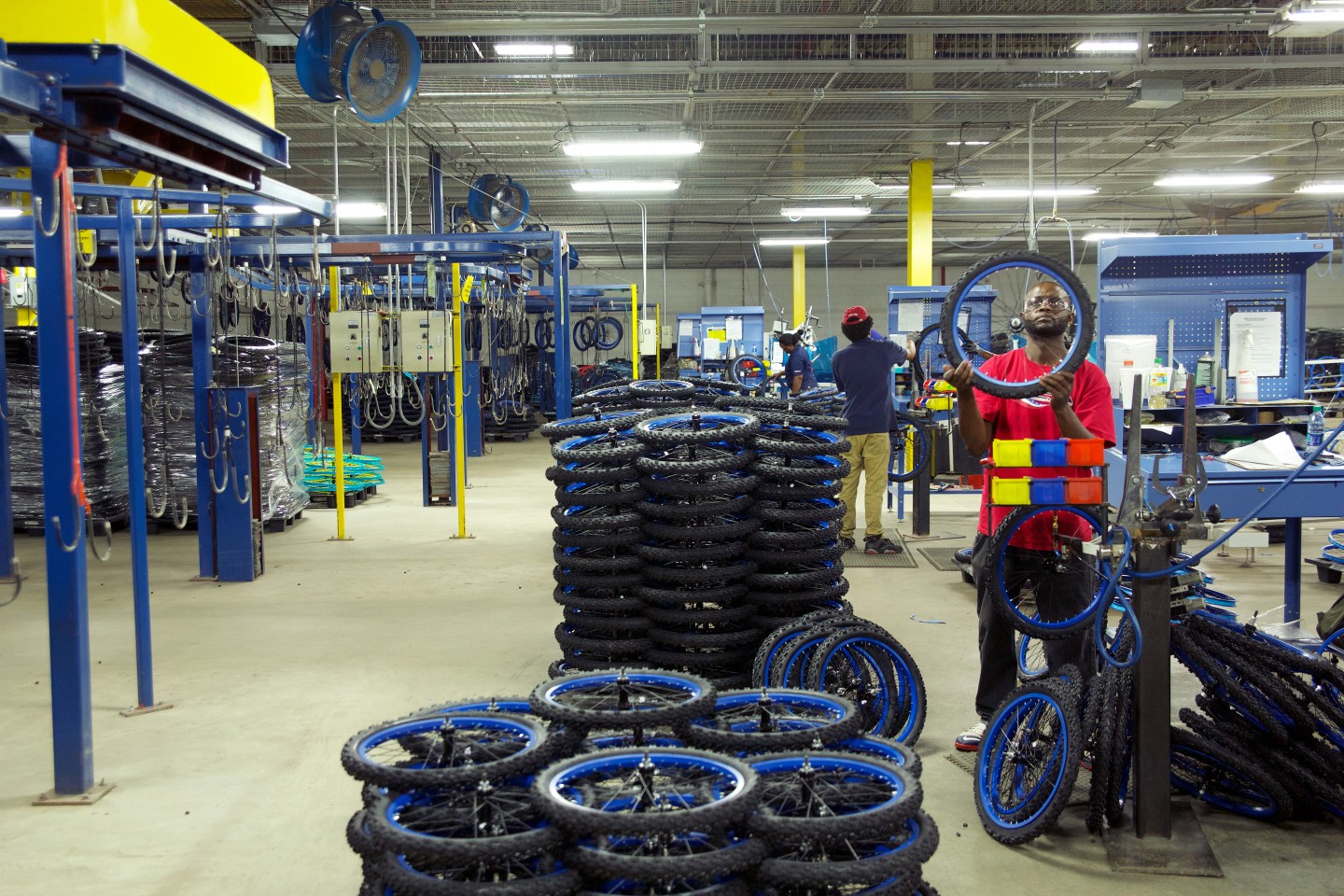
One such company was Kent International, a third-generation bike manufacturer. Its production had been in China since 1987. In 2014, the company relocated its assembly to Manning, S.C., where it built a factory and announced the company would hire up to 200 workers to make bikes for Walmart. It was the first major bicycle production facility built in America in decades.
Another example was Giti Tire. In 2014, it agreed to build its first-ever U.S. factory in Chester County, S.C., along with a distribution center. All told, the company announced it would bring 1,700 new jobs and $560 million in investment to the state. The news broke on the largest day of jobs announcements in Palmetto State history.
These examples show what’s possible. America can renew its manufacturing, regardless of industry. Defense contractors, electronics makers, pharmaceutical companies, and medical device manufacturers can all thrive by making products on American soil using American workers.
State leaders should be on the front lines of this effort. While Washington has a role to play by enacting sensible policies at the national level, America is at her best when our states and their people shine. Every state is different, and so is every business, which means states should compete to be the best fit for specific firms. The more involved Washington gets, the more it risks becoming an exercise in counterproductive top-down control, rather than bottom-up innovation.
The opportunity is already here. In the past few months, both of us have heard from businesses that want to set up shop in America—some after a long time away, some for the first time. Making that happen is especially important as our country works to come out of the coronavirus pandemic. It’s time to ensure that our nation has the things our people depend on in times of trial.
This should be a top priority. It’s a matter of ensuring that our country can rise to any occasion, overcome any challenge, and persevere through every crisis. Made in America is more than a slogan—it’s a statement of American strength.
Nikki Haley is the former U.S. ambassador to the United Nations (2017–2019) and former governor of South Carolina (2011–2017). Bill Simon is the former president and CEO of Walmart U.S. (2010–2014).