When Allison Whalen returned to her job at WeWork after having her first child, she found her team in disarray.
“Two weeks before I came back from leave, I was promoted. On paper everything was right,” says Whalen, who was vice president of expansion at cleaning service Managed by Q, then owned by the co-working giant (it was sold off last week). “But when I came back to work, morale was horrible among my direct reports. I hadn’t set them up for success while I was out. Major decisions were made about the business without my input.”
Despite a generous parental leave policy that allowed Whalen to spend12 weeks at home caring for her baby in 2017, she knew something was wrong. If her team had fallen apart in her absence, she and her employers must have missed some important steps in preparing for and managing her leave. So, when she was back in the office in September of that year, she began to think about all the problems that can crop up for employees and companies during parental leave—and how they might be better addressed. Those ideas eventually crystalized into a business plan: a company that would focus on helping employees map out a step-by-step plan for both their leave and their return to work.
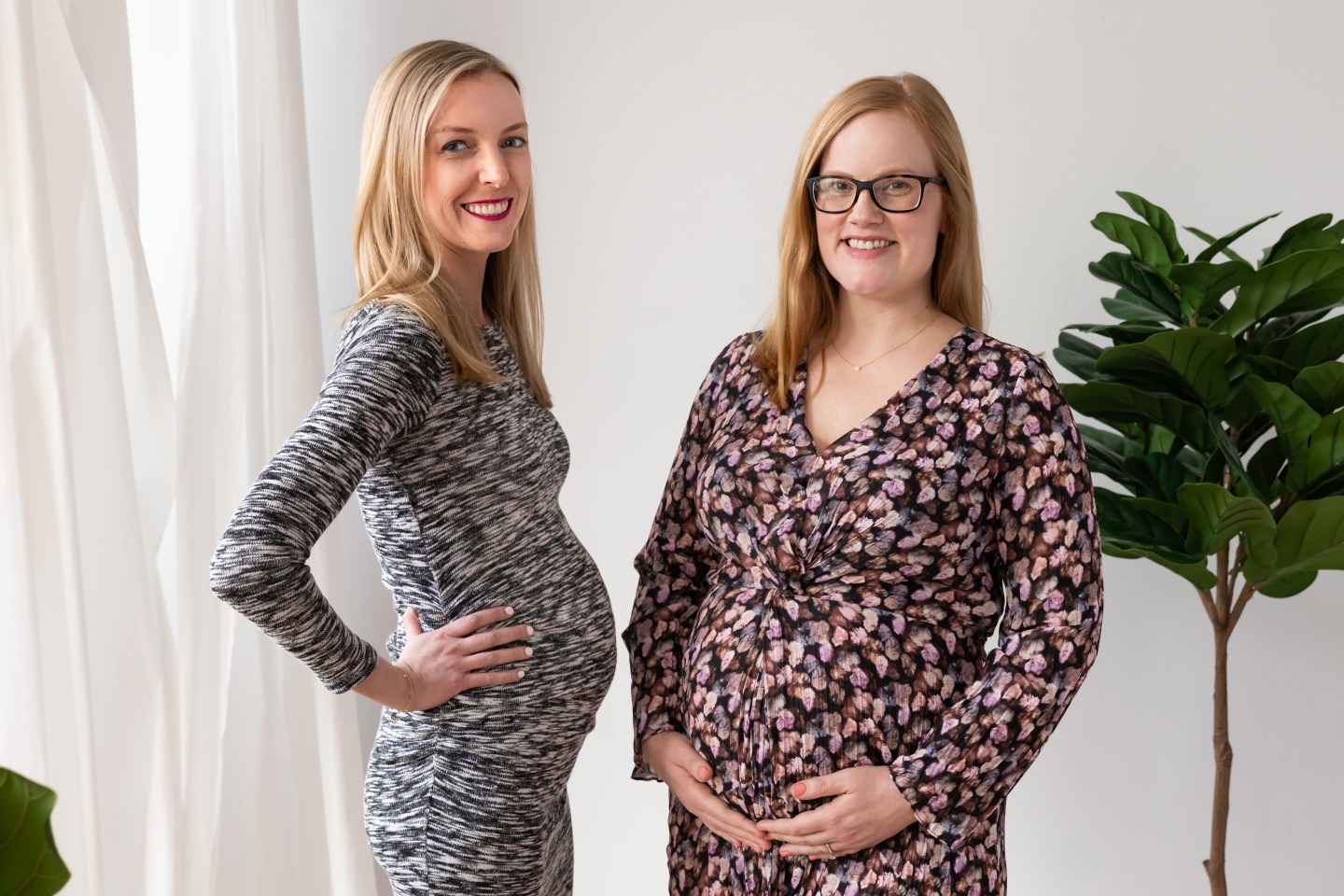
Whalen and co-founder Jaime Rooney, who remains senior director of brand management at Target, quietly launched their startup Parentaly in October 2019. The company’s coaching and career development program will help senior employees who take leave plan for and manage their transitions out of and back into the office. The co-founders are pitching their service to employers, who will offer it as an employee benefit.
Parentaly is attempting to capitalize on a perfect storm of trends in order to convince companies to spend the $4,000 to $6,000 per employee who uses the program: a tight labor market that is pushing companies to offer improved benefits, women’s growing representation at senior levels in the workforce, and the tendency among millennials to delay having children until later in life. Many companies are already feeling the effects of these factors, and even those that aren’t may soon—millennials, who make up more than one-third of the U.S. workforce, are approaching peak childbearing years, with more than 1 million millennial women becoming first-time moms annually.
Of course, Parentaly is not the only company to identify—and attempt to monetize—these societal shifts. Services like Cleo connect new parents with education or lactation consultants. The Second Shift is a talent marketplace also trying to improve the execution of family leave policies.
Whalen argues that among a certain set of employers, eagerness to expand parental leave has outpaced companies’ abilities to manage its impact. It’s a niche problem, to be sure: most American workers still don’t have access to any paid family leave.
Is an extended parental leave—so common outside of the United States—inherently disruptive, or are there better ways to integrate such policies into the workplace? Research has found that the top two needs that must be met in order for women to remain in the workforce after having children are access to childcare: the kind of support employers have so far focused on providing and a feeling of satisfaction in their jobs. One study of working mothers in France found that women’s “perception of their work as rewarding” was the strongest indicator for whether they’d return to the workforce one year after having a child. Parentaly wants to attack that issue. “If you give someone a lactation consultant and their business is falling apart, it doesn’t matter,” Whalen says.
Parentaly’s program starts well before an employee is out on parental leave, generally during the second or third trimester of a pregnancy. Women—and it’s mostly women who have used the program so far—answer questions like, “Where do you see yourself in six months when you’re back from maternity leave, compared to where you see yourself in five years?” Team members who work with executive on leave track decisions and changes made during the leave period so she can easily get up to speed when she’s ready to return. The employee’s managers receive materials on what it’s like to take parental leave and what support their employee may need.
The combination of executive coaching, educational materials, and guided leave-planning are intended to solve a suite of problems: lack of communication, business disruption, and incorrect assumptions about flexibility or decreased responsibility that women may or may not want when they get back to work.
Companies are aware that women often leave the workforce during the return-to-work phase. But they’re not identifying the root of that problem, Whalen argues. “What you hear is that return-to-work is so difficult because it’s so hard to leave your child and women want flexibility,” she says. “[With our participants], those things never came up. What came up consistently was: ‘While I was out for four months, major business decisions were made that I don’t agree with and now I have to live with them. My work fell apart, my team is unhappy, critical direct reports of mine are going to quit. I came back to work and no one could give me an update on changes that happened.’”
Many of the 30 managers who have participated so far have also found the program useful as a career development tool. Caitlyn Fox, director of the justice and opportunity initiative at the Chan Zuckerberg Initiative, used her time in a pilot version of the program to figure out how to help two of her 10 reports take over pieces of her work and to keep those tasks in their hands when she returned.
“I’m not stepping back into my old role,” Fox says of coming back after her initial three-and-a-half months of leave (she took leave in chunks). “If I’ve positioned my team effectively, 50% of what I passed off to my team, they can continue to run with. That gives me the capacity to grow myself.”
So far, the startup has signed three mid-sized companies including Wisconsin-based Education Analytics, which offers26 weeks, and San Francisco-based jobs platform Handshake, which offers 16 weeks to parents who give birth and 10 weeks to others, and a third that declined to be identified. Handshake decided to sign on, director of people Paloma Thombley says, after experiencing the common startup phenomenon of an employee baby boom.
Whalen hopes Parentaly’s program can cause a ripple effect in the core issue of getting more companies to offer paid leave in the first place. “Businesses may be more comfortable giving three months off to everyone if they know the business disruption won’t be horrible,” she says.
In an apt bit of timing, Whalen and Rooney are both pregnant; Whalen with her second child and Rooney with her third. They’re looking forward to using the program to develop their own leave plans for their burgeoning startup.
More must-read stories from Fortune:
—Candidates talk about the issues that matter to working women
—Fixing the corporate approach to addressing sexual harassment
—Funding for female founders increased in 2019—but only to 2.7%
—How “for women, by women” startup Lola views its investor’s Trump ties
—WATCH: The double burdens that hold women back
Keep up with the world’s most powerful women with The Broadsheet newsletter.