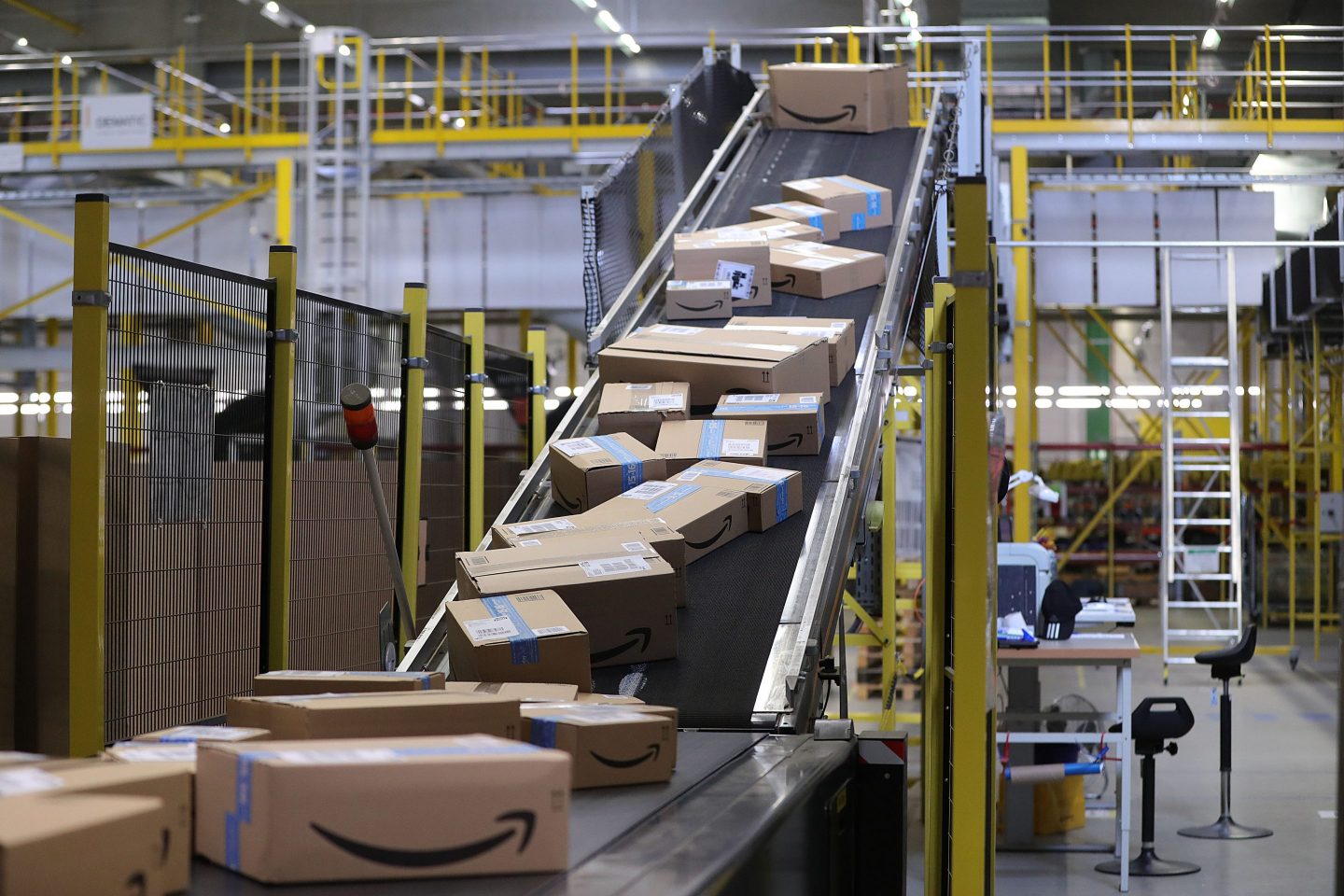
In conversations with other CEOs across a wide range of industries, I hear firsthand that consumers in markets around the world are not only motivated to be more environmentally conscious, but are exercising their influence through the products they purchase. With the majority of products shipped in corrugated boxes and the significant increase of e-commerce, there’s a good reason for consumers to ask if they are making the best decisions for the environment when purchasing products delivered in corrugated boxes.
The answer is clearer than they might think: Consumers should not feel guilty about paper packaging when they shop online.
My company, International Paper, is one of the oldest and largest producers of renewable fiber-based products in the world. We are also one of the world’s largest users of recycled fiber. We’ve been in business for more than 120 years using a circular model that transforms renewable resources into recyclable products that people depend on every day.
According to the Fibre Box Association (FBA), the average corrugated box produced in the U.S. is made with 50% recycled content. New boxes are made from recycled boxes and trees, a renewable natural resource. FBA data shows that in 2018, 96% of the corrugated packaging produced in the U.S. was recovered and recycled. That is a significantly higher recovery rate than plastic; 91% of plastic ever created has not been recycled, according to a 2017 study by the National Center for Ecological Analysis and Synthesis.
Still, you might be asking yourself: What about the trees?
Our entire business depends on the sustainability of forests, and trees are a renewable resource. The U.S. forest products industry plays an essential role in ensuring sustainable forest management. According to the U.S. Forest Service, there are more acres of forests today than there were over a century ago. Today, almost one-third of working forests—defined by the National Alliance of Forest Owners as “forestland carefully managed to supply a steady, renewable supply of wood for lumber, energy, paper, and packaging”—in the U.S. are on private land. And 89% of fiber sourced in the U.S. comes from private landowners, according to the U.S. Department of Agriculture. These landowners have an economic incentive to harvest and replant so that their forestland continues to generate revenue.
The papermaking process relies on renewable, carbon-neutral biomass residuals—from lumber and pulp production—to generate the energy used to produce fiber-based packaging. International Paper generates nearly 75% of our paper mill energy from these biomass residuals rather than from fossil fuels. Since 2010, we have reduced our greenhouse gas emissions by more than 20%, and we have committed to reducing our Scope 1, 2, and 3 emissions (standards set by the Greenhouse Gas Protocol) by a further 35% by 2030.
The forest products industry continues to improve its environmental footprint, but more work is needed. According to Environmental Protection Agency data, U.S. pulp and paper industry greenhouse gas emissions declined from 44 million metric tons of carbon dioxide equivalent in 2011 to 36 million in 2018, a 19% reduction. This improvement was due to improved energy efficiency and increased use of less carbon-intensive fossil fuels and carbon-neutral residual biomass-based energy. This is good progress, but we understand we need to further reduce greenhouse gas emissions.
The forest products industry is an important contributor to the U.S. economy and is positioned to meet the challenges ahead—and do so sustainably. According to the American Forest & Paper Association (AF&PA), the industry employs 950,000 workers in green jobs, making the industry a top 10 manufacturing employer in 45 states and responsible for 4.5% of U.S. manufacturing GDP. AF&PA also notes that our industry is the leading generator and user of renewable energy in the U.S.
According to the CIA World Factbook, the service sector in 2017 accounted for 80% of U.S. GDP. As the world’s population continues to increase, and the service sector expands, we will need to meet the rising demand for raw materials used to make packaging. Our industry’s circular model—using recovered fiber and renewable fiber from trees—holds the answer.
Be sure to flatten those brown boxes and place them in a recycling bin. This simple step ensures old boxes are recycled into new packaging, which allows your e-commerce orders to arrive clean and undamaged. And in doing so, you’re joining the corrugated packaging industry in proactively protecting our environment.
Mark S. Sutton is chairman and CEO of International Paper.
More opinion in Fortune:
—Elizabeth Warren: I’ll use the government to make tech work for people with disabilities
—I worked at McKinsey. Here’s how the firm needs to change
—5G’s side streets will be empty without fiber’s interstate
—These new rules might end tech’s reliance on Chinese investors
—To build diversity, companies should focus on tackling student debt
Listen to our audio briefing, Fortune 500 Daily