• Home
  • Latest
  • Fortune 500
  • Finance
  • Tech
  • Leadership
  • Lifestyle
  • Rankings
  • Multimedia
Commentarygovernment spending

It’s time government starts to better manage its online spending

By
Emily W. Murphy
Emily W. Murphy
Down Arrow Button Icon
By
Emily W. Murphy
Emily W. Murphy
Down Arrow Button Icon
January 28, 2020, 4:00 PM ET
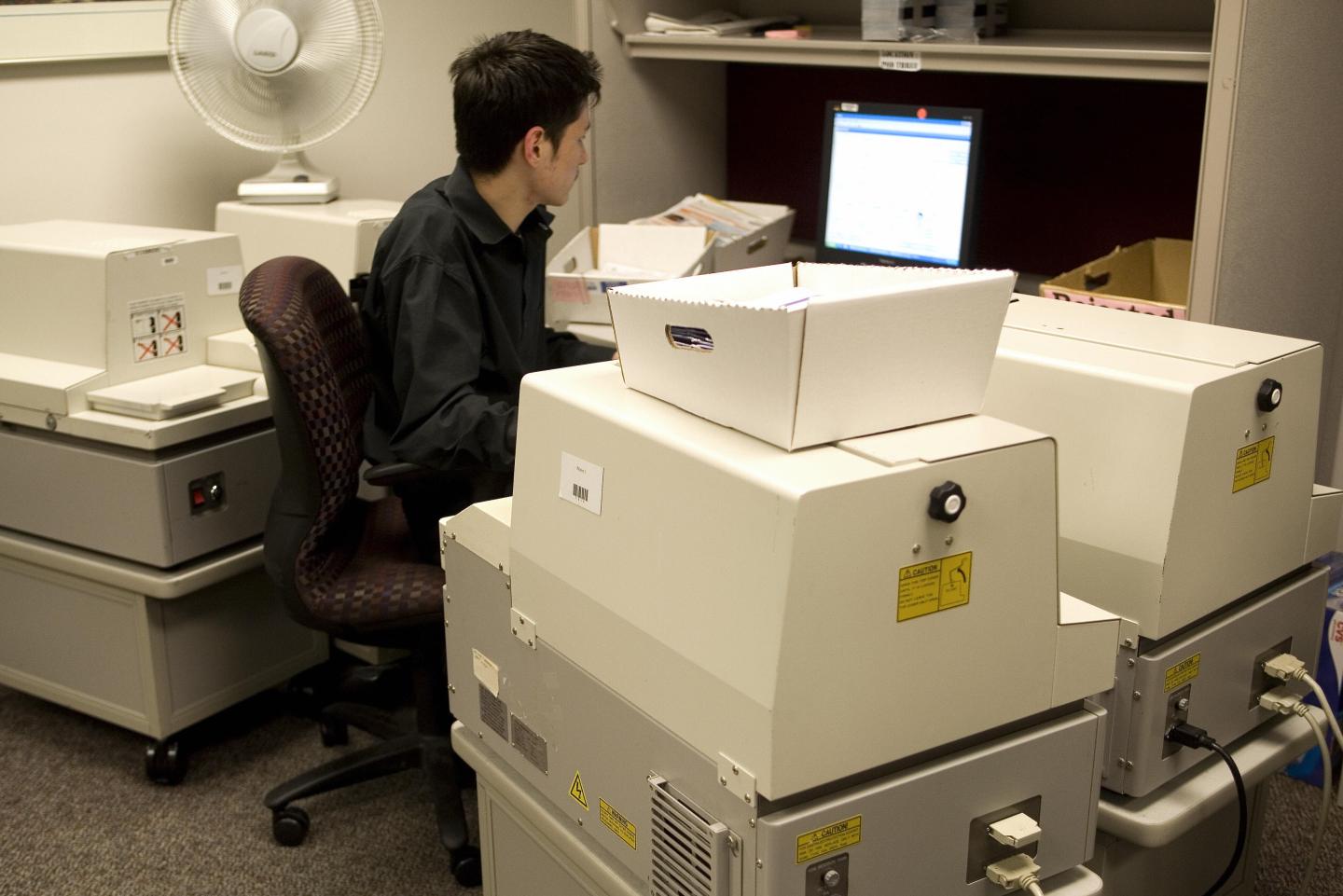
A US government official with the State Department's Passport Services works with four "book printers" for the processing of entering personal data and photographs of applicants 14 June 2007 at the Passport Services office in Washington, DC.
Washington, UNITED STATES: A US government official with the State Department's Passport Services works with four "book printers" for the processing of entering personal data and photographs of applicants 14 June 2007 at the Passport Services office in Washington, DC. The US State Department is temporarily easing restrictions imposed this year that require Americans to have passports to travel to Mexico, Canada, the Caribbean and Bermuda. The requirement led to a massive backlog of passport applications ahead of the summer travel season, with applications surging 33 percent over the same period last year. AFP PHOTO/Paul J. Richards (Photo credit should read PAUL J. RICHARDS/AFP via Getty Images)Paul J. Richards—AFP/Getty Images

A penny here, a penny there, and pretty soon we’re talking about $6 billion. Every year, the government spends more than $6 billion in small purchases. Surprisingly, we don’t have good visibility into what we’re buying with those dollars. Under federal law, these micropurchases don’t require an existing contract. While this lets agencies efficiently buy goods and services worth less than $10,000—such as printing services or office supplies—it also means the federal government has little or no visibility into those transactions. This opens the door to counterfeit goods and security risks. 

As we enter a new decade, we owe it to citizens to ensure this $6 billion is spent transparently and responsibly, without adding unnecessary bureaucracy. 

E-commerce has revolutionized how people and organizations buy and sell things. It’s rewired the American economy and shifted the purchasing process; however, the federal government has not kept pace with these trends. The last major round of acquisition reform was a generation ago—before the Internet and all things digital dominated how business got done. Online retailers were untested novelties. 

Fast forward to today, where federal purchases and procurement spending through commercial e-commerce portals are increasing at a rapid pace. Agency charge card spending through commercial online portals has grown 92% from fiscal year 2014 to fiscal year 2018; that trend will only increase. And that’s just the tip of the iceberg, as it only captures spending to those companies who exclusively have an online presence. It doesn’t account for spending with companies who have both brick-and-mortar and online storefronts. 

While this growing trend offers promise when it comes to efficiencies, it is not without risk. These one-off purchases add up quickly, leaving the government with limited visibility into online spending, increasing exposure to supply chain risk, and posing significant accountability and fraud-related concerns. It also risks missing opportunities to buy from disadvantaged socioeconomic groups and small businesses. We can do better.

Congress has challenged the U.S. General Services Administration (GSA) to provide a solution. The agency was charged with establishing a program to procure commercial products through partnerships with commercial e-commerce portals, as part of the fiscal year 2018 National Defense Authorization Act (NDAA). 

To answer Congress’s call, GSA established the Commercial Platforms Initiative and is launching a proof of concept this year, partnering with e-marketplace platforms that offer business-to-business capabilities. Federal agencies will be able to manage their accounts, approve real-time purchases, and access large numbers of suppliers that are selling on these e-marketplaces—all through a modern buying experience. Furthermore, companies can highlight their platforms’ advanced technology when selling to the government.

This whole-of-government approach will provide agencies with critical insight into their spending, leverage the government’s buying power, take advantage of constantly evolving pricing to include sales and bulk discounts, ensure small business participation, and increase supply chain visibility. This initiative enables GSA to move forward on a small scale and expand the program based on lessons learned.

By enabling government buyers to use modern tools and technologies, we’ll have immediate visibility into their order status and spending trends. The proof-of-concept approach will modernize the buying experience and offer a solution that better serves our government and American taxpayers. Not only is GSA leveraging capabilities offered in the commercial market, but doing it at a time when a number of Fortune 500 companies are considering the same actions. In this sense, the government is helping lead this change.

Agencies across government are eager to participate in the proof of concept, having expressed a strong desire to gain better visibility into their online purchasing, including key insights on buying patterns. GSA has met with close to a dozen agencies to better understand how the commercial platforms can improve their procurement process, provide value, and ensure we are even better stewards of taxpayer money. 

Don’t forget about transparency. Federal agencies want to know what’s being bought, who’s selling it, and where it’s coming from. Today, if a federal employee with a government charge card buys a prohibited product under the $10,000 threshold, or receives an item from a prohibited company, it’s very difficult to track. However, if those same products are bought through commercial platforms in the proof of concept, agencies will receive real-time data so they can take the appropriate corrective action. 

To that end, some agencies are already forming partnerships with online marketplaces to get access to their data to help mitigate supply chain and purchasing concerns. But these ad hoc e-commerce agreements will lead to a fragmented view of spending data and inconsistent terms and conditions, limiting the government’s buying power and contributing to a largely inconsistent federal market. A better, more unified solution starts with launching the proof of concept. The unique role GSA plays in government provides an opportunity to strategically bring together federal buying by offering a unified, cross-agency approach to e-commerce purchasing.

I’m confident that the Commercial Platforms Initiative will take an important step in bringing increased transparency and purchasing discipline into the small-dollar procurement space—unlocking purchase trends and insights to better serve Americans. At the front end of a new decade, the time to make this change is now.

Emily W. Murphy is administrator of the U.S. General Services Administration.

More opinion in Fortune:

—Elizabeth Warren: I’ll use the government to make tech work for people with disabilities
—I worked at McKinsey. Here’s how the firm needs to change
—5G’s side streets will be empty without fiber’s interstate
—These new rules might end tech’s reliance on Chinese investors
—To build diversity, companies should focus on tackling student debt

Listen to our audio briefing, Fortune 500 Daily

About the Author
By Emily W. Murphy
See full bioRight Arrow Button Icon

Latest in Commentary

Finance
Lorem ipsum dolor sit amet, consectetur adipiscing elit, sed do eiusmod tempor incididunt ut labore et dolore magna aliqua. Ut enim ad minim veniam
By Fortune Editors
October 20, 2025
Finance
Lorem ipsum dolor sit amet, consectetur adipiscing elit, sed do eiusmod tempor incididunt ut labore et dolore magna aliqua. Ut enim ad minim veniam
By Fortune Editors
October 20, 2025
Finance
Lorem ipsum dolor sit amet, consectetur adipiscing elit, sed do eiusmod tempor incididunt ut labore et dolore magna aliqua. Ut enim ad minim veniam
By Fortune Editors
October 20, 2025
Finance
Lorem ipsum dolor sit amet, consectetur adipiscing elit, sed do eiusmod tempor incididunt ut labore et dolore magna aliqua. Ut enim ad minim veniam
By Fortune Editors
October 20, 2025
Finance
Lorem ipsum dolor sit amet, consectetur adipiscing elit, sed do eiusmod tempor incididunt ut labore et dolore magna aliqua. Ut enim ad minim veniam
By Fortune Editors
October 20, 2025
Finance
Lorem ipsum dolor sit amet, consectetur adipiscing elit, sed do eiusmod tempor incididunt ut labore et dolore magna aliqua. Ut enim ad minim veniam
By Fortune Editors
October 20, 2025

Most Popular

Finance
Lorem ipsum dolor sit amet, consectetur adipiscing elit, sed do eiusmod tempor incididunt ut labore et dolore magna aliqua. Ut enim ad minim veniam
By Fortune Editors
October 20, 2025
Finance
Lorem ipsum dolor sit amet, consectetur adipiscing elit, sed do eiusmod tempor incididunt ut labore et dolore magna aliqua. Ut enim ad minim veniam
By Fortune Editors
October 20, 2025
Finance
Lorem ipsum dolor sit amet, consectetur adipiscing elit, sed do eiusmod tempor incididunt ut labore et dolore magna aliqua. Ut enim ad minim veniam
By Fortune Editors
October 20, 2025
Finance
Lorem ipsum dolor sit amet, consectetur adipiscing elit, sed do eiusmod tempor incididunt ut labore et dolore magna aliqua. Ut enim ad minim veniam
By Fortune Editors
October 20, 2025
Finance
Lorem ipsum dolor sit amet, consectetur adipiscing elit, sed do eiusmod tempor incididunt ut labore et dolore magna aliqua. Ut enim ad minim veniam
By Fortune Editors
October 20, 2025
Finance
Lorem ipsum dolor sit amet, consectetur adipiscing elit, sed do eiusmod tempor incididunt ut labore et dolore magna aliqua. Ut enim ad minim veniam
By Fortune Editors
October 20, 2025
Rankings
  • 100 Best Companies
  • Fortune 500
  • Global 500
  • Fortune 500 Europe
  • Most Powerful Women
  • Future 50
  • World’s Most Admired Companies
  • See All Rankings
Sections
  • Finance
  • Leadership
  • Success
  • Tech
  • Asia
  • Europe
  • Environment
  • Fortune Crypto
  • Health
  • Retail
  • Lifestyle
  • Politics
  • Newsletters
  • Magazine
  • Features
  • Commentary
  • Mpw
  • CEO Initiative
  • Conferences
  • Personal Finance
  • Education
Customer Support
  • Frequently Asked Questions
  • Customer Service Portal
  • Privacy Policy
  • Terms Of Use
  • Single Issues For Purchase
  • International Print
Commercial Services
  • Advertising
  • Fortune Brand Studio
  • Fortune Analytics
  • Fortune Conferences
  • Business Development
About Us
  • About Us
  • Editorial Calendar
  • Press Center
  • Work At Fortune
  • Diversity And Inclusion
  • Terms And Conditions
  • Site Map
  • Facebook icon
  • Twitter icon
  • LinkedIn icon
  • Instagram icon
  • Pinterest icon

© 2026 Fortune Media IP Limited. All Rights Reserved. Use of this site constitutes acceptance of our Terms of Use and Privacy Policy | CA Notice at Collection and Privacy Notice | Do Not Sell/Share My Personal Information
FORTUNE is a trademark of Fortune Media IP Limited, registered in the U.S. and other countries. FORTUNE may receive compensation for some links to products and services on this website. Offers may be subject to change without notice.


Most Popular

placeholder alt text
Economy
Elon Musk warns the U.S. is '1,000% going to go bankrupt' unless AI and robotics save the economy from crushing debt
By Jason MaFebruary 7, 2026
1 day ago
placeholder alt text
Success
Even with $850 billion to his name, Elon Musk admits ‘money can’t buy happiness.’ But billionaire Mark Cuban says it’s not so simple
By Preston ForeFebruary 6, 2026
2 days ago
placeholder alt text
Success
Gen Z Patriots quarterback Drake Maye still drives a 2015 pickup truck even after it broke down on the highway—despite his $37 million contract
By Sasha RogelbergFebruary 7, 2026
2 days ago
placeholder alt text
Future of Work
Anthropic cofounder says studying the humanities will be 'more important than ever' and reveals what the AI company looks for when hiring
By Jason MaFebruary 7, 2026
1 day ago
placeholder alt text
AI
AI can make anyone rich: Mark Cuban says it could turn 'just one dude in a basement' into a trillionaire
By Sydney LakeFebruary 7, 2026
1 day ago
placeholder alt text
Real Estate
We may be looking at the housing affordability crisis all wrong. Higher earners are driving home prices, not lack of supply, researchers say
By Jason MaFebruary 7, 2026
22 hours ago

Latest in Commentary

nfl
CommentaryTV
The Super Bowl was made for TV and instant replay was made for visual AI. Here’s how it could be better and what it would look like
By Jason CorsoFebruary 8, 2026
8 hours ago
tipping
CommentaryTipping
I’m the chief growth officer at a payments app and I know how America really tips. Connecticut, I’m looking at you
By Ricardo CiciFebruary 8, 2026
10 hours ago
heacock
CommentaryLeadership
I’m a CEO who grew a ‘boring’ air filter business into a $260 million company, and AI is going to help blue-collar, everyday people just like me
By David HeacockFebruary 8, 2026
10 hours ago
broker
CommentaryRecession
We studied 70 countries’ economic data for the last 60 years and something big about market crashes changed 25 years ago
By Josh Ederington, Jenny Minier and The ConversationFebruary 8, 2026
11 hours ago
birthday
CommentaryAmerican Dream
America marks its 250th birthday with a fading dream—the first time that younger generations will make less than their parents
By Mark Robert Rank and The ConversationFebruary 8, 2026
11 hours ago
sarandos
CommentaryAntitrust
Netflix dominates streaming. No wonder it’s trying to redefine the market
By Hal SingerFebruary 7, 2026
1 day ago