
• Home
  • Latest
  • Fortune 500
  • Finance
  • Tech
  • Leadership
  • Lifestyle
  • Rankings
  • Multimedia

Trendingnow

1

Mark Cuban says he has the solution to growing income inequality, and it's to reward every employee—from CEO to janitor—with company stock

2

OpenAI says its AI models secretly broke out of a secure test environment and hacked into AI company Hugging Face in order to cheat on an evaluation

3

‘I want to die broke’: Billionaire philanthropist Denny Sanford dies after giving away $4 billion

1

Mark Cuban says he has the solution to growing income inequality, and it's to reward every employee—from CEO to janitor—with company stock

2

OpenAI says its AI models secretly broke out of a secure test environment and hacked into AI company Hugging Face in order to cheat on an evaluation

3

‘I want to die broke’: Billionaire philanthropist Denny Sanford dies after giving away $4 billion
China

The Trade War Cost U.S. Farmers Their China Market. A Deal Might Not Bring It Back

Grady McGregor
By
Grady McGregor
Grady McGregor
Down Arrow Button Icon
Grady McGregor
By
Grady McGregor
Grady McGregor
Down Arrow Button Icon
November 15, 2019, 8:00 AM ET
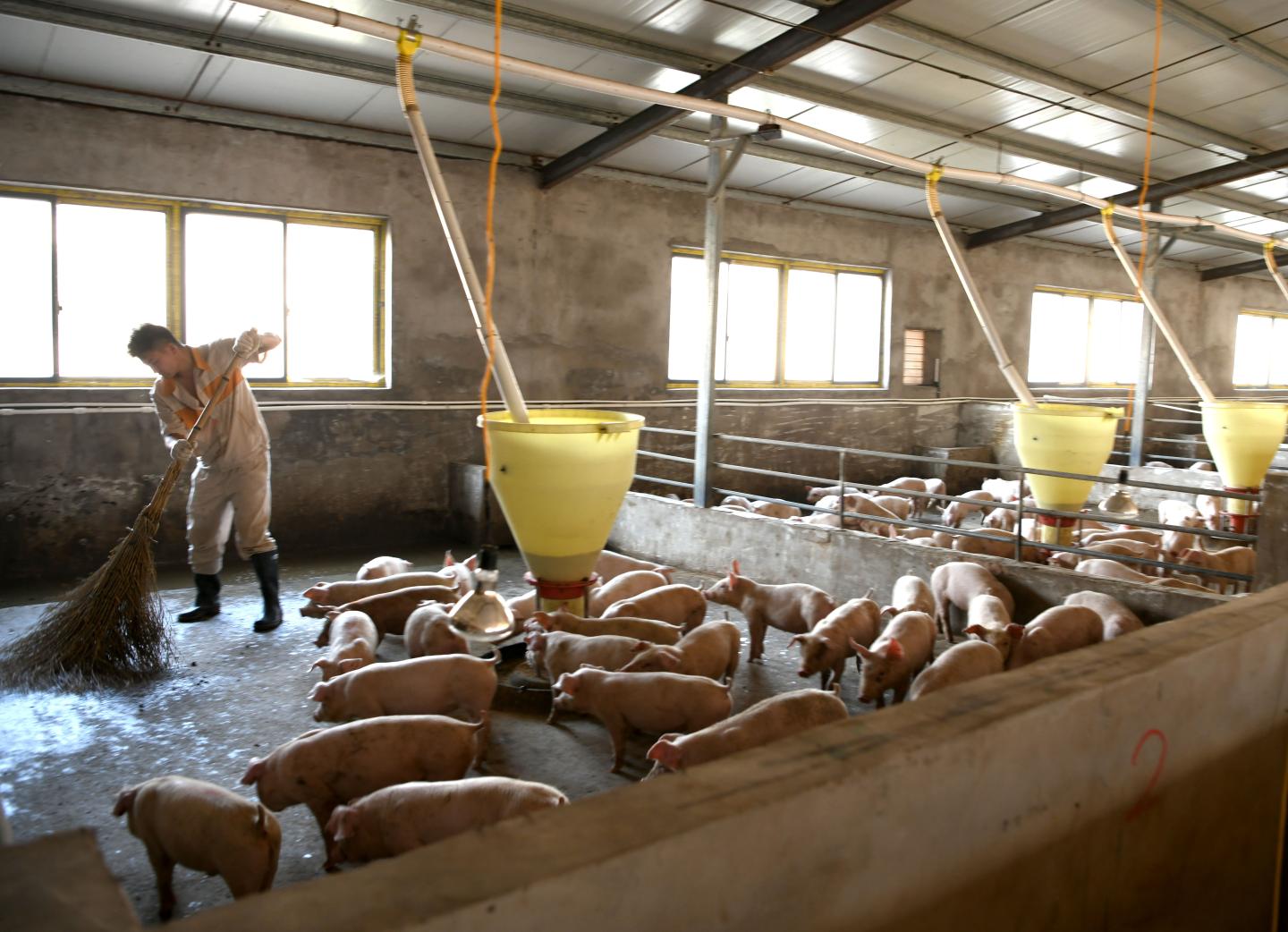
HUAINAN, CHINA - OCTOBER 19: Piglets in a pigsty at Liangmu Agricultural Development Co., Ltd on October 19, 2019 in Huainan, Anhui Province of China. (Photo by Chen Bin/VCG via Getty Images)
HUAINAN, CHINA - OCTOBER 19: Piglets in a pigsty at Liangmu Agricultural Development Co., Ltd on October 19, 2019 in Huainan, Anhui Province of China. (Photo by Chen Bin/VCG via Getty Images)Chen Bin—VCG via Getty Images
Add Fortune on Google for similar content.

U.S. farmers have paid a steep price during Washington’s months-long trade war with Beijing, losing almost two-thirds of their exports to China. Now, however, there is hope as trade talks—with U.S. agriculture squarely in the center—seem to be closing in on a deal.

But even if an agreement comes to fruition, changes in the world agriculture market may mean that those farmers will still lose out.

This week, President Donald Trump demanded China buy up to $50 billion in U.S. agricultural products annually, and China reacted with reluctance, arguing that it would be better to allow market forces to dictate purchases after tariffs are eased.

This mirrors news from several weeks ago, when China denied President Trump’s claims that the country would purchase $50 billion in agricultural products as part of the trade agreement. Reports pegged the figure nearer to $20 billion, which would be much closer to the $24 billion in agricultural products the U.S. shipped to China at its peak in 2014—and more than double the $9 billion sent last year.

Those trade figures are why analysts like Darin Friedrichs, senior Asia commodity analyst at INTL FCSTONE in Shanghai, think a $50 billion guarantee was always unlikely. But there are others forces at play. In China, the desire to defer to market whims may reflect the country’s increasingly diversified food supply; the country has accounted for the decrease in U.S. agricultural imports by increasing trade with other countries.

“Agriculture is one of those things that the U.S. side really has to address. It’s probably the most publicized, or well-known, effect of the trade war,” Friedrichs said. “[But] basically, over the past year and a half, China has been really aggressive in trying to diversify where [it’s] buying from.”

The trade war hits

The trade war began in July 2018, when the U.S. levied $34 billion in tariffs on Chinese goods. China immediately responded by placing a 25% tariff on soybeans, along with taxes on a slew of agricultural and other products. Rounds of retaliatory tariffs over the following months raised soybean tariffs as high as 33% for U.S. producers, and pork tariffs as high as 72%.

Aaron Krauter, a farmer in North Dakota and former head of the state’s farm service agency, says that at the peak of the U.S.-China soybean trade, farmers in his area were sending 80-90% of their soybeans to China. Now, he says, the soybean market has evaporated—and other crops have also been hurt either through tariffs or from secondary impacts.
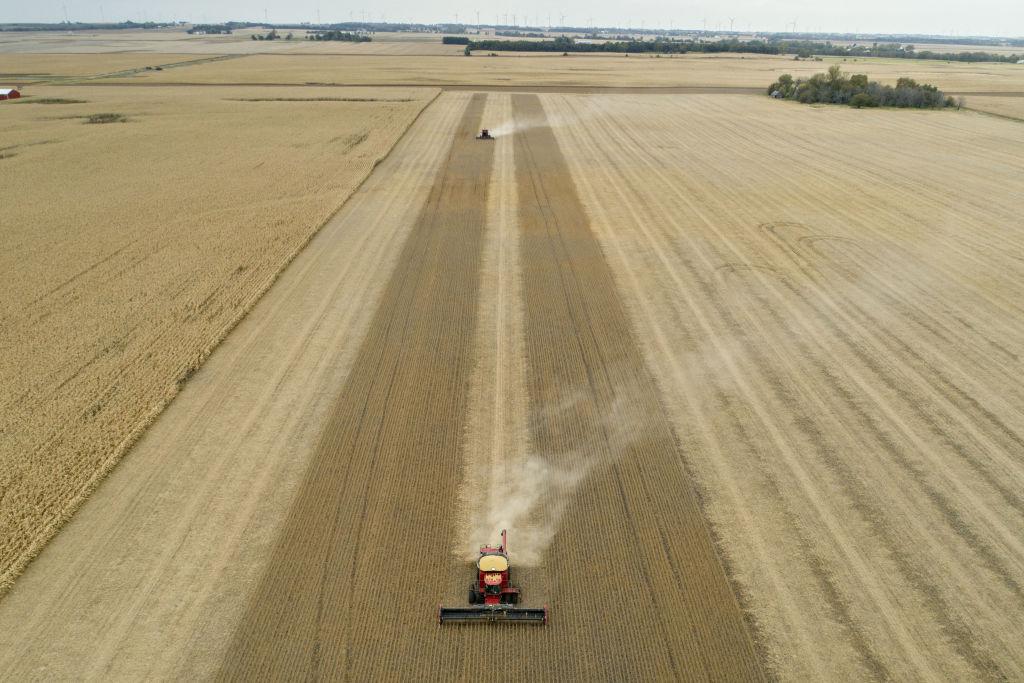
U.S. soybean farmers have been hit particularly hard by the trade war, which has forced China to look elsewhere for the crop. (Daniel Acker/Bloomberg via Getty Images)
Daniel Acker—Bloomberg via Getty Images

“It’s a huge loss,” Krauter said. “If it’s soybeans, [the impact of the trade war is] really obvious. If it’s wheat, it’s kind of obvious. If it’s other oil seed crops, like canola, they’re saying, ‘Wait a minute, what happened to our market? What happened to our prices?’”

U.S. farmers might have initially hoped that the trade war would lead to less trade restrictions with China, Friedrichs says, but now they worry that it could mean a complete loss of the market.

Farmers thought, “‘We’re going to get rid of these silly restrictions that China is putting on our products and we’re going to have this huge market [in China],’ but that hasn’t happened,” said Friedrichs. “We’re a year and a half into this, and it made China realize [it was] way too dependent on U.S. beans.”

Diversification and African Swine Flu

Indeed, since the trade war began, the Chinese agriculture market has transformed.

Amid the U.S. conflict, China seems to have realized that food security means having diversification of sources, says Friedrichs of INTL FCSTONE. “China has been really aggressive in trying to diversify,” he said. “So [after a trade deal], the market might be open for the U.S., but [American producers] are going to face a lot of competition from all these new players.”

China has worked around the U.S. agriculture tariffs by expanding relationships with South American countries like Argentina and Brazil. At the same time, China’s pursued its Belt and Road Initiative (BRI), a trillion-dollar-plus policy aimed at developing infrastructure and investment projects around the world. Through BRI, China has established ties with dozens of countries in Asia, the Middle East, Africa, and Europe, which has opened new markets for agricultural imports.

“We’ve lost those markets, they’ve gone someplace else, they’ve built up those relationships,” Krauter, the North Dakota farmer, said. “It’s going to take years, years for that to come back.”

Another factor that’s reshaped China’s agricultural market in the past months is African Swine Fever (ASF).

Since arriving in China in August last year, ASF has devastated domesticated pig herds across the country. The country has lost as much as 60-70% of its female pigs, and slashed roughly 25% of its pork production.
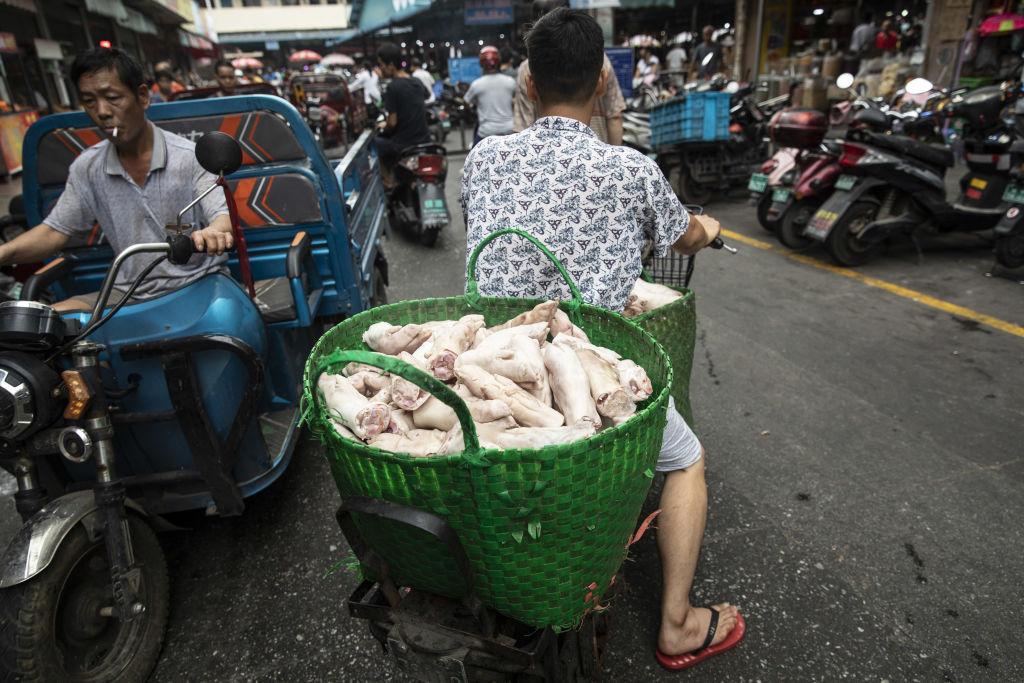
China consumes the most pork of any country in the world, but its supply has been devastated by African Swine Flu. (Qilai Shen/Bloomberg via Getty Images)
Qilai Shen—Bloomberg via Getty Images

China is the world’s largest consumer of pork, and ASF has created a massive shortage in the country’s protein supplies. That means U.S. pork producers will stand to benefit from a trade deal; China needs its pork. But other U.S. farmers might not experience the same rebound in the event of a deal because China has fewer pigs to feed.

“Because of the African Swine Fever, there is just not that much need for soybeans and corn [to feed pigs],” said Friedrichs. “The U.S. is trying to push China to buy huge amounts of soybeans, but China is saying, sure, but we don’t really need those.”

Even with these trends underway, there’s tremendous pressure on the U.S. side to strike a deal. The government has provided significant subsidies to farmers to offset their losses during the trade war, but a deal with China would provide a more sustainable solution.

The U.S. is certainly not alone in feeling a sense of urgency.

Edgar Wayne Johnson, an agricultural consultant based in Beijing, says China’s ASF troubles are reaching a tipping point. With skyrocketing prices of pork and other meat, he says China is entering a food crisis and will be forced to come to the negotiating table.

“Eventually China is going to blink,” said Johnson. “The people of China are taking up the slack, and I don’t know how long it can last.”

More must-read stories from Fortune:

—Airbus’s A400M still has a screw loose after years of problems
—After record floods, Venice assesses the damage and braces for more
—Global energy trends are defying Trump’s climate agenda
—Banks set to cash in on Saudi Aramco IPO want you to know they’re still serious about climate change
Catch up with Data Sheet, Fortune’s daily digest on the business of tech.

Sign up for the Fortune Features email list so you don’t miss our biggest features, exclusive interviews, and investigations.

About the Author
Grady McGregor
By Grady McGregor
LinkedIn iconTwitter icon
See full bioRight Arrow Button Icon
Add Fortune on Google for similar content.

Latest in

Finance
Lorem ipsum dolor sit amet, consectetur adipiscing elit, sed do eiusmod tempor incididunt ut labore et dolore magna aliqua. Ut enim ad minim veniam
By Fortune Editors
October 20, 2025
Finance
Lorem ipsum dolor sit amet, consectetur adipiscing elit, sed do eiusmod tempor incididunt ut labore et dolore magna aliqua. Ut enim ad minim veniam
By Fortune Editors
October 20, 2025
Finance
Lorem ipsum dolor sit amet, consectetur adipiscing elit, sed do eiusmod tempor incididunt ut labore et dolore magna aliqua. Ut enim ad minim veniam
By Fortune Editors
October 20, 2025
Finance
Lorem ipsum dolor sit amet, consectetur adipiscing elit, sed do eiusmod tempor incididunt ut labore et dolore magna aliqua. Ut enim ad minim veniam
By Fortune Editors
October 20, 2025
Finance
Lorem ipsum dolor sit amet, consectetur adipiscing elit, sed do eiusmod tempor incididunt ut labore et dolore magna aliqua. Ut enim ad minim veniam
By Fortune Editors
October 20, 2025
Finance
Lorem ipsum dolor sit amet, consectetur adipiscing elit, sed do eiusmod tempor incididunt ut labore et dolore magna aliqua. Ut enim ad minim veniam
By Fortune Editors
October 20, 2025

Most Popular

Finance
Lorem ipsum dolor sit amet, consectetur adipiscing elit, sed do eiusmod tempor incididunt ut labore et dolore magna aliqua. Ut enim ad minim veniam
By Fortune Editors
October 20, 2025
Finance
Lorem ipsum dolor sit amet, consectetur adipiscing elit, sed do eiusmod tempor incididunt ut labore et dolore magna aliqua. Ut enim ad minim veniam
By Fortune Editors
October 20, 2025
Finance
Lorem ipsum dolor sit amet, consectetur adipiscing elit, sed do eiusmod tempor incididunt ut labore et dolore magna aliqua. Ut enim ad minim veniam
By Fortune Editors
October 20, 2025
Finance
Lorem ipsum dolor sit amet, consectetur adipiscing elit, sed do eiusmod tempor incididunt ut labore et dolore magna aliqua. Ut enim ad minim veniam
By Fortune Editors
October 20, 2025
Finance
Lorem ipsum dolor sit amet, consectetur adipiscing elit, sed do eiusmod tempor incididunt ut labore et dolore magna aliqua. Ut enim ad minim veniam
By Fortune Editors
October 20, 2025
Finance
Lorem ipsum dolor sit amet, consectetur adipiscing elit, sed do eiusmod tempor incididunt ut labore et dolore magna aliqua. Ut enim ad minim veniam
By Fortune Editors
October 20, 2025
Fortune Secondary Logo
Rankings
  • 100 Best Companies
  • Fortune 500
  • Global 500
  • Fortune 500 Europe
  • Most Powerful Women
  • World's Most Admired Companies
  • See All Rankings
  • Lists Calendar
Sections
  • Finance
  • Fortune Crypto
  • Features
  • Leadership
  • Health
  • Commentary
  • Success
  • Retail
  • Mpw
  • Tech
  • Lifestyle
  • CEO Initiative
  • Asia
  • Politics
  • Conferences
  • Europe
  • Newsletters
  • Personal Finance
  • Environment
  • Magazine
  • Education
Customer Support
  • Frequently Asked Questions
  • Customer Service Portal
  • Privacy Policy
  • Terms Of Use
  • Single Issues For Purchase
  • International Print
Commercial Services
  • Advertising
  • Fortune Brand Studio
  • Fortune Analytics
  • Fortune Conferences
  • Business Development
  • Group Subscriptions
About Us
  • About Us
  • Press Center
  • Work At Fortune
  • Terms And Conditions
  • Site Map
  • About Us
  • Press Center
  • Work At Fortune
  • Terms And Conditions
  • Site Map
  • Facebook icon
  • Twitter icon
  • LinkedIn icon
  • Instagram icon
  • TikTok icon
  • YouTube icon

Latest in

Samsung’s North America CEO says the smartphone is just an entry point to ambient AI of the home
NewslettersCEO Daily
Samsung’s North America CEO says the smartphone is just an entry point to ambient AI of the home
By Diane BradyJuly 22, 2026
42 minutes ago
Hugging Face CEO Clément Delangue (center) on Capitol Hill on September 13, 2023 in Washington, D.C. (Photo: Chip Somodevilla/Getty Images)
NewslettersFortune Tech
OpenAI: Our models accidentally compromised Hugging Face
By Andrew NuscaJuly 22, 2026
1 hour ago
George Soros never signed the Giving Pledge. He’s given away more of his fortune than the billionaires who did
Successphilanthropy
George Soros never signed the Giving Pledge. He’s given away more of his fortune than the billionaires who did
By Sydney LakeJuly 22, 2026
3 hours ago
Current ARM mortgage rates report for July 22, 2026
Personal FinanceReal Estate
Current ARM mortgage rates report for July 22, 2026
By Glen Luke FlanaganJuly 22, 2026
3 hours ago
Current refi mortgage rates report for July 22, 2026
Personal FinanceReal Estate
Current refi mortgage rates report for July 22, 2026
By Glen Luke FlanaganJuly 22, 2026
3 hours ago
Mortgage rates today, July 22, 2026
Personal Financemortgages
Mortgage rates today, July 22, 2026
By Glen Luke FlanaganJuly 22, 2026
3 hours ago

Most Popular

Mark Cuban says he has the solution to growing income inequality, and it's to reward every employee—from CEO to janitor—with company stock
Success
Mark Cuban says he has the solution to growing income inequality, and it's to reward every employee—from CEO to janitor—with company stock
By Sasha RogelbergJuly 20, 2026
2 days ago
OpenAI says its AI models secretly broke out of a secure test environment and hacked into AI company Hugging Face in order to cheat on an evaluation
Cybersecurity
OpenAI says its AI models secretly broke out of a secure test environment and hacked into AI company Hugging Face in order to cheat on an evaluation
By Jeremy Kahn and Emily ForliniJuly 21, 2026
14 hours ago
‘I want to die broke’: Billionaire philanthropist Denny Sanford dies after giving away $4 billion
Success
‘I want to die broke’: Billionaire philanthropist Denny Sanford dies after giving away $4 billion
By Sydney LakeJuly 20, 2026
2 days ago
Mathematicians grapple with a ‘very rapid and very unsettling change’ as AI cracks yet another century-old problem
AI
Mathematicians grapple with a ‘very rapid and very unsettling change’ as AI cracks yet another century-old problem
By Eva RoytburgJuly 21, 2026
18 hours ago
Despite a $156 million contract, Knicks star Jalen Brunson still calls his parents for financial advice any time he makes a big purchase
Success
Despite a $156 million contract, Knicks star Jalen Brunson still calls his parents for financial advice any time he makes a big purchase
By Emma BurleighJuly 21, 2026
19 hours ago
'Dr. Doom' Nouriel Roubini says we're headed for universal basic income or 'some form of socialism' as AI revolutionizes work—He calls that optimistic
AI
'Dr. Doom' Nouriel Roubini says we're headed for universal basic income or 'some form of socialism' as AI revolutionizes work—He calls that optimistic
By Jason MaJuly 18, 2026
3 days ago

© 2026 Fortune Media IP Limited. All Rights Reserved. Use of this site constitutes acceptance of our Terms of Use and Privacy Policy | CA Notice at Collection and Privacy Notice | Do Not Sell/Share My Personal Information
FORTUNE is a trademark of Fortune Media IP Limited, registered in the U.S. and other countries. FORTUNE may receive compensation for some links to products and services on this website. Offers may be subject to change without notice.