• Home
  • Latest
  • Fortune 500
  • Finance
  • Tech
  • Leadership
  • Lifestyle
  • Rankings
  • Multimedia
Commentarydiesel emissions scandal

Commentary: How Monkeys Proved to VW That Diesel Can Never Be Safe

By
Margo Oge
Margo Oge
and
Bethany Cianciolo
Bethany Cianciolo
Down Arrow Button Icon
By
Margo Oge
Margo Oge
and
Bethany Cianciolo
Bethany Cianciolo
Down Arrow Button Icon
March 6, 2018, 2:33 PM ET
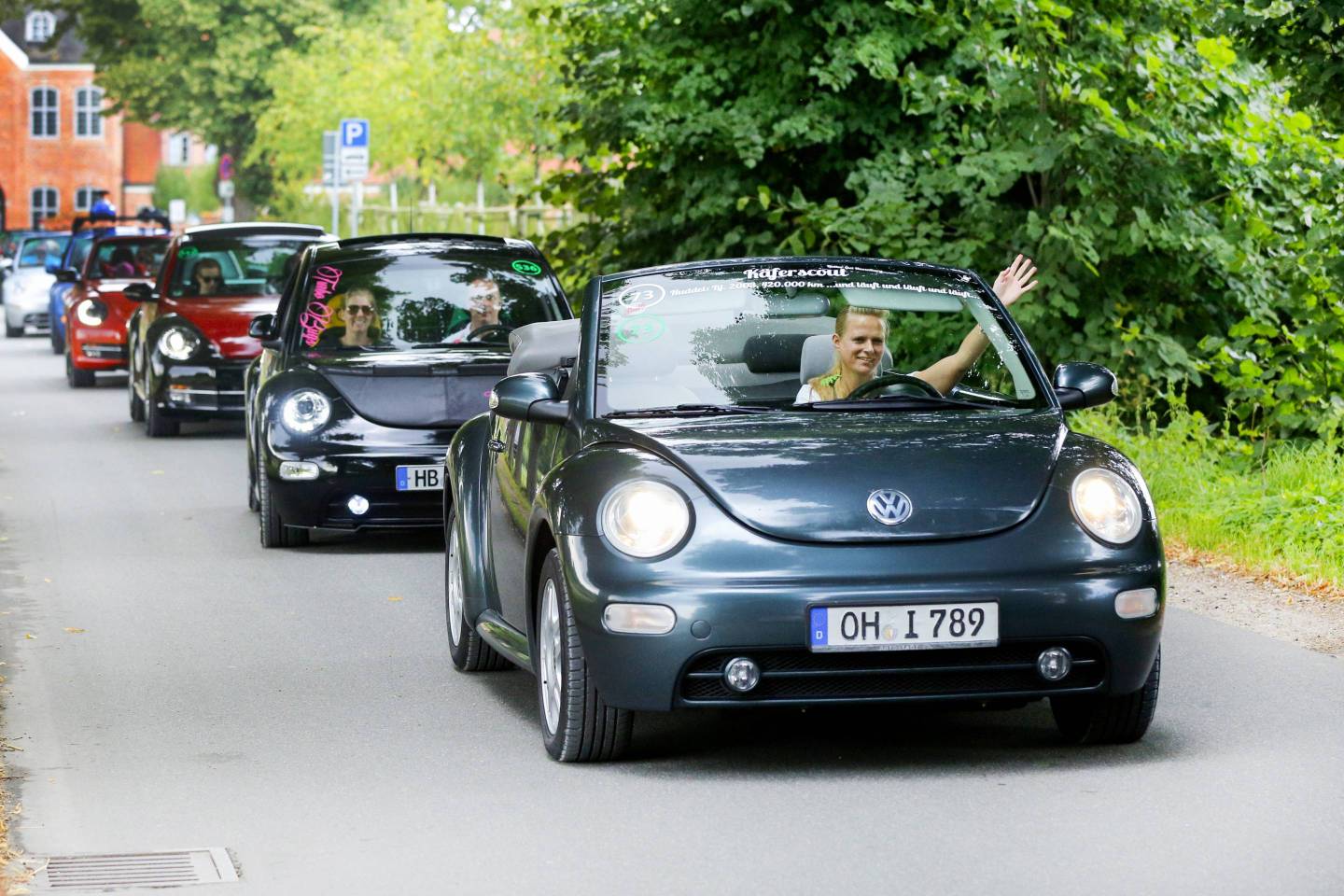
12th Beetle Sunshine Tour To Travemuende
LUEBECK, GERMANY - AUGUST 20: Beetles during the 12th Beetle Sunshine Tour To Travemuende the 12th Beetle Sunshine Tour on August 20, 2016 in Luebeck, Germany. (Photo by Franziska Krug/Getty Images for Beetle Sunshine Tour)Franziska Krug—Getty Images for Beetle Sunshine

What do 10 long-tailed macaque monkeys watching cartoons have to do with making diesel safer?

Ideally nothing, but if you watched the recent Netflix (NFLX) documentary Dirty Money, you would see a lab outside of Albuquerque in 2014, where these primates are sitting in air-tight compartments while a Volkswagen Beetle’s diesel fumes are pumped inside. It was as part of an experiment paid for by the European Research Group on Environment and Health in the Transport Sector (EUGT), a German auto industry group.

But it’s actually worse than all that. The Beetle was 40 times the legal limit due to software that cheated the system. The tests proved that the VW car was polluting more than an old, 1997-year Ford (F) truck, and the companies decided not to publicly release the test results.

The monkey experiment, conducted at the Lovelace Respiratory Research Institute in Albuquerque, was sponsored by EUGT. The goal was to create (bogus) scientific research proving that new technology had made diesel safe. EUGT received all of its funding from Volkswagen, Daimler, and BMW. It shut down last year amid controversy over its work.

There was a lot at stake for the companies to produce industry-friendly data. Europe embraced diesel in the 1990s because, on average, diesel cars and trucks produce fewer greenhouse gases than similar gasoline vehicles. But, by the time of the monkey experiments, the negative health effects of diesel were getting more attention.

A report released by the European Parliament showed that 72,000 people in Europe died prematurely because of nitrogen dioxide pollution in 2012. Some European cities are creating zones that restrict diesel vehicles, or banning them outright. In Germany, the highest federal court issued a landmark ruling last month that cities have the right to ban diesel cars. One of those cities petitioning the court for a ban was Stuttgart, the home of Mercedes and Porsche.

Volkswagen, along with the other German auto companies, also wanted to use the research to increase their diesel sales in the United States. That came to a screeching halt with “Dieselgate” and VW’s emissions cheating scheme in 2015, which has cost the company more than $30 billion.

When I learned about these tests, my mind immediately flashed back to events in my 32-plus year career with the U.S. Environmental Protection Agency. First, it was the time I was the director of the Office of Radiation and Indoor Air (ORIA), where we developed the first report about the dangers of secondhand smoke. Our report got massive pushback from the tobacco industry, which created a variety of misleading research designed to confuse the public about the massive health risks of their products. Cigarette companies had, in fact, run very similar tests on a variety of animals to prove that their products were safe.

But unlike smoking, diesel engines serve a purpose, are an integral part of the freight transportation systems of the world, and can be made cleaner. Later in my EPA career, as director of the Office of Transportation Air Quality (OTAQ), I led the effort that ended up becoming known as “clean diesel.” With the Heavy Duty Diesel rule in 2000, we took regulatory action to clean diesel fuel and reduce toxic diesel exhaust by 95%.

As a result of this rule, 8,300 premature deaths and 750,000 respiratory illnesses were expected to be prevented annually. Recent studies by the Health Effects Institute concluded that the overall toxicity of modern diesel engines are significantly lower than the high-polluting older engines, but even “clean diesel” is not perfectly clean.

What exacerbates the situation today is endemic cheating and the lack of consistent enforcement of the standards. In my 18 years as director of OTAQ, we had fined car manufacturers and diesel engine and truck companies that were cheating with polluting trucks for over a decade. Just last month, new revelations emerged about alleged cheating by Mercedes Benz. And, there is money and politics as witnessed in the recent actions of Scott Pruitt, the current EPA administrator, who is behind a decision to give compliance waiver to the highly polluting diesel truck “glider kits.”


So, how can we make diesel engines completely safe? Realistically, we can’t. There is only one known, long-lasting strategy to address both human health and climate change: move to electrification of our transportation system. Electric vehicles have no emissions and help mitigate the environmental challenge of our time: climate change.

Some say the internal combustion engine’s days are numbered, and that may be true for light-duty vehicles nearing the “tipping point” for electric vehicles. But in medium-duty and especially heavy-duty vehicles, diesel will continue to play a role as we wait for technologies and infrastructure to become more economically feasible.

While the passenger vehicle sector is getting electrified, we cannot take our eye off diesel technology. It will be important to continue improvements to diesel engines—and especially enforcement of the rules—to ensure that their health effects continue to be reduced and their contribution to climate change is minimized.

But that doesn’t require industry studies of gassed monkeys.

Margo Oge served the United States Environmental Protection Agency for over 32 years and most recently, was the director of the EPA’s Office of Transportation and Air Quality (OTAQ) from 1994 to 2012 and a key architect of the 2025 GHG/CAFE Standards. She is also the author of the book, Driving the Future: Combating Climate Change with Cleaner, Smarter Cars.


About the Authors
By Margo Oge
See full bioRight Arrow Button Icon
By Bethany Cianciolo
See full bioRight Arrow Button Icon

Latest in Commentary

Finance
Lorem ipsum dolor sit amet, consectetur adipiscing elit, sed do eiusmod tempor incididunt ut labore et dolore magna aliqua. Ut enim ad minim veniam
By Fortune Editors
October 20, 2025
Finance
Lorem ipsum dolor sit amet, consectetur adipiscing elit, sed do eiusmod tempor incididunt ut labore et dolore magna aliqua. Ut enim ad minim veniam
By Fortune Editors
October 20, 2025
Finance
Lorem ipsum dolor sit amet, consectetur adipiscing elit, sed do eiusmod tempor incididunt ut labore et dolore magna aliqua. Ut enim ad minim veniam
By Fortune Editors
October 20, 2025
Finance
Lorem ipsum dolor sit amet, consectetur adipiscing elit, sed do eiusmod tempor incididunt ut labore et dolore magna aliqua. Ut enim ad minim veniam
By Fortune Editors
October 20, 2025
Finance
Lorem ipsum dolor sit amet, consectetur adipiscing elit, sed do eiusmod tempor incididunt ut labore et dolore magna aliqua. Ut enim ad minim veniam
By Fortune Editors
October 20, 2025
Finance
Lorem ipsum dolor sit amet, consectetur adipiscing elit, sed do eiusmod tempor incididunt ut labore et dolore magna aliqua. Ut enim ad minim veniam
By Fortune Editors
October 20, 2025

Most Popular

Finance
Lorem ipsum dolor sit amet, consectetur adipiscing elit, sed do eiusmod tempor incididunt ut labore et dolore magna aliqua. Ut enim ad minim veniam
By Fortune Editors
October 20, 2025
Finance
Lorem ipsum dolor sit amet, consectetur adipiscing elit, sed do eiusmod tempor incididunt ut labore et dolore magna aliqua. Ut enim ad minim veniam
By Fortune Editors
October 20, 2025
Finance
Lorem ipsum dolor sit amet, consectetur adipiscing elit, sed do eiusmod tempor incididunt ut labore et dolore magna aliqua. Ut enim ad minim veniam
By Fortune Editors
October 20, 2025
Finance
Lorem ipsum dolor sit amet, consectetur adipiscing elit, sed do eiusmod tempor incididunt ut labore et dolore magna aliqua. Ut enim ad minim veniam
By Fortune Editors
October 20, 2025
Finance
Lorem ipsum dolor sit amet, consectetur adipiscing elit, sed do eiusmod tempor incididunt ut labore et dolore magna aliqua. Ut enim ad minim veniam
By Fortune Editors
October 20, 2025
Finance
Lorem ipsum dolor sit amet, consectetur adipiscing elit, sed do eiusmod tempor incididunt ut labore et dolore magna aliqua. Ut enim ad minim veniam
By Fortune Editors
October 20, 2025
Fortune Secondary Logo
Rankings
  • 100 Best Companies
  • Fortune 500
  • Global 500
  • Fortune 500 Europe
  • Most Powerful Women
  • Future 50
  • World’s Most Admired Companies
  • See All Rankings
Sections
  • Finance
  • Fortune Crypto
  • Features
  • Leadership
  • Health
  • Commentary
  • Success
  • Retail
  • Mpw
  • Tech
  • Lifestyle
  • CEO Initiative
  • Asia
  • Politics
  • Conferences
  • Europe
  • Newsletters
  • Personal Finance
  • Environment
  • Magazine
  • Education
Customer Support
  • Frequently Asked Questions
  • Customer Service Portal
  • Privacy Policy
  • Terms Of Use
  • Single Issues For Purchase
  • International Print
Commercial Services
  • Advertising
  • Fortune Brand Studio
  • Fortune Analytics
  • Fortune Conferences
  • Business Development
  • Group Subscriptions
About Us
  • About Us
  • Editorial Calendar
  • Press Center
  • Work At Fortune
  • Diversity And Inclusion
  • Terms And Conditions
  • Site Map
  • About Us
  • Editorial Calendar
  • Press Center
  • Work At Fortune
  • Diversity And Inclusion
  • Terms And Conditions
  • Site Map
  • Facebook icon
  • Twitter icon
  • LinkedIn icon
  • Instagram icon
  • Pinterest icon

Latest in Commentary

assis
CommentaryIBM
The digital sovereignty dilemma is a false choice — here’s how enterprises can have both
By Ana Paula AssisApril 9, 2026
22 hours ago
housing
CommentaryHousing
The housing market has been frozen for 3 years. Here’s why this spring could finally change that
By Jessica LautzApril 8, 2026
2 days ago
curtin
CommentaryInfrastructure
TE Connectivity CEO: the real promise of AI is long-term transformation, not short-term efficiency gains
By Terrence CurtinApril 7, 2026
3 days ago
philip
CommentaryEducation
I just became CEO of one of education’s Big 3. Here’s why AI will never replace a great teacher
By Philip MoyerApril 7, 2026
3 days ago
omar
Commentarydisruption
Pearson CEO: the AI job apocalypse is a Silicon Valley story. The data tells a different one
By Omar AbboshApril 6, 2026
4 days ago
no kings
CommentaryLeadership
America’s CEOs have become reluctant guardians of democracy
By Jeffrey Sonnenfeld and Stephen HenriquesApril 6, 2026
4 days ago

Most Popular

The U.S. government is spending $88 billion a month in interest on national debt—equal to spending on defense and education combined
Economy
The U.S. government is spending $88 billion a month in interest on national debt—equal to spending on defense and education combined
By Fortune EditorsApril 9, 2026
20 hours ago
A Meta employee created a dashboard so coworkers can compete to be the company's No. 1 AI token user—and Zuckerberg doesn't even rank in the top 250
AI
A Meta employee created a dashboard so coworkers can compete to be the company's No. 1 AI token user—and Zuckerberg doesn't even rank in the top 250
By Fortune EditorsApril 9, 2026
22 hours ago
Gen Z doesn't want your full-time job. They want several part-time roles, and it's reshaping the entire workforce
Success
Gen Z doesn't want your full-time job. They want several part-time roles, and it's reshaping the entire workforce
By Fortune EditorsApril 9, 2026
23 hours ago
White-collar workers are quietly rebelling against AI as 80% outright refuse adoption mandates
AI
White-collar workers are quietly rebelling against AI as 80% outright refuse adoption mandates
By Fortune EditorsApril 9, 2026
21 hours ago
2 years ago, Saudi Arabia quietly canceled the ‘petrodollar’ deal with America that wired the world economy for 50 years. Then war broke out in Iran
Energy
2 years ago, Saudi Arabia quietly canceled the ‘petrodollar’ deal with America that wired the world economy for 50 years. Then war broke out in Iran
By Fortune EditorsApril 7, 2026
2 days ago
Gen Z workers are so fearful AI will take their job they’re intentionally sabotaging their company’s AI rollout
AI
Gen Z workers are so fearful AI will take their job they’re intentionally sabotaging their company’s AI rollout
By Fortune EditorsApril 8, 2026
2 days ago

© 2026 Fortune Media IP Limited. All Rights Reserved. Use of this site constitutes acceptance of our Terms of Use and Privacy Policy | CA Notice at Collection and Privacy Notice | Do Not Sell/Share My Personal Information
FORTUNE is a trademark of Fortune Media IP Limited, registered in the U.S. and other countries. FORTUNE may receive compensation for some links to products and services on this website. Offers may be subject to change without notice.