• Home
  • Latest
  • Fortune 500
  • Finance
  • Tech
  • Leadership
  • Lifestyle
  • Rankings
  • Multimedia
FinanceP&G

Procter & Gamble Needs To Work on Its Math

Shawn Tully
By
Shawn Tully
Shawn Tully
Senior Editor-at-Large
Down Arrow Button Icon
Shawn Tully
By
Shawn Tully
Shawn Tully
Senior Editor-at-Large
Down Arrow Button Icon
September 22, 2017, 2:29 PM ET
Key Speakers At The WSJDLive Global Technology Conference
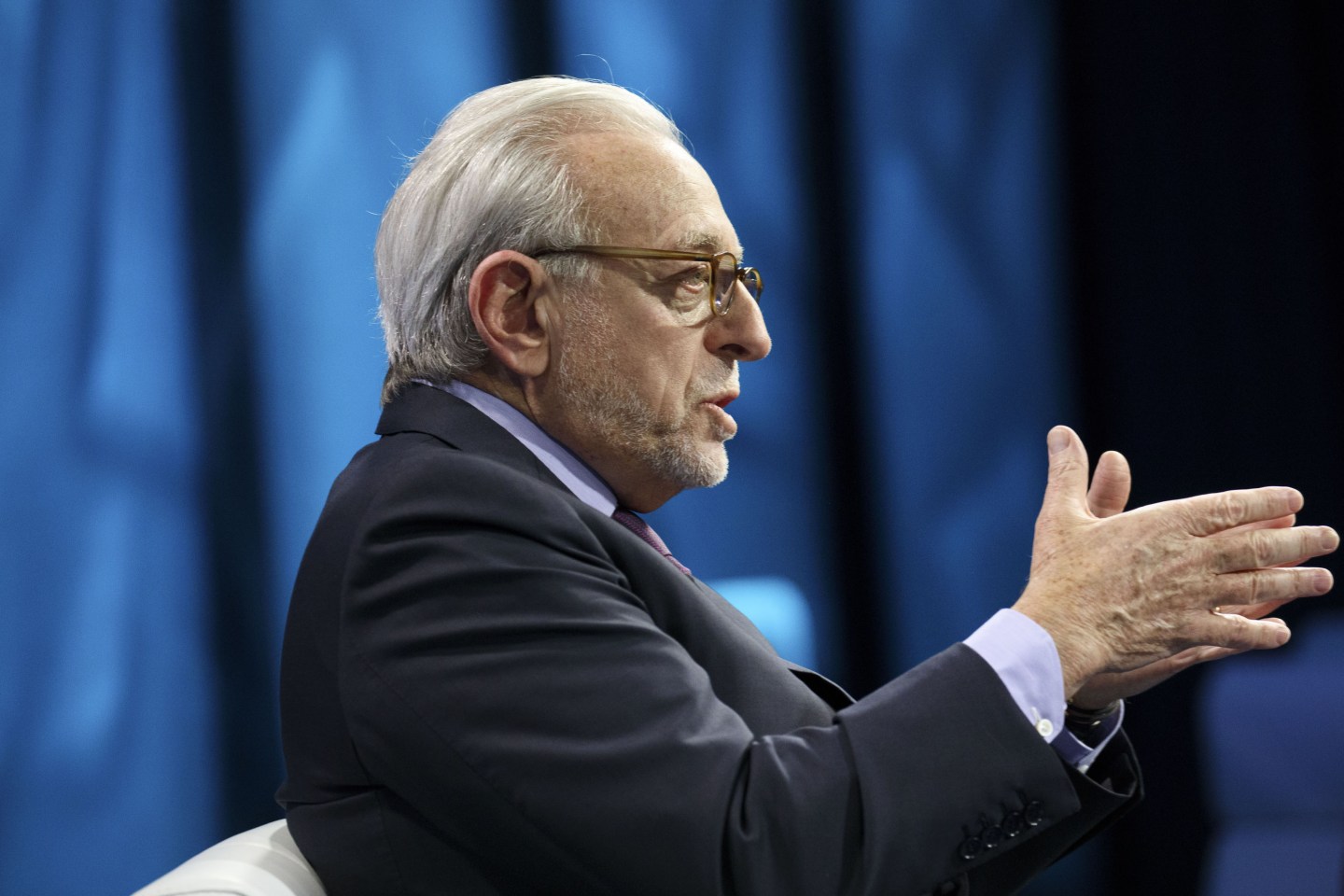
Nelson Peltz, chief executive officer of Trian Fund Management LP, speaks during the WSJDLive Global Technology Conference in Laguna Beach, California, U.S., on Tuesday, Oct. 25, 2016. The conference brings together an unmatched group of top CEOs, founders, pioneers, investors and luminaries to explore tech opportunities emerging around the world. Photographer: Patrick T. Fallon/Bloomberg via Getty ImagesPatrick T. Fallon/Bloomberg/Getty Images

To bolster its attack on Nelson Peltz, P&G has unveiled a 20-page analysis alleging that companies show little or no benefit from having Peltz’s Trian as an investor. Peltz, who’s mounted a proxy battle seeking a board seat at P&G’s October 10 annual meeting, has fired back. P&G’s newest broadside, charges Trian, is riddled with “material factual errors, data errors, calculation errors and misrepresentations of Trian’s and Nelson Peltz’s track records.”

While assessing P&G’s entire critique would be a lengthy undertaking, this writer was intrigued by one of the major points in dispute. P&G claims that this comparison with prominent rivals demonstrates Trian’s mediocre performance, and Trian counters that the P&G’s calculations are marred by glaring errors, and show no such thing.

After checking the numbers, my conclusion is that Trian is basically correct. P&G needs to work on its math.

On page 83 of its web presentation defending management’s performance and criticizing Peltz’s fitness as a director, P&G displays a bar chart comparing the record of Trian holding Mondelez to rivals Hershey and Nestle from 2013 to 2016, based on “Adjusted Operating Margin.” That measure is apparently EBIT, or earnings before interest and taxes, because the 15.3% margin shown for Mondelez, and its 470 basis point improvement over the past three years, are the EBIT numbers reported in its 10K.

According to the chart, Mondelez trailed Hershey in raising its margins, 590 bps to 470 bps, and barely beat Nestle’s 440 bps improvement. It also shows that Mondelez’s 2016 margins of 15.3% stand far below Hershey’s 24.4% and Nestle’s 19.5%.

In its rebuttal, Trian states that a basic error skews the comparison in favor of Hershey and Nestle. P&G, says Trian, is using EBIT for the earlier periods, and EBITDA for 2016 figures. Since EBITDA adds depreciation and amortization back to earnings, it gives a big boost to last year’s margins, and hugely inflates, and misstates, the improvement from 2013.

To see who’s right, I ran the numbers. Let’s start with Nestle. P&G states that it’s excluding coffee from its calculations, apparently because Mondelez recently sold its own coffee franchise. From Nestle’s 10Ks, I was unable to determine coffee’s precise contribution to sales and profits; however, even including coffee, the overall numbers demonstrate P&G’s faulty math. In 2013, Nestle posted an EBIT margin of 15.27%. In 2016, P&G claims that Nestle’s margins showed an improvement of over 400 bps, rising to 19.5%. But it appears that Nestle is using EBIT for 2013, and EBITDA for 2016. By my calculations, it’s only by adding back depreciation and amortization, raising EBIT by almost one-quarter, that Nestle’s record “improves” at all.

Trian claims that if EBIT in 2013 is compared with EBIT in 2016, Nestle added only 100 bps to its margins. That’s what my calculations show as well.

For Hershey, P&G’s numbers are even more misleading. They show EBIT for 2013 at 18.5%; that’s actually the figure for 2012. The correct number for 2013 is 19.2% As with Nestle, P&G the switches to EBIDA for 2016. So Hershey’s improvement is inflated twice, first by starting in the wrong year with a lower base, and second by ddding amortization and depreciation for 2016, while excluding them for 2013. Those factors combined boost Hershey’s gains by a factor of five, from the actual 115 basis points to a huge 590 basis points.

Trian’s position that Mondelez raised EBIT a lot more than either Hershey or Nestle appears correct. Comparing EBIT in one year to EBITDA in another is like comparing grapes to avocados. As I’ve previously stated, P&G’s weak defense of its own record is the best argument for putting Peltz on its board. These new, bogus numbers only strengthen the case for Trian.


About the Author
Shawn Tully
By Shawn TullySenior Editor-at-Large

Shawn Tully is a senior editor-at-large at Fortune, covering the biggest trends in business, aviation, politics, and leadership.

See full bioRight Arrow Button Icon

Latest in Finance

PoliticsAffordable Care Act (ACA)
With just days to go before ACA subsidies expire, Congress is about to wrap up its work with no consensus solution in sight
By Kevin Freking, Lisa Mascaro and The Associated PressDecember 13, 2025
9 minutes ago
InnovationRobots
Even in Silicon Valley, skepticism looms over robots, while ‘China has certainly a lot more momentum on humanoids’
By Matt O'Brien and The Associated PressDecember 13, 2025
39 minutes ago
HealthAffordable Care Act (ACA)
A Wisconsin couple was paying $2 a month for an ACA health plan. But as subsidies expire, it’s soaring to $1,600, forcing them to downgrade
By Ali Swenson and The Associated PressDecember 13, 2025
54 minutes ago
Julian Braithwaite is the Director General of the International Alliance for Responsible Drinking
CommentaryProductivity
Gen Z is drinking 20% less than Millennials. Productivity is rising. Coincidence? Not quite
By Julian BraithwaiteDecember 13, 2025
2 hours ago
carbon
Commentaryclimate change
Banking on carbon markets 2.0: why financial institutions should engage with carbon credits
By Usha Rao-MonariDecember 13, 2025
3 hours ago
Oracle chairman of the board and chief technology officer Larry Ellison delivers a keynote address during the 2019 Oracle OpenWorld on September 16, 2019 in San Francisco, California.
AIOracle
Oracle’s collapsing stock shows the AI boom is running into two hard limits: physics and debt markets
By Eva RoytburgDecember 13, 2025
6 hours ago

Most Popular

placeholder alt text
Economy
Tariffs are taxes and they were used to finance the federal government until the 1913 income tax. A top economist breaks it down
By Kent JonesDecember 12, 2025
1 day ago
placeholder alt text
Success
Apple cofounder Ronald Wayne sold his 10% stake for $800 in 1976—today it’d be worth up to $400 billion
By Preston ForeDecember 12, 2025
1 day ago
placeholder alt text
Success
40% of Stanford undergrads receive disability accommodations—but it’s become a college-wide phenomenon as Gen Z try to succeed in the current climate
By Preston ForeDecember 12, 2025
1 day ago
placeholder alt text
Economy
For the first time since Trump’s tariff rollout, import tax revenue has fallen, threatening his lofty plans to slash the $38 trillion national debt
By Sasha RogelbergDecember 12, 2025
20 hours ago
placeholder alt text
Economy
The Fed just ‘Trump-proofed’ itself with a unanimous move to preempt a potential leadership shake-up
By Jason MaDecember 12, 2025
19 hours ago
placeholder alt text
Success
At 18, doctors gave him three hours to live. He played video games from his hospital bed—and now, he’s built a $10 million-a-year video game studio
By Preston ForeDecember 10, 2025
3 days ago
Rankings
  • 100 Best Companies
  • Fortune 500
  • Global 500
  • Fortune 500 Europe
  • Most Powerful Women
  • Future 50
  • World’s Most Admired Companies
  • See All Rankings
Sections
  • Finance
  • Leadership
  • Success
  • Tech
  • Asia
  • Europe
  • Environment
  • Fortune Crypto
  • Health
  • Retail
  • Lifestyle
  • Politics
  • Newsletters
  • Magazine
  • Features
  • Commentary
  • Mpw
  • CEO Initiative
  • Conferences
  • Personal Finance
  • Education
Customer Support
  • Frequently Asked Questions
  • Customer Service Portal
  • Privacy Policy
  • Terms Of Use
  • Single Issues For Purchase
  • International Print
Commercial Services
  • Advertising
  • Fortune Brand Studio
  • Fortune Analytics
  • Fortune Conferences
  • Business Development
About Us
  • About Us
  • Editorial Calendar
  • Press Center
  • Work At Fortune
  • Diversity And Inclusion
  • Terms And Conditions
  • Site Map

© 2025 Fortune Media IP Limited. All Rights Reserved. Use of this site constitutes acceptance of our Terms of Use and Privacy Policy | CA Notice at Collection and Privacy Notice | Do Not Sell/Share My Personal Information
FORTUNE is a trademark of Fortune Media IP Limited, registered in the U.S. and other countries. FORTUNE may receive compensation for some links to products and services on this website. Offers may be subject to change without notice.