• Home
  • News
  • Fortune 500
  • Tech
  • Finance
  • Leadership
  • Lifestyle
  • Rankings
  • Multimedia
TechGlobal 500

Reebok Is Bringing Some of Its Shoemaking Back to U.S.

By
John Kell
John Kell
Contributing Writer and author of CIO Intelligence
Down Arrow Button Icon
By
John Kell
John Kell
Contributing Writer and author of CIO Intelligence
Down Arrow Button Icon
October 20, 2016, 2:58 PM ET
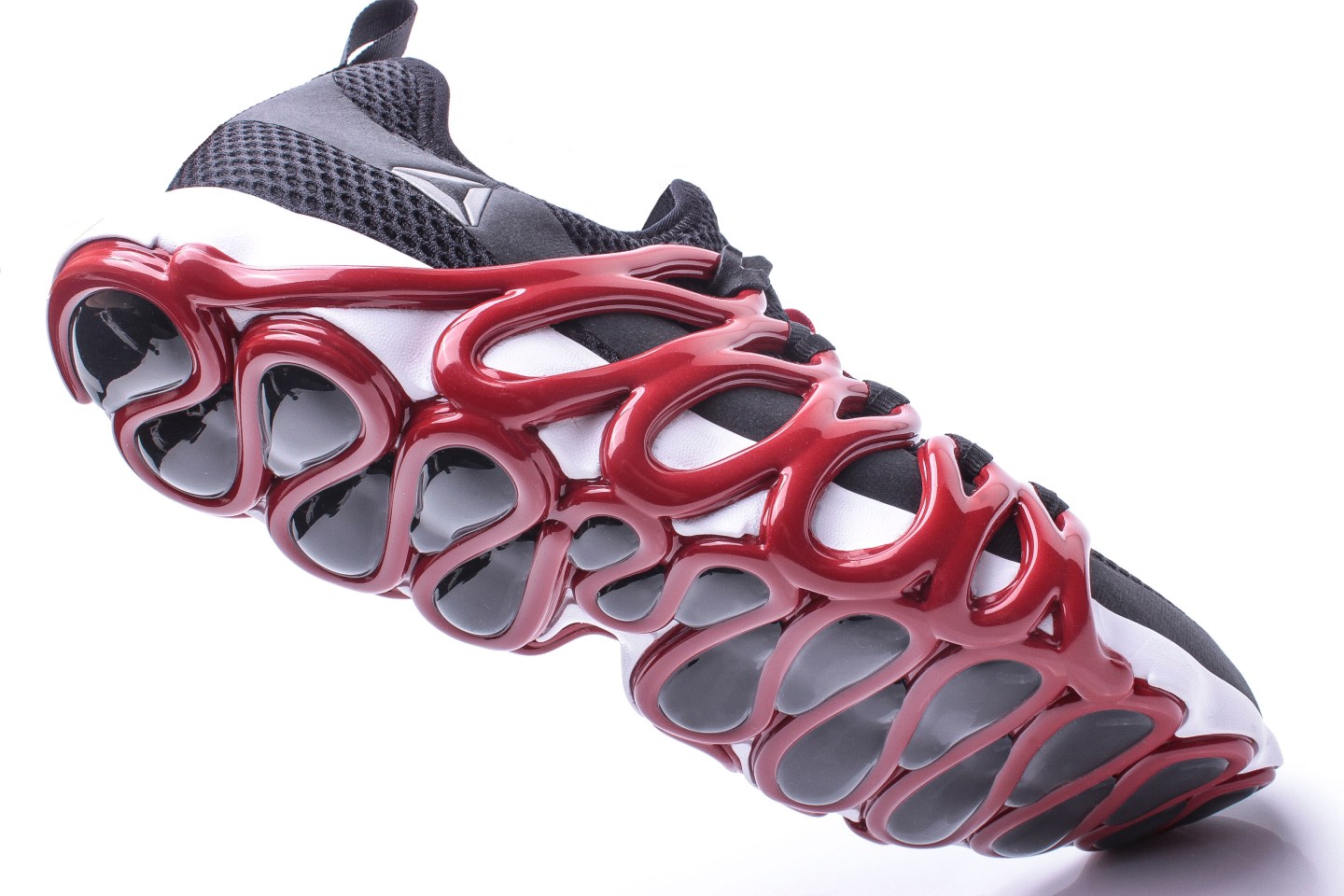
Courtesy of Reebok

Reebok is bringing some manufacturing capabilities to the United States as the athletic-gear maker unveiled plans to open a new manufacturing lab that relies on futuristic liquid material and 3D drawing.

Fortune has learned that in early 2017, the Adidas-owned brand will open its own Liquid Factory manufacturing lab in Lincoln, R.I. in a collaboration with footwear specialist AF Group Inc. At this lab, Reebok’s team will have the ability to experiment with new manufacturing processes, creating and customizing shoes at a faster pace than if they relied on shoe molds that are these days constructed in China.

“Getting faster and closer to the consumer is 100% what we are after,” says Bill McInnis, Head of Future at Reebok, in an interview. “If you can take out shipping and [making] molds that take time to formulate, it moves you closer to the consumer.”

What exactly is “Reebok Future”? McInnis has steered this division the past few years after Reebok determined it wanted a team of veteran designers, engineers, and prototype experts to focus on new manufacturing processes, rather than worry about churning out products that will generate sales to hit quarterly targets. This long-term approach was a way for Reebok to start from scratch when it thinks about how to manufacture athletic shoes.

“The footwear industry hasn’t changed dramatically from a manufacturing standpoint over the past 30 years,” McInnis says. He took inspiration from the auto industry, in particular Tesla Motors (TSLA), as a prime example of what innovation can occur when a company doesn’t rely on traditional processes. “If you were to start a shoe company tomorrow, how would you do it?” asks McInnis rhetorically, when speaking of the mandate his team follows.

Reebok Future honed in on the molds that are used to make shoes today. These molds are expensive, time consuming, and wasteful. Reebok wanted to make shoes that didn’t rely on molds—which are made in Asian factories, where much of the shoe industry’s manufacturing takes place.

To eliminate molds, Reebok relies on an urethane-based liquid developed by chemical giant BASF. That material is then drawn on the entire shoe outsole, resulting in a three-dimensional fit. The first concept shoe to come out of this process is a running shoe that is called the Reebok Liquid Speed. Reebok is only releasing a limited run of 300, at $189.50 a pair. That shoe was designed and assembled in Michigan and Massachusetts. The Rhode Island lab will aim to leverage that liquid technology for future shoe lines.

https://www.youtube.com/watch?v=a31fLiylg0c&feature=youtu.be

A handful of brands are tinkering with new manufacturing processes, including both Under Armour (UA) and New Balance, each of which have announced 3D-printed running shoes earlier this year. Those shoe launches often come at high price points and limited production runs.

McInnis explains that Reebok didn’t want to go in that direction because 3D printing today is too slow and too expensive. “Liquid drawing is our idea of taking 3D printing to a different place,” he says. His hope is that the Rhode Island lab can create entire lines of shoes that will scale far beyond a few hundred pairs in limited-time offers that only appeal to die-hard sneakerheads.

Interestingly, Reebok is following sibling Adidas in bringing some manufacturing to the U.S. Earlier this year, Adidas said it would open a new shoemaking factory in the Atlanta region. Under Armour has alluded it too could make such a bold move.

All of this movement again returns back to the American consumer. Brands think they’ll have an edge if they can more rapidly respond to trends by having manufacturing in markets that serve the target customers.

“It isn’t just about the U.S., it is local-for-local globally,” McInnis says.

About the Author
By John KellContributing Writer and author of CIO Intelligence

John Kell is a contributing writer for Fortune and author of Fortune’s CIO Intelligence newsletter.

See full bioRight Arrow Button Icon

Latest in Tech

Big TechStreaming
Trump warns Netflix-Warner deal may pose antitrust ‘problem’
By Hadriana Lowenkron, Se Young Lee and BloombergDecember 7, 2025
6 hours ago
Big TechOpenAI
OpenAI goes from stock market savior to burden as AI risks mount
By Ryan Vlastelica and BloombergDecember 7, 2025
6 hours ago
AIData centers
HP’s chief commercial officer predicts the future will include AI-powered PCs that don’t share data in the cloud
By Nicholas GordonDecember 7, 2025
8 hours ago
Future of WorkJamie Dimon
Jamie Dimon says even though AI will eliminate some jobs ‘maybe one day we’ll be working less hard but having wonderful lives’
By Jason MaDecember 7, 2025
13 hours ago
CryptoCryptocurrency
So much of crypto is not even real—but that’s starting to change
By Pete Najarian and Joe BruzzesiDecember 7, 2025
17 hours ago
Elon Musk
Big TechSpaceX
SpaceX to offer insider shares at record-setting $800 billion valuation
By Edward Ludlow, Loren Grush, Lizette Chapman, Eric Johnson and BloombergDecember 6, 2025
1 day ago

Most Popular

placeholder alt text
Real Estate
The 'Great Housing Reset' is coming: Income growth will outpace home-price growth in 2026, Redfin forecasts
By Nino PaoliDecember 6, 2025
2 days ago
placeholder alt text
AI
Nvidia CEO says data centers take about 3 years to construct in the U.S., while in China 'they can build a hospital in a weekend'
By Nino PaoliDecember 6, 2025
2 days ago
placeholder alt text
Economy
The most likely solution to the U.S. debt crisis is severe austerity triggered by a fiscal calamity, former White House economic adviser says
By Jason MaDecember 6, 2025
1 day ago
placeholder alt text
Economy
JPMorgan CEO Jamie Dimon says Europe has a 'real problem’
By Katherine Chiglinsky and BloombergDecember 6, 2025
1 day ago
placeholder alt text
Big Tech
Mark Zuckerberg rebranded Facebook for the metaverse. Four years and $70 billion in losses later, he’s moving on
By Eva RoytburgDecember 5, 2025
3 days ago
placeholder alt text
Uncategorized
Transforming customer support through intelligent AI operations
By Lauren ChomiukNovember 26, 2025
11 days ago
Rankings
  • 100 Best Companies
  • Fortune 500
  • Global 500
  • Fortune 500 Europe
  • Most Powerful Women
  • Future 50
  • World’s Most Admired Companies
  • See All Rankings
Sections
  • Finance
  • Leadership
  • Success
  • Tech
  • Asia
  • Europe
  • Environment
  • Fortune Crypto
  • Health
  • Retail
  • Lifestyle
  • Politics
  • Newsletters
  • Magazine
  • Features
  • Commentary
  • Mpw
  • CEO Initiative
  • Conferences
  • Personal Finance
  • Education
Customer Support
  • Frequently Asked Questions
  • Customer Service Portal
  • Privacy Policy
  • Terms Of Use
  • Single Issues For Purchase
  • International Print
Commercial Services
  • Advertising
  • Fortune Brand Studio
  • Fortune Analytics
  • Fortune Conferences
  • Business Development
About Us
  • About Us
  • Editorial Calendar
  • Press Center
  • Work At Fortune
  • Diversity And Inclusion
  • Terms And Conditions
  • Site Map

© 2025 Fortune Media IP Limited. All Rights Reserved. Use of this site constitutes acceptance of our Terms of Use and Privacy Policy | CA Notice at Collection and Privacy Notice | Do Not Sell/Share My Personal Information
FORTUNE is a trademark of Fortune Media IP Limited, registered in the U.S. and other countries. FORTUNE may receive compensation for some links to products and services on this website. Offers may be subject to change without notice.