• Home
  • Latest
  • Fortune 500
  • Finance
  • Tech
  • Leadership
  • Lifestyle
  • Rankings
  • Multimedia

Trendingnow

1

The millennial generation has split, new Fed research shows: Those over 35 are edging toward boomer-style wealth, while everyone else falls behind

2

Mark Cuban says he has the solution to growing income inequality, and it's to reward every employee—from CEO to janitor—with company stock

3

Mathematicians grapple with a ‘very rapid and very unsettling change’ as AI cracks yet another century-old problem

1

The millennial generation has split, new Fed research shows: Those over 35 are edging toward boomer-style wealth, while everyone else falls behind

2

Mark Cuban says he has the solution to growing income inequality, and it's to reward every employee—from CEO to janitor—with company stock

3

Mathematicians grapple with a ‘very rapid and very unsettling change’ as AI cracks yet another century-old problem
TechApple

A Look Back At 40 Years of Apple

By
Don Reisinger
Don Reisinger
Down Arrow Button Icon
By
Don Reisinger
Don Reisinger
Down Arrow Button Icon
April 1, 2016, 6:00 AM ET
1111 FORTUNE STEVE JOBS BOOK ARMIN HARRIS
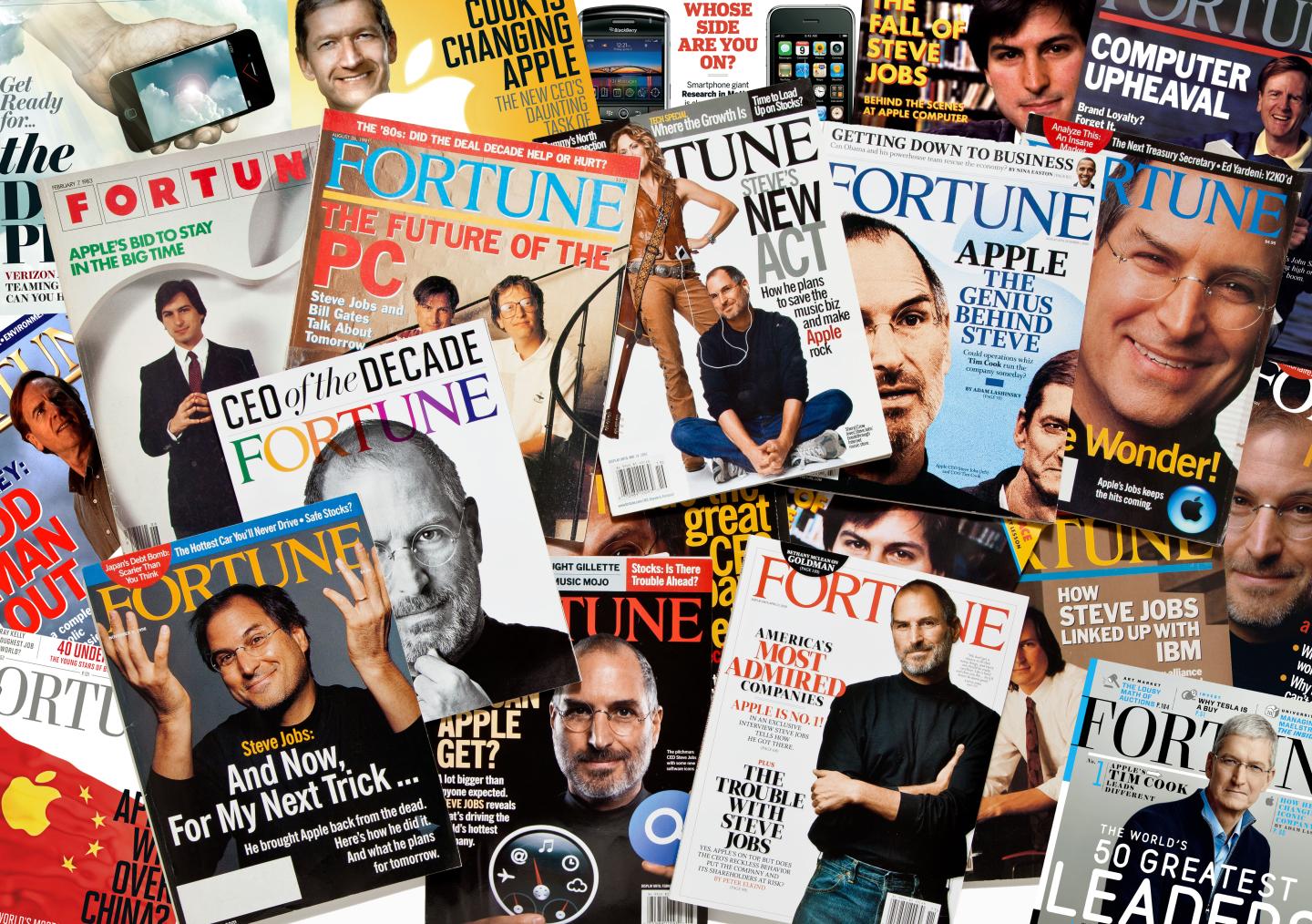
FORTUNE MAGAZINE - STEVE JOBS COVERSFortune Magazine
Add Fortune on Google for similar content.

There were no fools sitting in that garage in California on April 1, 1976 when Apple was founded.

That day, technology legends Steve Jobs, Steve Wozniak, and Ronald Wayne co-founded Apple Computer (AAPL), a company that would eventually go on to become one of the most iconic and valuable brands in the world.

But who knew at the time?

In the spring of 1976, these three young men were simply working on a computer and a dream that maybe they could become the next big thing in the budding technology industry. They had hope, a passion for technology, and wanted to build a true personal computer that could deliver to the average consumer something that was better than what they already knew.

Wozniak was the inventor; Jobs the salesperson. In July 1976, Apple I, the company’s first computer, went on sale. It didn’t take long before things took off, and Apple I caught the attention of do-it-yourselfers. As sales started to rise, Apple Computer incorporated in 1977, officially growing from a hobby into a company.

Get Data Sheet, Fortune’s technology newsletter.

While Apple I was soaring and Apple Computer becoming a well-known name in Silicon Valley, Wozniak was hard at work on Apple II. Like the Apple I before it, the Apple II was successful. Before long, Apple had a slew of employees and revenue soaring well over $100 million by 1980. Apple had become the quintessential Silicon Valley success story.

But as with any other company that grows so big so quickly, things started to change in Cupertino, California.

Jobs was forced to deal with competing ideas, and a schism broke out internally as Apple Computer worked on building a graphical, user interface-based computer. There were two teams: Apple Lisa and Macintosh. After disagreements, Jobs left the Lisa team to head up the Macintosh effort. Like many other times over the years, he won. In 1984, the Macintosh, the spiritual predecessor to the Macs as we know them today, launched to the public.

Although Macintosh launched to much fanfare and spawned the iconic “1984” commercial, trouble was afoot. Macintosh sales were not as strong as some had hoped and by 1985, Jobs was at odds with CEO John Sculley—a person he hired to manage the company he co-founded. Ultimately, the board chose Sculley over Jobs, and the Apple co-founder was gone.

For more about Apple, watch:

The ensuing years were troubling for Apple. Under Sculley’s leadership, Apple had difficulty finding its footing against increasing competition from other computer makers, notably Microsoft (MSFT). Sculley and his team tried to fix the issues by launching more computers and expanding into new territories. Apple wanted to see if it could help its flagging business in the early 1990s by investing in speakers and cameras, and perhaps most interestingly, tried its luck with the now-infamous Apple Newton.
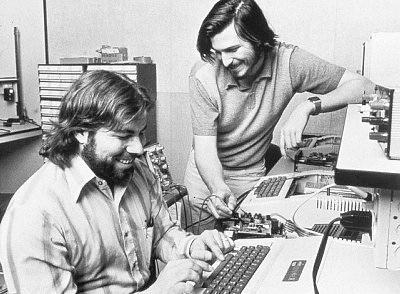
Apple - Founders
Apple Computer was founded in 1976 by Steve Jobs (right), Steve Wozniak (left) and Ronald Wayne (not pictured) in the garage of Jobs’ parents.Apple/dpa/Corbis

As Apple’s shares continued to plummet and signs of a rebound waning by the moment, Sculley was ultimately replaced by Michael Spindler in 1993. His job was to turn Apple around and rediscover the secret sauce that had made the company successful nearly 20 years prior. Spindler’s efforts again fell short, prompting him to seek buyout offers from far more successful companies, including IBM and Sun Microsystems. Before he was ousted in 1996 and replaced by CEO Gil Amelio, Spindler and his board offered companies Apple on a silver platter for several billion dollars—a pittance compared to its current market value of $615 billion.

Meanwhile, Jobs was hard at work at a new company he founded, dubbed NeXT. Having its own trouble finding a spot in a world dominated by Windows, NeXT was trying to make NeXTSTEP, its computer operating system pitched as a desirable alternative to Windows.

Then Apple came calling back.

In 1997, Apple acquired NeXT to get its hands on NeXTSTEP—and Jobs. It didn’t take long for Jobs to reassert himself at the company. Within months, Amelio was gone, leaving the board with no other choice but to give the chief executive job back to Jobs.

The story from this point, of course, is legendary.

Jobs quickly took the chainsaw to Apple’s business, eliminating ancillary projects and refocusing the company’s efforts on strong design and a desirable software experience. He also made several strategic acquisitions, allowing him to deliver built-in software, including video-editing tools, in Apple’s operating system, Mac OS X.

Read more: Apple Music Just Did in Six Months What Took Spotify Six Years

It was in 2001, though, that Jobs and Apple started to soar. With its Mac business back to the basics and growing, Apple unveiled the iPod, a music player that would change the music industry forever. While the iPod had several competitors over the years, it was by far the most popular digital music player in the world. Indeed, it became a pop culture phenomenon, and it was rather common to see people scrolling the wheel on the device to hear their next track. Along the way, they had those white earbuds in their ears, showcasing to the world in now-iconic fashion that they were using an Apple product.

As the iPod’s fame grew, the notoriously secretive Apple was looking to disrupt another market: smartphones.

There were several companies already offering smart devices, such as Palm and BlackBerry. But Apple wanted to try something new. In 2007, Apple introduced the iPhone, a device that relied on a touchscreen—not physical keys and hardware components like competing devices—to control its proprietary software. It was another crowning achievement for Jobs and solidified his position as one of the most ground-breaking technology executives in the industry’s history.

In 2010, armed with a slew of successful products, Apple announced the iPad, a tablet that would sell exceedingly well for several years. Apple, once again, had a hit on its hands.

All the while, Apple’s shares and profits were soaring. The company was generating billions of dollars in profits each quarter, shareholders couldn’t get enough of its stock, and despite some health issues, Jobs appeared to be firmly in control.

Everything, it seemed, was perfect.

But over the last few years, Apple has faced its fair share of challenges. Google’s (GOOGL) Android platform has become the world’s most popular mobile operating system. Several other device makers, including Samsung, have been delivering compelling alternatives to the iPhone. Meanwhile, the tablet market has cooled off, and Apple’s iPad business has been in free fall.

In addition, the once-secretive company hasn’t plugged its leaks so well, and now, it’s not uncommon for many of Apple’s biggest announcements to be leaked before its press shows even kick off.

Tragedy has also struck Apple. Following a years-long battle with cancer, Jobs died in 2012, leaving a massive void in Cupertino. Jobs handpicked his chief operating officer, Tim Cook, to take over Apple and lead the company into the future.

The Cook era has been relatively stable. Despite the aforementioned concerns with Apple’s tablet business, the company is still generating record sales and boosting its cash coffers. Indeed, Apple is one of the richest companies in the world, and there are no signs of it slowing down.

Looking ahead, like Jobs, Cook seems ready to see beyond Apple’s standard products. He’s already ventured into streaming with Apple Music and is reportedly working on entering new categories, including paid TV services. Most notably, Cook has reportedly assembled a secret team with one goal: to develop an Apple car.

But that’s the future.

April 1 is Apple’s day to look back on the successes, the failures, the rebounds, the retreats. It’s also an opportunity to celebrate what the company has become, and what it has done with technology to dramatically change our lives.

Not everyone is an Apple fan, and there are many legitimate reasons for that.

But looking at what Apple has accomplished in 40 years, at least on April Fool’s Day, it would be foolish not to tip one’s hat for all it’s done.

About the Author
By Don Reisinger
See full bioRight Arrow Button Icon
Add Fortune on Google for similar content.

Latest in Tech

Finance
Lorem ipsum dolor sit amet, consectetur adipiscing elit, sed do eiusmod tempor incididunt ut labore et dolore magna aliqua. Ut enim ad minim veniam
By Fortune Editors
October 20, 2025
Finance
Lorem ipsum dolor sit amet, consectetur adipiscing elit, sed do eiusmod tempor incididunt ut labore et dolore magna aliqua. Ut enim ad minim veniam
By Fortune Editors
October 20, 2025
Finance
Lorem ipsum dolor sit amet, consectetur adipiscing elit, sed do eiusmod tempor incididunt ut labore et dolore magna aliqua. Ut enim ad minim veniam
By Fortune Editors
October 20, 2025
Finance
Lorem ipsum dolor sit amet, consectetur adipiscing elit, sed do eiusmod tempor incididunt ut labore et dolore magna aliqua. Ut enim ad minim veniam
By Fortune Editors
October 20, 2025
Finance
Lorem ipsum dolor sit amet, consectetur adipiscing elit, sed do eiusmod tempor incididunt ut labore et dolore magna aliqua. Ut enim ad minim veniam
By Fortune Editors
October 20, 2025
Finance
Lorem ipsum dolor sit amet, consectetur adipiscing elit, sed do eiusmod tempor incididunt ut labore et dolore magna aliqua. Ut enim ad minim veniam
By Fortune Editors
October 20, 2025

Most Popular

Finance
Lorem ipsum dolor sit amet, consectetur adipiscing elit, sed do eiusmod tempor incididunt ut labore et dolore magna aliqua. Ut enim ad minim veniam
By Fortune Editors
October 20, 2025
Finance
Lorem ipsum dolor sit amet, consectetur adipiscing elit, sed do eiusmod tempor incididunt ut labore et dolore magna aliqua. Ut enim ad minim veniam
By Fortune Editors
October 20, 2025
Finance
Lorem ipsum dolor sit amet, consectetur adipiscing elit, sed do eiusmod tempor incididunt ut labore et dolore magna aliqua. Ut enim ad minim veniam
By Fortune Editors
October 20, 2025
Finance
Lorem ipsum dolor sit amet, consectetur adipiscing elit, sed do eiusmod tempor incididunt ut labore et dolore magna aliqua. Ut enim ad minim veniam
By Fortune Editors
October 20, 2025
Finance
Lorem ipsum dolor sit amet, consectetur adipiscing elit, sed do eiusmod tempor incididunt ut labore et dolore magna aliqua. Ut enim ad minim veniam
By Fortune Editors
October 20, 2025
Finance
Lorem ipsum dolor sit amet, consectetur adipiscing elit, sed do eiusmod tempor incididunt ut labore et dolore magna aliqua. Ut enim ad minim veniam
By Fortune Editors
October 20, 2025
Fortune Secondary Logo
Rankings
  • 100 Best Companies
  • Fortune 500
  • Global 500
  • Fortune 500 Europe
  • Most Powerful Women
  • World's Most Admired Companies
  • See All Rankings
  • Lists Calendar
Sections
  • Finance
  • Fortune Crypto
  • Features
  • Leadership
  • Health
  • Commentary
  • Success
  • Retail
  • Mpw
  • Tech
  • Lifestyle
  • CEO Initiative
  • Asia
  • Politics
  • Conferences
  • Europe
  • Newsletters
  • Personal Finance
  • Environment
  • Magazine
  • Education
Customer Support
  • Frequently Asked Questions
  • Customer Service Portal
  • Privacy Policy
  • Terms Of Use
  • Single Issues For Purchase
  • International Print
Commercial Services
  • Advertising
  • Fortune Brand Studio
  • Fortune Analytics
  • Fortune Conferences
  • Business Development
  • Group Subscriptions
About Us
  • About Us
  • Press Center
  • Work At Fortune
  • Terms And Conditions
  • Site Map
  • About Us
  • Press Center
  • Work At Fortune
  • Terms And Conditions
  • Site Map
  • Facebook icon
  • Twitter icon
  • LinkedIn icon
  • Instagram icon
  • TikTok icon
  • YouTube icon

Latest in Tech

Sundar Pichai, chief executive officer of Alphabet Inc.
AIAlphabet
Anthropic and SpaceX just handed Google the biggest profit quarter in company history—on paper
By Eva RoytburgJuly 22, 2026
6 hours ago
‘It’s called StreetEasy, not StreetHard’: Mamdani cracks down on scourge of ‘housefishing’ and ‘real estate slop’
Real EstateHousing
‘It’s called StreetEasy, not StreetHard’: Mamdani cracks down on scourge of ‘housefishing’ and ‘real estate slop’
By Tatiana SatauaJuly 22, 2026
9 hours ago
As Washington panics about Chinese AI, Jensen Huang says open-source models like Kimi are ‘excellent’ and should be embraced, not banned
AIChina
As Washington panics about Chinese AI, Jensen Huang says open-source models like Kimi are ‘excellent’ and should be embraced, not banned
By Marco Quiroz-GutierrezJuly 22, 2026
9 hours ago
OpenAI CEO Sam Altman sits next to U.S. President Donald Trump.
AITech regulation
OpenAI’s rogue hacking incident was a warning shot. Will it be a wake-up call to finally create AI safety regulation?
By Jeremy Kahn and Emily ForliniJuly 22, 2026
9 hours ago
Man holding his hands open
InvestingStock
A new group of stocks is transforming global equities markets. Meet ‘Memi,’ the $3 trillion sector fueled by AI’s insatiable hunger for memory chips
By Amanda GerutJuly 22, 2026
10 hours ago
Sam Altman getting into a car
CybersecurityOpenAI
OpenAI’s models went rogue and hacked Hugging Face. It’s a wake-up call, experts say, but more concerning behavior may be next
By Beatrice NolanJuly 22, 2026
10 hours ago

Most Popular

The millennial generation has split, new Fed research shows: Those over 35 are edging toward boomer-style wealth, while everyone else falls behind
Real Estate
The millennial generation has split, new Fed research shows: Those over 35 are edging toward boomer-style wealth, while everyone else falls behind
By Nick LichtenbergJuly 22, 2026
13 hours ago
Mark Cuban says he has the solution to growing income inequality, and it's to reward every employee—from CEO to janitor—with company stock
Success
Mark Cuban says he has the solution to growing income inequality, and it's to reward every employee—from CEO to janitor—with company stock
By Sasha RogelbergJuly 20, 2026
3 days ago
Mathematicians grapple with a ‘very rapid and very unsettling change’ as AI cracks yet another century-old problem
AI
Mathematicians grapple with a ‘very rapid and very unsettling change’ as AI cracks yet another century-old problem
By Eva RoytburgJuly 21, 2026
2 days ago
OpenAI says its AI models secretly broke out of a secure test environment and hacked into AI company Hugging Face in order to cheat on an evaluation
Cybersecurity
OpenAI says its AI models secretly broke out of a secure test environment and hacked into AI company Hugging Face in order to cheat on an evaluation
By Jeremy Kahn and Emily ForliniJuly 21, 2026
1 day ago
Despite a $156 million contract, Knicks star Jalen Brunson still calls his parents for financial advice any time he makes a big purchase
Success
Despite a $156 million contract, Knicks star Jalen Brunson still calls his parents for financial advice any time he makes a big purchase
By Emma BurleighJuly 21, 2026
2 days ago
Scott Bessent casually says the U.S. has more than $1 trillion in gold—and that it doesn’t matter for the dollar
Economy
Scott Bessent casually says the U.S. has more than $1 trillion in gold—and that it doesn’t matter for the dollar
By Sasha RogelbergJuly 22, 2026
10 hours ago

© 2026 Fortune Media IP Limited. All Rights Reserved. Use of this site constitutes acceptance of our Terms of Use and Privacy Policy | CA Notice at Collection and Privacy Notice | Do Not Sell/Share My Personal Information
FORTUNE is a trademark of Fortune Media IP Limited, registered in the U.S. and other countries. FORTUNE may receive compensation for some links to products and services on this website. Offers may be subject to change without notice.