• Home
  • Latest
  • Fortune 500
  • Finance
  • Tech
  • Leadership
  • Lifestyle
  • Rankings
  • Multimedia

Trendingnow

1

Jensen Huang made his $172 billion fortune on AI chips. His family's $75 million gift to Vanderbilt argues art decides what technology is for

2

The millennial generation has split, new Fed research shows: Those over 35 are edging toward boomer-style wealth, while everyone else falls behind

3

The $39 trillion U.S. national debt isn’t as high as Japan’s and Singapore’s relative to economy size—and yet it's still worse somehow

1

Jensen Huang made his $172 billion fortune on AI chips. His family's $75 million gift to Vanderbilt argues art decides what technology is for

2

The millennial generation has split, new Fed research shows: Those over 35 are edging toward boomer-style wealth, while everyone else falls behind

3

The $39 trillion U.S. national debt isn’t as high as Japan’s and Singapore’s relative to economy size—and yet it's still worse somehow
CommentarySyria

Here’s What the U.S. Can Do to Save Syria From Starvation

By
Daniel Serwer
Daniel Serwer
and
Bethany Cianciolo
Bethany Cianciolo
Down Arrow Button Icon
By
Daniel Serwer
Daniel Serwer
and
Bethany Cianciolo
Bethany Cianciolo
Down Arrow Button Icon
January 13, 2016, 12:17 PM ET
TOPSHOT-SYRIA-CONFLICT-AID
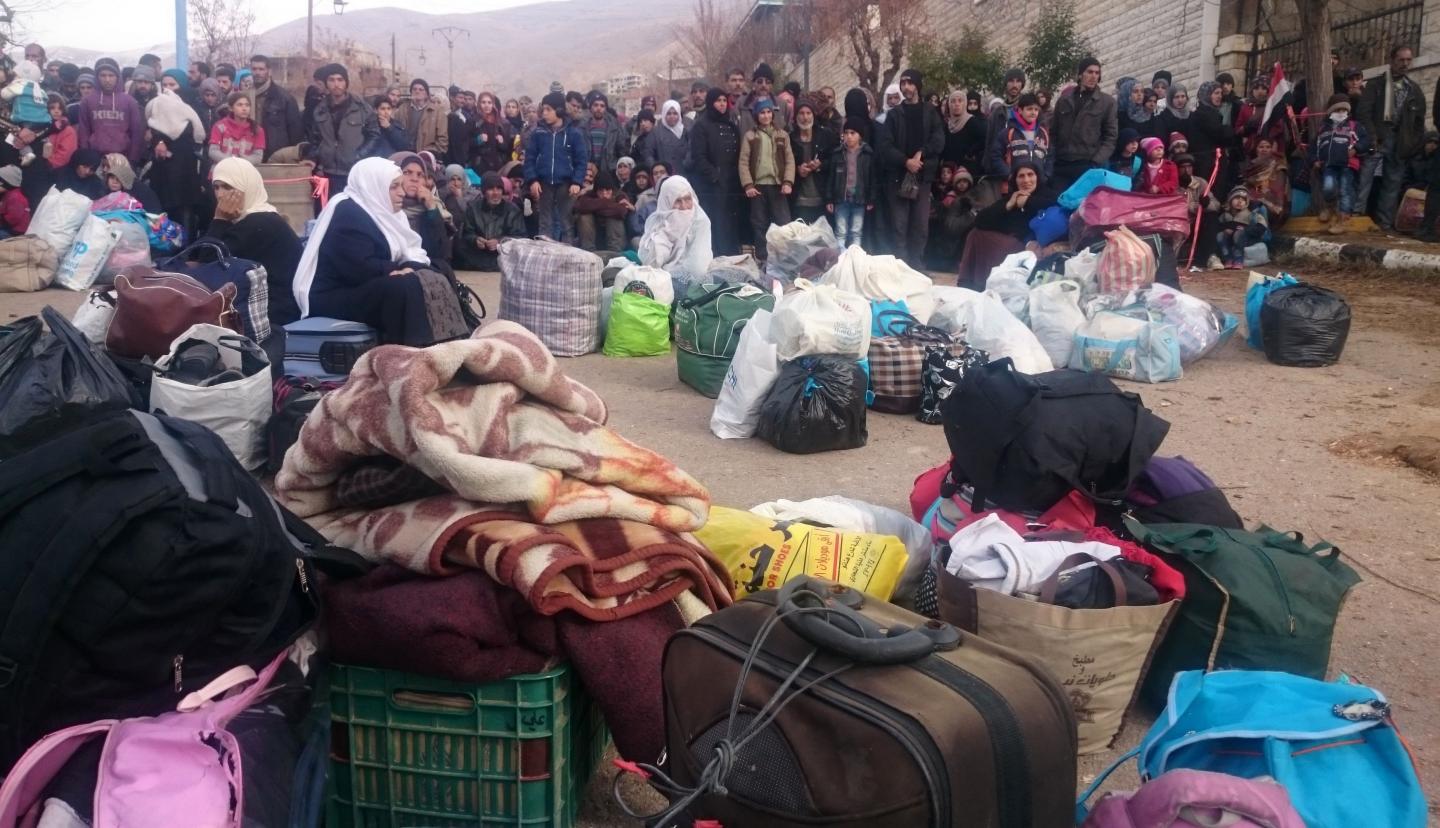
TOPSHOT - Syrians wait for the arrival of an aid convoy on January 11, 2016 in the besieged town of Madaya as part of a landmark six-month deal reached in September for an end to hostilities in those areas in exchange for humanitarian assistance. Forty-four trucks operated by the International Committee of the Red Cross, the Syrian Red Crescent, the United Nations and World Food Programme left from Damascus to enter Madaya, where more than two dozen people are reported to have starved to death. / AFP / Marwan IBRAHIM (Photo credit should read MARWAN IBRAHIM/AFP/Getty Images)Photograph by Marwan Ibrahim — AFP via Getty Images
Add Fortune on Google for similar content.

Earlier this week, the international community celebrated as a UN convoy carrying food and medical supplies arrived in the besieged Syrian town of Madaya, where reliable reports and photographs of starving people emerged over past the few weeks. The Syrian government had besieged Madaya since July, since it’s a rebel-held town northeast of Damascus near the Lebanese border—an area President Bashar al Assad regards as vital to the “useful” part of Syria he seeks to control.

But Madaya isn’t alone, and it’s a small part of the problem. There are dozens of besieged towns in Syria. At least 4 million people in Syria are already dependent on humanitarian aid shipments, while another 4 million are still in need of them. The relatively fortunate are the more than 4 million who have fled the country—only a fraction of those who have any hope of making it to Europe. And a tiny fraction of that fraction constitutes the few thousand who might, after extensive screening by multiple intelligence and law enforcement agencies, make it to the United States, provided the Congress doesn’t block their requests for asylum.

No matter how big the headlines and how tragic the circumstances, Madaya is just a piece of the humanitarian problem in Syria, as are refugees trying to enter the United States. Dealing with Syria by providing humanitarian aid shipments and taking in a few thousand refugees is like trying to empty the Atlantic Ocean with a pail. Every bucketful may make you feel like you are doing something, but there is no way you are going to succeed.

The problem of Syria is above all a political problem inside of Syria. Bashar al Assad is a dictator. When his multi-sectarian, multi-ethnic people peacefully protested in 2011 for “dignity” and “freedom,” he responded with a violent army crackdown in order to preserve his own hold on power. This drove some Syrians to violent resistance, enabling him to frame his crackdown as a fight against terrorists.


The Assad regime has received ample support in the rebel fight from Iran and Russia, neither of which targets extremists. Both are more concerned with protecting Bashar al Assad from moderate rebels, as Tehran and Moscow stand to lose a vital toehold in Syria if Assad falls. Iran provides both its Revolutionary Guard Corps to train and lead Syrian security forces, as well as the Lebanese Hezbollah fighters it controls. Russia has long provided arms and ammunition, but felt compelled to intervene with its own air forces this fall to prevent the fall of Latakia, the heartland of support for the Assad regime threatened by rebels.

Assad’s violent crackdown has driven some Syrians toward the most effective fighters against the regime, who are often (not always) Islamist extremists, including some associated with the Al Qaeda affiliate Jabhat al Nusra. The breakdown of law and order has also opened the door to what the West refers to as “foreign fighters,” attracted to Syria by the radical Islamic State. Relatively moderate rebels, who dominate parts of Central and Northern Syria, get assistance from the United States. Saudi Arabia, Turkey, and Qatar have provided military support to Assad’s opponents in a far less discriminating way, leading to charges that they support extremists.

President Obama has chosen to fight the Islamic State and Jabhat al Nusra—both of which threaten and commit harm to Americans—but not to attack the Assad regime, which on the whole does not present a direct risk to the U.S. Washington is providing upwards of $1 billion per year (a total of $4.5 billion since the war started) in humanitarian assistance, which does little to relieve the Syrians’ plight. The total UN-estimated requirement is $7.7 billion this year alone.

That is a lot of money. But it won’t buy peace in Syria, or even relief for all of the Syrians who need it. The UN is to convene talks aimed at reaching a political settlement Jan. 25 in Geneva. The recent dust-up over Saudi Arabia’s execution of a Shia cleric and Iran’s trashing of the Saudi embassy will make the talks even more difficult than they would’ve already been. But the best relief for starving Syrians and the best way to prevent more refugees from fleeing their country is a political settlement that ends Assad’s dictatorship and begins a political transition. It will happen sooner or later. The objective should be to make it happen sooner and to try to guide the process away from extremist control, which is where things will end up if the fighting continues.

Daniel Serwer is a professor at the Johns Hopkins School of Advanced International Studies and a scholar at the Middle East Institute. He tweets @DanielSerwer.

About the Authors
By Daniel Serwer
See full bioRight Arrow Button Icon
By Bethany Cianciolo
See full bioRight Arrow Button Icon
Add Fortune on Google for similar content.

Latest in Commentary

Finance
Lorem ipsum dolor sit amet, consectetur adipiscing elit, sed do eiusmod tempor incididunt ut labore et dolore magna aliqua. Ut enim ad minim veniam
By Fortune Editors
October 20, 2025
Finance
Lorem ipsum dolor sit amet, consectetur adipiscing elit, sed do eiusmod tempor incididunt ut labore et dolore magna aliqua. Ut enim ad minim veniam
By Fortune Editors
October 20, 2025
Finance
Lorem ipsum dolor sit amet, consectetur adipiscing elit, sed do eiusmod tempor incididunt ut labore et dolore magna aliqua. Ut enim ad minim veniam
By Fortune Editors
October 20, 2025
Finance
Lorem ipsum dolor sit amet, consectetur adipiscing elit, sed do eiusmod tempor incididunt ut labore et dolore magna aliqua. Ut enim ad minim veniam
By Fortune Editors
October 20, 2025
Finance
Lorem ipsum dolor sit amet, consectetur adipiscing elit, sed do eiusmod tempor incididunt ut labore et dolore magna aliqua. Ut enim ad minim veniam
By Fortune Editors
October 20, 2025
Finance
Lorem ipsum dolor sit amet, consectetur adipiscing elit, sed do eiusmod tempor incididunt ut labore et dolore magna aliqua. Ut enim ad minim veniam
By Fortune Editors
October 20, 2025

Most Popular

Finance
Lorem ipsum dolor sit amet, consectetur adipiscing elit, sed do eiusmod tempor incididunt ut labore et dolore magna aliqua. Ut enim ad minim veniam
By Fortune Editors
October 20, 2025
Finance
Lorem ipsum dolor sit amet, consectetur adipiscing elit, sed do eiusmod tempor incididunt ut labore et dolore magna aliqua. Ut enim ad minim veniam
By Fortune Editors
October 20, 2025
Finance
Lorem ipsum dolor sit amet, consectetur adipiscing elit, sed do eiusmod tempor incididunt ut labore et dolore magna aliqua. Ut enim ad minim veniam
By Fortune Editors
October 20, 2025
Finance
Lorem ipsum dolor sit amet, consectetur adipiscing elit, sed do eiusmod tempor incididunt ut labore et dolore magna aliqua. Ut enim ad minim veniam
By Fortune Editors
October 20, 2025
Finance
Lorem ipsum dolor sit amet, consectetur adipiscing elit, sed do eiusmod tempor incididunt ut labore et dolore magna aliqua. Ut enim ad minim veniam
By Fortune Editors
October 20, 2025
Finance
Lorem ipsum dolor sit amet, consectetur adipiscing elit, sed do eiusmod tempor incididunt ut labore et dolore magna aliqua. Ut enim ad minim veniam
By Fortune Editors
October 20, 2025
Fortune Secondary Logo
Rankings
  • 100 Best Companies
  • Fortune 500
  • Global 500
  • Fortune 500 Europe
  • Most Powerful Women
  • World's Most Admired Companies
  • See All Rankings
  • Lists Calendar
Sections
  • Finance
  • Fortune Crypto
  • Features
  • Leadership
  • Health
  • Commentary
  • Success
  • Retail
  • Mpw
  • Tech
  • Lifestyle
  • CEO Initiative
  • Asia
  • Politics
  • Conferences
  • Europe
  • Newsletters
  • Personal Finance
  • Environment
  • Magazine
  • Education
Customer Support
  • Frequently Asked Questions
  • Customer Service Portal
  • Privacy Policy
  • Terms Of Use
  • Single Issues For Purchase
  • International Print
Commercial Services
  • Advertising
  • Fortune Brand Studio
  • Fortune Analytics
  • Fortune Conferences
  • Business Development
  • Group Subscriptions
About Us
  • About Us
  • Press Center
  • Work At Fortune
  • Terms And Conditions
  • Site Map
  • About Us
  • Press Center
  • Work At Fortune
  • Terms And Conditions
  • Site Map
  • Facebook icon
  • Twitter icon
  • LinkedIn icon
  • Instagram icon
  • TikTok icon
  • YouTube icon

Latest in Commentary

craig
CommentaryPharmaceutical Industry
Big pharma’s patent cliff meets a new biotech Cold War: We need to outrun China, not outlaw it
By Craig GarthwaiteJuly 24, 2026
5 hours ago
tim
Commentarysmartphones and mobile devices
NYU Stern pricing expert: There’s a hidden ‘AI tax’ hitting Apple, Dell — and your next phone
By Srikanth JagabathulaJuly 24, 2026
5 hours ago
nyse
CommentaryEconomics
AI doesn’t end scarcity. It relocates it
By François Candelon, Paul-Louis Andres and Augustin ManchonJuly 24, 2026
7 hours ago
Can Bangkok future-proof itself against the heat?
CommentaryThailand
Can Bangkok future-proof itself against the heat?
By Curtis S. Chin and Ella TanJuly 23, 2026
20 hours ago
mm
CommentaryLeadership
Michael Muthukrishna: The ‘lone genius’ myth is wrong and it’s holding back your business
By Michael MuthukrishnaJuly 23, 2026
1 day ago
Paul Keary (L) and Mike Sutcliff (R).
CommentaryAI agents
Teneo & Thoughtworks CEOs: the AI race will be won with governance, not speed 
By Paul Keary and Mike SutcliffJuly 23, 2026
1 day ago

Most Popular

Jensen Huang made his $172 billion fortune on AI chips. His family's $75 million gift to Vanderbilt argues art decides what technology is for
Big Tech
Jensen Huang made his $172 billion fortune on AI chips. His family's $75 million gift to Vanderbilt argues art decides what technology is for
By Sydney LakeJuly 23, 2026
1 day ago
The millennial generation has split, new Fed research shows: Those over 35 are edging toward boomer-style wealth, while everyone else falls behind
Real Estate
The millennial generation has split, new Fed research shows: Those over 35 are edging toward boomer-style wealth, while everyone else falls behind
By Nick LichtenbergJuly 22, 2026
2 days ago
The $39 trillion U.S. national debt isn’t as high as Japan’s and Singapore’s relative to economy size—and yet it's still worse somehow
Economy
The $39 trillion U.S. national debt isn’t as high as Japan’s and Singapore’s relative to economy size—and yet it's still worse somehow
By Sasha RogelbergJuly 23, 2026
1 day ago
'The demographic dividend of the last 40 years is ending': J.P. Morgan says the world is running out of the two things that kept interest rates down
Economy
'The demographic dividend of the last 40 years is ending': J.P. Morgan says the world is running out of the two things that kept interest rates down
By Eleanor PringleJuly 24, 2026
10 hours ago
Spain lifted the World Cup, but the IRS still gets a cut of its $50 million pay day as players, coaches and refs all face complex U.S. “jock taxes”
Personal Finance
Spain lifted the World Cup, but the IRS still gets a cut of its $50 million pay day as players, coaches and refs all face complex U.S. “jock taxes”
By Joshua HongJuly 23, 2026
1 day ago
Current price of oil as of July 23, 2026
Personal Finance
Current price of oil as of July 23, 2026
By Joseph HostetlerJuly 23, 2026
1 day ago

© 2026 Fortune Media IP Limited. All Rights Reserved. Use of this site constitutes acceptance of our Terms of Use and Privacy Policy | CA Notice at Collection and Privacy Notice | Do Not Sell/Share My Personal Information
FORTUNE is a trademark of Fortune Media IP Limited, registered in the U.S. and other countries. FORTUNE may receive compensation for some links to products and services on this website. Offers may be subject to change without notice.