• Home
  • Latest
  • Fortune 500
  • Finance
  • Tech
  • Leadership
  • Lifestyle
  • Rankings
  • Multimedia
Commentary

The Fed knows what it’s doing by teasing rate hikes

By
Thomas More Smith
Thomas More Smith
and
Bethany Cianciolo
Bethany Cianciolo
Down Arrow Button Icon
By
Thomas More Smith
Thomas More Smith
and
Bethany Cianciolo
Bethany Cianciolo
Down Arrow Button Icon
September 18, 2015, 5:12 PM ET
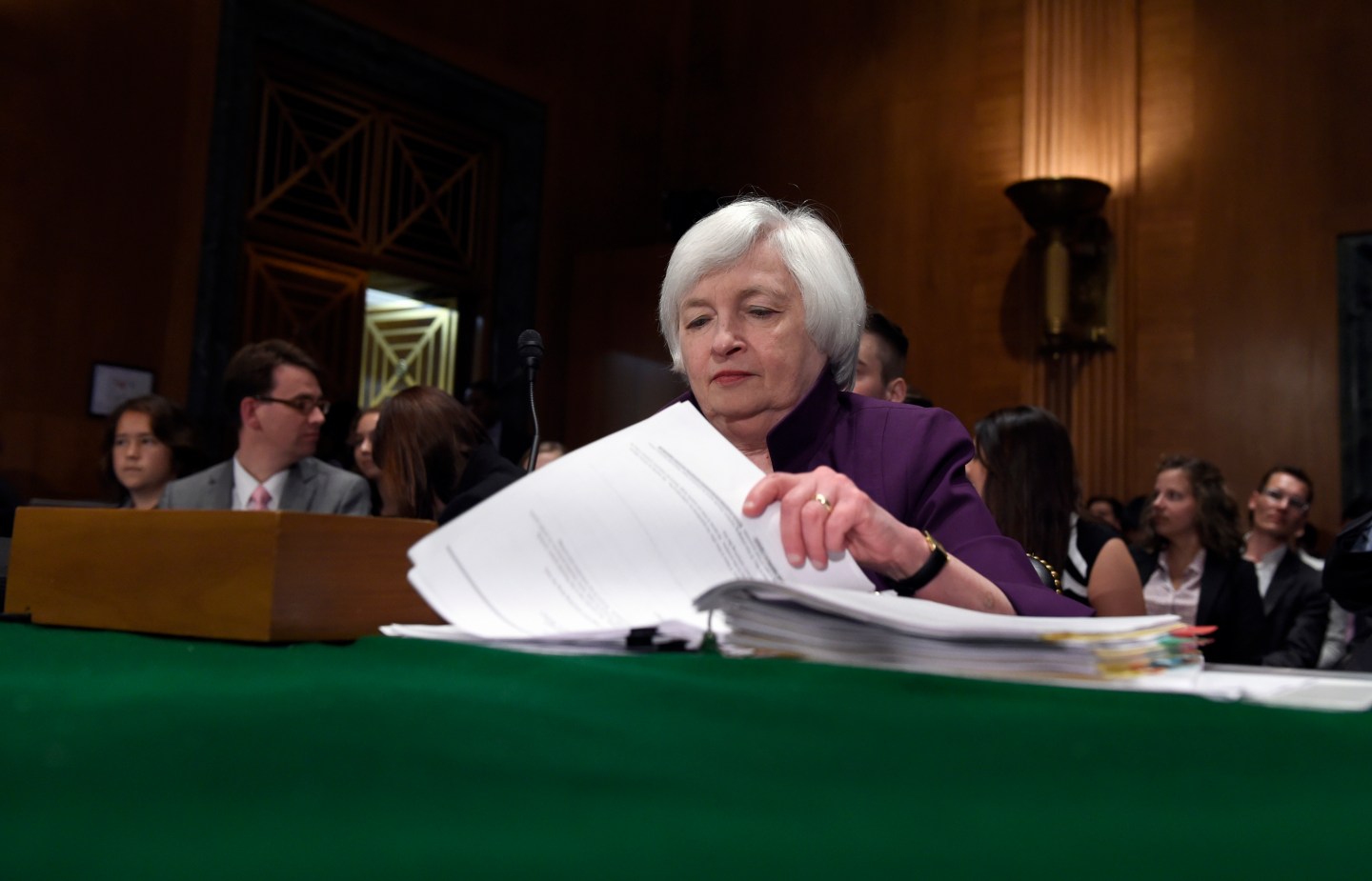
Janet Yellen
Federal Reserve Chair Janet Yellen prepares to testify on Capitol Hill in Washington, Thursday, July 16, 2015, before the Senate Banking Committee hearing on: "The Semiannual Monetary Policy Report to the Congress." (AP Photo/Susan Walsh)Photograph by Susan Walsh — AP

The Federal Reserve is the central bank of the United States and sets monetary policy to steer the direction of the economy. Traditionally, the Fed has had three policy choices: increase its target interest rate, lower it or do nothing.

But because the federal funds rate has been at or near zero since 2008, the Fed has really only had two choices — increase its target or do nothing.

Last month, I predicted the Fed would pick the first option when it ended its two-day policy meeting yesterday. I was wrong. Instead, the central bank said that it would keep the rate at about zero.

I have read a number of articles and, depending on the writer, the Fed either got it wildly right or wildly wrong. Each of these articles is based on the premise that the Fed had those two remaining choices mentioned above. But I think there is another third option (perhaps, the choice between the two, really), which is what the Fed did. I call this purposeful inactivity.

The Fed has been charged with three often counter-acting policy goals: to keep prices stable (control inflation), maximize employment and moderate long-term interest rates via the Federal Reserve Act.

These goals are counter-acting in that actions the Fed takes to increase employment — by targeting a lower interest rate, for example, as it has done since the financial crisis — often have the effect of creating inflation over the long run. Or, when the Fed tackles inflation, as then-Chair Paul Volcker did beginning in early 1980, it can have devastating effects on employment (we saw this in what is now referred to as the Volcker Recession).

People have been a bit riled by the Fed’s easy monetary policy for quite a while, suggesting that low interest rate targets and quantitative easing are causing inflation.

But the evidence is that inflation is pretty well under control. Looking at the inflation rate using either the consumer price index (CPI) or the GDP Deflator shows inflation below the Fed’s 2% target.

At the same time, people are a bit antsy about unemployment. Although the unemployment rate has consistently decreased since April 2010, the labor force participation rate has also fallen — in other words, the unemployment picture is good but not great.

So why would anyone even think that the Fed might increase rates given that there are no inflation worries and the employment picture could get better? One reason is that the Fed has been hinting that the economy might be ready for a rate hike. This is where the third play comes in.

The purposefully inactive policy

Purposeful inactivity sounds a little like an oxymoron. But, for an institution that doesn’t have many options, it’s actually perfect. Here’s how it works:

The Fed has been waiting and watching — observing the economy move. It doesn’t want to increase rates just for the purpose of a rate hike (that’s not the Fed’s job) but wants sound policy that will resonate within the economy (keeping prices stable or helping the employment picture). It sends out feelers into the economy to see how people will react in the event that it did make a move. Of course, nobody takes the Fed seriously. Why should they? The Fed hasn’t made an overt policy move in nearly six years.

But last month the Fed received the feedback it was looking for. Investors and traders read the minutes of its July meetings — which hinted at a rate increase while expressing concern about the global economy — and stocks dropped.

People have been talking about a market correction for a while. This is just what the market needed. The Fed wants the actors and agents in the economy to start taking notice of where the economy is and where it is likely to be. Other actors in the economy have been really comfortable with easy, cheap money. By pushing the prospect of a rate hike as a policy tool, the Fed was able to get people to take notice.

Mortgage applications, for example, spiked a bit right after the August 19 release of the minutes. That week, applications rose almost 4% over the prior seven-day period and were up 20% from a year earlier.

In other words, the market was saying: “Wait, is the Fed really serious about this? If so, we might want to rethink what an interest rate hike will mean for us in a month (or a quarter or a year).”

Corrective action without action

The Fed pushed everybody’s buttons when it released the details of its deliberations last month. Fed Chair Janet Yellen and her colleagues then sat back and watched. In the process, though, they laid the groundwork for what we got yesterday. Perhaps it isn’t quite the right time for an interest rate hike, as the market still has work to do before it’s ready. But the Fed has made clear that it could happen at any moment given current national and international economic conditions.

If, as I expect the Fed is anticipating, agents in the economy start believing that the Fed will raise rates before the end of the year, then businesses will take on more capital purchases, people will buy more homes, and more economic activity will be engaged sooner rather than later. These activities can create an economic environment that would be consistent with an interest rate hike.

It may be that I am giving Fed officials way too much credit. Perhaps they aren’t trying to move the economic needle by doing nothing. But these are some the smartest and craftiest central bankers we’ve ever seen, so I think it’s safe to give them the benefit of the doubt.

Thomas More Smith is an associate professor in the practice of finance at Emory University. This article was originally published on The Conversation.

The Conversation

The Conversation

About the Authors
By Thomas More Smith
See full bioRight Arrow Button Icon
By Bethany Cianciolo
See full bioRight Arrow Button Icon

Latest in Commentary

Finance
Lorem ipsum dolor sit amet, consectetur adipiscing elit, sed do eiusmod tempor incididunt ut labore et dolore magna aliqua. Ut enim ad minim veniam
By Fortune Editors
October 20, 2025
Finance
Lorem ipsum dolor sit amet, consectetur adipiscing elit, sed do eiusmod tempor incididunt ut labore et dolore magna aliqua. Ut enim ad minim veniam
By Fortune Editors
October 20, 2025
Finance
Lorem ipsum dolor sit amet, consectetur adipiscing elit, sed do eiusmod tempor incididunt ut labore et dolore magna aliqua. Ut enim ad minim veniam
By Fortune Editors
October 20, 2025
Finance
Lorem ipsum dolor sit amet, consectetur adipiscing elit, sed do eiusmod tempor incididunt ut labore et dolore magna aliqua. Ut enim ad minim veniam
By Fortune Editors
October 20, 2025
Finance
Lorem ipsum dolor sit amet, consectetur adipiscing elit, sed do eiusmod tempor incididunt ut labore et dolore magna aliqua. Ut enim ad minim veniam
By Fortune Editors
October 20, 2025
Finance
Lorem ipsum dolor sit amet, consectetur adipiscing elit, sed do eiusmod tempor incididunt ut labore et dolore magna aliqua. Ut enim ad minim veniam
By Fortune Editors
October 20, 2025

Most Popular

Finance
Lorem ipsum dolor sit amet, consectetur adipiscing elit, sed do eiusmod tempor incididunt ut labore et dolore magna aliqua. Ut enim ad minim veniam
By Fortune Editors
October 20, 2025
Finance
Lorem ipsum dolor sit amet, consectetur adipiscing elit, sed do eiusmod tempor incididunt ut labore et dolore magna aliqua. Ut enim ad minim veniam
By Fortune Editors
October 20, 2025
Finance
Lorem ipsum dolor sit amet, consectetur adipiscing elit, sed do eiusmod tempor incididunt ut labore et dolore magna aliqua. Ut enim ad minim veniam
By Fortune Editors
October 20, 2025
Finance
Lorem ipsum dolor sit amet, consectetur adipiscing elit, sed do eiusmod tempor incididunt ut labore et dolore magna aliqua. Ut enim ad minim veniam
By Fortune Editors
October 20, 2025
Finance
Lorem ipsum dolor sit amet, consectetur adipiscing elit, sed do eiusmod tempor incididunt ut labore et dolore magna aliqua. Ut enim ad minim veniam
By Fortune Editors
October 20, 2025
Finance
Lorem ipsum dolor sit amet, consectetur adipiscing elit, sed do eiusmod tempor incididunt ut labore et dolore magna aliqua. Ut enim ad minim veniam
By Fortune Editors
October 20, 2025
Rankings
  • 100 Best Companies
  • Fortune 500
  • Global 500
  • Fortune 500 Europe
  • Most Powerful Women
  • Future 50
  • World’s Most Admired Companies
  • See All Rankings
Sections
  • Finance
  • Leadership
  • Success
  • Tech
  • Asia
  • Europe
  • Environment
  • Fortune Crypto
  • Health
  • Retail
  • Lifestyle
  • Politics
  • Newsletters
  • Magazine
  • Features
  • Commentary
  • Mpw
  • CEO Initiative
  • Conferences
  • Personal Finance
  • Education
Customer Support
  • Frequently Asked Questions
  • Customer Service Portal
  • Privacy Policy
  • Terms Of Use
  • Single Issues For Purchase
  • International Print
Commercial Services
  • Advertising
  • Fortune Brand Studio
  • Fortune Analytics
  • Fortune Conferences
  • Business Development
About Us
  • About Us
  • Editorial Calendar
  • Press Center
  • Work At Fortune
  • Diversity And Inclusion
  • Terms And Conditions
  • Site Map
  • Facebook icon
  • Twitter icon
  • LinkedIn icon
  • Instagram icon
  • Pinterest icon

Most Popular

placeholder alt text
Success
After decades in the music industry, Pharrell Williams admits he never stops working: ‘If you do what you love everyday, you’ll get paid for free'
By Emma BurleighFebruary 3, 2026
3 days ago
placeholder alt text
Politics
Peter Thiel warns the Antichrist and apocalypse are linked to the ‘end of modernity’ currently happening—and cites Greta Thunberg as a driving example
By Nick LichtenbergFebruary 4, 2026
2 days ago
placeholder alt text
Investing
Ray Dalio warns the world is ‘on the brink’ of a capital war of weaponizing money—and gold is the best way for people to protect themselves
By Sasha RogelbergFebruary 4, 2026
2 days ago
placeholder alt text
C-Suite
OpenAI’s Sam Altman says his highly disciplined daily routine has ‘fallen to crap’—and now unwinds on weekends at a ranch with no cell phone service
By Jacqueline MunisFebruary 5, 2026
21 hours ago
placeholder alt text
Economy
Trump is giving the U.S. economy a $65 billion tax-refund shot in the arm, mostly for higher-income people, BofA says
By Nick LichtenbergFebruary 5, 2026
22 hours ago
placeholder alt text
Investing
Tech stocks go into free fall as it dawns on traders that AI has the ability to cut revenues across the board
By Jim EdwardsFebruary 4, 2026
2 days ago

© 2026 Fortune Media IP Limited. All Rights Reserved. Use of this site constitutes acceptance of our Terms of Use and Privacy Policy | CA Notice at Collection and Privacy Notice | Do Not Sell/Share My Personal Information
FORTUNE is a trademark of Fortune Media IP Limited, registered in the U.S. and other countries. FORTUNE may receive compensation for some links to products and services on this website. Offers may be subject to change without notice.


Latest in Commentary

johnsson
Commentaryvaluations
When the music stops: the unravelling of AI companies’ flawed valuations
By Mikael JohnssonFebruary 6, 2026
3 hours ago
desantis
CommentaryLeadership
Understanding corporate leaders’ muted Minnesota response: the example of Disney, Florida and conservative retaliation
By Alessandro Piazza and The ConversationFebruary 5, 2026
20 hours ago
grace
CommentaryRobotics
I’m a 25-year-old founder who loves robots but too many humanoids are militant and creepy-looking. Things need to change—just look at Elon Musk
By Grace BrownFebruary 5, 2026
23 hours ago
sam wolf
Commentaryactivist investing
Activist investors are more dangerous to CEOs than ever. Here are 3 ways to safeguard your leadership
By Sam WolfFebruary 5, 2026
1 day ago
warsh
CommentaryFederal Reserve
Kevin Warsh’s Fed criticisms make sense, but he’s got a ‘cleanest dirty shirt’ problem. Here’s the triple dilemma he faces
By Daniel J. ArbessFebruary 5, 2026
1 day ago
disney
CommentaryDisney
Disney’s new D’Amaro-land:  a dream team succession saga comes to life
By Jeffrey Sonnenfeld and Stephen HenriquesFebruary 4, 2026
2 days ago