• Home
  • News
  • Fortune 500
  • Tech
  • Finance
  • Leadership
  • Lifestyle
  • Rankings
  • Multimedia
TechMicrosoft

Why Microsoft’s ‘buy only what you use’ pricing strategy is a big deal

By
Heather Clancy
Heather Clancy
Down Arrow Button Icon
By
Heather Clancy
Heather Clancy
Down Arrow Button Icon
February 4, 2015, 11:30 AM ET
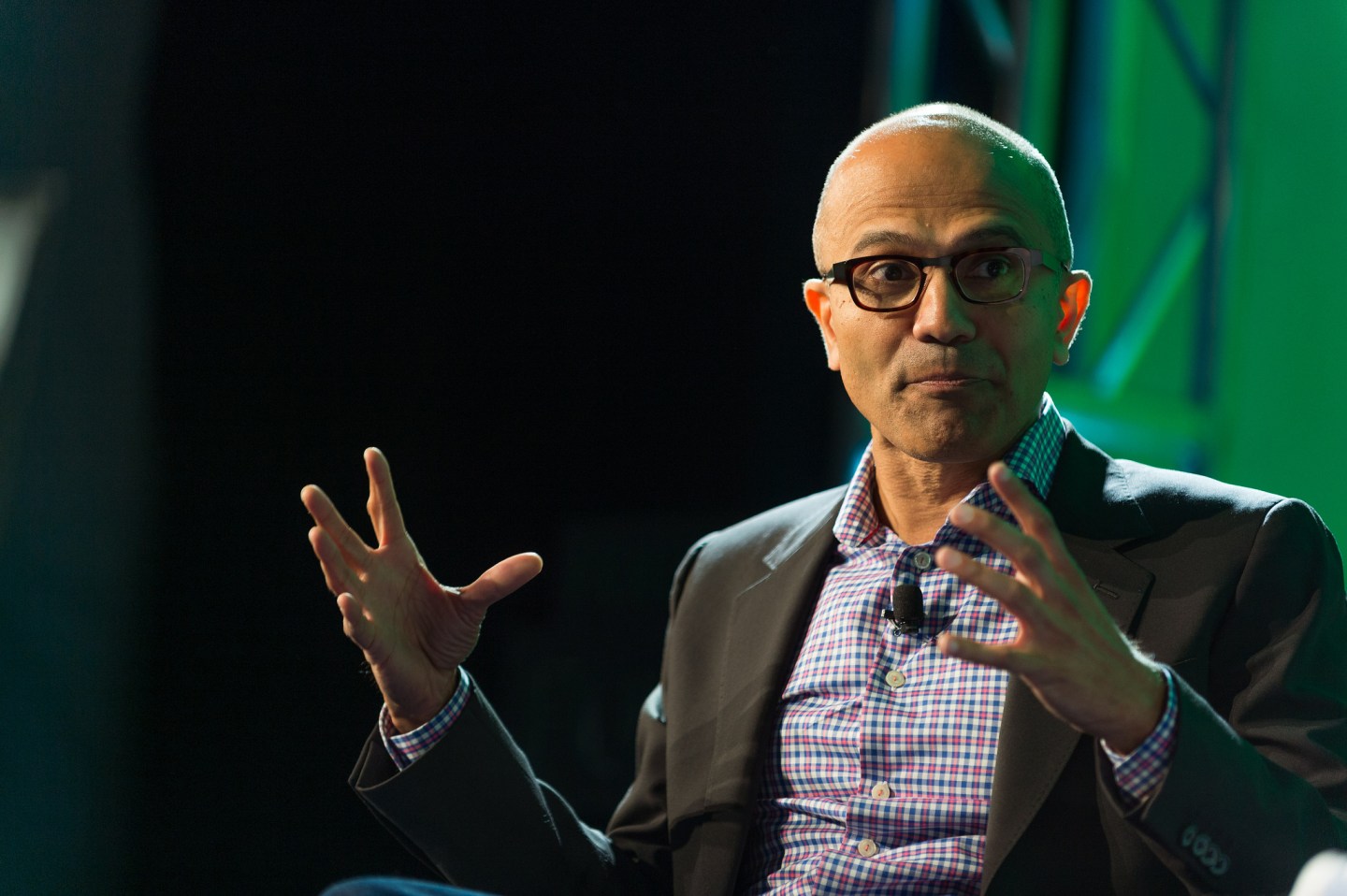
Microsoft CEO Satya Nadella at Brainstorm Tech 2014
Microsoft CEO Satya Nadella at the 2014 Fortune Brainstorm Tech conference in Aspen, Colo.Photograph by Stuart Isett — Fortune Brainstorm Tech

I missed a boatload of financial reports last week while I was on vacation. After rejoicing over Amazon’s decision to start disclosing results for its cloud services division, I spent time catching up on Microsoft’s second-quarter results. To refresh your memory, it reported a respectable $26.5 billion in revenue. Profits slipped about 10% (mostly because of its restructuring), pretty much as expected.

Nothing stellar, but nothing surprising either.

Far more interesting is this tidbit: a 30% increase in non-corporate subscribers for the cloud-hosted edition of its productivity applications, Office 365. (There are now 9.2 million of these people.) Meanwhile, its commercial cloud revenue grew 114% to an annualized $5.5 billion, driven by Azure, Office 365, and Dynamics CRM Online.

That cloud uptick is good news, but here’s another intriguing metric: Microsoft (MSFT) is still reporting appreciable sales for server software, and related services. For example, it recorded double-digit growth for the SQL Server database platform. Oh, and it just promised to ship an on-premises version of the SharePoint content management technology for businesses that aren’t quite ready for the cloud model.

SAP’s cloud transformation will drag on profits until 2017. Oracle is also feeling the financial pressure. So why does Microsoft seem to be navigating its own transformation somewhat more gracefully than two of its biggest rivals?

From my standpoint, Microsoft’s flexibility when it comes to how businesses or individuals want to pay for software could be very important. Over the past year, it has completely overhauled its volume licensing policies. I won’t bore you with all the details, but the biggest change is this: instead of charging companies for software on a per-device basis, it will price subscriptions and licenses based on who actually uses them. It will also emulate Apple’s strategy of free operating system updates with the Windows 10 release.

Notes Technology Business Research (TBR) analyst Kelsey Mason: “While moving customers to the cloud remains a priority, Microsoft realizes that hybrid IT will be the end-game for many customers. As a result, preventing defection from core, traditional software businesses such as Windows and SQL Server is a critical piece to Microsoft’s strategy in becoming the ‘productivity and platform company for the cloud-first, mobile-first world.’ ”

Many tech types use the word “hybrid” to describe where software is installed, whether that happens to be down the hall in an on-premises data center or somewhere off in cloud hosting location. But the adjective actually could be applied to software payment models.

Traditional software licenses (where customers pay up front as a capital expense) will co-exist alongside multi-year cloud subscriptions (pay over time) for many years to come. What businesses wind up paying will be some combination of the two approaches. Most software companies will use the freemium model—essentially allowing people to try before they buy—to entice potential converts.

Smartsheet, which sells online project management software to the likes of Cisco, Genentech and “20 of the Fortune 50,” is one example of startup that has used that strategy to advantage. Rather than forcing businesses to pay a lump-sum license based on employee headcounts, Smartsheet makes its software available to entire companies centrally. Then, it charges quarterly for what actually is used. So far, that strategy has resonated with more than 55,000 paying companies, said co-founder Brent Frei. “When you win the business, you win the right to sell them software.”

For Microsoft, this could mean a far closer union between its operating system software and applications—something that could put antitrust hawks on notice. Notes TBR’s Mason: “The stickiness of Windows will be key to monetizing the operating system amid this business model transformation. To do so, Microsoft is seamlessly attaching services such as Office, Enterprise Mobility Suite and OneDrive, and the promise of universal applications will add value to the Windows platform.”

Hmmm, sounds a lot like Apple, with far more of a corporate twist.

This item first appeared in the Feb. 4 edition of Data Sheet, Fortune’s daily newsletter on the business of technology. Sign up here.

Watch more of the latest news about Microsoft from Fortune’s video team:

About the Author
By Heather Clancy
See full bioRight Arrow Button Icon

Latest in Tech

Elon Musk
Big TechSpaceX
SpaceX to offer insider shares at record-setting $800 billion valuation
By Edward Ludlow, Loren Grush, Lizette Chapman, Eric Johnson and BloombergDecember 6, 2025
1 hour ago
Big TechApple
Apple rocked by executive departures, with chip chief at risk of leaving next
By Mark Gurman and BloombergDecember 6, 2025
4 hours ago
Nvidia CEO Jensen Huang said China is better equipped for an AI data center buildout than the U.S.
AITech
Nvidia CEO says data centers take about 3 years to construct in the U.S., while in China ‘they can build a hospital in a weekend’
By Nino PaoliDecember 6, 2025
6 hours ago
Arts & EntertainmentMedia
Former Amazon Studios boss warns the Netflix-Warner Bros. deal will make Hollywood ‘a system that circles a single sun’
By Jason MaDecember 6, 2025
7 hours ago
Jay Clayton
LawCrime
25-year DEA veteran charged with helping Mexican drug cartel launder millions of dollars, secure guns and bombs
By Dave Collins, Michael R. Sisak and The Associated PressDecember 6, 2025
8 hours ago
Elon Musk
LawSocial Media
Elon Musk’s X fined $140 million by EU for breaching digital regulations
By Kelvin Chan and The Associated PressDecember 6, 2025
8 hours ago

Most Popular

placeholder alt text
Big Tech
Mark Zuckerberg rebranded Facebook for the metaverse. Four years and $70 billion in losses later, he’s moving on
By Eva RoytburgDecember 5, 2025
1 day ago
placeholder alt text
Economy
Two months into the new fiscal year and the U.S. government is already spending more than $10 billion a week servicing national debt
By Eleanor PringleDecember 4, 2025
3 days ago
placeholder alt text
Success
Nvidia CEO Jensen Huang admits he works 7 days a week, including holidays, in a constant 'state of anxiety' out of fear of going bankrupt
By Jessica CoacciDecember 4, 2025
2 days ago
placeholder alt text
Success
‘Godfather of AI’ says Bill Gates and Elon Musk are right about the future of work—but he predicts mass unemployment is on its way
By Preston ForeDecember 4, 2025
2 days ago
placeholder alt text
Success
Nearly 4 million new manufacturing jobs are coming to America as boomers retire—but it's the one trade job Gen Z doesn't want
By Emma BurleighDecember 4, 2025
2 days ago
placeholder alt text
Asia
Despite their ‘no limits’ friendship, Russia is paying a nearly 90% markup on sanctioned goods from China—compared with 9% from other countries
By Jason MaNovember 29, 2025
7 days ago
Rankings
  • 100 Best Companies
  • Fortune 500
  • Global 500
  • Fortune 500 Europe
  • Most Powerful Women
  • Future 50
  • World’s Most Admired Companies
  • See All Rankings
Sections
  • Finance
  • Leadership
  • Success
  • Tech
  • Asia
  • Europe
  • Environment
  • Fortune Crypto
  • Health
  • Retail
  • Lifestyle
  • Politics
  • Newsletters
  • Magazine
  • Features
  • Commentary
  • Mpw
  • CEO Initiative
  • Conferences
  • Personal Finance
  • Education
Customer Support
  • Frequently Asked Questions
  • Customer Service Portal
  • Privacy Policy
  • Terms Of Use
  • Single Issues For Purchase
  • International Print
Commercial Services
  • Advertising
  • Fortune Brand Studio
  • Fortune Analytics
  • Fortune Conferences
  • Business Development
About Us
  • About Us
  • Editorial Calendar
  • Press Center
  • Work At Fortune
  • Diversity And Inclusion
  • Terms And Conditions
  • Site Map

© 2025 Fortune Media IP Limited. All Rights Reserved. Use of this site constitutes acceptance of our Terms of Use and Privacy Policy | CA Notice at Collection and Privacy Notice | Do Not Sell/Share My Personal Information
FORTUNE is a trademark of Fortune Media IP Limited, registered in the U.S. and other countries. FORTUNE may receive compensation for some links to products and services on this website. Offers may be subject to change without notice.