• Home
  • Latest
  • Fortune 500
  • Finance
  • Tech
  • Leadership
  • Lifestyle
  • Rankings
  • Multimedia
Financejackson hole

The end of the era of decisive central banks

By
Chris Matthews
Chris Matthews
Down Arrow Button Icon
By
Chris Matthews
Chris Matthews
Down Arrow Button Icon
August 22, 2014, 3:03 PM ET
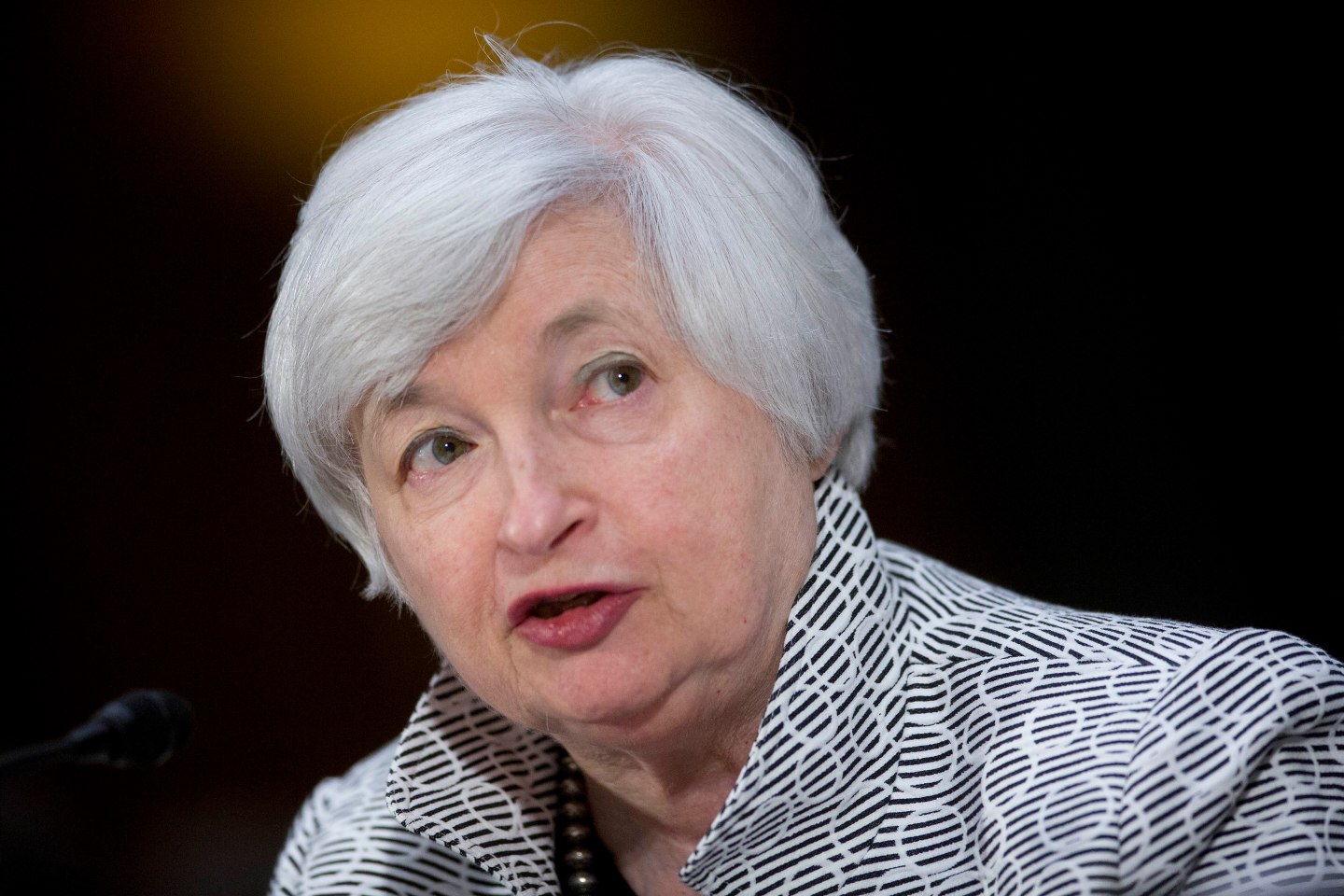
Photograph by Bloomberg/Getty Images

Legend has it that when President Harry Truman grew tired of the indecisiveness of his economic advisers, he begged for a one-handed economist who wouldn’t analyze every policy proposal with “one the one hand . . . but on the other.”

For a few moments during the financial crisis and subsequent recovery, it looked like former Federal Reserve Chair Ben Bernanke would be that one-handed economist. His decisive and bold action to stabalize global financial markets during the worst of the crisis earned him Time Magazine’sperson of the year award. And his decision to implement a program of open-ended bond buying in order to lower long-term interest rates and spur hiring in 2012 has helped bring the unemployment rate down from around 8% to it’s 6.2% level today.

But despite the fact that the job market remains far from healthy, Ben Bernanke began last year to wind down the Federal Reserve efforts to keep interest rates low by moving to end the central bank’s program of bond buying. Newly ascendant Fed Chair Janet Yellen has taken up this mantle, and in her speech at the Federal Reserve Bank of Kansas City’s annual symposium in Jackson Hole, Wyoming, Yellen doubled down on the idea that the time for extraordinary central bank action, and one-handed economists, is over.

Yellen’s speech, entitled “Labor Market Dynamics and Monetary Policy,” focused on how we should judge the health of the labor market in an era when, because of changes in the economy and society, the unemployment rate is a less reliable indicator of labor market health. Though the unemployment rate has fallen pretty dramatically, the high rate of long-term unemployment, part-time work, and slow wage growth is evidence that the labor market isn’t nearly as healthy as it could be. But Yellen’s speech was filled with qualifications as to why, despite the fact she believes the labor market to be much too weak, she is hesitant to move the Fed from what appears to be an autopilot path toward ending its long-term bond buying program and the eventual raising of interest rates sometime next year.

Meanwhile, the other big-wig at the Jackson Hole conference, Mario Draghi, spent time in his speech outlining the absolute disaster the European economy has been over the past seven years. But beyond some of the small-bore measures the central bank announced in June it was taking to fight disinflation and sky-high Eurozone unemployment — now running at around 11.5% — Draghi unveiled no new policies. He did, however, lay blame at the feet of national European governments for not enacting fiscal policies and supply-side reforms that would help boost growth.

Draghi is certainly correct that there’s much the national governments of European countries could do to help boost growth, and it’s likely true that he is being prevented from taking stronger action, like initiating a quantitative easing program of its own. But when faced with the human suffering that has been allowed to continue because of inaction from European governments, it’s at the very least galling to hear the ECB head talk up the mini-measures he’s undertaking and ignore the fact that EU policies and politics preventing bolder action are causing real harm.

The fact that the Federal Reserve is beginning to retreat from the oversized role it played in our economy is music to the ears of many. Lots of folks long for a time of more “normal” markets that weren’t so reliant on the actions of the central bank. But there’s plenty of reason to believe changes in our economy, from the the aging of our society to growing income inequality, call for a greater role for central banks and the federal government, not less. Reverting to the ways of the past simply for the sake of doing so, rather than for what’s best for the greater good, is no way to govern. Whether it’s from national governments or technocrats at the central bank, we need bolder action, not a wishing away of the real problems our economies face.

About the Author
By Chris Matthews
See full bioRight Arrow Button Icon

Latest in Finance

Goldman Sachs' logo seen displayed on a smartphone with an AI chip and symbol in the background.
NewslettersCFO Daily
Goldman Sachs CFO on the company’s AI reboot, talent, and growth
By Sheryl EstradaDecember 10, 2025
39 minutes ago
Current price of silver as of Wednesday, December 10, 2025
Personal Financesilver
Current price of silver as of Wednesday, December 10, 2025
By Joseph HostetlerDecember 10, 2025
44 minutes ago
EconomyFederal Reserve
If the Fed cuts interest rates today, it may be the last one until June 2026
By Jim EdwardsDecember 10, 2025
1 hour ago
Jerome Powell, chairman of the US Federal Reserve
EconomyFed interest rates
Fed’s expected rate cut today is less about stimulating the economy and more about protecting the job market from ‘shattering’
By Eleanor PringleDecember 10, 2025
2 hours ago
NewslettersTerm Sheet
5 VCs sounds off on the AI question du jour
By Amanda GerutDecember 10, 2025
3 hours ago
Personal FinanceSavings accounts
Today’s best high-yield savings account rates on Dec. 10, 2025: Earn up to 5.00% APY
By Glen Luke FlanaganDecember 10, 2025
4 hours ago

Most Popular

placeholder alt text
Economy
‘Fodder for a recession’: Top economist Mark Zandi warns about so many Americans ‘already living on the financial edge’ in a K-shaped economy 
By Eva RoytburgDecember 9, 2025
16 hours ago
placeholder alt text
Success
When David Ellison was 13, his billionaire father Larry bought him a plane. He competed in air shows before leaving it to become a Hollywood executive
By Dave SmithDecember 9, 2025
1 day ago
placeholder alt text
Banking
Jamie Dimon taps Jeff Bezos, Michael Dell, and Ford CEO Jim Farley to advise JPMorgan's $1.5 trillion national security initiative
By Nino PaoliDecember 9, 2025
18 hours ago
placeholder alt text
Uncategorized
Transforming customer support through intelligent AI operations
By Lauren ChomiukNovember 26, 2025
14 days ago
placeholder alt text
Real Estate
The 'Great Housing Reset' is coming: Income growth will outpace home-price growth in 2026, Redfin forecasts
By Nino PaoliDecember 6, 2025
4 days ago
placeholder alt text
Success
Even the man behind ChatGPT, OpenAI CEO Sam Altman, is worried about the ‘rate of change that’s happening in the world right now’ thanks to AI
By Preston ForeDecember 9, 2025
21 hours ago
Rankings
  • 100 Best Companies
  • Fortune 500
  • Global 500
  • Fortune 500 Europe
  • Most Powerful Women
  • Future 50
  • World’s Most Admired Companies
  • See All Rankings
Sections
  • Finance
  • Leadership
  • Success
  • Tech
  • Asia
  • Europe
  • Environment
  • Fortune Crypto
  • Health
  • Retail
  • Lifestyle
  • Politics
  • Newsletters
  • Magazine
  • Features
  • Commentary
  • Mpw
  • CEO Initiative
  • Conferences
  • Personal Finance
  • Education
Customer Support
  • Frequently Asked Questions
  • Customer Service Portal
  • Privacy Policy
  • Terms Of Use
  • Single Issues For Purchase
  • International Print
Commercial Services
  • Advertising
  • Fortune Brand Studio
  • Fortune Analytics
  • Fortune Conferences
  • Business Development
About Us
  • About Us
  • Editorial Calendar
  • Press Center
  • Work At Fortune
  • Diversity And Inclusion
  • Terms And Conditions
  • Site Map

© 2025 Fortune Media IP Limited. All Rights Reserved. Use of this site constitutes acceptance of our Terms of Use and Privacy Policy | CA Notice at Collection and Privacy Notice | Do Not Sell/Share My Personal Information
FORTUNE is a trademark of Fortune Media IP Limited, registered in the U.S. and other countries. FORTUNE may receive compensation for some links to products and services on this website. Offers may be subject to change without notice.