• Home
  • Latest
  • Fortune 500
  • Finance
  • Tech
  • Leadership
  • Lifestyle
  • Rankings
  • Multimedia
TechNvidia
Asia

Nvidia is working on its approach to China, the world’s second-largest economy, as it tries to comply with Biden’s chip export controls

By
Lionel Lim
Lionel Lim
Asia Reporter
Down Arrow Button Icon
By
Lionel Lim
Lionel Lim
Asia Reporter
Down Arrow Button Icon
January 9, 2024, 5:49 AM ET
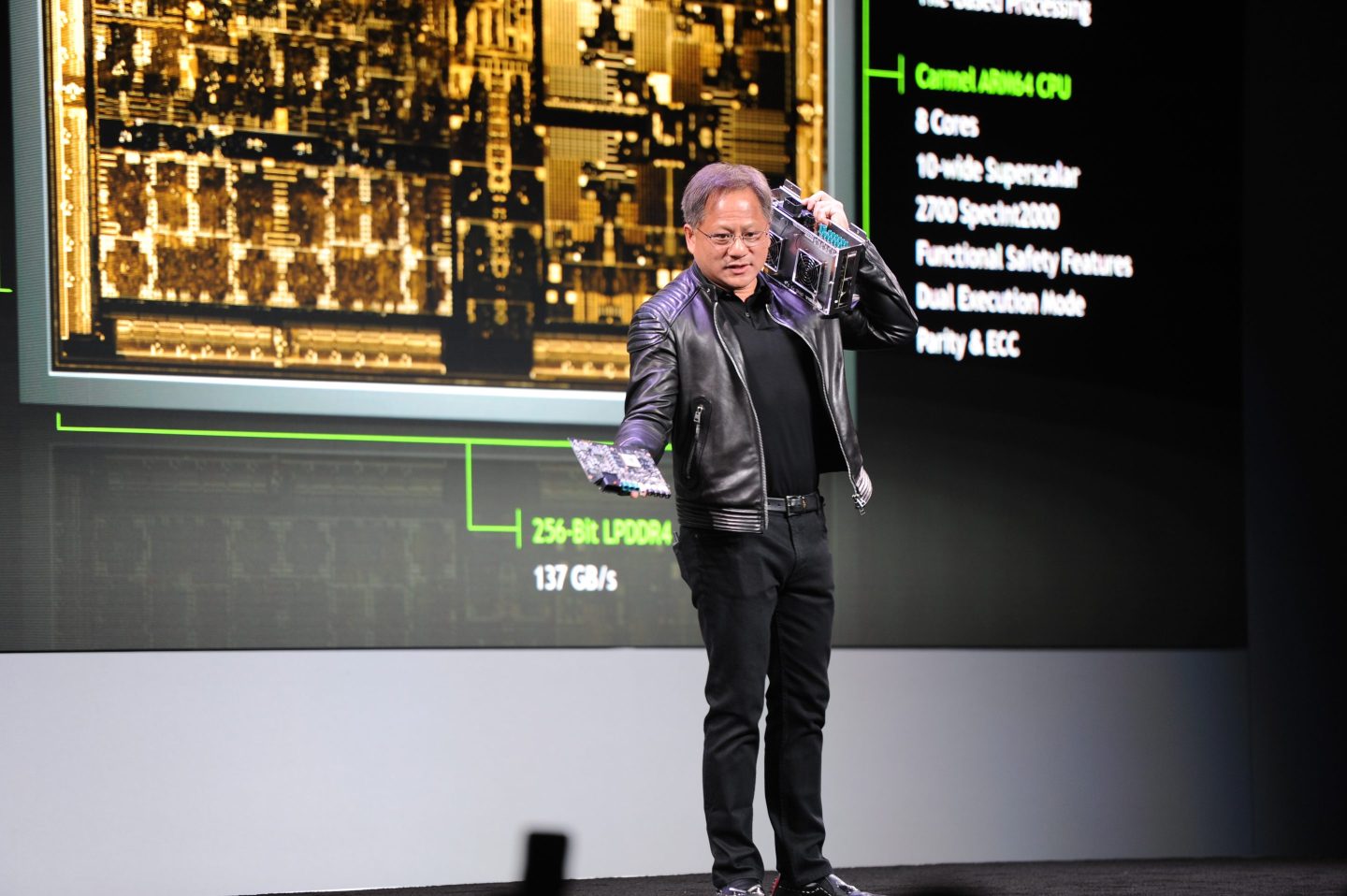
Jensen Huang, CEO of Nvidia, presents a prototype of the “DRIVE Xavier” for autonomous driving during CES 2018 in Las Vegas.
Jensen Huang, CEO of Nvidia, presents a prototype of the “DRIVE Xavier” for autonomous driving during CES 2018 in Las Vegas.Andrej Sokolow—Picture Alliance/Getty Images

Nvidia has a China problem. Chinese companies are some of Nvidia’s biggest clients, with the country traditionally contributing about 20% of the company’s revenue. Yet the Biden administration is worried that the company’s chips, key to the AI revolution, are a national security risk if sent to China. That’s giving the world’s most valuable chip company a dilemma: how to stay involved in the world’s second-largest economy while still complying with Washington’s rules.

On Monday, Nvidia announced that four car manufacturers—Li Auto, Great Wall Motor, ZEEKR, and Xiaomi—will use the company’s DRIVE technology to power their automated driving systems.

While known for its graphics processing units (GPUs), which are now key to AI-related applications, Nvidia is also trying to get a foothold in the auto industry. The company has announced car-focused partnerships with both chip designer MediaTek and electronics manufacturer Foxconn. Nvidia CEO Jensen Huang even joined Foxconn’s “Tech Day” to announce the chipmaker would be a key partner in the Apple supplier’s efforts to start making electric cars.

Complying with U.S. rules

Nvidia is also planning to start mass production of a new set of semiconductors designed for the China market that comply with updated U.S. export restrictions, reports Reuters. The company reportedly plans to start production later this year.

“We are engaged with the U.S. government and, following its clear guidelines, are working to offer compliant product solutions to customers worldwide,” an Nvidia spokesperson said to Fortune in a statement.

This isn’t the first time Nvidia has had to change its products to comply with U.S. rules. After the U.S. announced its first controls on semiconductor sales to China in October 2022, Nvidia developed chips for the Chinese market that offered similar capabilities to its high-end chips while still complying with U.S. rules.

Last October, the Biden administration updated its export restrictions to close this loophole, forcing Nvidia to redevelop its products again. The updated rules even prevented Nvidia from selling its most advanced video gaming chips to Chinese firms. The chipmaker released a U.S.-compliant replacement in December, which it said was developed after the company “extensively engaged with the U.S. government.”

Nvidia CEO Jensen Huang has, at times, warned against U.S. rules against chip sales to China. He previously warned, in an interview with the Financial Times in May, that U.S. export controls aimed at slowing China’s advance in the semiconductor industry would instead encourage the country to build its own chips in a bid to rival Nvidia’s. Then in another interview with CNBCin November, Huang said U.S. chipmakers were at least a decade away from “supply-chain independence” from China.

Nvidia chief financial officer Colette Kress has downplayed the near-term effect of U.S. export restrictions, yet warned that, in the long term, U.S. restrictions would lead to a “permanent loss of opportunities for the U.S. industry to compete and lead in one of the world’s largest markets.”

Last quarter, the company warned that data center revenue from countries affected by U.S. controls, including China, will “decline significantly.”

Customer demand

Yet Nvidia has a new problem: Chinese companies which originally flocked to its high-powered chips aren’t as interested in weaker replacements.

Local Chinese chipmakers are pitching their own chips as a safer alternative, banking on fears among China’s tech companies that the U.S. will once again tighten restrictions, according to Reuters in December.

Companies are also concerned that Nvidia’s downgraded processors may mean there’s not as much difference in performance compared with those produced by Chinese manufacturers, the Wall Street Journal reports. Firms like Alibaba and Tencent are now shifting some orders to Chinese companies like Huawei; the Chinese tech company has a new AI chip that Reuters describes as comparable to Nvidia’s offerings.

Update Jan. 9, 2023: This article has been updated with a comment from Nvidia.

Join us at the Fortune Workplace Innovation Summit May 19–20, 2026, in Atlanta. The next era of workplace innovation is here—and the old playbook is being rewritten. At this exclusive, high-energy event, the world’s most innovative leaders will convene to explore how AI, humanity, and strategy converge to redefine, again, the future of work. Register now.
About the Author
By Lionel LimAsia Reporter
LinkedIn icon

Lionel Lim is a Singapore-based reporter covering the Asia-Pacific region.

See full bioRight Arrow Button Icon

Latest in Tech

InvestingStock
There have been head fakes before, but this time may be different as the latest stock rotation out of AI is just getting started, analysts say
By Jason MaDecember 13, 2025
1 hour ago
Politicsdavid sacks
Can there be competency without conflict in Washington?
By Alyson ShontellDecember 13, 2025
2 hours ago
InnovationRobots
Even in Silicon Valley, skepticism looms over robots, while ‘China has certainly a lot more momentum on humanoids’
By Matt O'Brien and The Associated PressDecember 13, 2025
3 hours ago
Sarandos
Arts & EntertainmentM&A
It’s a sequel, it’s a remake, it’s a reboot: Lawyers grow wistful for old corporate rumbles as Paramount, Netflix fight for Warner
By Nick LichtenbergDecember 13, 2025
8 hours ago
Oracle chairman of the board and chief technology officer Larry Ellison delivers a keynote address during the 2019 Oracle OpenWorld on September 16, 2019 in San Francisco, California.
AIOracle
Oracle’s collapsing stock shows the AI boom is running into two hard limits: physics and debt markets
By Eva RoytburgDecember 13, 2025
9 hours ago
robots
InnovationRobots
‘The question is really just how long it will take’: Over 2,000 gather at Humanoids Summit to meet the robots who may take their jobs someday
By Matt O'Brien and The Associated PressDecember 12, 2025
22 hours ago

Most Popular

placeholder alt text
Economy
Tariffs are taxes and they were used to finance the federal government until the 1913 income tax. A top economist breaks it down
By Kent JonesDecember 12, 2025
1 day ago
placeholder alt text
Success
Apple cofounder Ronald Wayne sold his 10% stake for $800 in 1976—today it’d be worth up to $400 billion
By Preston ForeDecember 12, 2025
1 day ago
placeholder alt text
Success
40% of Stanford undergrads receive disability accommodations—but it’s become a college-wide phenomenon as Gen Z try to succeed in the current climate
By Preston ForeDecember 12, 2025
1 day ago
placeholder alt text
Economy
The Fed just ‘Trump-proofed’ itself with a unanimous move to preempt a potential leadership shake-up
By Jason MaDecember 12, 2025
21 hours ago
placeholder alt text
Economy
For the first time since Trump’s tariff rollout, import tax revenue has fallen, threatening his lofty plans to slash the $38 trillion national debt
By Sasha RogelbergDecember 12, 2025
23 hours ago
placeholder alt text
Success
Apple CEO Tim Cook out-earns the average American’s salary in just 7 hours—to put that into context, he could buy a new $439,000 home in just 2 days
By Emma BurleighDecember 12, 2025
1 day ago
Rankings
  • 100 Best Companies
  • Fortune 500
  • Global 500
  • Fortune 500 Europe
  • Most Powerful Women
  • Future 50
  • World’s Most Admired Companies
  • See All Rankings
Sections
  • Finance
  • Leadership
  • Success
  • Tech
  • Asia
  • Europe
  • Environment
  • Fortune Crypto
  • Health
  • Retail
  • Lifestyle
  • Politics
  • Newsletters
  • Magazine
  • Features
  • Commentary
  • Mpw
  • CEO Initiative
  • Conferences
  • Personal Finance
  • Education
Customer Support
  • Frequently Asked Questions
  • Customer Service Portal
  • Privacy Policy
  • Terms Of Use
  • Single Issues For Purchase
  • International Print
Commercial Services
  • Advertising
  • Fortune Brand Studio
  • Fortune Analytics
  • Fortune Conferences
  • Business Development
About Us
  • About Us
  • Editorial Calendar
  • Press Center
  • Work At Fortune
  • Diversity And Inclusion
  • Terms And Conditions
  • Site Map

© 2025 Fortune Media IP Limited. All Rights Reserved. Use of this site constitutes acceptance of our Terms of Use and Privacy Policy | CA Notice at Collection and Privacy Notice | Do Not Sell/Share My Personal Information
FORTUNE is a trademark of Fortune Media IP Limited, registered in the U.S. and other countries. FORTUNE may receive compensation for some links to products and services on this website. Offers may be subject to change without notice.