• Home
  • Latest
  • Fortune 500
  • Finance
  • Tech
  • Leadership
  • Lifestyle
  • Rankings
  • Multimedia
LeadershipWorld's Most Admired Companies

What makes GE great?

Geoff Colvin
By
Geoff Colvin
Geoff Colvin
Senior Editor-at-Large
Down Arrow Button Icon
Geoff Colvin
By
Geoff Colvin
Geoff Colvin
Senior Editor-at-Large
Down Arrow Button Icon
February 24, 2006, 11:02 AM ET
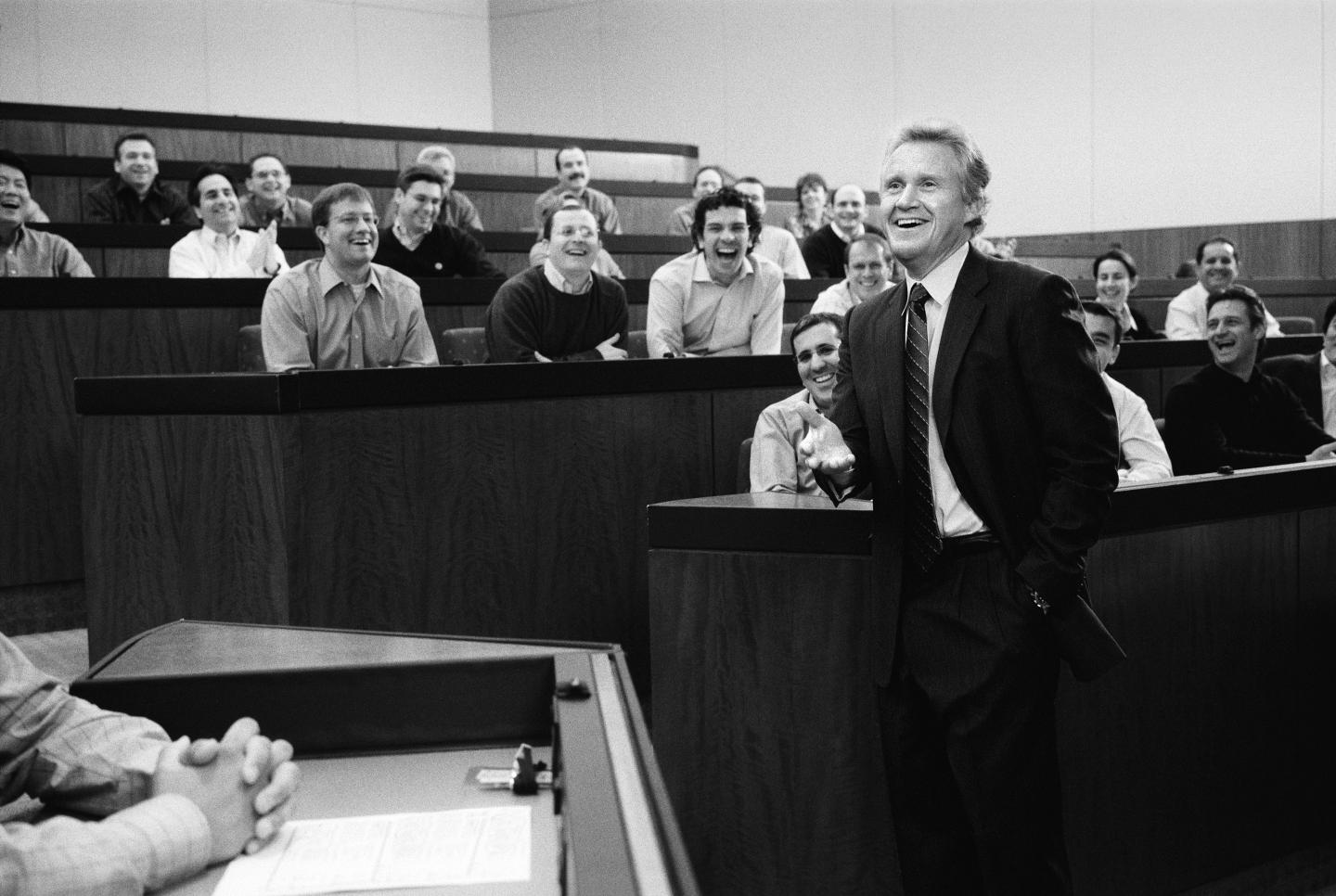
Jeffrey R. ImmeltChairman of the Board & Chief Executive Officer anwsering questions from future executives who are enrolled in the John F. Welch Leadership Center at Crotonville, the world's first major corporate business school. February 2, 2006 Ossining NY
Jeffrey R. Immelt Chairman of the Board & Chief Executive Officer anwsering questions from future executives who are enrolled in the John F. Welch Leadership Center at Crotonville, the world's first major corporate business school. February 2, 2006 Ossining NYBen Baker

On paper, the most admired company in America—and the world—may not look all that distinguished. It isn’t the biggest or the most profitable; it’s not the fastest growing or the most valuable. Its stock has been practically inert for years. Allegations of managed quarterly earnings keep showing up in the press. What’s to admire?

Recommended Video

Yet this company, General Electric (GE), is No. 1 on our list once again, the most admired company for the sixth time in the past decade. (It last reached the top slot in 2002.) And if you’re wondering whether we’ve got some pro-GE bias in our survey—nope. GE has also ranked No. 1 in the Financial Times’ “most respected” survey for seven of the past eight years, and it topped a recent Barron’s ranking of most admired companies. The results speak for themselves. But why does the world love this company so much?

The answer lies in the fact that our survey (like the others) is a poll not of consumers but of businesspeople working in the same hard world as GE. They admire GE the way golf pros voted Tiger Woods Player of the Year in 2003, when he didn’t win a major championship or top the money list: Through good years and bad, GE consistently does things the rest only wish they could.

Charles Coffin, GE's first CEO.
The First Genius: Charles Coffin, a former shoe industry executive, began the GE tradition of innovation in the practice of management. That tradition is still alive and well.

For the past century or so, for example, GE has continually set the agenda of management ideas and practices that other companies will follow. Practically everyone in business realizes this. GE’s record of being ahead of the game is remarkable. Under Charles Coffin, who led the firm from 1892 to 1912, GE set principles of organizational design that would guide large companies–above all, the idea that the company’s most important product was not light bulbs or transformers but managerial talent. In 1900 the company started the first corporate R&D lab, and in the 1930s it focused on cooperative labor relations, adopting pension plans and profit-based bonuses to keep employees away from unions. In the 1950s it produced the famous “blue books”—five volumes of ultra-detailed guidance for GE managers—that shaped management everywhere. In the 1960s it led the move to strategic planning. In the 1980s and 1990s, it took concepts like leadership development, Work Out, and Six Sigma and made them the stuff of the global management culture. Most organizations will never establish any kind of intellectual leadership. Maintaining it for 100 years is a unique achievement.

But wait a minute. A lot of those ideas are dead. Isn’t strategic planning now generally scorned, for example? Aren’t the blue books and the whole centralizing ethos behind them long since abandoned? Yes—and GE led the scorning and abandoning. Here is another GE trait that businesspeople especially admire: an ability to change direction unabashedly. “Most people inside GE learn from the past but have a healthy disrespect for history,” says CEO Jeff Immelt. “They have an ability to live in the moment and not be burdened by the past, which is extremely important.”

GE Fast Facts

Market Cap: $354 billion
Employees: 300,000
CEO Base Pay: $8.3 million
Shareholders: Five million
2005 Earnings: $18.3 billion
Average Annual Total Return Since 1996: 13.5%

It’s hard to find any other organization that so enthusiastically destroys its own creations. Coffin created an organizational structure based on functions; Ralph Cordiner (CEO, 1950-63), broke it to pieces. He got GE into computers, and then Fred Borch (CEO, 1963-72) bailed out. Reg Jones (CEO, 1972-81) established a layer of sector executives and bought a coal-mining company; Jack Welch (1981-2001) abolished the layer and sold the mines. Welch built up the insurance business; Immelt offloaded it. Immelt is putting his own stamp on the company by reemphasizing its scientific research labs and a long-dormant marketing function.

The result of GE’s seamless, constant reinvention of itself is that while companies are constantly emulating GE, they’re frequently a step or more behind, and they know it. That’s another reason they consistently admire the company.

"The ability to demand high performance without being heartless," says Immelt, "has been a part of GE for a long time."
“The ability to demand high performance without being heartless,” says Immelt, “has been a part of GE for a long time.”Ben Baker

GE does one more big thing: develop people, evaluate them, and act on the results. The company takes a lot of heat for getting rid of the bottom 10% of its employees every year, but that’s only the end point of a process of constant appraisal. The fired ones are not surprised when the ax comes down. And the result is an extraordinarily high-performing organization. “The ability to demand high performance without being heartless,” says Immelt, “has been a part of GE for a long time.”

Dan Mudd is the president and CEO of Fannie Mae; as president and CEO of GE Capital Japan from 1999 to mid-2005, he saw this dynamic from the inside. “GE, like anywhere else, has a little bit of politics, a little bit of personal stuff and all that,” he says, “but compared with all the other organizations I know, it’s minimized. It’s upfront. You know what you have to do to succeed.” Most companies, frankly, don’t have the stomach to give frequent, rigorous evaluations–and to fire those who need to be fired. They admire a company that does.

What makes GE great-chart2
Click chart to enlarge.

But then there’s the matter of the stock price, down about 18% since Immelt took over in September 2001. In the view of one fan who knows a bit about the market, GE’s recent lassitude in that regard isn’t so important. Warren Buffett says, “I think the people who respond to Fortune’s survey are looking beyond the recent action of the stock—looking at the challenges Jeff has faced and how well he is handling them.” Of course, a flailing stock is nothing to admire. The fact that GE’s reputation has stayed so solid despite the stock’s woes probably reflects a belief among those surveyed that GE will rise again.

It’s all about the long term. No other U.S. company has been as dominant for as long as GE. Of the 12 firms that Charles Dow put into his original Dow Jones industrial average in 1896, GE is the only one still in the index, and most of the others are dead. Survival is another achievement to admire.

Could GE blow it? Sure. All it would take is a slight slackening of rigor, a tiny easing of standards, a growing taste for self-congratulation, and GE could go the way of Woolworth, Studebaker, and Bethlehem Steel.

Immelt quite properly says, “I would never run the company to be the most admired.” But because GE’s stature is based on so much more than just a good year or two, alarm bells should go off in Fairfield, Conn., if it isn’t at least in contention.

For more perspectives on GE, read our interviews with experts in The GE Mystique, originally published as part of this story.

This article is from the March 6, 2006 issue of Fortune.

Join us at the Fortune Workplace Innovation Summit May 19–20, 2026, in Atlanta. The next era of workplace innovation is here—and the old playbook is being rewritten. At this exclusive, high-energy event, the world’s most innovative leaders will convene to explore how AI, humanity, and strategy converge to redefine, again, the future of work. Register now.
About the Author
Geoff Colvin
By Geoff ColvinSenior Editor-at-Large
LinkedIn iconTwitter icon

Geoff Colvin is a senior editor-at-large at Fortune, covering leadership, globalization, wealth creation, the infotech revolution, and related issues.

See full bioRight Arrow Button Icon

Latest in Leadership

Finance
Lorem ipsum dolor sit amet, consectetur adipiscing elit, sed do eiusmod tempor incididunt ut labore et dolore magna aliqua. Ut enim ad minim veniam
By Fortune Editors
October 20, 2025
Finance
Lorem ipsum dolor sit amet, consectetur adipiscing elit, sed do eiusmod tempor incididunt ut labore et dolore magna aliqua. Ut enim ad minim veniam
By Fortune Editors
October 20, 2025
Finance
Lorem ipsum dolor sit amet, consectetur adipiscing elit, sed do eiusmod tempor incididunt ut labore et dolore magna aliqua. Ut enim ad minim veniam
By Fortune Editors
October 20, 2025
Finance
Lorem ipsum dolor sit amet, consectetur adipiscing elit, sed do eiusmod tempor incididunt ut labore et dolore magna aliqua. Ut enim ad minim veniam
By Fortune Editors
October 20, 2025
Finance
Lorem ipsum dolor sit amet, consectetur adipiscing elit, sed do eiusmod tempor incididunt ut labore et dolore magna aliqua. Ut enim ad minim veniam
By Fortune Editors
October 20, 2025
Finance
Lorem ipsum dolor sit amet, consectetur adipiscing elit, sed do eiusmod tempor incididunt ut labore et dolore magna aliqua. Ut enim ad minim veniam
By Fortune Editors
October 20, 2025

Most Popular

Finance
Lorem ipsum dolor sit amet, consectetur adipiscing elit, sed do eiusmod tempor incididunt ut labore et dolore magna aliqua. Ut enim ad minim veniam
By Fortune Editors
October 20, 2025
Finance
Lorem ipsum dolor sit amet, consectetur adipiscing elit, sed do eiusmod tempor incididunt ut labore et dolore magna aliqua. Ut enim ad minim veniam
By Fortune Editors
October 20, 2025
Finance
Lorem ipsum dolor sit amet, consectetur adipiscing elit, sed do eiusmod tempor incididunt ut labore et dolore magna aliqua. Ut enim ad minim veniam
By Fortune Editors
October 20, 2025
Finance
Lorem ipsum dolor sit amet, consectetur adipiscing elit, sed do eiusmod tempor incididunt ut labore et dolore magna aliqua. Ut enim ad minim veniam
By Fortune Editors
October 20, 2025
Finance
Lorem ipsum dolor sit amet, consectetur adipiscing elit, sed do eiusmod tempor incididunt ut labore et dolore magna aliqua. Ut enim ad minim veniam
By Fortune Editors
October 20, 2025
Finance
Lorem ipsum dolor sit amet, consectetur adipiscing elit, sed do eiusmod tempor incididunt ut labore et dolore magna aliqua. Ut enim ad minim veniam
By Fortune Editors
October 20, 2025
Fortune Secondary Logo
Rankings
  • 100 Best Companies
  • Fortune 500
  • Global 500
  • Fortune 500 Europe
  • Most Powerful Women
  • World's Most Admired Companies
  • See All Rankings
  • Lists Calendar
Sections
  • Finance
  • Fortune Crypto
  • Features
  • Leadership
  • Health
  • Commentary
  • Success
  • Retail
  • Mpw
  • Tech
  • Lifestyle
  • CEO Initiative
  • Asia
  • Politics
  • Conferences
  • Europe
  • Newsletters
  • Personal Finance
  • Environment
  • Magazine
  • Education
Customer Support
  • Frequently Asked Questions
  • Customer Service Portal
  • Privacy Policy
  • Terms Of Use
  • Single Issues For Purchase
  • International Print
Commercial Services
  • Advertising
  • Fortune Brand Studio
  • Fortune Analytics
  • Fortune Conferences
  • Business Development
  • Group Subscriptions
About Us
  • About Us
  • Press Center
  • Work At Fortune
  • Terms And Conditions
  • Site Map
  • About Us
  • Press Center
  • Work At Fortune
  • Terms And Conditions
  • Site Map
  • Facebook icon
  • Twitter icon
  • LinkedIn icon
  • Instagram icon
  • Pinterest icon

© 2026 Fortune Media IP Limited. All Rights Reserved. Use of this site constitutes acceptance of our Terms of Use and Privacy Policy | CA Notice at Collection and Privacy Notice | Do Not Sell/Share My Personal Information
FORTUNE is a trademark of Fortune Media IP Limited, registered in the U.S. and other countries. FORTUNE may receive compensation for some links to products and services on this website. Offers may be subject to change without notice.


Latest in Leadership

hoskins
Commentaryoffices
Gensler Co-Chair: Hot-desking was supposed to save money. It may be costing you your culture
By Diane HoskinsApril 30, 2026
44 minutes ago
The $665 billion question: Will Big Tech’s AI gamble pay off?
NewslettersCEO Daily
The $665 billion question: Will Big Tech’s AI gamble pay off?
By Diane BradyApril 30, 2026
2 hours ago
Aerie built a $2 billion brand by rejecting Victoria’s Secret’s old playbook. Now it wants to win the AI backlash.
C-SuiteRetail
Aerie built a $2 billion brand by rejecting Victoria’s Secret’s old playbook. Now it wants to win the AI backlash.
By Phil WahbaApril 30, 2026
4 hours ago
Google Cloud revenue is now 18% of Alphabet’s business. Is this the beginning of the end of Google’s search identity?
Big TechGoogle
Google Cloud revenue is now 18% of Alphabet’s business. Is this the beginning of the end of Google’s search identity?
By Alexei OreskovicApril 29, 2026
9 hours ago
A man in a suit and tie
InvestingMeta
Meta just bumped its 2026 capex forecast up to as much as $145 billion for the AI boom—and investors flinched
By Amanda GerutApril 29, 2026
12 hours ago
teri
BankingBanks
Exclusive: America’s largest Black-owned bank launches podcast with mission to unlock hidden shame holding back generational wealth
By Nick LichtenbergApril 29, 2026
12 hours ago

Most Popular

Apple cofounder Ronald Wayne—whose stake would be worth up to $400 billion had he not sold it in 1976—says that at 91, he has no regrets
Success
Apple cofounder Ronald Wayne—whose stake would be worth up to $400 billion had he not sold it in 1976—says that at 91, he has no regrets
By Preston ForeApril 27, 2026
3 days ago
‘Take the money and run’: Johns Hopkins economist Steve Hanke on why the UAE quit OPEC
Energy
‘Take the money and run’: Johns Hopkins economist Steve Hanke on why the UAE quit OPEC
By Shawn TullyApril 29, 2026
1 day ago
‘The cost of compute is far beyond the costs of the employees’: Nvidia executive says right now AI is more expensive than paying human workers
AI
‘The cost of compute is far beyond the costs of the employees’: Nvidia executive says right now AI is more expensive than paying human workers
By Sasha RogelbergApril 28, 2026
2 days ago
Jamie Dimon gets candid about national debt: ‘There will be a bond crisis, and then we’ll have to deal with it’
Economy
Jamie Dimon gets candid about national debt: ‘There will be a bond crisis, and then we’ll have to deal with it’
By Eleanor PringleApril 29, 2026
1 day ago
‘They left me no choice’: Powell isn’t going anywhere—blocking Trump from another Fed appointee
Banking
‘They left me no choice’: Powell isn’t going anywhere—blocking Trump from another Fed appointee
By Eva RoytburgApril 29, 2026
16 hours ago
More than two-thirds of U.S. schools say they’re unable to afford the cost of student free lunch—and MAHA’s dietary guidelines may make it worse
Economy
More than two-thirds of U.S. schools say they’re unable to afford the cost of student free lunch—and MAHA’s dietary guidelines may make it worse
By Sasha RogelbergApril 29, 2026
1 day ago