On Jan. 4, 2023, GE HealthCare Technologies (No. 219 on the Fortune 500) debuted as a standalone public company on the Nasdaq exchange. Since then, its stock is up almost 50%. It was the first of three businesses to be spun off in the breakup of General Electric, the conglomerate founded on the inventions of Thomas Edison that went public in 1892 and became one of the original 12 components of the Dow Jones Industrial Average four years later. (GE Vernova, No. 130, and GE Aerospace, No. 118, each went public on the New York Stock Exchange in April 2024.)
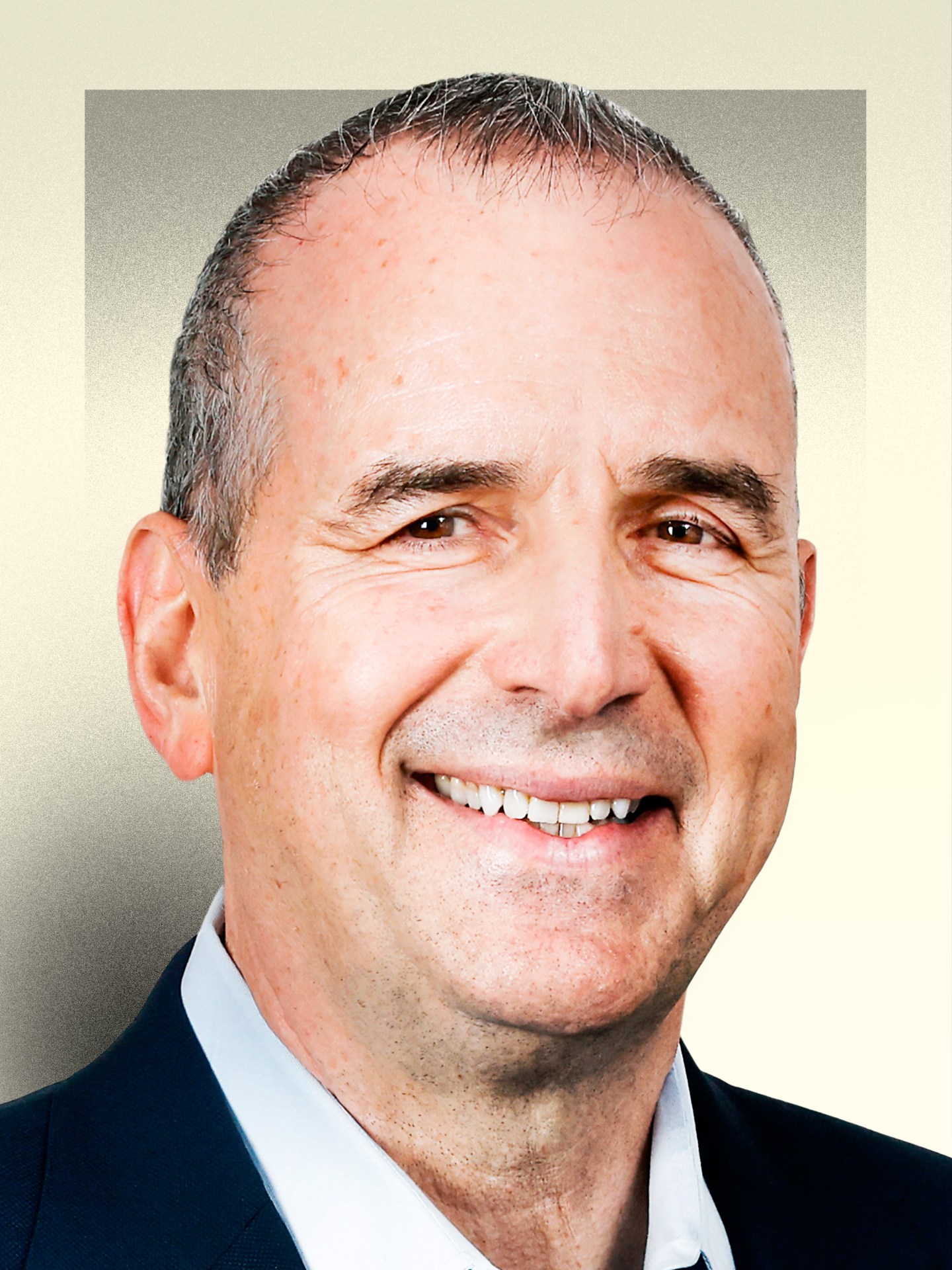
GE HealthCare CEO Peter J. Arduini, the man tapped to lead the $20 billion-a-year business, spoke to Fortune about how he’s forging a new chapter for the medical technology and digital health company while drawing on GE’s legacy.
This interview has been edited and condensed for clarity.
You were initially at GE during the Jack Welch years, starting in 1990, and left a few years after Jeff Immelt took over. What do you think made GE stand apart?
At the time, I was a Proctor & Gamble guy, and I did not love the grocery business. I got a call from someone who talked about a perfect opportunity in technology and global businesses at a company called GE Medical Systems at the time. I didn’t even know GE had a medical business then.
Going to GE in those days, with its leadership development, you had the opportunity to take on bigger responsibilities at a very young age—I look back and say, probably too young an age. But it was one of those rare companies where they gave you bold assignments and you had this wide diversity of potential opportunities that you could play in. You learned how to run a company the GE way. The candor and the openness about what’s working, what’s not working, really permeated, how to do the right thing. It was tough culture, but you knew it was a fair culture, and that’s what really made it successful under Jack.
After leaving in 2005, what made you decide to come back?
A headhunter called and said, [the then-GE CEO] Larry Culp wants to speak with you.’ And I said, ‘I don’t know if I’m really interested in going back to GE.’ My wife convinced me to give a call back. I talked to the headhunter, and he said, ‘Well, I’ll pass it on to Larry.’ Literally, 10 minutes later, I got a text that said, ‘Hey, Pete, this is Larry Culp. I’d love to chat with you.’ I texted back to say, ‘Well, look, I can contact your assistant.’ And Larry, right then, said, ‘Hey, do you have five minutes now?’ That’s the essence of Larry; he’s a very down-to-earth guy, a very focused and very intentional guy.
Those five minutes convinced you to take the job?
It was probably more than the five, but honestly, his impact and his leadership made a difference. This was a chance to create three separate companies, to take this company public. I got very interested and very excited about it.
Why did it make sense for GE HealthCare to be a separate company?
Everything has a cycle. On the technology side and on the market side, there was such a fast transition and evolution, with new competitors coming into new markets. When you’re in a larger business, in many cases, decisions take longer. And focus matters in our business. It is all about signal to noise; you want more signal, less noise. In a larger company, there has to be a little bit more noise.
The past three years have been interesting time for med tech. Looking back, what did you over-index on or under-appreciate?
At a macro level, look at the environment, between the China market, which was always a double-digit growth or changing the geopolitical environment and how we need to change around our supply chains because of tariffs. Those are kind of the unplanned events where where you ask: Do you have the right people? Do you have a management system that can deal with the clock speed and the differentiation? Do you have the right innovation-processing capability? If you don’t have the innovation, it’s difficult to get the price, it’s difficult to hold share, it’s difficult to grow. We were somewhat of a cash cow as part of the GE integrated model. We weren’t starved, but we weren’t funded for leading innovation. So I’d say one of the things I felt that I did well—and, like most credit, comes from listening to people that are wiser than you and having humility to understand that that’s the action—is lean into innovation.
You think what products you need, four years out, and fund them to the max, because it’s the rules of the farm. You got to get the seeds in the ground. They’ve got to germinate. You got to get the plants to grow till you get fruit. In our business, that’s a three to five year cycle.
“We laid out this purpose of creating a world where health care has no limits, and a big part of that was to say we’re humble to know that we don’t have all the answers.”
GE HealthCare CEO Peter J. Arduini
I think our teams did a really good job with the focus on making the right investments early. In 2018, to give an example, we probably spent $750 million to $800 million on research and development. R&D will be north of $1.4 billion this year. So we fundamentally doubled the R&D investment. We cut costs in other areas and simplified some of the company.
Through lean manufacturing techniques?
We changed some of the field organization, about 40% to 50% of the leaders. We upgraded talent across the board, and I spent a lot of time on what our vision is, what our values are, and do we have the right people who can match up to that? In the last two years, we’ve really made a lot of progress on what we’re calling our Heartbeat management system, which is really about a lean principles construct for how you run your company. What is the daily management at different levels in the organization? What is standard work that is needed to be done in all areas, the use of Kaizen and really bringing customer employees into the decision making?
Larry Culp is a big proponent of Kaizen and I think back to GE’s reputation in promoting Six Sigma. How would you say the culture has shifted as an independent company?
I tried to take the GE of old and took what was really good: how we think about our distribution of leadership, how we actually talk about leader development, how we build out our own Crotonville virtual university of development. The GE model was really stellar, and, honestly, prior to Larry coming back, some of that had dissolved. We didn’t even really do performance reviews in the same way and he brought that back.
I would say I even reached back further to some of the Jack Welch-period of tools, There are things that we did really well that we want to utilize in a more contemporary way. As an example, I think Crotonville was a fabulous destination for training and development, In today’s world, it’s not practical to bring everybody to upstate New York, but we can take the tools and the capabilities and recreate that in virtual and other environments around the world.
In health care, we had our own distinct way of thinking about innovation pipeline, and it was something called worldwide product plan. It had kind of phased away in the last decade or so, and I resurrected it, but in a new format: more digital focused, more connected …from diagnosis through therapy, through action, follow up and how the money flows. The integration of cloud-based computing and artificial intelligence. We look at the full stack for the company. And that’s been a game changer for us to take valuable resources and move them.
What is the vision?
We laid out this purpose of creating a world where health care has no limits, and a big part of that was to say we’re humble to know that we don’t have all the answers. We want to work with customers on jointly solving problems which, again, is the core to the lean mindset. Servant leadership is a big part of it, which turns the pyramid upside down. My job is to help everybody else get their job done. We’re all focused on the customer. We’re all focused on the patient. We spent a lot of time talking about entrepreneurship because in our business, the way we’re going to be successful is in this broader ecosystem. We don’t have to own everything, we don’t have to make everything, but we have to be more creative. We talk about teamwork and inclusive teams. We actually drive and reward and recognize people on how well they live up to those values.
The landscape has shifted for global companies. Where do you see the biggest challenges and opportunities right now?
If I think about med tech as an industry, it’s an American gem. Still, 70%-plus of the products are made in the United States, the majority of the IP, the technology is here. And so having that protected or enhanced by our government policy is important.
We’ve spent a lot of time trying to make that case clear and I think, for the most part, it’s been heard. Having global footprints and manufacturing and R&D is super critical because you can’t make everything in the United States to be competitive. You can’t, in a world post-COVID, have an integrated single point of control for all supply chains. Many of us used to say, here’s the least expensive place to buy this, or the best quality, then we would do it one place and ship it all over the world. We found during COVID that’s just not the model that works.
We’re bringing more and more U.S. products and their subcomponents back to North America. In China, we used to ship in 75% of the products from different parts around the world. Now we make 85%, almost 90% of the products in China, for China.
Why do you want to be in China?
Look,it’s 1.4 billion people, where 400 million have reasonable care. We often forget that. You know, we’re a nation of 375 million people, and you can judge how good our care is. There’s still a billion people in China that don’t have adequate care, and so at some point, it will be the largest health care market. I’m a big believer that, with China and the U.S., the more we work together in harmony, it’s only going to help the world. And honestly, for companies like us, it’s really a necessity for being able to kind of reach our full potential.
You’ve been at companies that are known as training grounds for leaders. I’d just love to hear your reflections on being in a CEO role the last three years.
I think authenticity is super important. I can be an extrovert when needed, but I tend to be a little bit more introverted. In today’s world, with our younger employee base, being out front and being vocal as the senior leader—not necessarily the charismatic leader, but the communicator directly to individuals—is super important. Social media gets more reads from your employees than even some internal communications. It’s a reality.
I think this ability to reach people in many different ways is critical for running a company. Leaning in on what the mission of the company is, and the why and helping people understand the why, is also critical. And then there’s the classic age-old factor of bringing customers into the story, talking about how you’ve changed the life of a patient. This could be your mother, your father on that table. The more I can empower people to live those values, that’s how we get excellence.