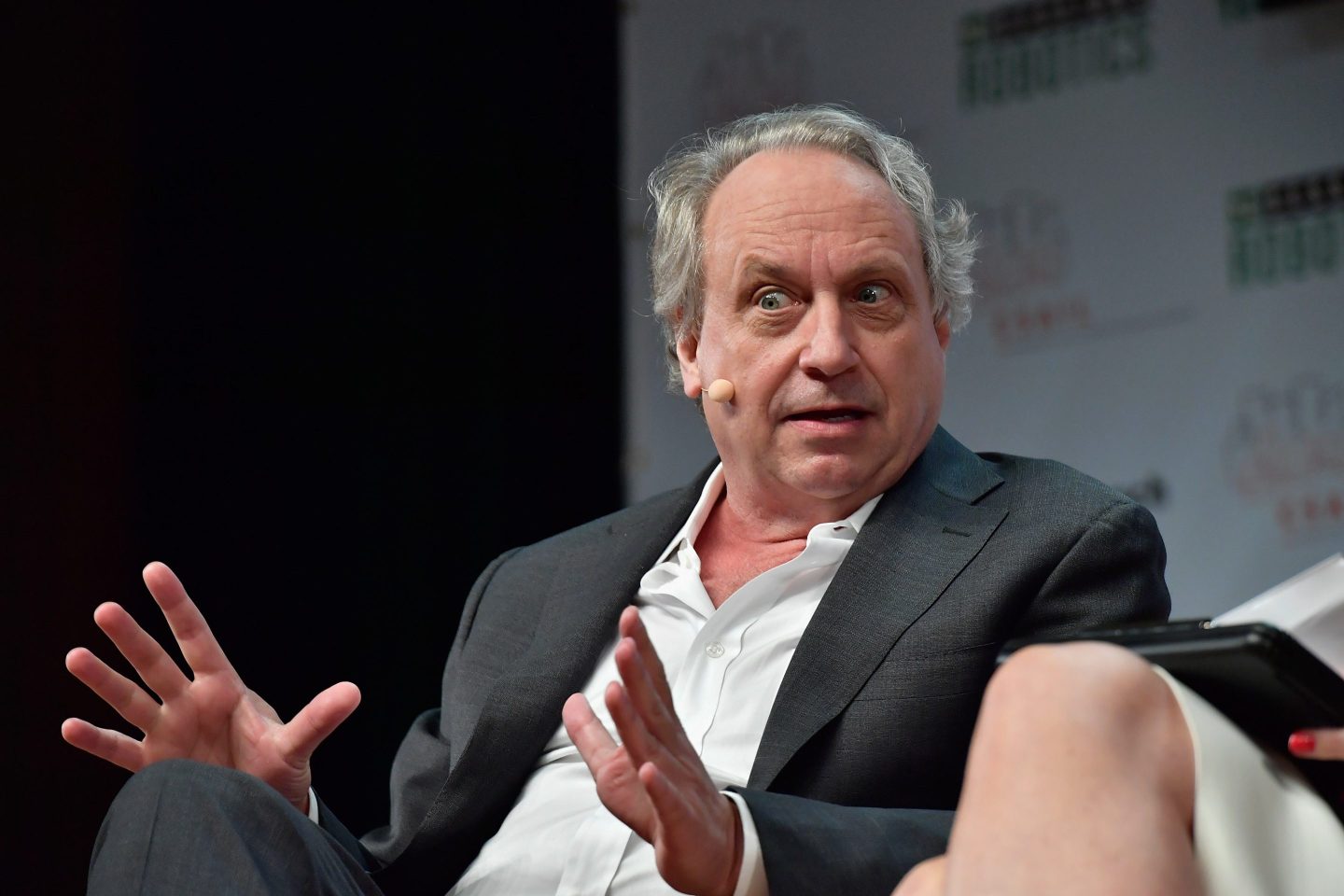
Anthropic CEO Dario Amodei says the most important thing he does each day has nothing to do with training AI models or shipping products. Instead, he said he spends almost half his time working on company culture.
“I probably spend a third, maybe 40%, of my time making sure the culture of Anthropic is good,” Amodei said in an interview on the Dwarkesh Podcast earlier this month.
Amodei’s comments offer a rare window into how one of tech’s most closely watched CEOs manages a company that now sports 2,500 employees and is valued at $380 billion.
As Anthropic has expanded, it has become nearly impossible for Amodei to weigh in on every technical and product decision, he said. So, rather than dig into the finer details, he has tried to focus on the bigger picture: making sure his employees like working for Anthropic, that the company’s mission and values are clear, and that all workers are working toward the same mission instead of against each other, as he said happens at other unnamed AI companies.
“I think we’ve done an extraordinarily good job, even, if not perfect, of holding the company together, making everyone feel the mission, that we’re sincere about the mission, and that everyone has faith that everyone else there is working for the right reason,” he said.
Key to Amodei’s approach to culture is constant communication and extreme sincerity. Amodei said he speaks candidly about his vision for the company in a biweekly all-hands he called a “DVQ,” short for Dario Vision Quest—a name he tried to resist at first because of its potential psychedelic connotation.
During these meetings, Amodei stands in front of the entire company with a three- or four-page document and speaks for an hour on topics ranging from product strategy to geopolitics, as well as the broader AI industry. A large fraction of the company attends, either in person or virtually, he said.
Amodei says he speaks plainly with his employees, answering questions and avoiding what he calls “corpo speak.” He also has an active Slack channel where he writes responses to employee questions or his own thoughts about the company throughout the week.
Amodei’s blunt approach to communication echoes the “radical transparency” leadership style pioneered by Bridgewater Associates founder Ray Dalio. As part of his management style, Dalio encourages employees to give honest feedback even to senior members of the firm. Dalio argues the method helps improve the company’s standards, but some critics have said allowing a no holds barred culture of communication could potentially make employees more closed off.
Amodei’s comments come as Anthropic updated its Responsible Scaling Policy, dropping its pledge not to continue training its AI after it had reached a certain level of capability unless it could guarantee its safety measures were adequate. Anthropic said the change was driven by competitive pressures and a lack of regulations. Critics have implied the move shifts Anthropic’s mission away from the safety-first identity with which it was founded.
Yet, when it comes to company issues, Amodei said on the podcast, he takes an “unfiltered” approach. Inside Anthropic, he can be completely candid with his employees about the company’s directions and the issues it faces. That openness, he said, is what keeps everyone on the same page—even as pressure may be building externally.
“The point is to get a reputation of telling the company the truth about what’s happening, to call things what they are, to acknowledge problems, to avoid the sort of ‘corpo speak,’ the kind of defensive communication that often is necessary in public,” he said. “But if you have a company of people who you trust—and we try to hire people that we trust—then you can really just be entirely unfiltered.”