Financial markets have long influenced perceptions, but prediction markets can prematurely create a permission structure for possible events in the future, according to economist Kyla Scanlon.
In a recent New York Times op-ed, she pointed to a dynamic that trading legend George Soros once observed, namely that market expectations help shape reality, not just predict what’s ahead.
But traders of stocks, bonds, currencies, and commodities are reacting to events and making forecasts based on that. What’s different about prediction markets is they can give the appearance of consensus for something that hasn’t happened yet, Scanlon warned.
“The uncomfortable truth is that prediction machines have become infrastructure for the legitimacy of event outcomes, no matter how outlandish: When markets process political events before democratic institutions like Congress can deliberate, market outcomes are treated as validation and permission for political actions,” she explained.
Scanlon, who has been dubbed Gen Z’s favorite economic commentator and authored the book In This Economy? How Money and Markets Really Work, added the speed with which prediction markets price events is another concern.
As traders bid on the odds of a particular outcome, it establishes a narrative before an alternate one derived from a more democratic process can challenge it.
“Legitimacy increasingly flows to whoever processes uncertainty first,” she wrote. “Markets have optimized for speed. Democracy has been designed for deliberation.”
In addition, large traders have outsize influence in prediction markets and could be benefiting from insider information.
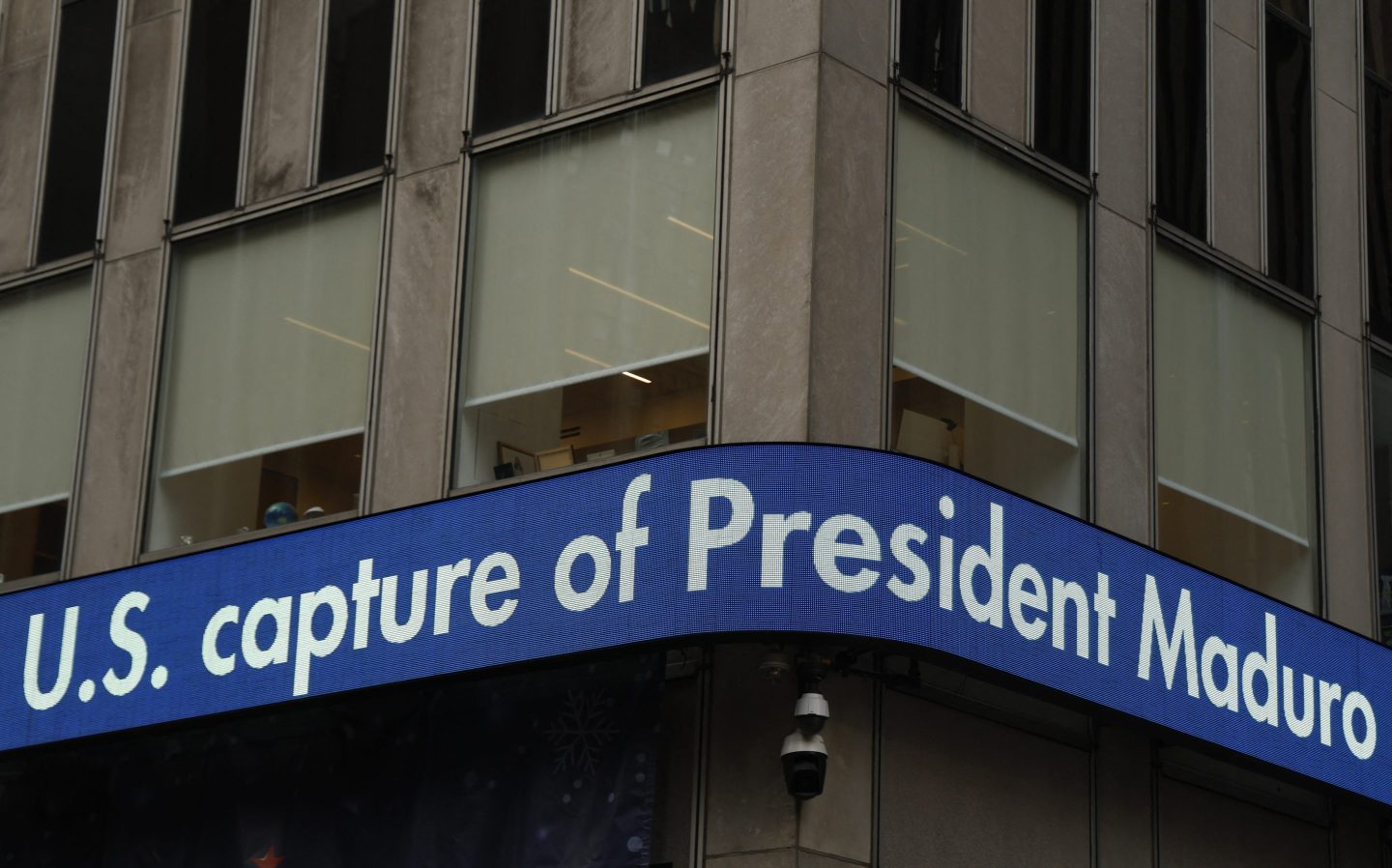
That was a concern earlier this month after the U.S. military captured Venezuelan dictator Nicolás Maduro. Just before the raid took place, one Polymarket account invested more than $30,000 on Maduro’s exit by Jan. 31, 2026, delivering a payout of more than $400,000.
Given that the operation was a closely held military secret, Rep. Ritchie Torres (D.-N.Y.) has introduced a bill to prohibit federal officials from using nonpublic information to trade on policy outcomes.
“If you’re both a government insider and a participant in the prediction market, you now have a perverse incentive to advocate for policy decisions that will personally benefit,” he told CNN on Jan. 9. “That kind of prediction market profiteering has no place in the ranks of the federal government.”
Scanlon also pointed out some media companies have partnered with prediction markets and are routinely reporting on odds for an event rising or falling.
That further shifts what the overall market perceives as consensus, with odds transforming to forecasts until “inevitability becomes acceptance,” she wrote.
“So when large traders move markets and those movements are reported as consensus, what you’re actually seeing is capital-weighted bets from whoever has the most information (insider or not),” Scanlon explained. “But those bets get laundered into legitimacy through the language of collective wisdom and truth machines, with a light touch of regulation.”
Top prediction markets Kalshi and Polymarket didn’t immediately respond to Fortune’s requests for comment.
To diminish the power to confer legitimacy, Scanlon suggested prediction markets adopt “know-your-customer” standards; disclose bet totals that show if single traders are moving the market; lengthen settlement windows so a consensus doesn’t form right away; and require labels on event settlements as “contractual arbitration.”
Meanwhile, sports betting and prediction markets have become increasingly popular with Gen Z as they turn to them for income amid growing pessimism about their financial prospects.
That has also given rise to “economic nihilism,” a term Scanlon popularized, leading to doom spending, “disillusionomics,” and the commodification of everything.
“When every conventional path narrows, people start to look for alternatives. And in practice, that has meant turning toward the few places where a real upside still appears possible, even if the risks are high.” she recently wrote in the Wall Street Journal. “When people start treating the economy like a game, it’s a sign that the traditional ways of winning no longer feel real.”