In this first, tumultuous month of 2026, many have taken to social media to post throwback photos and reflections upon another consequential year: 2016. In that spirit, here’s a Fortune cover story from May of 2016 about the man who would be elected president six months later, and again this past November.
“Donald Trump’s pitch is simple,” Shawn Tully and Roger Parloff explained in their 2016 cover feature about the candidate, then in the midst of a crowded primary race. “He is, as he’ll happily tell you, one of the world’s elite businessmen. Therefore he’d make a great President.”
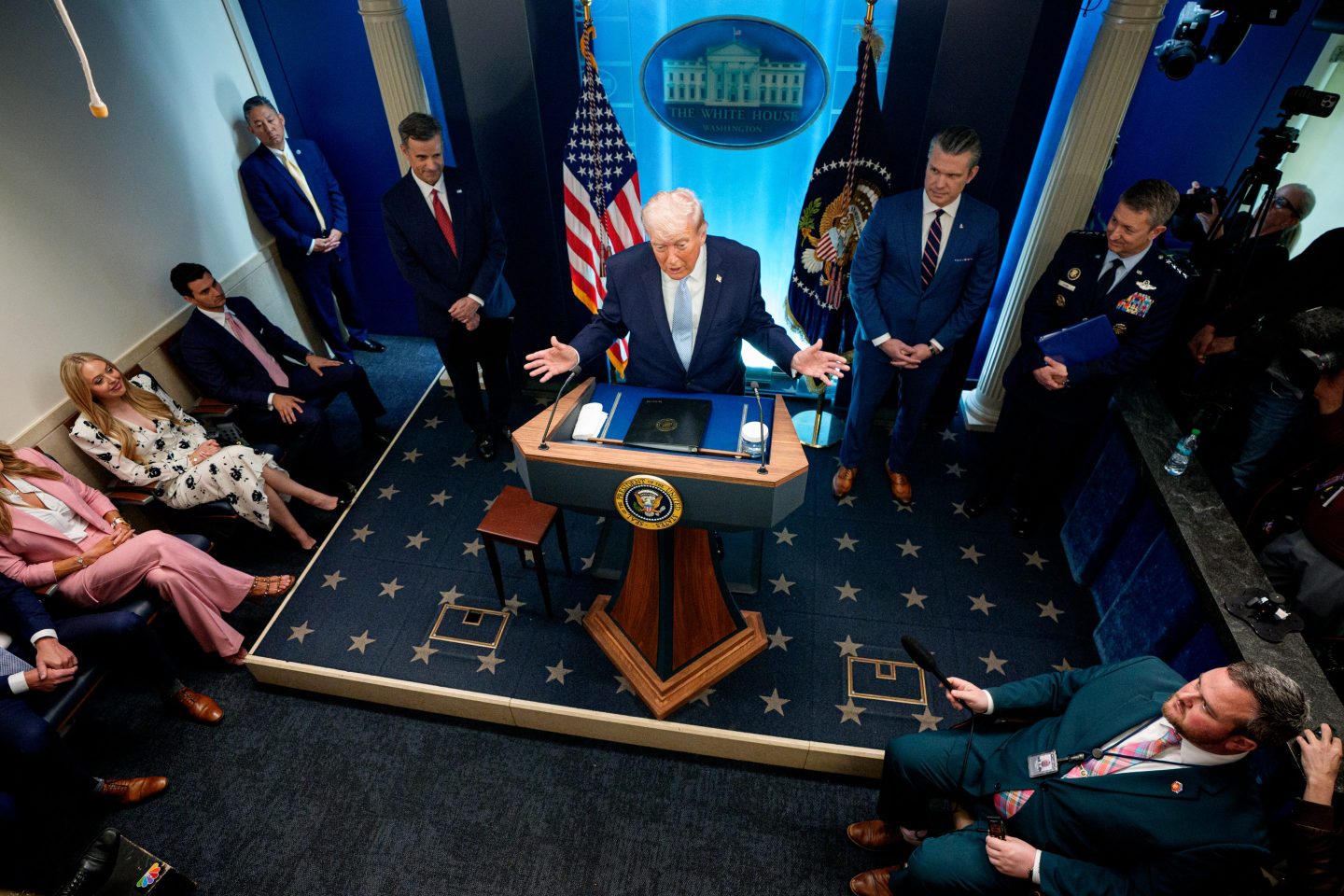
In the decade since, Trump’s pitch has not changed at all, as Geoff Colvin writes this month in a Fortune cover story about the nation’s “CEO-in-chief”: “In the first year of his second term, Trump has rewritten the government’s relationship with business more radically than any predecessor.”
This approach—and a chummy “CEO to CEO” tone in his frequent huddles with business leaders—has garnered praise from those, including Nvidia CEO Jensen Huang, OpenAI CEO Sam Altman, and Boeing CEO Kelly Ortberg, whose companies have benefited from his dealmaking and reductions in regulatory friction.
But when asked more broadly how they feel about the future, American CEOs are sounding less sanguine, Colvin writes: “In the fall 2024 Fortune/Deloitte CEO Survey, conducted just after that year’s presidential election, 61% of CEOs said they were ‘optimistic or very optimistic for my industry.’ A year later, under Trump, only 47% felt that way, while those who felt pessimistic or very pessimistic more than doubled, from 10% to 22%.”
Tully and Parloff, in 2016, laid out a roadmap for understanding Trump’s actions and his dealmaking approach, including five maxims: “He always comes first.” “He wants you to know how rich he is.” “He sues first, asks questions later.” “He’s taken on debt recklessly.” “He thinks he’s great at everything.”
But they—like many others—were wrong in one respect. They ended the piece by citing pundits who suggested that the candidate’s “ineptitude in the intricacies of the process” might thwart his presidential ambitions at the Republican Convention. “Then,” they concluded, “Trump could go back to the business of being Trump full-time.”
Instead, the president seems to be conducting the business of being Trump, unfettered and on an even larger scale, from the Oval Office.