
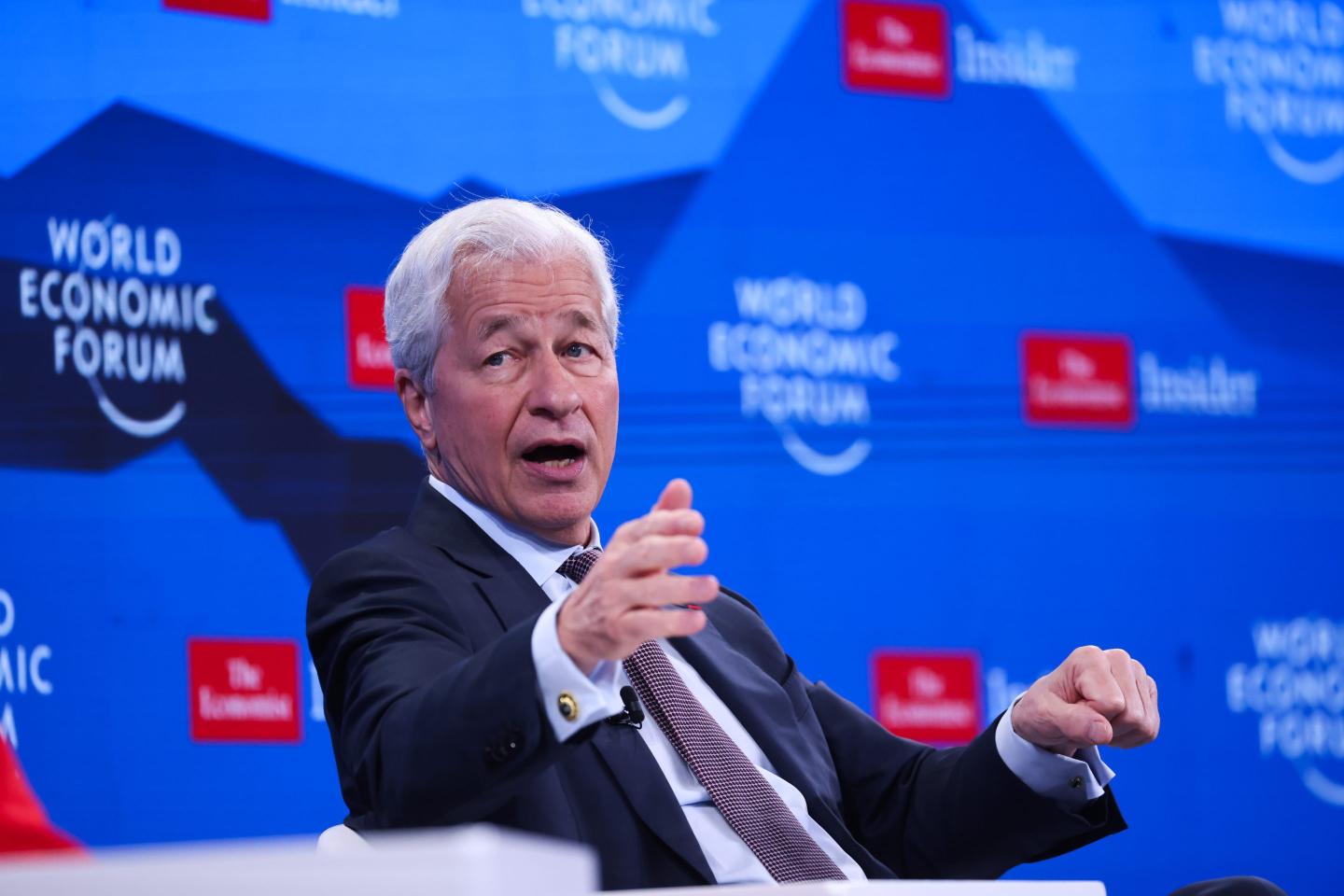
When Jamie Dimon stepped onto the stage at the World Economic Forum meeting in Davos today, he didn’t have outstanding feedback for the congregation.
The CEO of JPMorgan Chase was questioned about whether there is a “climate of fear” among America’s CEOs, particularly when it comes to speaking about the policies of the White House. The question, which drew applause from the audience, prompted some blunt feedback for what he called the “Davos elite.”
“I’ve been coming to Davos all these years and listen to chatter and stuff like that,” he said. “And you didn’t do a particularly good job making the world a better place. I think it’s great we get together and talk.”
Dimon leveled the criticism amid questions throughout the interview on whether he thought President Trump’s policies had been good or bad for the economy and geopolitical climate. The Wall Street veteran’s response was that he didn’t see the issues as binary, either better or worse, particularly until more information about outcomes became clear.
The 69-year-old banker, having sidestepped some more politically fraught topics like Greenland, robustly summarized his views as: “I’ve made it clear I want a stronger NATO, a stronger Europe. Some of the things Trump has done are causing that, some are not. I’m not a tariff guy, though I’d use it in [some] cases. I think they should change their approach to immigration. I’ve said it.
“What the hell else do you want me to say?”
The leader of America’s biggest bank has been a critical friend to the second Trump administration. He has backed some policies, for example, saying the White House was right to address trade imbalances between the U.S. and its partners. He told Fox in an interview in May that at first, he thought tariff rhetoric was “too large, too big and too aggressive when it started.” He added: “It was part of a master plan to get people to the table.” At Davos last year, he also told people to “get over” tariffs if it meant better national security.
He has been similarly complimentary about Trump’s drive for better border security, but said he was an advocate for “merit-based immigration.” To that end, he was concerned by the Oval Office’s proclamation imposing a new $100,000 fee for H-1B visas. The specialist visas let U.S. employers temporarily hire non-U.S. workers, typically for specialized tech-sector jobs, and have been held by some of Silicon Valley’s most notable names.
“I would beg the president,” he told CNBC at JPMorgan’s 10th annual India Investor Conference in September. “We should have good immigration. I think there will be some pushback on the H-1Bs.”
But Dimon’s overarching message about recent policy has been the need for unity with key allies. Most notably, he wrote in his letter to shareholders last year that “our country’s goal should be to help make European nations stronger and keep them close. If Europe’s economic weakness leads to fragmentation, the landscape will look a lot like the world before World War II.”
He added: “Economics is the longtime glue, and America First is fine, as long as it doesn’t end up being America alone.” At Davos this year, he said simply: “I’m a globalist.”