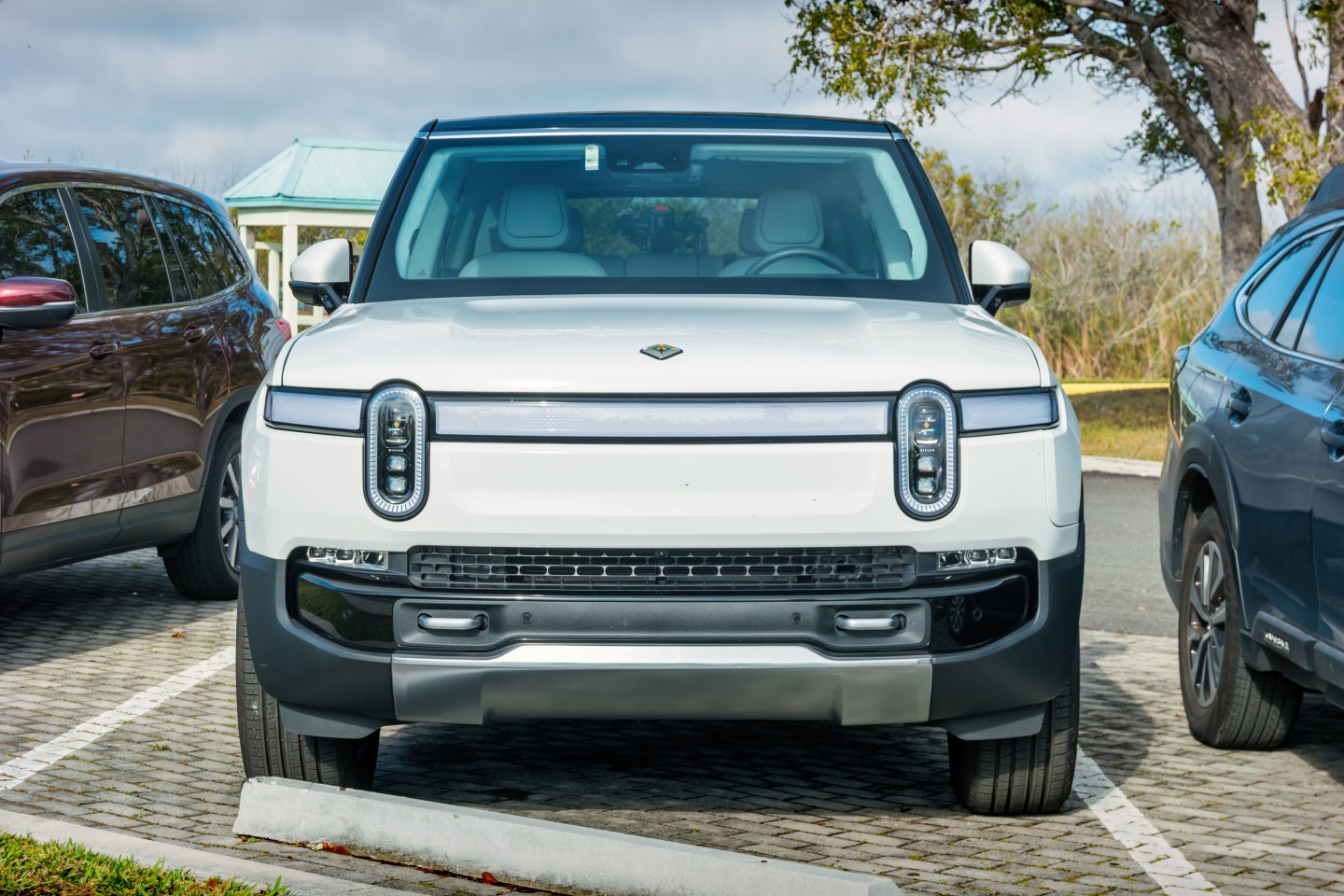
If Rivian’s sales are any indication, owning an electric vehicle isn’t such a partisan issue, despite President Donald Trump’s rollbacks of mandates, incentives, and targets for EVs.
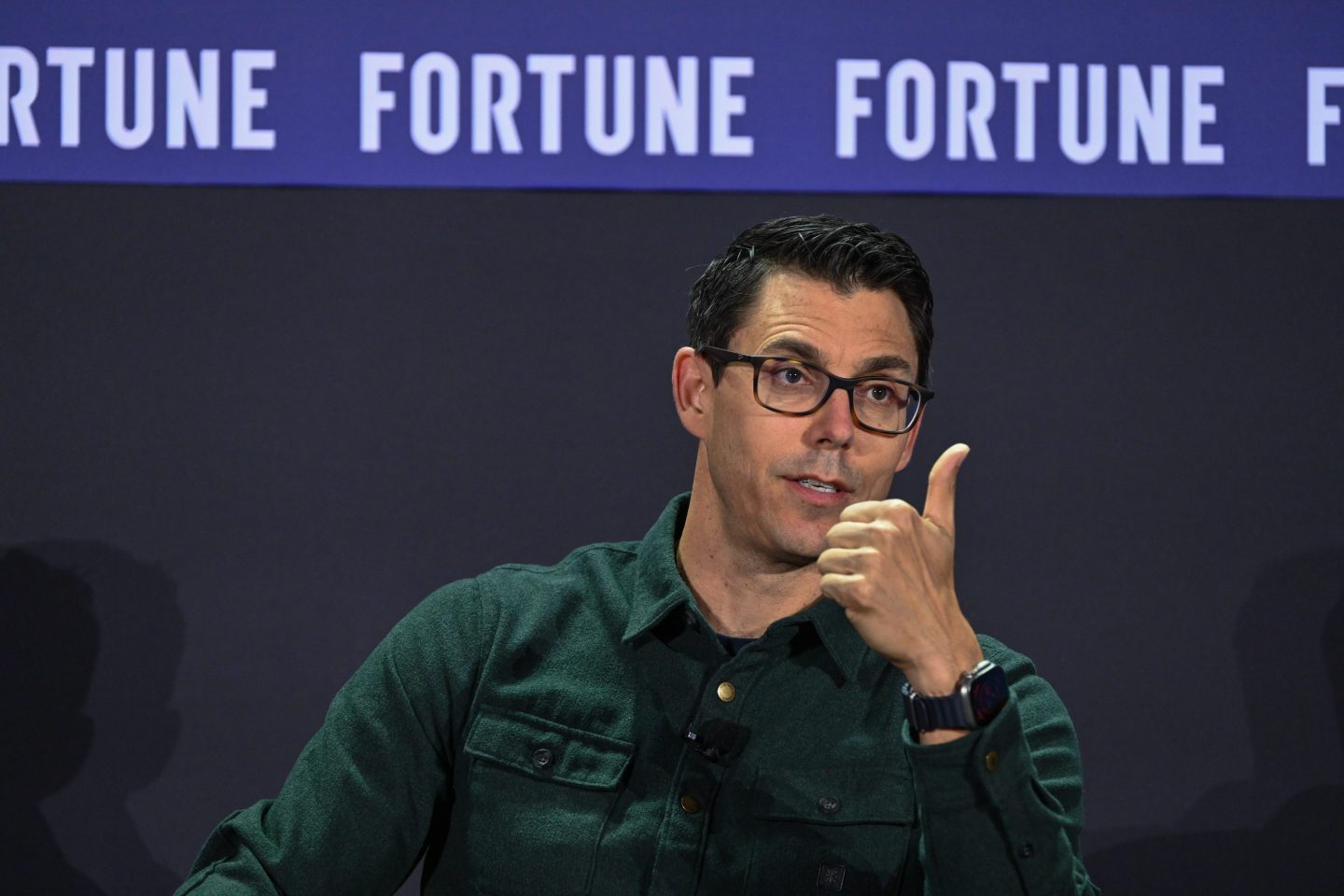
At the Fortune Brainstorm AI conference in San Francisco on Tuesday, Rivian CEO RJ Scaringe said it’s a misconception that electrification is politicized, explaining that most customers buy a product based on how it fits their needs, not their ideology. The questions car buyers ask, he said, are the same whether they’re purchasing one with an internal combustion engine or a battery: “Is it exciting? Are you attracted to the product? Does it draw you in? Does the brand positioning resonate with you? Do the features answer needs that you have?”
Buyers of Rivian’s R1 electric SUV are split roughly 50-50 between Republicans and Democrats, Scaringe told Fortune’s Andrew Nusca. “I think that’s extraordinarily powerful news for us to recognize—that this isn’t just left-leaning buyers,” he added. “These are people that are saying, ‘I like the idea of this product, I’m excited about it.’ And this is thousands and thousands of customers. This is statistically relevant information.”
Buying an EV was once an indication of left-leaning politics, but the politics got scrambled after Tesla CEO Elon Musk became the top Republican donor and a close advisor to Trump. That drew some new customers to Tesla, and turned off a lot of progressive EV buyers, with many existing owners putting bumper stickers on their Teslas explaining that they bought their cars before Musk’s hard-right turn. Trump and Musk later had a stunning public feud, in part over the administration’s elimination of EV and solar tax credits.
But Scaringe said he started Rivian with a long-term view, independent of any policy framework or political trends. He also insisted that if Americans have more EV choices, sales will follow. Right now, Tesla dominates a key corner of the market, namely EVs in the $50,000 price range. Rivian’s forthcoming R2 midsize SUV will represent a new choice in that market, with a starting price of $45,000 versus the R1’s $70,000.
Ten years from now, Scaringe said, he hopes—and believes—that EV adoption in the U.S. will be meaningfully higher than it is today across the board, explaining that the main constraint isn’t on the demand side. Instead, it’s on the supply side, which suffers from “a shocking lack of choice,” especially compared with Europe and China, he added. EV options in the U.S. are limited by the fact that Chinese brands are shut out of the market.
More choices for U.S. EV buyers would presumably create more competition for Rivian—and indeed, the flood of low-price Chinese EVs in other auto markets has created a backlash, with countries such as Canada imposing steep tariffs on them. But Scaringe appears to view more competition as positive for the market overall.
“I do think that the existence of choice will help drive more penetration, and it actually creates a unique opportunity in the United States,” he said.