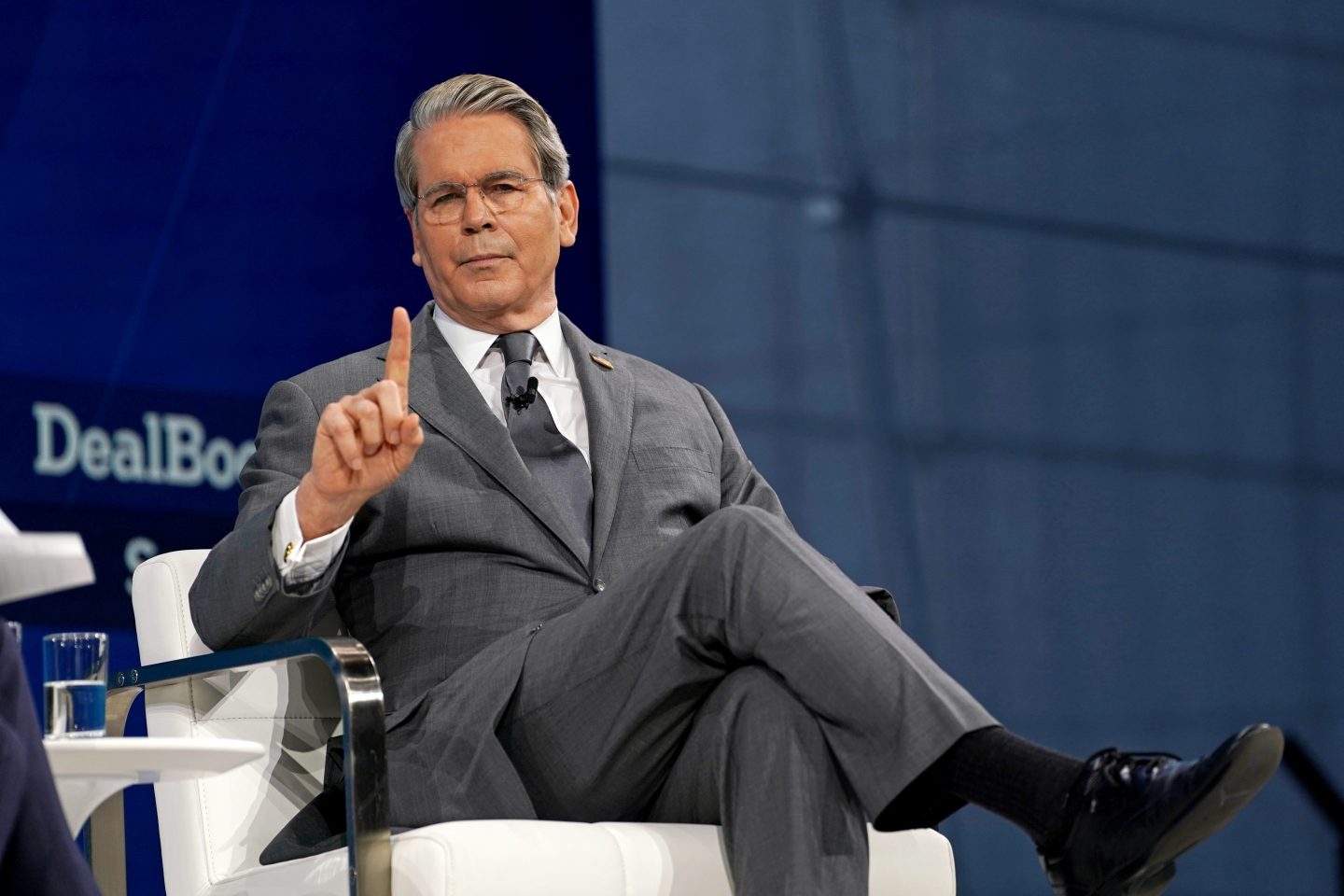
Scott Bessent, President Donald Trump’s Treasury secretary, staunchly defended the use of tariffs at the New York Times’ DealBook Summit, in conversation with Andrew Ross Sorkin, strongly asserting he does not believe tariffs are a tax. He pivoted the debate by challenging Democrats who claim tariffs are inflationary to instead “join me and cut taxes, and that will be disinflationary.”
Bessent argued that, behind the scenes, a “huge number” of Democrats are actually in favor of tariffs but can’t say so because they’ve been labeled “the Trump tariffs,” forcing them to avoid deviating “from the hive.” And he insisted he has gotten “a couple of Democrats” to walk into his “bear trap” with their argument tariffs act as a tax. By their own logic, Bessent insisted, if they truly believe taxes are inflationary and therefore bad, they should do the obvious: “So you believe taxes are inflationary. So join me and cut taxes, and that will be disinflationary.”
As Bessent and Sorkin jousted, the Treasury secretary tangled with the big (non-AI-related) economic quandary of 2025. Tariffs are paid by U.S. companies and consumers, and are difficult to distinguish from a tax. They appear to have revived inflationary pressures that were on the wane when Trump was reelected, and they are part of a larger trade tangle with China dating back nearly a decade. But the Trump administration has refused to drop its commitment to them, even if they are turning out far different from when Trump announced worldwide “reciprocal tariffs” in April.
A ‘shrinking ice cube,’ but still important
The tariffs are currently bringing in a lot of revenue and are “good for labor,” he argued. At the same time, Bessent emphasized the revenue generation is secondary, describing tariffs as a “shrinking ice cube,” acknowledging the mounting estimates from various economists that the revenue being generated is less than the White House initially projected. The ultimate goal is to rebalance trade and to bring back domestic production.
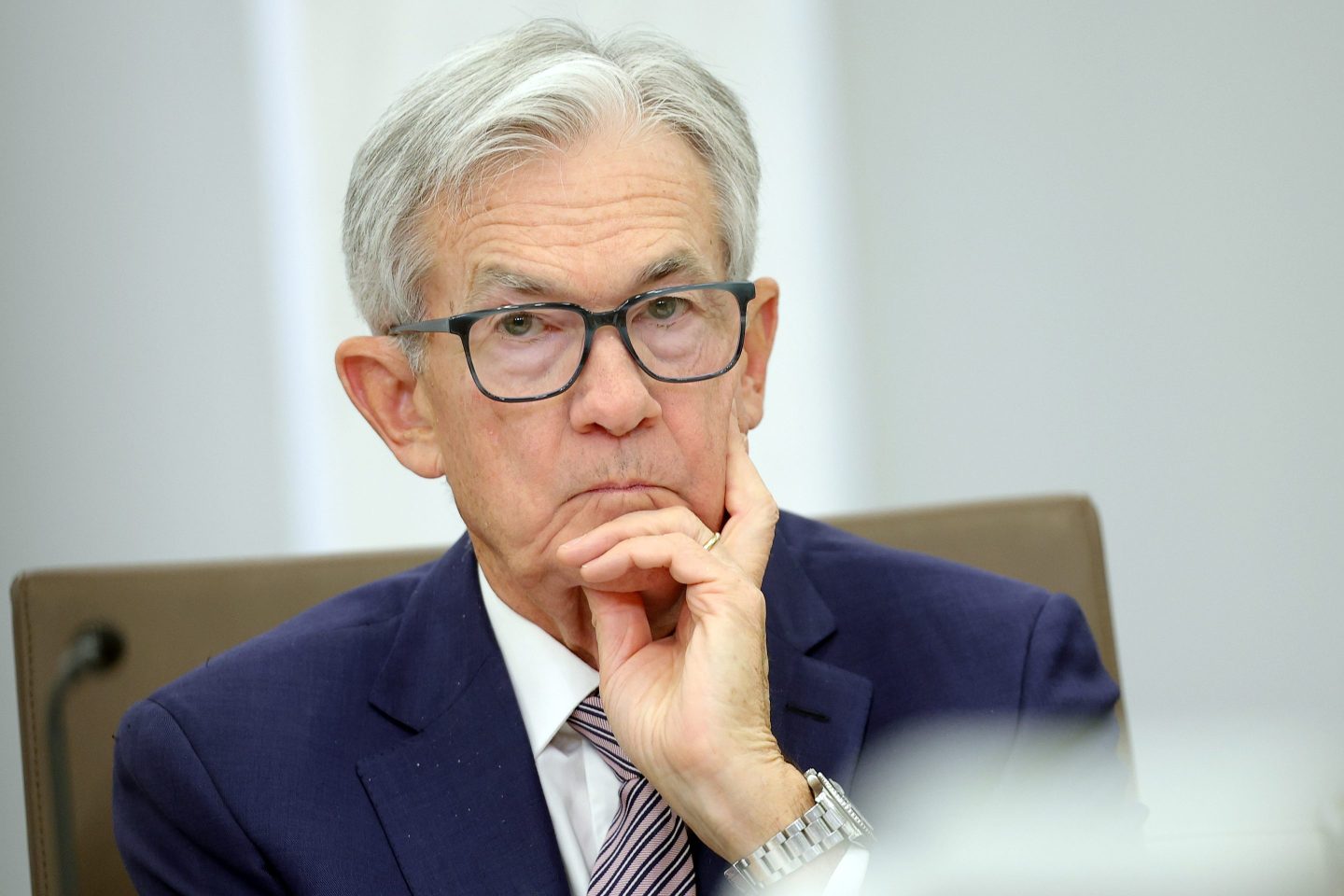
Bessent also addressed concerns tariffs are fueling inflation, defining inflation as a “generalized price and persistent price increase,” whereas tariffs may seem inflationary in 2025 but they are really a one-time price adjustment. Sorkin pressed Bessent, raising the finding from Bank of America that tariffs have pushed consumer prices higher, and Federal Reserve Chair Jerome Powell’s comment that “inflation away from tariffs is actually not so far from our 2% goal.”
Bessent countered the “tariff piece is a small part of the economy” and dismissed much of Sorkin’s questioning, saying it’s trapped in a “fever swamp of Democratic talking points.” According to the Treasury secretary, a central plank of the administration’s strategy is countering China, which Bessent described as a “very different economic animal” owing to its willingness to “subsidize labor, subsidize production, subsidize capital” to maintain its export economy. Tariffs provide critical emergency leverage, Bessent argued, noting when Trump threatened China with a 100% tariff owing to export licensing requirements, China “immediately came to the negotiating table.”
Looking ahead to the Supreme Court ruling concerning tariffs, Bessent expressed optimism, though he noted: “Everyone says it will be a loss for the administration.” He warned if the administration loses the legal fight, it “will be a loss for the American people” and suggested that even if the current tariffs are struck down, the administration has pathways to maintain the structure.
Bessent also refuted mainstream media interpretations of Justice Amy Coney Barrett’s remarks during the hearing. When she stated undoing the tariffs “will be a mess,” Bessent argued what she actually meant was the court needed to be “very judicious” and “very prudent.”