
• Home
  • News
  • Fortune 500
  • Tech
  • Finance
  • Leadership
  • Lifestyle
  • Rankings
  • Multimedia
Successwork-life balance

Work-life balance finally outranks pay as a top motivator for job seekers, but CEOs aren’t sold

Emma Burleigh
By
Emma Burleigh
Emma Burleigh
Reporter, Success
Down Arrow Button Icon
Emma Burleigh
By
Emma Burleigh
Emma Burleigh
Reporter, Success
Down Arrow Button Icon
November 17, 2025, 11:07 AM ET
Workers leaving office
Gen Z talent rank work-life balance far above pay, more than any other generation of workers. Meanwhile, CEOs are split on whether it’s possible to have the best of both worlds. Chris Whitehead / Getty Images

Work culture in the U.S. is changing, and employees are fed up with five-day RTO mandates and late-night calls from their bosses. Disillusioned with corporate America’s grind, they’re finally putting their work-life balance first—even above a hefty paycheck. 

Recommended Video

Work-life balance is now the highest ranking factor for talent when it comes to their current or future job, according to a 2025 Workmonitor report from Randstad. About 83% of people list it as the most important consideration—right next to job security—with pay ranked in third as a motivator at 82%. It’s the first time work-life balance has surpassed pay as an incentive since the first Workmonitor study 22 years ago. 

“Talent’s search for workplaces that shape around them, rather than vice versa, continues to be a strong motivator,” the report notes. “Their expectations have become more multifaceted, with traditionally sought-after workplace aspects giving way to a broader distribution of priorities.”

Gen Z is leading the charge for valuing work-life balance over pay

In true fashion of their mission to make office life better, young people are leading the change in expectations for employers. 

The gap between wanting flexibility and compensation is most stark for Gen Z, according to the Randstad report. Around 74% rank work-life balance as a top consideration, compared with just 68% who put pay first. The young generation even ranked mental health (70%) above eye-catching salaries—part of their drive to ensure they’re happy clocking into their jobs every day. 

They even value remote and hybrid schedules more than pay; about 40% of Gen Zers and millennials would take a pay cut for more flexibility about where they work, according to a 2025 LinkedIn report. It’s part of a wider shift among young professionals, dubbed “career minimalism,” as Gen Z staffers save energy for their true ambitions outside of working hours. 

However, older staffers are all-in on sustainable schedules, too. The Randstad report finds that the importance of work-life balance and pay increases with age: 85% of baby boomers rank work-life balance as a primary consideration in jobs, while 87% rank pay as a significant consideration. A large proportion of these employees still hold work-life balance in high regard, but they haven’t yet come to terms with the notion that cash is king.

Everyday workers want flexibility—but CEOs say it’s a pipe dream

Workers at the upper and bottom rungs of the corporate totem pole agree on one thing: work-life balance is extremely important when considering a job. But professionals who have assumed the throne as CEO are starkly divided on whether it’s possible to be ambitious and unplug at a decent hour.

Marc Randolph, the cofounder of $472 billion entertainment giant Netflix, is one of the few highly successful entrepreneurs who are adamant on setting work-life boundaries. He lived by a straightforward rule throughout his three-decade-long career: every Tuesday, he walked out of the office at 5 p.m. and wouldn’t do work for the rest of the night. He’d go to a movie, have dinner, or go window-shopping with his close friend—and “nothing got in the way of that.” 

“I’ve worked hard, for my entire career, to keep my life balanced with my job,” Randolph wrote in an old LinkedIn post that has recently been recirculating on social media. “Those Tuesday nights kept me sane. And they put the rest of my work in perspective.”

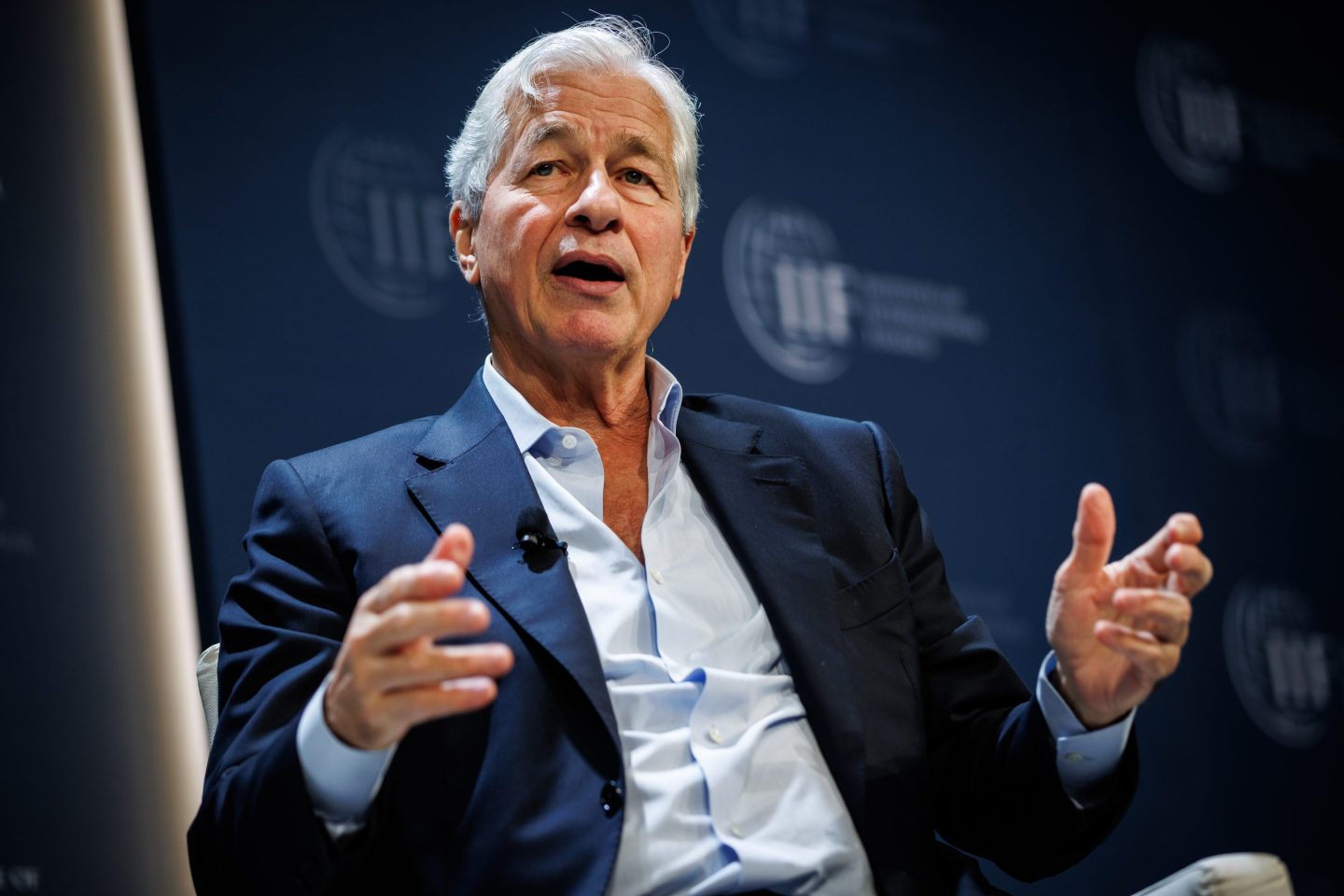
In what might seem unconventional for Wall Street titans, JPMorgan CEO Jamie Dimon has also advised young workers to break away from work. It’s what’s best for their relationships and well-being. 

“You need to have work-life balance,” Dimon said to students at the Georgetown University Psaros Center for Financial Markets and Policy last year. “What we tell our people at JPMorgan is you have to take care of your mind, your body, your spirit, your soul, your friends, your friends, your health. You really have to.”

However, there’s a large camp of CEOs and entrepreneurs who wholeheartedly disagree with the notion of work-life balance. Google cofounder Sergey Brin and Scale AI’s Lucy Guo have lambasted the idea of clocking in at 9 a.m. and out at 5 p.m. Andrew Feldman, cofounder and CEO of $8.1 billion AI chip company Cerebras, agreed it’s astonishing that people want to have it both ways.

“This notion that somehow you can achieve greatness, you can build something extraordinary by working 38 hours a week and having work-life balance, that is mind-boggling to me,” Feldman stressed on the 20VC podcast last month. “It’s not true in any part of life.”

About the Author
Emma Burleigh
By Emma BurleighReporter, Success

Emma Burleigh is a reporter at Fortune, covering success, careers, entrepreneurship, and personal finance. Before joining the Success desk, she co-authored Fortune’s CHRO Daily newsletter, extensively covering the workplace and the future of jobs. Emma has also written for publications including the Observer and The China Project, publishing long-form stories on culture, entertainment, and geopolitics. She has a joint-master’s degree from New York University in Global Journalism and East Asian Studies.

See full bioRight Arrow Button Icon

Latest in Success

Alex Amouyel is the President and CEO of Newman’s Own Foundation
Commentaryphilanthropy
Following in Paul Newman and Yvon Chouinard’s footsteps: There are more ways for leaders to give it away in ‘the Great Boomer Fire Sale’ than ever
By Alex AmouyelDecember 7, 2025
8 hours ago
Hank Green sipping tea
SuccessPersonal Finance
Millionaire YouTuber Hank Green tells Gen Z to rethink their Tesla bets—and shares the portfolio changes he’s making to avoid AI-bubble fallout
By Preston ForeDecember 7, 2025
9 hours ago
Tamera Fenske, chief supply chain officer at Kimberly-Clark
SuccessCareers
Kimberly-Clark exec is one of 76 women in the Fortune 500 with her title—she says bosses used to compare her to their daughters when she got promoted
By Emma BurleighDecember 7, 2025
11 hours ago
SuccessWealth
The $124 trillion Great Wealth Transfer is intensifying as inheritance jumps to a new record, with one 19-year-old reaping the rewards
By Jason MaDecember 6, 2025
1 day ago
Bambas
LawSocial Media
22-year-old Australian TikToker raises $1.7 million for 88-year-old Michigan grocer after chance encounter weeks earlier
By Ed White and The Associated PressDecember 6, 2025
1 day ago
Timm Chiusano
Successcreator economy
After he ‘fired himself’ from a Fortune 100 job that paid up to $800k, the ‘Mister Rogers’ of Corporate America shows Gen Z how to handle toxic bosses
By Jessica CoacciDecember 6, 2025
1 day ago

Most Popular

placeholder alt text
AI
Nvidia CEO says data centers take about 3 years to construct in the U.S., while in China 'they can build a hospital in a weekend'
By Nino PaoliDecember 6, 2025
1 day ago
placeholder alt text
Economy
The most likely solution to the U.S. debt crisis is severe austerity triggered by a fiscal calamity, former White House economic adviser says
By Jason MaDecember 6, 2025
23 hours ago
placeholder alt text
Real Estate
The 'Great Housing Reset' is coming: Income growth will outpace home-price growth in 2026, Redfin forecasts
By Nino PaoliDecember 6, 2025
1 day ago
placeholder alt text
Big Tech
Mark Zuckerberg rebranded Facebook for the metaverse. Four years and $70 billion in losses later, he’s moving on
By Eva RoytburgDecember 5, 2025
2 days ago
placeholder alt text
Asia
Despite their ‘no limits’ friendship, Russia is paying a nearly 90% markup on sanctioned goods from China—compared with 9% from other countries
By Jason MaNovember 29, 2025
8 days ago
placeholder alt text
Economy
JPMorgan CEO Jamie Dimon says Europe has a 'real problem’
By Katherine Chiglinsky and BloombergDecember 6, 2025
22 hours ago
Rankings
  • 100 Best Companies
  • Fortune 500
  • Global 500
  • Fortune 500 Europe
  • Most Powerful Women
  • Future 50
  • World’s Most Admired Companies
  • See All Rankings
Sections
  • Finance
  • Leadership
  • Success
  • Tech
  • Asia
  • Europe
  • Environment
  • Fortune Crypto
  • Health
  • Retail
  • Lifestyle
  • Politics
  • Newsletters
  • Magazine
  • Features
  • Commentary
  • Mpw
  • CEO Initiative
  • Conferences
  • Personal Finance
  • Education
Customer Support
  • Frequently Asked Questions
  • Customer Service Portal
  • Privacy Policy
  • Terms Of Use
  • Single Issues For Purchase
  • International Print
Commercial Services
  • Advertising
  • Fortune Brand Studio
  • Fortune Analytics
  • Fortune Conferences
  • Business Development
About Us
  • About Us
  • Editorial Calendar
  • Press Center
  • Work At Fortune
  • Diversity And Inclusion
  • Terms And Conditions
  • Site Map

© 2025 Fortune Media IP Limited. All Rights Reserved. Use of this site constitutes acceptance of our Terms of Use and Privacy Policy | CA Notice at Collection and Privacy Notice | Do Not Sell/Share My Personal Information
FORTUNE is a trademark of Fortune Media IP Limited, registered in the U.S. and other countries. FORTUNE may receive compensation for some links to products and services on this website. Offers may be subject to change without notice.