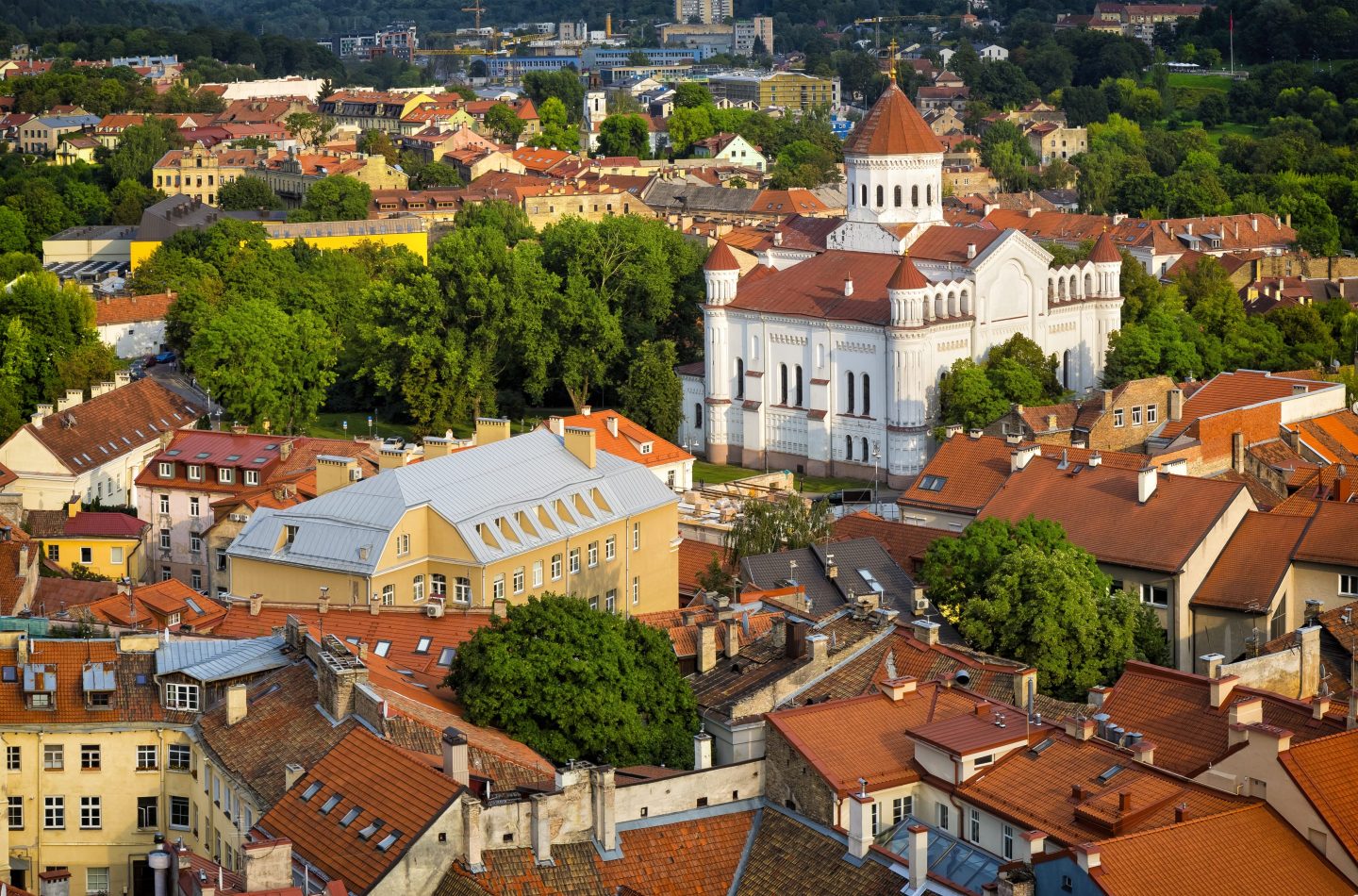
Vilnius doesn’t need Olympic fanfare to make its waters swimmable. While Paris spent billions cleaning up the Seine for a splashy opening, the rivers and lakes in Lithuania’s capital have long been open for a dip whenever the weather allows.
Permitting urban swimming is just one way that the Baltics’ largest city has sought to become more sustainable, helping it earn the title of European Green Capital of the Year 2025.
Now Vilnius authorities want to use these green credentials to boost their global economic competitiveness too.
“One of the biggest challenges we need to fight is the [lack of] awareness of Lithuania and of Vilnius,” says Mangirdas Sapranauskas, a senior department head at the city’s development agency, Go Vilnius, which oversees foreign direct investment (FDI) and international talent attraction. “The Green Capital title put us on the map.”
Foreigners now make up over 12% of Vilnius’ population, with global companies including Moody’s, Nasdaq, and Thermo Fisher having offices there, and the city’s FDI strategy has won international plaudits.
Yet it was only after hearing from executives who chose to relocate there that Sapranauskas realized how impressed they were by how green Vilnius is—nearly everyone lives within 300 meters of parks or other green spaces; there’s even a forest, Vingis Park, within walking distance of its Parliament.
Vilnius’s chief sustainability officer, Anton Nikitin, says that being green improves quality of life in multiple ways. Indeed, while recognizing the importance of clean air and water, access to nature, biodiversity and electric public transportation, his definition of sustainability goes much further.
“We have to become more people-oriented, and that’s the very important social part of sustainability,” Nikitin says. “We don’t want to be green because we’re green; we want to be green because we want our city to be a very livable city, a very safe city, a very resilient city.”
This citizen-first approach extends to the country’s advanced digitalization of public and private services, which 77% of Lithuanians believe is making their lives easier. Vilnius also actively encourages people to engage with policy debates and to participate in civic life through citizen assemblies.
A burgeoning startup scene
Are sustainability and quality of life competitive advantages for a city looking to attract talent and investment?
They certainly don’t seem to hurt. Vilnius is the second-fastest riser on the IMD smart cities index, and Dealroom.co gives its tech ecosystem special mention for its per capita venture capital, enterprise value creation, and unicorn numbers (in absolute terms, the Dutch research firm ranks Vilnius 113th globally).
The city’s star scale-ups include Nord Security, the $3 billion Lithuanian company behind Nord VPN, and second-hand marketplace Vinted—which has now expanded across Europe and recently unlocked a €5 billion ($5.9 billion) valuation in a secondary share sale.
“We have to become more people-oriented, and that’s the very important social part of sustainability…”
Vilnius’s chief sustainability officer, Anton Nikitin
They aren’t alone. No fewer than twenty Vinted alumni have already founded new startups, to the delight of Vinted CEO Thomas Plantenga, while Nord’s parent company, venture builder and investor Tesonet, is the biggest backer of vibrant local tech complex Cyber City. Aptly enough, tenants there include nexos.ai—the start-up launched earlier this year by Nord cofounders Tomas Okmanas and Eimantas Sabaliauskas.
Having bootstrapped businesses “from Vilnius to the world,” Okmanas is a self-described advocate of this “super safe and green city” with “great talent” that can also speak English. “I believe being in Lithuania is really an advantage,” says the entrepreneur. “You cannot choose your neighbors but apart from that, it’s just a fantastic place to live.”
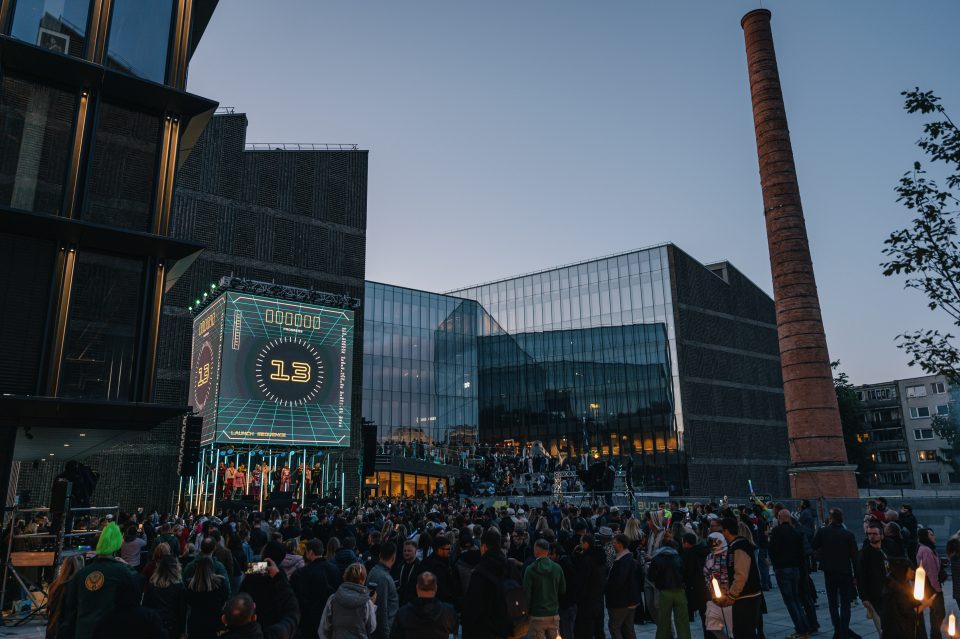
It’s a common theme among the city’s high-growth firms—both those starting out and those that have relocated to Vilnius.
“Previously the main questions [for companies looking to relocate] were about taxes, salaries, and office costs. Now two additional criteria are just as important: talent attraction and quality of life. Companies want their people to feel good, surrounded by greenery, a great city atmosphere, and places where natural networking happens,” says Darius Žakaitis, a founder at Tech Zity.
Known for its startup hubs, Tech Zity is currently transforming an industrial area of Vilnius with almost no greenery into a well-balanced $110 million tech campus due to open in 2026. “We’re planning four large courtyards as outdoor extensions of the offices. There will be spaces for working, events, or just walking around—like a park owned by the community. We see greenery not as decoration but as infrastructure for productivity and well-being,” Žakaitis says.
What of larger companies? Lithuania offers some concessions to strategic investors, but as a European Union member, it faces restrictions on preferential tax incentives for foreign firms. According to Sapranauskas, that is where “soft things come into play”—whether environmental policy and digital public services or practical support like International House Vilnius, which helps newcomers feel at home.
“Previously the main questions [for companies looking to relocate] were about taxes, salaries, and office costs. Now two additional criteria are just as important: talent attraction and quality of life…”
Darius Žakaitis, a founder at Tech Zity
The availability of talent is a major consideration. While Vilnius is no longer necessarily cheap in that regard—the average monthly salary tripled from €797 in 2014 to €2,536 in 2024, driven by strength in fintech, cybersecurity, and life sciences—it is still competitive, in part because of its desirability as a place to live.
“That livability factor genuinely helps the city compete for international talent, especially younger generations who want sustainability to be part of their everyday lifestyle,” says Vlada Musvydaitė-Vilčiauskė, founder of Lithuanian walking app Walk15.
Now boasting 1.1 million users, its platform also enables more than 2,000 companies including DHL, Nestlé and Novo Nordisk to encourage employees to walk more and exchange steps for rewards. These clients increasingly point out that their teams value not just the office environment but the environment around it, Musvydaitė-Vilčiauskė says, favoring cities like Vilnius, which is also rapidly expanding its cycle path infrastructure.
Musvydaitė-Vilčiauskė spends half of her time in Berlin, and also praises the German city for its “scale, diversity, and international vibe, which make it attractive for global talent.”
But “if Berlin offers breadth, Vilnius offers balance”—with the culture, international community and burgeoning tech scene of a major European capital, but greener, easier to get around and “without the stress of a much bigger city,” she says.
Being a green and pleasant place to live certainly isn’t necessary or sufficient for economic competitiveness, but Vilnius’s experience shows that at the very least it helps. It also shows that smaller cities and countries can find a way to compete with major metropolises and economic powerhouses if they lean into their strengths.