
• Home
  • News
  • Fortune 500
  • Tech
  • Finance
  • Leadership
  • Lifestyle
  • Rankings
  • Multimedia
FinanceFederal Reserve

Fed official sees July rate cut ‘unlikely,’ sticking with Powell’s view that coming months will be moment of truth for tariffs’ effect on inflation

Paolo Confino
By
Paolo Confino
Paolo Confino
Reporter
Down Arrow Button Icon
Paolo Confino
By
Paolo Confino
Paolo Confino
Reporter
Down Arrow Button Icon
July 1, 2025, 4:02 AM ET
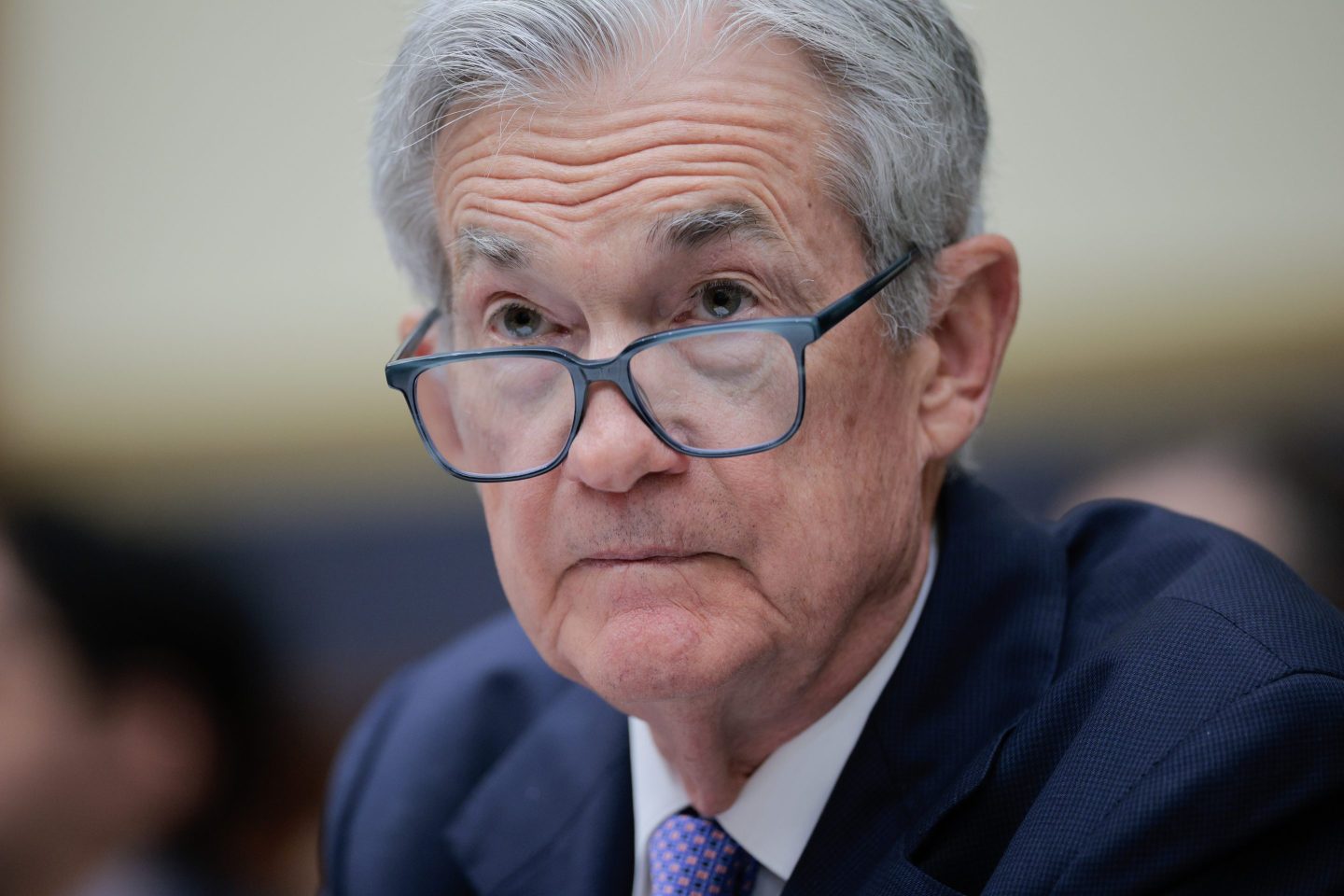
Federal Reserve Chair Jerome Powell
Federal Reserve Chair Jerome Powell signaled that economic data coming in over the summer would be critical in assessing tariffs’ impact on the U.S. economy.Chip Somodevilla/Getty Images
  • Economic data that comes in over the summer is expected to be the first batch to offer clear indications about what tariffs will do to prices, according to Federal Reserve Chair Jerome Powell. For that reason, any interest rate cuts are likely to happen in the fall. 

Atlanta Federal Reserve President Raphael Bostic believes a July interest rate cut would be premature. Even by its upcoming meeting next month, the Fed still wouldn’t have enough data to understand what’s happening to inflation in the wake of the U.S.’s new tariff regime, according to Bostic.  

Recommended Video

“I don’t think we’re going to have enough clarity about the trajectory of the economy to really know for sure by July,” Bostic said Monday morning in a CNBC interview. “We’re only going to have one more measure of inflation. We’re going to have a lot that’s unknown about how other policies are impacting the labor market. And without that kind of clarity, I don’t think it’ll be appropriate to move in any direction at this point but rather to wait.”

What exactly will happen to inflation is the central question for the central bank. 

Bostic said it was becoming clear that companies would raise prices but that it’s “still quite unknown” when they will and by much. “You do a model and you’re going to have to change it tomorrow and the day after and the day after,” he said. 

Textbook economics says that tariff policies lead to a one-time inflationary shock. But that’s theory, not practice. And the current practical realities of the economy are far from textbook. The stock market went from crashing to hitting all-time highs in a month and a half this spring. The U.S. alienated virtually all of its trading partners, then brokered uneasy truces with most of them, all while still keeping historically high tariffs in place. At the same time, the public is still reeling from persistent inflation. 

All of which makes for an uncertain outlook with little historical precedent. That’s why some Fed officials, including Chair Jerome Powell, have preached the merits of waiting patiently before deciding to cut rates. 

At a congressional hearing last week Powell reiterated the Fed was “well-positioned to wait to learn more about the likely course of the economy” before making any changes to interest rates. 

Powell’s strategy to wait for more economic data earned the ire of President Donald Trump. Since retaking office in January, Trump has regularly criticized the Fed’s repeated decisions to hold interest rates steady. His social media posts excoriating Powell have become a fixture of monthly Fed meetings. On Monday, Trump went on social media to post a list of central bank interest rates from other countries on which he had scrawled that the U.S.’s rates should be “lower by a lot.”

However, during his testimony, Powell offered some hints about a potential timeline for rate cuts. The summer months—June, July, and August—would be crucial because that is when Fed officials expect to see the earliest signs of tariffs’ effect on inflation. 

“We do expect it to move in the summer, and if we see it not happening, we’ll learn from that,” Powell told members of Congress. 

If inflation does move upward this summer, as the Fed expects, it will wait until it subsides to cut rates. 

However, if prices don’t rise significantly as a result of inflation, then the Fed could cut rates sooner, Powell said. The other change that could cause an earlier-than-expected rate cut could be a rise in the unemployment rate. 

Several other Fed officials such as San Francisco Fed President Mary Daly and New York Fed President John Williams also preferred to wait before cutting rates. But that view is not shared across everyone at the Fed. Federal Reserve governors Michelle Bowman and Christopher Waller said in recent weeks they thought a July rate cut was appropriate, on the grounds that any inflationary spikes would be short-lived, rather than persistent.

And while Powell avoided giving a specific date for when the Fed would cut interest rates, his comments did more clearly lay out the timing for the different scenarios facing the U.S. economy. The summer will be an assessment period. What follows in the fall—either a rate cut or hold—remains to be seen. Until then, the decision on rates would likely have to wait. 

Companies are also pushing off their own decisions about how best to respond to tariffs. Bostic said many of the companies he had spoken to told him they were waiting until a clearer economic picture emerged. Some companies, according to Bostic, told him they were experimenting with different approaches to see how consumers would respond and that final strategies might not be in place until 2026. 

“So this could be a much more extended period to see the full effects of all of this,” Bostic said.

Fortune Brainstorm AI returns to San Francisco Dec. 8–9 to convene the smartest people we know—technologists, entrepreneurs, Fortune Global 500 executives, investors, policymakers, and the brilliant minds in between—to explore and interrogate the most pressing questions about AI at another pivotal moment. Register here.
About the Author
Paolo Confino
By Paolo ConfinoReporter

Paolo Confino is a former reporter on Fortune’s global news desk where he covers each day’s most important stories.

See full bioRight Arrow Button Icon

Latest in Finance

RetailConsumer Spending
U.S. consumers are so financially strained they put more than $1 billion on buy-now, pay later services during Black Friday and Cyber Monday
By Jeena Sharma and Retail BrewDecember 5, 2025
8 hours ago
Elon Musk
Big TechSpaceX
Musk’s SpaceX discusses record valuation, IPO as soon as 2026
By Edward Ludlow, Loren Grush, Lizette Chapman, Eric Johnson and BloombergDecember 5, 2025
8 hours ago
data center
EnvironmentData centers
The rise of AI reasoning models comes with a big energy tradeoff
By Rachel Metz, Dina Bass and BloombergDecember 5, 2025
8 hours ago
Personal FinanceLoans
5 ways to use a home equity line of credit (HELOC)
By Joseph HostetlerDecember 5, 2025
8 hours ago
Netflix
InvestingAntitrust
Netflix–Warner Bros. deal sets up $72 billion antitrust test
By Josh Sisco, Samuel Stolton, Kelcee Griffis and BloombergDecember 5, 2025
8 hours ago
Schumer
Politicsnational debt
‘This is a bad idea made worse’: Senate Dems’ plan to fix Obamacare premiums adds nearly $300 billion to deficit, CRFB says
By Nick LichtenbergDecember 5, 2025
8 hours ago

Most Popular

placeholder alt text
Economy
Two months into the new fiscal year and the U.S. government is already spending more than $10 billion a week servicing national debt
By Eleanor PringleDecember 4, 2025
2 days ago
placeholder alt text
Success
‘Godfather of AI’ says Bill Gates and Elon Musk are right about the future of work—but he predicts mass unemployment is on its way
By Preston ForeDecember 4, 2025
2 days ago
placeholder alt text
Success
Nearly 4 million new manufacturing jobs are coming to America as boomers retire—but it's the one trade job Gen Z doesn't want
By Emma BurleighDecember 4, 2025
2 days ago
placeholder alt text
Success
Nvidia CEO Jensen Huang admits he works 7 days a week, including holidays, in a constant 'state of anxiety' out of fear of going bankrupt
By Jessica CoacciDecember 4, 2025
2 days ago
placeholder alt text
Real Estate
‘There is no Mamdani effect’: Manhattan luxury home sales surge after mayoral election, undercutting predictions of doom and escape to Florida
By Sasha RogelbergDecember 4, 2025
1 day ago
placeholder alt text
Economy
Tariffs and the $38 trillion national debt: Kevin Hassett sees ’big reductions’ in deficit while Scott Bessent sees a ‘shrinking ice cube’
By Nick LichtenbergDecember 4, 2025
2 days ago
Rankings
  • 100 Best Companies
  • Fortune 500
  • Global 500
  • Fortune 500 Europe
  • Most Powerful Women
  • Future 50
  • World’s Most Admired Companies
  • See All Rankings
Sections
  • Finance
  • Leadership
  • Success
  • Tech
  • Asia
  • Europe
  • Environment
  • Fortune Crypto
  • Health
  • Retail
  • Lifestyle
  • Politics
  • Newsletters
  • Magazine
  • Features
  • Commentary
  • Mpw
  • CEO Initiative
  • Conferences
  • Personal Finance
  • Education
Customer Support
  • Frequently Asked Questions
  • Customer Service Portal
  • Privacy Policy
  • Terms Of Use
  • Single Issues For Purchase
  • International Print
Commercial Services
  • Advertising
  • Fortune Brand Studio
  • Fortune Analytics
  • Fortune Conferences
  • Business Development
About Us
  • About Us
  • Editorial Calendar
  • Press Center
  • Work At Fortune
  • Diversity And Inclusion
  • Terms And Conditions
  • Site Map

© 2025 Fortune Media IP Limited. All Rights Reserved. Use of this site constitutes acceptance of our Terms of Use and Privacy Policy | CA Notice at Collection and Privacy Notice | Do Not Sell/Share My Personal Information
FORTUNE is a trademark of Fortune Media IP Limited, registered in the U.S. and other countries. FORTUNE may receive compensation for some links to products and services on this website. Offers may be subject to change without notice.