• Home
  • Latest
  • Fortune 500
  • Finance
  • Tech
  • Leadership
  • Lifestyle
  • Rankings
  • Multimedia
CommentaryEnergy

Trump’s ‘One Big Beautiful Bill’ is one big betrayal of American energy progress

By
Chris Hopper
Chris Hopper
Down Arrow Button Icon
By
Chris Hopper
Chris Hopper
Down Arrow Button Icon
June 24, 2025, 10:54 AM ET

Chris Hopper is cofounder and CEO of Aurora Solar, a cloud-based solar design and sales platform.

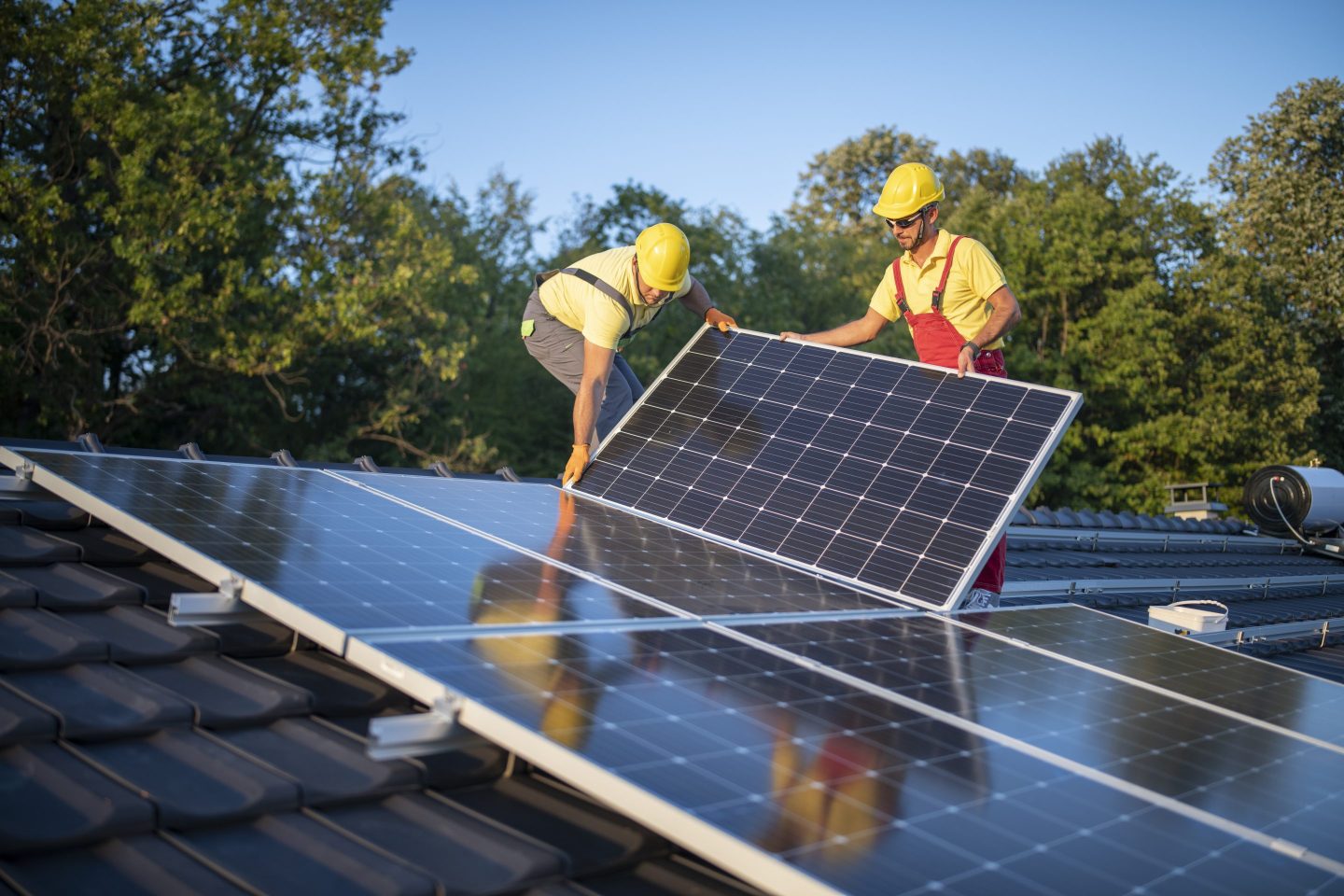
The solar industry could see an abrupt end to federal tax credits.
The solar industry could see an abrupt end to federal tax credits.getty images

The budget negotiations in Congress could dramatically reshape the energy industry—not by advancing it, but by dragging it backward. The “One Big Beautiful Bill” (OBBB), recently revised by the Senate Finance Committee, is branded as sweeping reform. But in reality, it weakens domestic energy output just as the country faces surging demand—weakening our energy resilience and adding at least $2.8 trillion to our national debt.

Most significantly, the OBBB guts one of the most effective energy incentives in the country: the 30% Investment Tax Credit (ITC). For homeowners, the ITC dramatically reduces the cost for going solar. As written, the OBBB would phase out certain elements of the ITC for homeowners within 180 days and the remainder of credits starting at the end of this year, with full incentive elimination for businesses at the end of 2027. To put it in perspective: Even a “simple” solar project currently takes up to six months, making a short phase-down window like this extremely disruptive.

Make no mistake: The solar industry should not rely on federal tax credits indefinitely. This was never the intention of the initial ITC proposal enacted in the Inflation Reduction Act (IRA). However, the OBBB’s abrupt repeal would cause severe and immediate harm. It could even destabilize the entire American solar industry. Without a more structured, longer-term phase-down timeline, developers, manufacturers, and installers will scramble to meet tight deadlines and face a massive drop in demand shortly thereafter. This threatens project viability, workforce stability, and long-term investments. According to the Solar Energy Industries Association, this bill jeopardizes up to 330,000 jobs and 331 U.S. factories.

The current bill also undermines the appeal of investing in domestic energy. Many hundreds of billions of dollars have been invested in renewable energy based on policies set by Congress. This legislation will make potential investors ask: Why invest in a market governed by U.S. policy if that policy can reverse course so abruptly and completely? Such unpredictability raises serious doubts about the reliability of U.S. policy as a foundation for long-term investment.

Instead, Congress should pursue a steady phase-down of tax credits, which would allow the industry to adapt, preserve many thousands of jobs, and ensure our ever-growing energy needs are met.

The IRA also spurred investment in large-scale solar projects that connect directly to the grid and help power entire communities. These projects often rely on low-cost financing provided through federal loan programs. The OBBB would eliminate this low-cost financing, significantly undercutting the financial viability of many solar energy projects. If developers are unable to secure alternative financing, many solar projects would likely be scrapped altogether. This would inevitably increase utility costs—expenses that are often passed directly to the customer.

Homeowners are already unhappy with the current state of utilities, particularly in light of extreme weather events and widespread outages. If these solar projects are delayed or shut down due to lack of funding, other energy sources will not be able to meet demand in a timely or cost-effective manner. And while fossil fuels have historically been a flexible, reliable option, equipment backlogs now force developers to reserve gas turbines seven to eight years in advance, so new projects wouldn’t enter service until 2031 or later. Nuclear energy is pushed even further out: The U.S. Department of Energy’s Pathways to Commercial Liftoff report notes that broad deployment of next-generation reactors is unlikely to begin before 2035.

That leaves solar as the best solution to meet our energy needs, avoid blackouts, and keep energy costs under control as we enter the AI revolution. A large-scale, commercial solar project can be deployed in 12 to 18 months, and projects in recent years have been completed at 40% less than the cost of gas plants today. While interconnection remains a challenge in some regions, solar still offers the fastest, most cost-effective path to adding new capacity at scale. And now that grid-scale energy storage is commercially viable, it’s the ideal complement to solar—ensuring reliable, round-the-clock power.

Residential solar and storage can be installed even faster. This makes solar the only scalable way to add generation capacity to the grid in the timeframes we need. And there’s bipartisan support, with 82% of Democrats, 74% of Republicans, and 73% of independents indicating that solar is a good investment. That’s how we can meet energy demand, lower energy costs, and keep everyone happy.

The Senate is expected to vote this week, with President Trump pushing to pass the bill by July 4. We’re at a critical juncture, and the potential ramifications are far-reaching. The decisions made in Washington now will shape the trajectory of America’s economic and energy leadership for decades to come. The OBBB, as currently written, will effectively cede leadership of the solar industry to China. Global demand for solar isn’t slowing down, and if the U.S. steps back, others will take our place.

At a time when consumers want more control over their energy and the demand for electricity is at an all-time high, energy independence is more important than ever. This bill moves us in exactly the wrong direction. Our leaders and lawmakers have to push back, advocate for a forward-thinking energy policy, and defend the future of resilient, affordable, and accessible power for all.

The opinions expressed in Fortune.com commentary pieces are solely the views of their authors and do not necessarily reflect the opinions and beliefs of Fortune.

Read more:

  • NextEra CEO: The rollback of clean energy tax credits needs a measured approach

Join us at the Fortune Workplace Innovation Summit May 19–20, 2026, in Atlanta. The next era of workplace innovation is here—and the old playbook is being rewritten. At this exclusive, high-energy event, the world’s most innovative leaders will convene to explore how AI, humanity, and strategy converge to redefine, again, the future of work. Register now.
About the Author
By Chris Hopper
See full bioRight Arrow Button Icon

Latest in Commentary

Finance
Lorem ipsum dolor sit amet, consectetur adipiscing elit, sed do eiusmod tempor incididunt ut labore et dolore magna aliqua. Ut enim ad minim veniam
By Fortune Editors
October 20, 2025
Finance
Lorem ipsum dolor sit amet, consectetur adipiscing elit, sed do eiusmod tempor incididunt ut labore et dolore magna aliqua. Ut enim ad minim veniam
By Fortune Editors
October 20, 2025
Finance
Lorem ipsum dolor sit amet, consectetur adipiscing elit, sed do eiusmod tempor incididunt ut labore et dolore magna aliqua. Ut enim ad minim veniam
By Fortune Editors
October 20, 2025
Finance
Lorem ipsum dolor sit amet, consectetur adipiscing elit, sed do eiusmod tempor incididunt ut labore et dolore magna aliqua. Ut enim ad minim veniam
By Fortune Editors
October 20, 2025
Finance
Lorem ipsum dolor sit amet, consectetur adipiscing elit, sed do eiusmod tempor incididunt ut labore et dolore magna aliqua. Ut enim ad minim veniam
By Fortune Editors
October 20, 2025
Finance
Lorem ipsum dolor sit amet, consectetur adipiscing elit, sed do eiusmod tempor incididunt ut labore et dolore magna aliqua. Ut enim ad minim veniam
By Fortune Editors
October 20, 2025

Most Popular

Finance
Lorem ipsum dolor sit amet, consectetur adipiscing elit, sed do eiusmod tempor incididunt ut labore et dolore magna aliqua. Ut enim ad minim veniam
By Fortune Editors
October 20, 2025
Finance
Lorem ipsum dolor sit amet, consectetur adipiscing elit, sed do eiusmod tempor incididunt ut labore et dolore magna aliqua. Ut enim ad minim veniam
By Fortune Editors
October 20, 2025
Finance
Lorem ipsum dolor sit amet, consectetur adipiscing elit, sed do eiusmod tempor incididunt ut labore et dolore magna aliqua. Ut enim ad minim veniam
By Fortune Editors
October 20, 2025
Finance
Lorem ipsum dolor sit amet, consectetur adipiscing elit, sed do eiusmod tempor incididunt ut labore et dolore magna aliqua. Ut enim ad minim veniam
By Fortune Editors
October 20, 2025
Finance
Lorem ipsum dolor sit amet, consectetur adipiscing elit, sed do eiusmod tempor incididunt ut labore et dolore magna aliqua. Ut enim ad minim veniam
By Fortune Editors
October 20, 2025
Finance
Lorem ipsum dolor sit amet, consectetur adipiscing elit, sed do eiusmod tempor incididunt ut labore et dolore magna aliqua. Ut enim ad minim veniam
By Fortune Editors
October 20, 2025
Rankings
  • 100 Best Companies
  • Fortune 500
  • Global 500
  • Fortune 500 Europe
  • Most Powerful Women
  • Future 50
  • World’s Most Admired Companies
  • See All Rankings
Sections
  • Finance
  • Leadership
  • Success
  • Tech
  • Asia
  • Europe
  • Environment
  • Fortune Crypto
  • Health
  • Retail
  • Lifestyle
  • Politics
  • Newsletters
  • Magazine
  • Features
  • Commentary
  • Mpw
  • CEO Initiative
  • Conferences
  • Personal Finance
  • Education
Customer Support
  • Frequently Asked Questions
  • Customer Service Portal
  • Privacy Policy
  • Terms Of Use
  • Single Issues For Purchase
  • International Print
Commercial Services
  • Advertising
  • Fortune Brand Studio
  • Fortune Analytics
  • Fortune Conferences
  • Business Development
About Us
  • About Us
  • Editorial Calendar
  • Press Center
  • Work At Fortune
  • Diversity And Inclusion
  • Terms And Conditions
  • Site Map
  • Facebook icon
  • Twitter icon
  • LinkedIn icon
  • Instagram icon
  • Pinterest icon

Latest in Commentary

CommentaryBusiness
Using AI just to reduce costs is a woeful misuse of a transformative technology
By Nigel VazJanuary 15, 2026
5 hours ago
powell
CommentaryMiddle class
Forget the K-Shape: We have a barbell economy—and the middle class is buckling under the weight
By Katica RoyJanuary 14, 2026
20 hours ago
engineer
Commentaryengineering
China graduates 1.3 million engineers per year, versus just 130,000 in the U.S. We need AI to bridge the gap
By Paul Eremenko and Ashish SrivastavaJanuary 14, 2026
23 hours ago
powell/trump
CommentaryFederal Reserve
Is Powell’s Fed head independence dead? Trump outfoxes himself this time
By Jeffrey SonnenfeldJanuary 13, 2026
2 days ago
paramount
CommentaryM&A
A cautionary Hollywood tale: the Ellisons’ lose-lose Paramount positioning
By Jeffrey Sonnenfeld and Stephen HenriquesJanuary 12, 2026
3 days ago
Walken
Commentarybeverages
Molson Coors CEO: We’re doing our part to solve society’s ‘occasion problem’ – and we’re getting some unexpected help
By Rahul GoyalJanuary 12, 2026
3 days ago

Most Popular

placeholder alt text
Personal Finance
Peter Thiel makes his biggest donation in years to help defeat California’s billionaire wealth tax
By Nick LichtenbergJanuary 14, 2026
19 hours ago
placeholder alt text
AI
'Godfather of AI' says the technology will create massive unemployment and send profits soaring — 'that is the capitalist system'
By Jason MaJanuary 12, 2026
3 days ago
placeholder alt text
Success
Despite his $2.6 billion net worth, MrBeast says he’s having to borrow cash and doesn’t even have enough money in his bank account to buy McDonald’s
By Emma BurleighJanuary 13, 2026
2 days ago
placeholder alt text
AI
Being mean to ChatGPT can boost its accuracy, but scientists warn you may regret it
By Marco Quiroz-GutierrezJanuary 13, 2026
2 days ago
placeholder alt text
Future of Work
'Microshifting,' an extreme form of hybrid working that breaks work into short, non-continuous blocks, is on the rise
By Nick LichtenbergJanuary 13, 2026
2 days ago
placeholder alt text
Economy
Jamie Dimon warns $38 trillion national debt is going to 'bite': 'You can't just keep borrowing money endlessly'
By Eleanor PringleJanuary 14, 2026
1 day ago

© 2025 Fortune Media IP Limited. All Rights Reserved. Use of this site constitutes acceptance of our Terms of Use and Privacy Policy | CA Notice at Collection and Privacy Notice | Do Not Sell/Share My Personal Information
FORTUNE is a trademark of Fortune Media IP Limited, registered in the U.S. and other countries. FORTUNE may receive compensation for some links to products and services on this website. Offers may be subject to change without notice.