- In normal times, hedge funds help keep money markets humming by profiting handsomely from tiny price discrepancies between Treasuries and futures linked to those bonds. When the $800 billion trade unwinds, however, the Federal Reserve may need to step in—as it did during the pandemic—to prevent the type of disastrous credit crunch exemplified by the 2008 financial crisis.
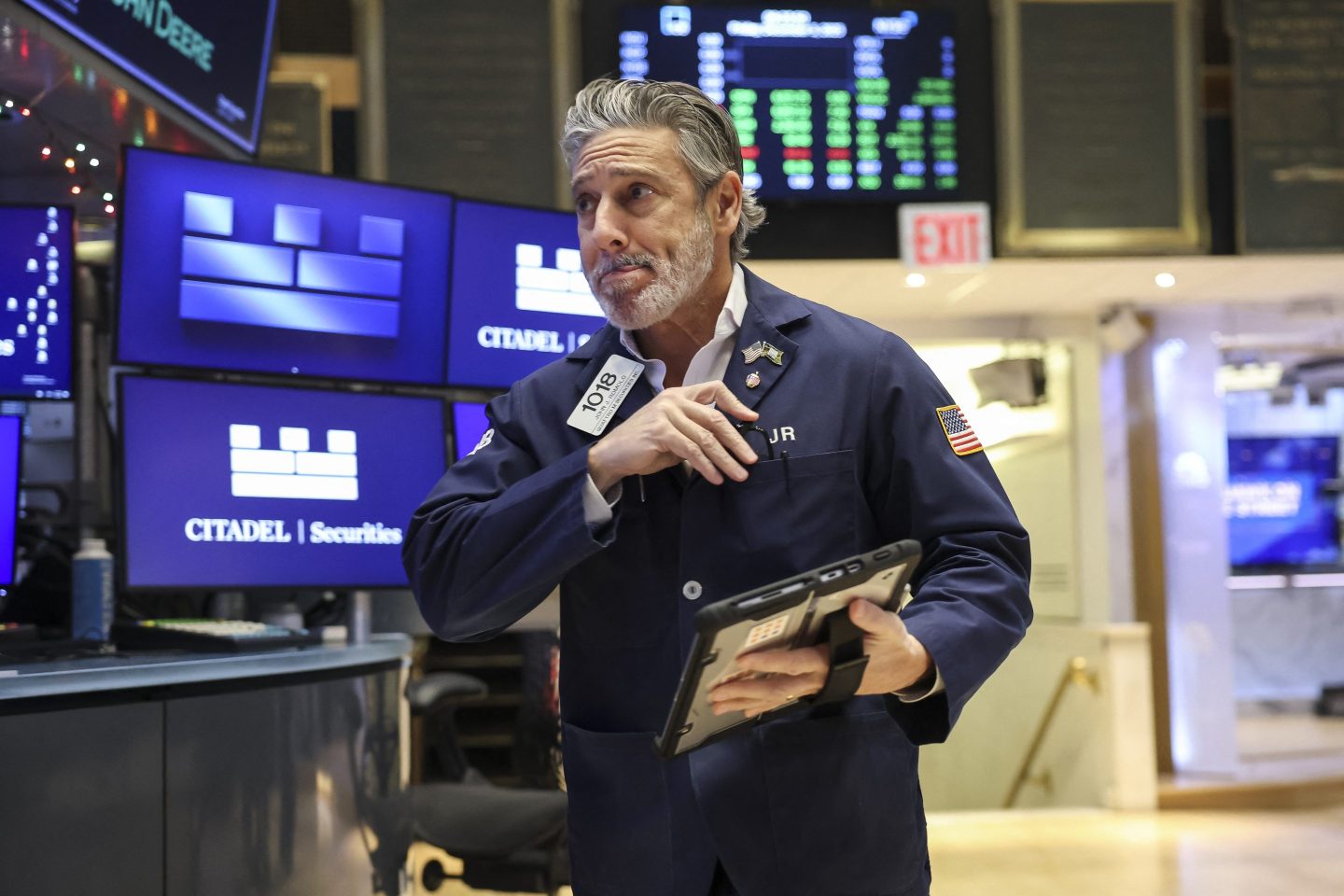
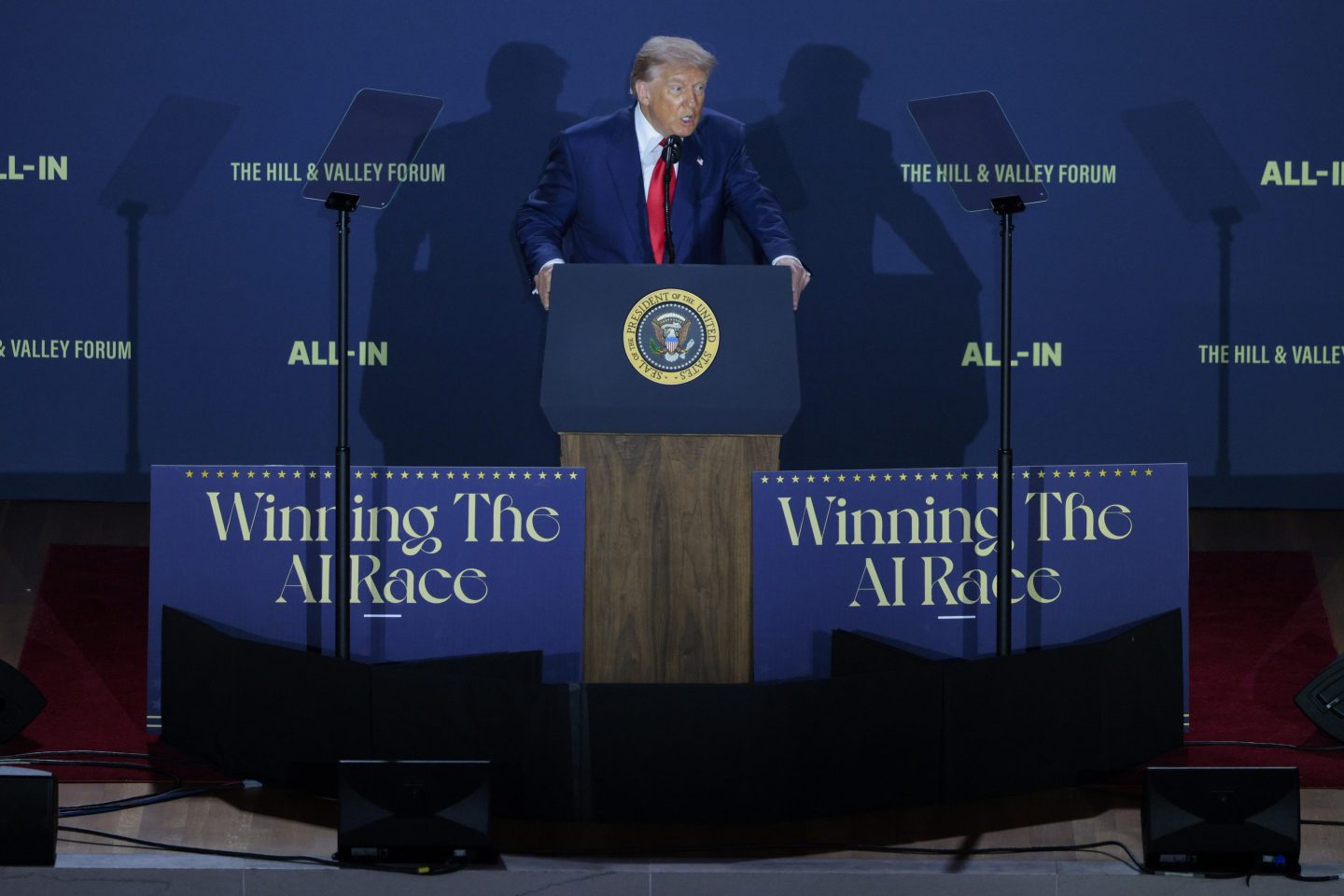
Investors are looking to pick up the pieces after President Donald Trump announced a 90-day pause to the sweeping “reciprocal tariffs” that sent stocks plunging, but many on Wall Street suspect chaos in the bond market truly forced the administration’s hand. A confounding spike in yields sparked fears of a liquidity crisis, and the collapse of the so-called basis trade may have been one of the main culprits.
In normal times, hedge funds borrow heavily to take advantage of tiny price discrepancies between Treasuries and futures linked to those bonds. They profit handsomely and, in turn, help keep money markets humming. The COVID-19 pandemic and recent trade policy upheaval have shown what can happen when the $800 billion trade unwinds, however, and some experts think the Federal Reserve needs to be better equipped to handle the next potential crisis in, say, three months or so.
After all, fixed-income markets can be fickle. Investors initially piled into Treasuries last week as stocks plunged, but the tide soon shifted—even as the carnage in equity markets continued. Yields, which represent an investor’s annual return, rise as bond prices fall, and they spiked early this week as a selloff in U.S. debt raised questions about its typical safe-haven status.
Treasury Secretary Scott Bessent has said the Trump administration wants to see a lower 10-year Treasury yield, the benchmark for mortgage rates, car loans, and other types of borrowing costs throughout the economy. It spiked above 4.5% on Wednesday morning, and while the stock market soared after Trump’s “pause,” the reaction in bonds was more muted. As of Thursday afternoon, the 10-year yield had again surged past the 4.4% mark, even though stocks shed part of their gains from Wednesday’s historic rebound.
Shortly after Trump announced import taxes on goods from most countries (excluding China) would be reduced to a baseline 10% charge, Bessent denied bond market volatility was behind the president’s flip-flop. But Kevin Hassett, Trump’s head of the U.S. National Economic Council, told CNBCThursdaymovements in the Treasury market had added “perhaps a little more urgency” to the decision to temporarily scrap the reciprocal tariffs. The White House did not respond to Fortune’s request for comment.
Whatever the case, the unusual increase in long-term interest rates amid an equity selloff has been akin to a “murder mystery,” said Torsten Sløk, chief economist at private equity giant Apollo.
“That’s telling me that there [are] some distressed, forced sellers out there,” he told Fortune. “Someone who’s selling not because they think the economy is good or bad, or inflation is good or bad, or [that] the Fed is going to hike or not hike [interest rates].”
To be sure, many commentators have also cited foreign selling as a possible cause. Trump has announced a 145% tariff on goods from China, the second-largest foreign holder of Treasuries, leading to questions about whether Beijing might retaliate by dumping some of its roughly $770 billion of U.S. debt—or simply have less reason to buy American assets as bilateral trade decreases.
However, if that had been a major factor this week, Sløk said, he would have expected to see a more significant weakening in the U.S. dollar (which did fall more noticeably on Thursday). Goldman Sachs researchers William Marshall and Bill Zu agreed.
“We would not rule out a diversification away from dollar assets over time,” they wrote in a note Wednesday, “but the near-term behavior appears more consistent with some anticipatory concern about that possibility in conjunction with unwinds of levered longs.”
In other words, this is what can happen when hedge funds are forced to dump Treasuries en masse. In extreme cases, liquidity can dry up—posing a threat to the broader economy if the Fed doesn’t step in.
How the ‘basis trade’ works
Hedge funds are presented with an arbitrage opportunity in the first place, experts say, because of a fundamental imbalance in credit markets. Many asset managers of mutual funds, pension funds, and insurance companies have long-term liabilities—like payouts to retirees decades down the road—and want to buy assets with similar exposure to interest rates, or duration, over that span.
The classic way of doing that often involves buying large amounts of Treasury futures contracts, but someone needs to take the other side of the trade. That’s where hedge funds and other broker-dealers step in, selling those derivatives while hedging that “short” position by buying cash Treasuries.
In return, hedge funds profit off the spread between the value of the bond and the slightly overpriced futures contract: As the latter approaches expiry, its price falls and the short bet pays off. The profit comes from the price difference—the “basis”—between the futures contract and the underlying Treasury.
But “this arrangement is inherently fragile,” according to a recent Brookings Institution paper by Harvard economist and former Fed governor Jeremy Stein along with the University of Chicago’s Anil Kashyap, Harvard’s Jonathan Wallen, and Columbia’s Joshua Younger.
To make the trade worthwhile, hedge funds need to borrow heavily, sometimes using as much as 50- to 100-times leverage. When markets start going haywire, however, they can be vulnerable to margin calls or otherwise be pressured to liquidate their position when they sustain losses on other trades (especially as stock prices plummet) and investors pull their money.
A better solution for the Fed
When the market struggles to absorb a massive increase in the supply of Treasuries, a broader credit crunch à la the 2008 financial crisis looms as a worst-case scenario. When yields spiked this week, many Wall Street analysts watched closely for signs the Fed would be forced to intervene. The central bank was quick to prevent such a situation at the onset of the COVID-19 pandemic, buying $1.6 trillion in Treasuries over several weeks.
Kashyap and his coauthors claim this solution is less than ideal, though. It may just be an effort to keep money markets stable, but it also looks a lot like quantitative easing—when the central bank buys financial assets to push down long-term interest rates.
“Without a clear upfront distinction between bond-buying for market-function purposes, versus for monetary-policy purposes, the initial round of Treasury purchases in the spring of 2020 morphed into a broader monetary policy effort that eventually saw the Fed add over $4 trillion to its combined holdings of Treasuries and agency mortgage-backed securities by mid-2022,” the authors noted.
Therefore, they call for a more “surgical” approach to such a crisis: help hedge funds unwind by purchasing Treasuries and selling futures. While the prospect of bailing out hedge funds might raise some eyebrows, the authors claim their solution might be more effective at preventing reckless behavior than blunt-force Treasury purchases.
There are complementary solutions, of course. It’s hard to find buyers during a Treasury selloff, in part, because banks and broker-dealers are limited by capital requirements strengthened after the Global Financial Crisis and the subsequent Dodd-Frank reform legislation. They were temporarily loosened during the pandemic to help lenders buy more U.S. debt, however, and Bessent said Wednesday those changes should be made permanent as part of a broader deregulatory push.
Even if the Treasury secretary gets his wish, though, markets may eventually need the Fed to take much more drastic action.