• Home
  • News
  • Fortune 500
  • Tech
  • Finance
  • Leadership
  • Lifestyle
  • Rankings
  • Multimedia
CommentaryTariffs and trade

Trump’s tariffs program is based on flawed assumptions about the trade deficit

By
Steve H. Hanke
Steve H. Hanke
and
Matt Sekerke
Matt Sekerke
Down Arrow Button Icon
By
Steve H. Hanke
Steve H. Hanke
and
Matt Sekerke
Matt Sekerke
Down Arrow Button Icon
March 19, 2025, 11:32 AM ET

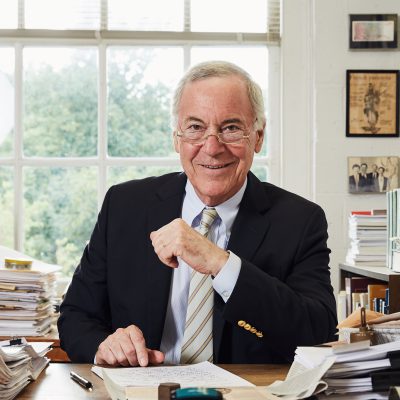
Steve H. Hanke is a Professor of Applied Economics at The Johns Hopkins University. Matt Sekerke is a Managing Director at SEDA Experts and Senior Macro Advisor at Hiddenite Capital Partners. They are the co-authors of Making Money Work (forthcoming, Wiley, 2025).

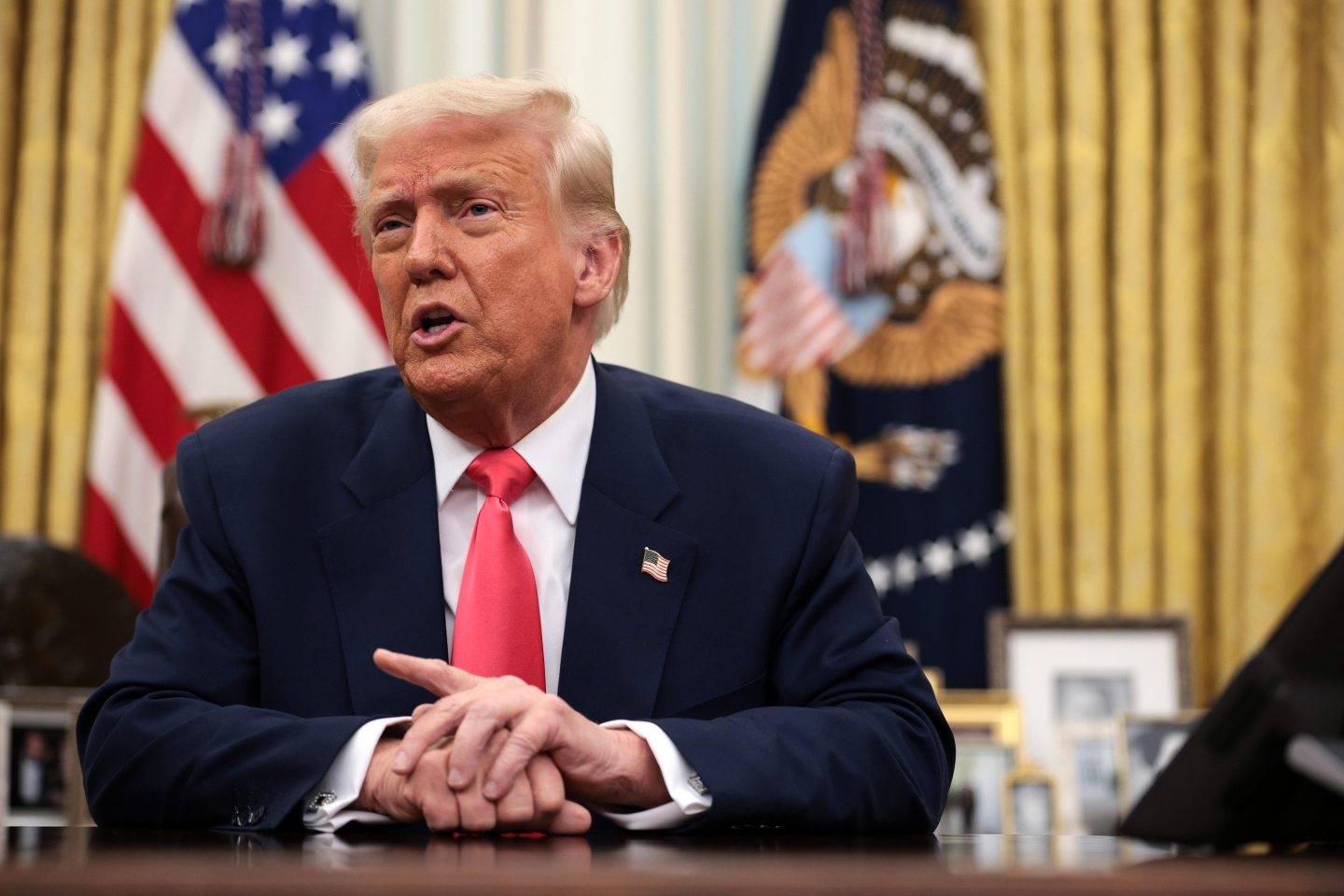
U.S. President Donald Trump.
U.S. President Donald Trump.Alex Wong/Getty Images

President Trump is tariff-happy. The impetus for his trade war is the U.S. trade deficit, a deficit that he believes is the result of foreigners taking advantage of the United States through “unfair” trade practices.

Trump, like most businessmen, thinks deficits are bad. When a business runs consistent budget deficits, it must either raise more capital to finance those deficits or enter into bankruptcy. But what is true for running a business is not necessarily true for running a country. Indeed, Trump’s line of thinking represents a classic fallacy of composition—the belief that what is true of a part (a business) is true for the whole (the economy). 

Trump is wrong on two counts. The U.S. trade deficit is not caused by foreigners—it is homegrown, made in the good old U.S.A. It also is not inherently bad; in fact, for Americans, it is a privilege. Both of these errors stem from Trump’s unawareness of the close connections between saving, investment, and a country’s trade balance.

A country’s trade balance is always accompanied by a corresponding gap between its domestic saving and domestic investment. If a country’s domestic saving is greater than its domestic investment, like China, Switzerland, and Germany, it will register a trade surplus. Likewise, if a country saves less than it invests, like the United States, it will register a trade deficit. The United States’ negative trade balance, which the country has registered every year since 1975, is “made in the U.S.A.,” a result of investment running ahead of its domestic savings. To view the trade balance correctly, the focus should be on investment conditions in the domestic economy, not nefarious foreign actors.

What follows from the savings-investment identity is that a country can only run a trade deficit to the extent that it is able to finance surplus investment with the rest of the world’s savings. For many countries, persistent trade deficits are worrisome because inflows of external savings are fickle. Higher interest rates are needed to retain external finance, which can slow growth and lead to currency depreciation. If the ability of a country to finance its deficits is called into question, a sudden stop of capital inflows may even precipitate a currency crisis. The opposite has been the case for the United States over nearly five decades. Foreigners are not just happy to finance our trade deficits. They are so eager to accumulate claims on the United States that external financial inflows lower U.S. interest rates and strengthen the U.S. dollar. Thanks to the ability of the American government and the U.S. financial system to attract and retain external finance, Americans are able to consume more than they produce. What’s more, the U.S. enjoys robust investment and economic growth despite its low domestic saving rates.

Why do foreign investors afford Americans this privilege? The simple answer is that, for many reasons, the United States is the best place in the world to invest. The U.S. dollar is the world’s reserve currency—investors have confidence in it. The U.S. also has strong property rights, robust legal and banking institutions, a lot of talented human capital, and the largest and most liquid capital markets in the world.

The premise underlying Trump’s tariff program is simply untrue. In fact, reality turns Trump’s premise on its head. For Americans, deficits are good, not bad. Furthermore, deficits are not caused by foreigners eating our lunch. The United States itself has created its trade deficits by making itself the leading destination for the world’s savings. That’s why Nobelist Milton Friedman concluded that: “One of the things that baffles me is the extent to which people regard the trade deficit as a bad thing.” It baffles us, too.

The opinions expressed in Fortune.com commentary pieces are solely the views of their authors and do not necessarily reflect the opinions and beliefs of Fortune.

Read more:

  • Trump’s tariffs and policies are putting America’s economy at risk: Consumer Technology Association CEO
  • Tariffs won’t make America great again: Export-Import Bank’s former chairman and president
  • Are Trump’s trade and tariffs tantrums repairing market failures or eroding global trust?
  • The best psych-out artists know how to mess with your mind, but Trump’s push for tariffs shows how this strategy can backfire
Fortune Brainstorm AI returns to San Francisco Dec. 8–9 to convene the smartest people we know—technologists, entrepreneurs, Fortune Global 500 executives, investors, policymakers, and the brilliant minds in between—to explore and interrogate the most pressing questions about AI at another pivotal moment. Register here.
About the Authors
Steve H. Hanke
By Steve H. Hanke
Twitter icon
See full bioRight Arrow Button Icon
By Matt Sekerke
See full bioRight Arrow Button Icon

Latest in Commentary

Rakesh Kumar
CommentarySemiconductors
China does not need Nvidia chips in the AI war — export controls only pushed it to build its own AI machine
By Rakesh KumarDecember 3, 2025
19 hours ago
Rochelle Witharana is Chief Financial and Investment Officer for The California Wellness Foundation
Commentarydiversity and inclusion
Fund managers from diverse backgrounds are delivering standout returns and the smart money is slowly starting to pay attention
By Rochelle WitharanaDecember 3, 2025
19 hours ago
Ayesha and Stephen Curry (L) and Arndrea Waters King and Martin Luther King III (R), who are behind Eat.Play.Learn and Realize the Dream, respectively.
Commentaryphilanthropy
Why time is becoming the new currency of giving
By Arndrea Waters King and Ayesha CurryDecember 2, 2025
2 days ago
Trump
CommentaryTariffs and trade
The trade war was never going to fix our deficit
By Daniel BunnDecember 2, 2025
2 days ago
Elizabeth Kelly
CommentaryNon-Profit
At Anthropic, we believe that AI can increase nonprofit capacity. And we’ve worked with over 100 organizations so far on getting it right
By Elizabeth KellyDecember 2, 2025
2 days ago
Decapitation
CommentaryLeadership
Decapitated by activists: the collapse of CEO tenure and how to fight back
By Mark ThompsonDecember 2, 2025
2 days ago

Most Popular

placeholder alt text
North America
Jeff Bezos and Lauren Sánchez Bezos commit $102.5 million to organizations combating homelessness across the U.S.: ‘This is just the beginning’
By Sydney LakeDecember 2, 2025
2 days ago
placeholder alt text
Economy
Ford workers told their CEO 'none of the young people want to work here.' So Jim Farley took a page out of the founder's playbook
By Sasha RogelbergNovember 28, 2025
6 days ago
placeholder alt text
North America
Anonymous $50 million donation helps cover the next 50 years of tuition for medical lab science students at University of Washington
By The Associated PressDecember 2, 2025
2 days ago
placeholder alt text
C-Suite
MacKenzie Scott's $19 billion donations have turned philanthropy on its head—why her style of giving actually works
By Sydney LakeDecember 2, 2025
2 days ago
placeholder alt text
Innovation
Google CEO Sundar Pichai says we’re just a decade away from a new normal of extraterrestrial data centers
By Sasha RogelbergDecember 1, 2025
3 days ago
placeholder alt text
Economy
Scott Bessent calls the Giving Pledge well-intentioned but ‘very amorphous,’ growing from ‘a panic among the billionaire class’
By Nick LichtenbergDecember 3, 2025
15 hours ago
Rankings
  • 100 Best Companies
  • Fortune 500
  • Global 500
  • Fortune 500 Europe
  • Most Powerful Women
  • Future 50
  • World’s Most Admired Companies
  • See All Rankings
Sections
  • Finance
  • Leadership
  • Success
  • Tech
  • Asia
  • Europe
  • Environment
  • Fortune Crypto
  • Health
  • Retail
  • Lifestyle
  • Politics
  • Newsletters
  • Magazine
  • Features
  • Commentary
  • Mpw
  • CEO Initiative
  • Conferences
  • Personal Finance
  • Education
Customer Support
  • Frequently Asked Questions
  • Customer Service Portal
  • Privacy Policy
  • Terms Of Use
  • Single Issues For Purchase
  • International Print
Commercial Services
  • Advertising
  • Fortune Brand Studio
  • Fortune Analytics
  • Fortune Conferences
  • Business Development
About Us
  • About Us
  • Editorial Calendar
  • Press Center
  • Work At Fortune
  • Diversity And Inclusion
  • Terms And Conditions
  • Site Map

© 2025 Fortune Media IP Limited. All Rights Reserved. Use of this site constitutes acceptance of our Terms of Use and Privacy Policy | CA Notice at Collection and Privacy Notice | Do Not Sell/Share My Personal Information
FORTUNE is a trademark of Fortune Media IP Limited, registered in the U.S. and other countries. FORTUNE may receive compensation for some links to products and services on this website. Offers may be subject to change without notice.