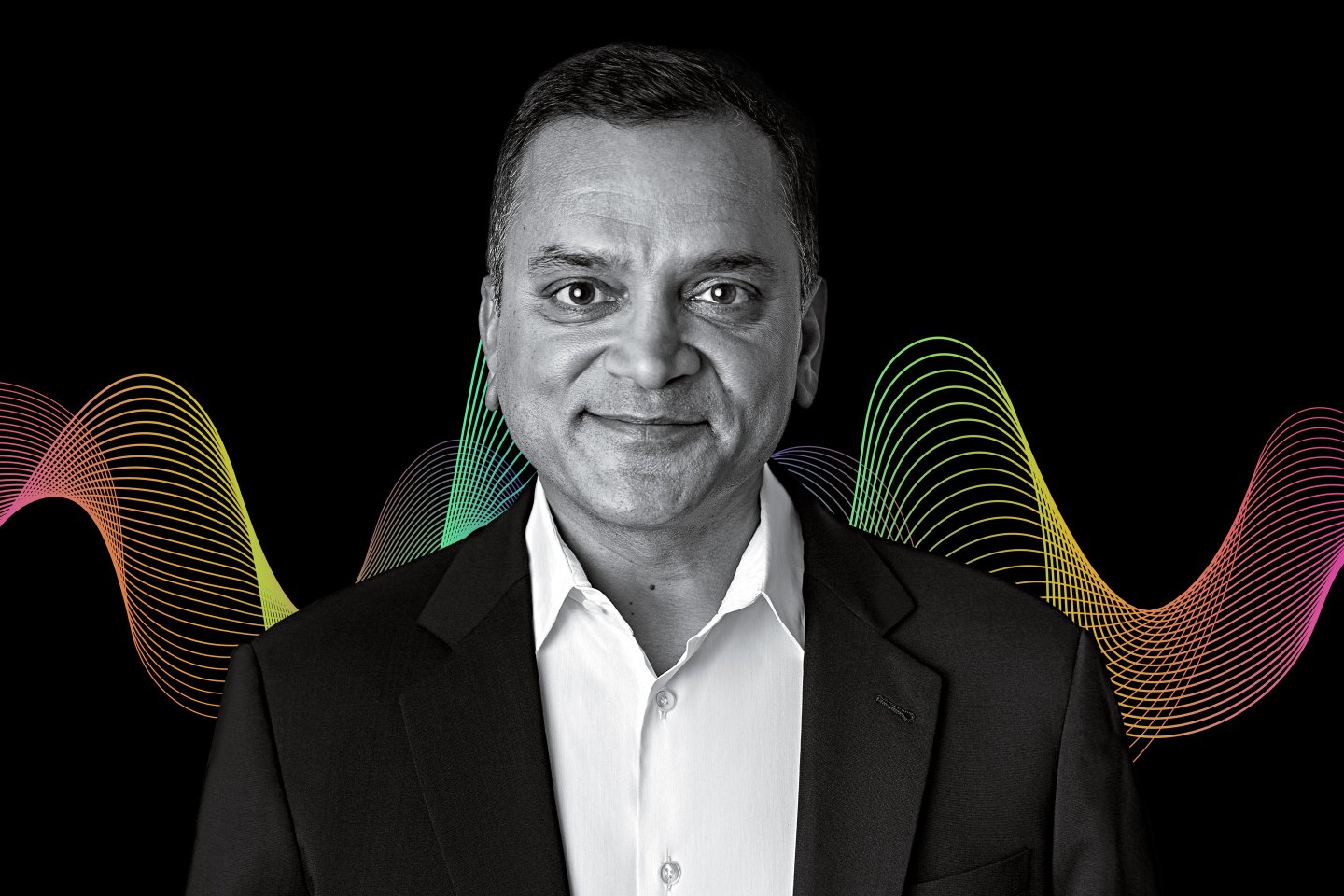
On this episode of Fortune’s Leadership Next podcast, co-hosts Diane Brady, executive editorial director of the Fortune CEO Initiative and Fortune Live Media, and editorial director Kristin Stoller talk to e.l.f. Beauty chairman and CEO Tarang Amin. The wide-ranging conversation covers the billboards the company used to draw attention to the lack of diversity on corporate boards, how e.l.f. will handle impending tariffs, and why the cosmetics and skincare company decided to create both a Roblox game and a catchy tune for TikTok.
Listen to the episode or read the transcript below.
Transcript
Diane Brady: Leadership Next is powered by the folks at Deloitte who, like me, are exploring the changing roles of business leadership and how CEOs are navigating this change.
Hi everyone. Welcome to Leadership Next, the podcast about the people…
Kristin Stoller: …and trends…
Brady: …that are shaping the future of business. I’m Diane Brady.
Stoller: And I’m Kristin Stoller.
Brady: This week we are talking with e.l.f. Beauty CEO Tarang Amin. I would say his products are a little more your demo than mine, Kristin.
Stoller: Yes, well, you’ve seen me use the e.l.f. primer like today many a time, but…
Brady: I thought it was natural. Who knew?
Stoller: It’s not. It’s all e.l.f. But I want to know how you learned about it.
Brady: Standing in line at the pharmacy, honestly, and turning around and seeing all its products. And they were very reasonably priced, which, honestly, as a Gen Xer, it always makes me a little nervous. How good can it be if it’s so cheap?
Stoller: That’s a really good point. And brick and mortar is not their focus. Their focus has been so intense on social media and marketing to Gen Z and millennials that it’s fascinating that…
Brady: The TikTok generation.
Stoller: The TikTok Generation loves it. They really went viral in 2019. They created this original song back when it wasn’t really popular for brands to do their original songs. They didn’t have to pay for any celebrities to use to market it. But, you know, Reese Witherspoon…
Brady: This is “Eyes, lips, and face.”
Stoller: Eyes, lips and face.
[Part of the song plays.]
Brady: And I thought it was, of course, something to do with hobbits and Lord of the Rings. So I stood corrected when that happened.
Stoller: You did. But it’s brilliant because it’s you know, they’re getting celebrities and all these influencers to do things for free. Brilliant marketing strategy.
Brady: I wish I had grown up in a time when people could show me how to put on makeup and I did not. But I’ll tell you the ad that really resonated with me was the one where they had the billboards and it was “change the board game” and they’d gone and counted the number of Ricks, Dicks, and Richards that were in U.S. boardrooms. And it turned out it outnumbered the number of women. And that was very effective to me. A, it’s a great story. B, it brought some humor to this topic of D.E.I., which is so fraught, especially right now.
Stoller: And they’re backing it up in their business, too. They have a board that’s 70% women, 44% diverse. I’m wondering if they can keep that up in the current climate and what Tarang is going to say about…
Brady: I agree and let’s just give them a bit of credit. He has stood firm, as has the company, in the face of all the anti-D.E.I. backlash. I think he also is impacted by tariffs, so I look forward to speaking to him about that. And they’ve had, I think now, 23 quarters of straight growth. How do you continue that? So where do you grow from here, I think is really interesting.
Stoller: I think so too. And I think, you know, he has a fascinating background. He’s an immigrant. He grew up helping his parents run motels. He is the first non-founder CEO that the company’s had. So he has a lot…
Brady: From East Africa where I used to go to school. So we’ll talk about that. I’ll practice my very bad Swahili, Kiswahili on him. Lots to talk about. And I’m sure after the break, we’ll find out more when we speak with Trang.
[Music starts.]
Generative AI has been a transformative force in the business landscape for the last 18 months, according to the latest Fortune Deloitte CEO survey. More than half of CEOs are experimenting with generative AI in their own daily activities and, of course, trying to spread it throughout their organizations. I’m joined by Jason Girzadas, the CEO of Deloitte US, which is the long-time sponsor of this podcast. Jason, good to see you.
Jason Girzadas: Hi, Diane. It’s great to be with you.
Brady: How are businesses integrating AI into their organizations? Where do you see the most substantial benefits?
Girzadas: I think it’s true, as you say, that every organization wants to capitalize on the benefits of AI, particularly generative AI. The benefits have been largely around efficiencies today and looking for ways to automate routine tasks and create cost savings wherever possible.
Brady: When you think about how much change there’s been in the last 18 months, really curious how do you think it’s going to evolve in the next 18 months, 36 months?
Girzadas: I think we’re actually needing to change our timing horizon. By all indications, we’re more in six month intervals, and I think that’s exciting, but also a challenge. Enterprises aren’t accustomed to working in that type of cadence and with that type of pace. And so the winners, if you will, will be those that can assimilate this technology that quickly, either with vendor partners that they already do business with or in their own internal development and use case development, which I think is putting real strain on organizations’ ability to adapt that quickly. This is a perfect instance where leadership has to be in sync to assimilate technology that quickly. I think as a CEO, it’s important that we lead by example. So I’ve been through all the training. I’ve been through all the productivity tools that we have available within our organization. But then more broadly, we’ve embarked upon a significant investment to deploy this across all we do.
Brady: I’m feeling the urgency, Jason. Thanks for joining us.
Girzadas: Well, thank you, Diane.
[Music ends.]
Stoller: Tarang, thank you so much for joining us today.
Tarang Amin: Well, thank you for having me.
Stoller: Of course. I think to kick it off, you know, e.l.f. is this 20-something year old brand that has just exploded in popularity, especially among my demographic, Gen Zs. Talk to me about how your focus in the company has evolved over the last 20 plus years.
Amin: Sure. So e.l.f. was founded in 2004 by father and son entrepreneurs Alan and Joey Shamah. And they had a revolutionary idea at the time. They were selling cosmetics over the internet for $1. Now, this is 2004, pre-iPhone, and everyone thought they were crazy. But that spirit of disruption has stayed with us throughout our history. We’re now the number one unit share brand in the U.S., number two in dollar share. And really that that spirit of disruption, of mixing things up is very much part of our DNA. We compete in cosmetics and skincare and we have one of the fastest growing businesses in beauty.
Brady: I know where the brand is today, and I know you’ve had, I think, 23 straight quarters, is that correct, of growth? So you have an unusual background. You did not come from the beauty space. What did you change, when you got there? You’ve been in the role now 11 years.
Amin: There was already a lot of really great things in the company. I talked about that incredible value proposition, the digital orientation. Those things were great, but we saw an opportunity to really build out the team, expand distribution into, at the time, I think we were only in Target to go to Ulta Beauty, to Walmart, expand the brand globally, really get into other categories. But probably the biggest change we made is historically e.l.f. was very focused on very low prices. And what we realized was, if we targeted or took inspiration from the best products in prestige and inspiration from our community, we could actually drive up the quality and that would give us the ability to take up our prices but still have phenomenal value. So, you know, we have one of our most popular products is our Halo Glow Liquid Filter. It retails for $14, which is higher than the average on e.l.f., which is about $6.50. But the only other thing like that in the marketplace is a prestige item at $44. So that was probably the biggest difference is really taking up the level of quality and really being able to really deliver our mission of making the best of beauty accessible.
Brady: That’s the primer, right? Isn’t that the primer?
Amin: That’s our Halo Glow Liquid Filter. But our primer, our Power Grip Primer is the number one SKU in all of color cosmetics.
Stoller: I’m wearing it right now.
Brady: We should point out you’re not Gen Z, by the way.
Stoller: I’m a millennial.
Brady: Because I’ve known her for almost a decade and we do not hire people when they’re, you know, in middle school. But I do think that it’s really resonated in particular with that young generation, millennial, Gen Z. So what is it you think, Tarang, that’s made it so popular with that generation in particular? Is it marketing?
Amin: Well, I think our ability to engage the Gen Z, we’re also the number one brand amongst Gen Alpha and millennials, is that generation of consumers are much more savvy. If I think about my wife when she was learning how to wear makeup, she ended up having to go to a department store and get the makeover at the department store makeup counter. When I look at my daughter, my daughter never went to a department store. She went online and she learned in terms of how she engaged, what brand she engaged with, all of the tips that she had there. So I think this next generation that’s much more digitally savvy, a brand like ours really speaks to them. And they love the fact that they can be smart. They can get that prestige level quality at just a fraction of the price.
Stoller: I think you’re right. I think I went once to a department store, my mom brought me when I was 16 and I was so intimidated and I was embarrassed. And since then I have bought all of my makeup online.
Brady: I knew, I hate to mention a rival product here, but I knew the co-founders of M.A.C. So that was my first makeover. It was Frank Toskan looking at my face and saying, You need makeup. I have to be a little sexist here. Forgive me. And I say that because I think you had a brilliant campaign, which we’ll talk about a bit later around the number of Dicks, Richards, and Ricks in the boardroom, but you are a man leading this beauty brand. How does how does that impact your perspective? And I’m saying that because we as women are always asked how being a woman impacts us. Do you ever get to comment on that?
Amin: Well, yeah, I would say no one had ever accused me being a makeup enthusiast.
Stoller: You look terrific. You’ve got the primer on, don’t you?
Amin: What I did, one of the first moves I did when we bought the company was make sure that our employee base reflects the community that we serve. So I’m very proud that 74% of our team are women, 75% are Gen Z or millennial, 44% are diverse. They very much reflect the community we serve. And what I do as CEO is spend a lot of time listening. When I do a product, I do a product review every other week and that’s an open ticket. Our CMO first thought I was crazy. She thought, those are the nuclear codes, how can you make it an open meeting? Well, I’m going there and I’m asking a lot of questions and I’m looking at my chat field and saying like, well, what makes this product particularly good? And our team, because they represent the community we serve, they have such great insights. It really aids in the speed. So I would say my main role, more than being a guy, is really making sure I’m creating the right team and the right culture where each person can bring out their unique strengths and the whole team gets better.
Stoller: I was just telling Diane about the 2019 original song you put out on TikTok, and e.l.f. has been such an early adopter of platforms like TikTok, like Twitch. How does your marketing on these social platforms play into your sales and how do you foresee that emerging in the future?
Amin: Well, they definitely play a major role in our sales. And if you think about our approach, our approach is we want to live where our community lives. So back in 2019, I remember my CMO coming to me saying, Hey, we have to be on TikTok because that’s where Gen Z is. And I’m like, Well, if that’s where Gen Z is, absolutely. Now what’s TikTok? (laughs) And so we approach each of these platforms with a great deal of humility and curiosity. And when we looked at TikTok, you know, we noticed that there was a lot of dancing, there was a lot of music. So we composed our own song. We did our hashtag challenge of our eyes, lips, face song, and that ended up getting some like 2 billion views. So we knew we were on to something. We kept migrating from there. We’re one of the few beauty brands, actually probably the first beauty brand to have our own channel on Twitch on the gaming platform, and all these things come from insights. We noticed almost 70% of our consumers play video games or watch other people play video games. So having a female empowerment platform with Lufu on Twitch did great. As we look at the younger generation, we see that they’re spending a lot of time on Roblox. So we created an entire branded experience on Roblox. We just celebrated our 20 millionth visit …
Brady: Twenty millionth. Wow. The numbers are staggering. As a leader, you know, this is a demographic, millennials and Gen Z, that I’m always hearing CEOs talk about. How do I relate to them? How do I manage them, especially Gen Z, who’ve gone through the pandemic. What advice do you have since you’ve just said that three quarters of your company fits into this demographic? Any tips that you have as to how to manage these folks to get the best out of them?
Amin: Yeah, well, we found the best way to manage them is really leverage their strengths and let them be who they are, and put a high premium of, I grew up a certain way that may not be the right way for that next generation. A couple of things we do. One is we make everyone a shareholder in the company. We grant equity to every single employee every year because this generation in particular has a high premium on are they part of something or are they just an employee? They very much want to be part of something. The second thing we do is we do a lot of training on high performance teamwork. How do you develop passionate relationships? How do you give pinpointed real time feedback in the spirit of helping the team succeed and mutual accountability We find if everyone has the same language and from a cultural standpoint, it helps you communicate with someone that you know, for me, could be 30 or 40 years younger than I am, and creating that environment where people are free to express themselves and really bring out the best of themselves.
Stoller: Tarang, what I want to ask about as, you know, as they make this investment in Gen Z and in TikTok. How are you looking to draw in maybe another demographic off of TikTok like Gen X or any of the others?
Brady: She says pointing to me.
Stoller: Not targeted. I promise.
Brady: Win my loyalty. How are you going to do it?
Amin: Well, I think many of the same tactics that we use with Gen Z and millennials will work with other generations. And what we find is it’s all about how do we engage and entertain our community. And so, you know, a couple of our latest efforts, the last two Super Bowls were, I think two seasons ago, we did a spot with Jennifer Coolidge, who’s over 60 years old and appeals to every demographic on our Power Grid Primer. Last year, we did a spot with Judge Judy and the cast of “Suits,” and again, looking at this multigenerational appeal. The last thing I’ll say is we’re seeing kind of the reverse effect of kind of traditionally how cosmetics were passed down from mother to daughter. And we are seeing the opposite now, that our younger consumers are so savvy on cosmetics, their moms keep dragging them to Target or they keep dragging their moms to Target, and then they basically educating their moms. Mom, why are you spending $50 on that foundation when the e.l.f. one at a fraction of the price is even better? So we’re picking up more consumers across every demographic, not just the younger ones.
Brady: I’m trying to picture mothers handing down makeup to their daughters. In my case, that would have been blue eyeshadow and Chanel N°5. And it’s like, No thanks, Mom. So I want to ask about, we’re talking less about the product right now and about the marketing strength, I think everybody has acknowledged. Let’s look at the environment we’re in. TikTok could have been banned. I know it’s got a temporary reprieve. How are you dealing with that? That’s going to deny you one of your prime platforms for reaching people?
Amin: Well, our entire approach is we want to live where our community lives. And so as great as TikTok is, if something happened to TikTok, I can guarantee you that community is not going to read more, they’re going to go to another platform. And our strength across social, if I look at Instagram reels, if I look at YouTube, across every single, Twitch, I just mentioned Roblox, I think will enable us to continue to follow that consumer and make sure that we’re engaging them in the way they want to be.
Stoller: Speaking of the current climate touring, I find it really interesting that you and your company are leaning really hard into D.E.I. in a time where everyone is very slowly backing away. Talk to us a bit, Diane mentioned your campaign earlier that I thought was really interesting.
Brady: So many Dicks.
Stoller: Yes. Tell us about that and how you’re looking at the climate right now. Are you scared that people might come after you for it?
Amin: No, I think authentically if you’re yourself, it’s very hard to fall into some of those traps. I mentioned we believe one of our biggest competitive advantages is our team and reflecting the community that we serve. It’s something we absolutely believe, and it’s not just our team. We’re one of only two public companies in the U.S., out of 4,100, that have 78% women, 44% diverse representation on our board. And while we’re proud of that, we also feel businesses must do something good for societal good. And so we created a campaign that actually originally partnered with Billie Jean King, a major champion of equality, to just serve up facts of just how homogenous America’s corporate boards are. We then took that a step further and ran a campaign that you mentioned that said, basically it was a billboard on Wall Street and throughout, and it basically had a bunch of white dudes on it. And the headline was so many Dicks, so few of everyone else. And the insight were there are more men named Richard, Rick, or Dick on America’s corporate boards and entire groups of underrepresented people. Now, there’s absolutely nothing wrong with being Richard, Rick, or Dick. Our whole point is shining a light to make room for others. So it’s something we really believe in because it’s a core of who we are as a company. I mentioned our mission of making the best of beauty accessible to every eye, lip, and face, and we really make sure we want to make sure that, you know, we’re doing our part to promote what’s been a key driver of our business.
Brady: There are certainly many Richards in my life and we celebrate all of them. And I want to ask you a question about tariffs, though. Let’s talk about the actual product you make. We have this situation right now where costs could be going up significantly. How are you dealing with that?
Amin: Well, you know, we’ve been subject to 25% tariffs since 2019. If I go back to 2019, that was a pretty big shock. We used a balanced playbook. We did some selective price increases. We had cost savings, supplier concessions, FX moved in our favor, and we were able to overcome those tariffs. If I look at an incremental tariff now, we use a similar playbook and two other things that we didn’t have in 2019. One is we’ve done further supplier diversification in other geographies. And two, we have a much bigger international business. So we feel, you know, we don’t like tariffs because we feel they’re attacks on the American consumer. But we will deal with them the same balanced way that we did last time.
Stoller: Tarang, when I was looking at your company. I found it interesting that in 2022 is when your stock price really, really took off. Is there one pivotal moment or action that you think you would attribute to your increase in popularity?
Amin: Well, you know, I think it was a few things. Back in 2019, our business hit a wall. We had been fast growing for the entire 20 some years that we’ve been in business. And we hit a wall. And I looked at it and I blame myself. There was a big wave of mega influencer brands, Fenty Beauty, Huda, Morphe, Kylie, a number of them. I thought our value proposition would insulate us from them. And what we found was we were getting drowned out in all the noise of the category. So we did three or four things that I think proved pivotal and are still helping us to this day. First, we really looked deeper inside in terms of what was the core of our strategy, making the best of beauty accessible. We were so good in innovation that we were launching a lot of products, but we really didn’t have enough marketing support for anybody to know what those products were. When a business is successful, you can find yourself sometimes getting distracted. We had 26 retail stores, many of which were in malls that were never going to see a better day. And we really got into, I call it the adrenaline of opening up new distribution. And the brand was really founded on a very strong productivity model, the highest dollar per foot sales in any retailer. And so in 2019, we pivoted and what we did is we shut down all of our retail stores. We took the $16 million of spending on them and doubled down on our digital national retailer business. We finally had enough marketing where we could shine a light on our biggest, what we call Holy Grails, products you previously could only find in prestige or take inspiration from our community and introduce those. And it’s really that strategy, honing that strategy has really been the driver of our 23 consecutive quarters of net sales growth.
Brady: I feel we can’t let any leader get out of here without talking a little bit about your background. I know you were born in East Africa. I believe you studied international relations, did you not? What did you want to be when you grew up initially? Or are you living the dream right now?
Amin: I’m definitely living the dream right now. But I think when I was a kid, I thought I wanted to be an ambassador. I thought that sounded really cool. So I learned a little bit more about what an ambassador does, then I definitely wanted to be in business. But my background is different. Immigrant family. Both my parents were born and raised in India. I was born in Kenya. We emigrated to the U.S. when I was a child and like many immigrants the way we rose as entrepreneurs. So when I was 14 years old, we sold our house. We took every penny we had, and we bought our first motel on Route 1 in Alexandria, Virginia. We moved right into the manager’s apartment, and our business model as a family is we find these distressed properties, we fix them up, we’re good operators. We kept building that business up. After grad school, I found myself at Procter & Gamble, and I spent almost 19 years at P&G and Clorox. And as good a training ground as that was, I tell people everything I know about cash flow, economic profit, how you treat people really came from those early days building up our family business and being able to take a lot of those same entrepreneurial skills to scale much bigger businesses. I’m passionate about the consumer space. I actually did start my career after grad school in beauty. I was part of the team that relaunched Pantene in the early nineties and then did something unusual. That was my baby for eight years. And in that time we took that business from about $50 million in sales to $2 billion in global market leadership. I’ve since worked every major consumable sector. If it’s an everyday consumable product, I have probably been around the space at one point or another. So I’m absolutely passionate about building brands. The best way I know how you build brands is you lead the innovation in the category. But what I love doing the most is assembling these high performance teams. I always brag that in 34 years of being in the consumer space, I’ve never had a business we haven’t grown multiples of the category, and I always attribute that to the team and the environment we create.
Stoller: I’m always curious, Tarang, about products that are left on the cutting room floor and never make it because you have such a wide range of products. Was there ever some kind of crazy idea that you had at e.l.f. that never actually made it on shelves or conversely something that didn’t make it and you thought it was going to be the next big thing, but it failed?
Amin: Oh, there are plenty of those. I think if you look at the consumer space, new item hit rates are like less than 50%. But we don’t let that deter us. We’re inherently, because we’re a digitally native brand, a test and learn business. So we will often take our innovation and put it online first on our website and we’ll get the signals off of that. Is it really resonating? Isn’t it? And that’s what we’ll decide to take to our national retail customers. And so we have plenty of examples of things that didn’t work and conversely, things that went viral that we weren’t expecting to. But that’s the nature of our business. I think the key is not being afraid to try new things and at creating an environment where failure is perfectly okay. In fact, you can’t really innovate if you’re not willing to fail. We just want to fail smaller and succeed higher.
Brady: At what point do you discontinue your items? Like when they fall below…
Amin: No, we don’t. We don’t even wait for that. I remember the first year we did it with Walmart. I got a call from the head of beauty saying, your team’s crazy. They want to replace 20% of the assortment. And I said, yeah, no, that’s our model. It’s a productivity model. And she said, But you don’t understand the 20% they want to eliminate is at the very top of my category. And I was like, No, that’s our approach. We’re going to take the insights we have digitally and we’re going to proactively make room for what we think is going to sell better. And so it’s a very different approach than many of our competitors. But it’s also one of the reasons why we’re the most productive brand a retailer will carry and how we increase our dollar per foot productivity every single year is through that proactive model.
Stoller: Never discontinue the primer or the brow gel please.
Amin: Well, luckily they rank as like number one and I think number five. So no worries.
Brady: So Tarang, there’s one thing with the generations that you’re reaching, whether it’s Gen Alpha, Gen Z, millennials, there is this concern about the environment. And when I think about the term affordable next to makeup, I do wonder about fast fashion and just the consumer culture. How do you think about the whole issue of climate and sustainability and how you incorporate that into your products? Because obviously you’re coming, you’re made outside the U.S. as you mentioned, a lot of the products, how are you dealing with that?
Amin: We focus on whatever is important to our community. So years ago, we were one of the first mass brands that became vegan and cruelty free. And because those were values that were really important to our younger consumer set. If you take a look at what we call our superpowers, it’s premium quality at extraordinary prices with broad appeal that also happens to be vegan, cruelty free, clean, and the only beauty brand that’s Fair Trade Certified. And the reason why we do that, because those are the values that are important to our consumers. So a few years ago we reformulated all of our e.l.f. products and we don’t formulate with 2,100 ingredients. I think the FDA bans 12. So we have a very high standard in terms of what are the ingredients in our products because that’s important to our younger consumer set. Same with if I think about sustainability, there are more components in cosmetics. It is a harder category on the sustainability journey, but we’re committed there too. If you take a look at how much packaging we’ve reduced or eliminated, the different initiatives we have, that is going to be an ongoing journey. And you know, I’m proud of the team for making progress, but we have a lot further to go.
Stoller: We’re curious, what keeps you up at night? What worries you as a CEO?
Amin: As a CEO, you worry about everything. But in terms of that question of what keeps me up at night, I sleep great. I sleep great because I’ve got a company full of people who want to do the right thing.
Brady: Show your Aura ring.
Stoller: Yeah. What is your beauty routine?
Amin: My beauty routine? I have a very specific one, which is very big on our e.l.f. skin and Naturium products. So I use the Naturium body wash. I use our e.l.f. Holy Hydration. I use our Suntouchables SPF product, which is incredible. And then I’m old so I also use our Poreless Putty Primer because I have a lot of big pores and I need to smooth out my skin. I then finish off these big bags around my eyes. I use our Hydrating Camo Concealer and then finish off finish off with our powder.
Brady: You look fantastic, Tarang. Since you talk about, I’m going to say eat your own cooking, but in your case, wear your own makeup. How big a market is the male category do you think, for you?
Amin: Well, you know, we are seeing more men who wear makeup because particularly these hybrid products I just talked about that I use, particularly when I do media. But I’d say it’s still a small part of the market. I think a much bigger part for men is skincare and some of these kind of core complexion products that we have.
Brady: Listen, Is there anything that we haven’t asked you that you wish people would ask you about? Because obviously e.l.f. gets a lot of press for good reason, and it’s very popular with the generations. What’s next for you? What have we not thought about that’s around the corner?
Amin: Sure. So, I mean, I’ve been CEO for 11 years. Every time I get a new candidate, I tell them, Oh, my God, you’re joining us at the exact right moment because we’re just getting started. And I very much mean that. We are very much just getting started. Not only are we the No. 1 unit share brand in the U.S. in color cosmetics, but we have our sights on clear market leadership in cosmetics with two of the fastest growing brands in skincare in e.l.f. Skin and Naturium. We still have plenty of room to grow digitally. And then internationally, it’s probably the most exciting because we’re starting to roll the brand out globally. And each country we go into, we find our strength in social in the U.S. actually creates pent up demand around the world well before we get into a country. So we often debut at the No. 1 position in new countries or new customers that we go to. And so it’s really exciting and a lot of that is driven on having that prestige quality innovation consumers want at incredible prices, and we see that resonate around the world as well. So we have, I think, innovation is one of the key drivers of our success in our ability to engage consumers. And you’re going to continue to see that. You’re going to continue to see us disrupt.
Brady: So many faces to bear your makeup. So lots more to come. Thanks for joining us, Tarang.
Stoller: Thank you.
Amin: Thank you for having me. Thanks so much.
Brady: Leadership Next is edited by Nicole Vergalla.
Stoller: Our executive producer is Adam Banicki.
Brady: Our producer is Mason Cohn.
Stoller: Our theme is by Jason Snell.
Brady: Our studio producer is Natasha Ortiz.
Stoller: Leadership Next is a production of Fortune Media.
Brady: I’m Diane Brady.
Stoller: And I’m Kristin Stoller.
Brady: See you next time.
Leadership Next episodes are produced by Fortune‘s editorial team. The views and opinions expressed by podcast speakers and guests are solely their own and do not reflect the opinions of Deloitte or its personnel