DeepSeek, a Chinese AI startup that’s just over a year old, has stirred awe and consternation in Silicon Valley after demonstrating breakthrough artificial-intelligence models that offer comparable performance to the world’s best chatbots at seemingly a fraction of the cost.
DeepSeek’s emergence may offer a counterpoint to the widespread belief that the future of AI will require ever-increasing amounts of computing power and energy.
Global technology stocks tumbled on Jan. 27 as hype around DeepSeek’s innovation snowballed and investors began to digest the implications for its US-based rivals and AI hardware suppliers such as Nvidia Corp.
What exactly is DeepSeek?
DeepSeek was founded in 2023 by Liang Wenfeng, the chief of AI-driven quant hedge fund High-Flyer. The company develops AI models that are open-source, meaning the developer community at large can inspect and improve the software. Its mobile app surged to the top of the iPhone download charts in the US after its release in early January.
The app distinguishes itself from other chatbots like OpenAI’s ChatGPT by articulating its reasoning before delivering a response to a prompt. The company claims its R1 release offers performance on par with the latest iteration of ChatGPT. It is offering licenses for individuals interested in developing chatbots using the technology to build on it, at a price well below what OpenAI charges for similar access.
How does DeepSeek R1 compare to OpenAI or Meta AI?
DeepSeek says R1’s performance approaches or improves on that of rival models in several leading benchmarks such as AIME 2024 for mathematical tasks, MMLU for general knowledge and AlpacaEval 2.0 for question-and-answer performance. It also ranks among the top performers on a UC Berkeley-affiliated leaderboard called Chatbot Arena.
Though not fully detailed by the company, the cost of training and developing DeepSeek’s models appears to be only a fraction of what’s required for OpenAI or Meta Platforms Inc.’s best products. The greater efficiency of the model puts into question the need for vast expenditures of capital to acquire the latest and most powerful AI accelerators from the likes of Nvidia. It also focuses attention on US export curbs of such advanced semiconductors to China — which were intended to prevent a breakthrough of the sort that DeepSeek appears to represent.
This is a modal window.
The media could not be loaded, either because the server or network failed or because the format is not supported.
When did DeepSeek spark global interest?
The AI developer has been closely watched since the release of its earliest model in 2023. Then in November, it gave the world a glimpse of its DeepSeek R1 reasoning model, designed to mimic human thinking. That model underpins its chatbot app, which exploded in popularity as a much cheaper OpenAI alternative, with investor Marc Andreessen calling it “AI’s Sputnik moment.”
The DeepSeek mobile app was downloaded 1.6 million times by Jan. 25 and ranked No. 1 in iPhone app stores in Australia, Canada, China, Singapore, the US and the UK, according to data from market tracker App Figures.
What did we learn from the giant stock market reaction?
For much of the past two-plus years since ChatGPT kicked off the global AI frenzy, investors have bet that improvements in AI will require ever more advanced chips from the likes of Nvidia.
The DeepSeek breakthrough suggests AI models are emerging that can achieve a comparable performance using less sophisticated chips for a smaller outlay.
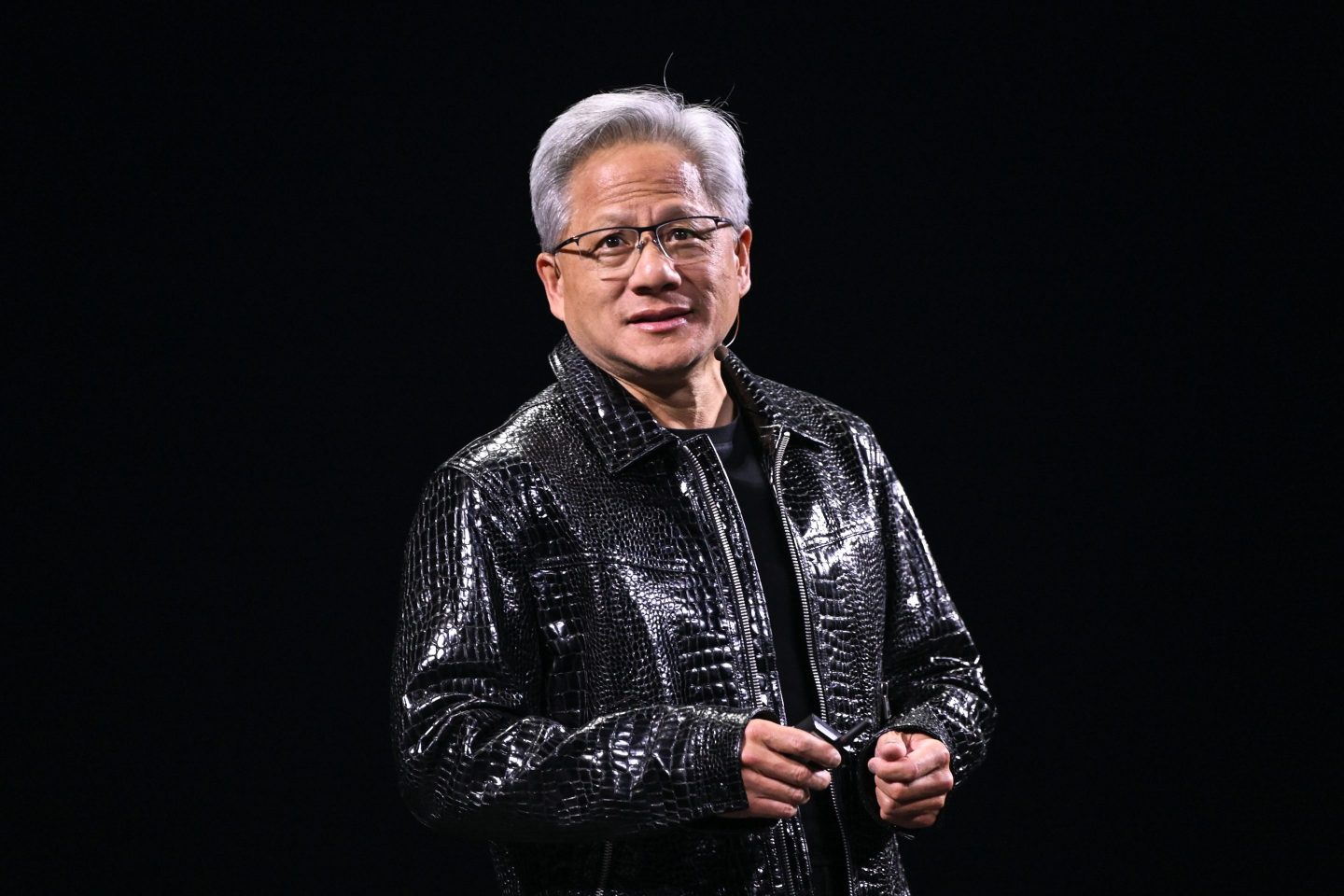
Investors offloaded Nvidia stock in response, sending the shares down 17% on Jan. 27 and erasing $589 billion of value from the world’s largest company — a stock market record. Semiconductor machine maker ASML Holding NV and other companies that also benefited from booming demand for cutting-edge AI hardware also tumbled.
DeepSeek’s success calls into question the vast spending by companies like Meta and Microsoft Corp. — each of which has committed to capex of $65 billion or more this year, largely on AI infrastructure.
Shares in Meta and Microsoft also opened lower, though by smaller margins than Nvidia, with investors weighing the potential for substantial savings on the tech giants’ AI investments. Meta even recovered later in the session to close higher. Chinese names linked to DeepSeek, such as Iflytek Co., also climbed.
Some industry watchers suggested the industry overall could benefit from DeepSeek’s breakthrough if it pushes OpenAI and other US providers to cut their prices, spurring faster adoption of AI.
How could DeepSeek affect the global strategic competition over AI?
AI is the key frontier in the US-China contest for tech supremacy. Washington has banned the export to China of equipment such as high-end graphics processing units in a bid to stall the country’s advances.
DeepSeek’s progress suggests Chinese AI engineers have worked their way around those restrictions, focusing on greater efficiency with limited resources. Still, it remains unclear how much advanced AI-training hardware DeepSeek has had access to.
Already, developers around the world are experimenting with DeepSeek’s software and looking to build tools with it. This could help US companies improve the efficiency of their AI models and quicken the adoption of advanced AI reasoning.
That in turn may force regulators to lay down rules on how these models are used, and to what end.
DeepSeek’s progress raises a further question, one that often arises when a Chinese company makes strides into foreign markets: Could the troves of data the mobile app collects and stores in Chinese servers present a privacy or security threats to US citizens?
The fact that DeepSeek’s models are open-source opens the possibility that users in the US could take the code and run the models in a way that wouldn’t touch servers in China.
Who is DeepSeek’s founder?
Born in Guangdong in 1985, engineering graduate Liang has never studied or worked outside of mainland China. He received bachelor’s and masters’ degrees in electronic and information engineering from Zhejiang University. He founded DeepSeek with 10 million yuan ($1.4 million) in registered capital, according to company database Tianyancha.
The bottleneck for further advances is not more fundraising, Liang said in an interview with Chinese outlet 36kr, but US restrictions on access to the best chips. Most of his top researchers were fresh graduates from top Chinese universities, he said, stressing the need for China to develop its own domestic ecosystem akin to the one built around Nvidia and its AI chips.
“More investment does not necessarily lead to more innovation. Otherwise, large companies would take over all innovation,” Liang said.
Liang has been compared to OpenAI founder Sam Altman, but the Chinese citizen keeps a much lower profile and seldom speaks publicly.
Where does DeepSeek stand in China’s AI landscape?
China’s technology leaders, from Alibaba Group Holding Ltd. and Baidu Inc. to Tencent Holdings Ltd., have poured significant money and resources into the race to acquire hardware and customers for their AI ventures. Alongside Kai-Fu Lee’s 01.AI startup, DeepSeek stands out with its open-source approach — designed to recruit the largest number of users quickly before developing monetization strategies atop that large audience.
Because DeepSeek’s models are more affordable, it’s already played a role in helping drive down costs for AI developers in China, where the bigger players have engaged in a price war that’s seen successive waves of price cuts over the past year and a half.
What are DeepSeek’s shortcomings?
Like all other Chinese AI models, DeepSeek self-censors on topics deemed sensitive in China. It deflects queries about the 1989 Tiananmen Square protests or geopolitically fraught questions such as the possibility of China invading Taiwan. In tests, the DeepSeek bot is capable of giving detailed responses about political figures like Indian Prime Minister Narendra Modi, but declines to do so about Chinese President Xi Jinping.
DeepSeek’s cloud infrastructure is likely to be tested by its sudden popularity. The company briefly experienced a major outage on Jan. 27 and will have to manage even more traffic as new and returning users pour more queries into its chatbot.
(Updated to include more detail on DeepSeek founder. A previous version of this article corrected the reference to Meta’s share price)
More on DeepSeek:
- DeepSeek buzz puts tech stocks on track for $1 trillion wipeout
- Trump calls DeepSeek a ‘wake-up call’ for U.S. tech and welcomes China’s AI gains
- Meta is reportedly scrambling ‘war rooms’ of engineers to figure out how DeepSeek’s AI is beating everyone else at a fraction of the price
- Marc Andreessen warns Chinese ChatGPT rival DeepSeek is ‘AI’s Sputnik moment’