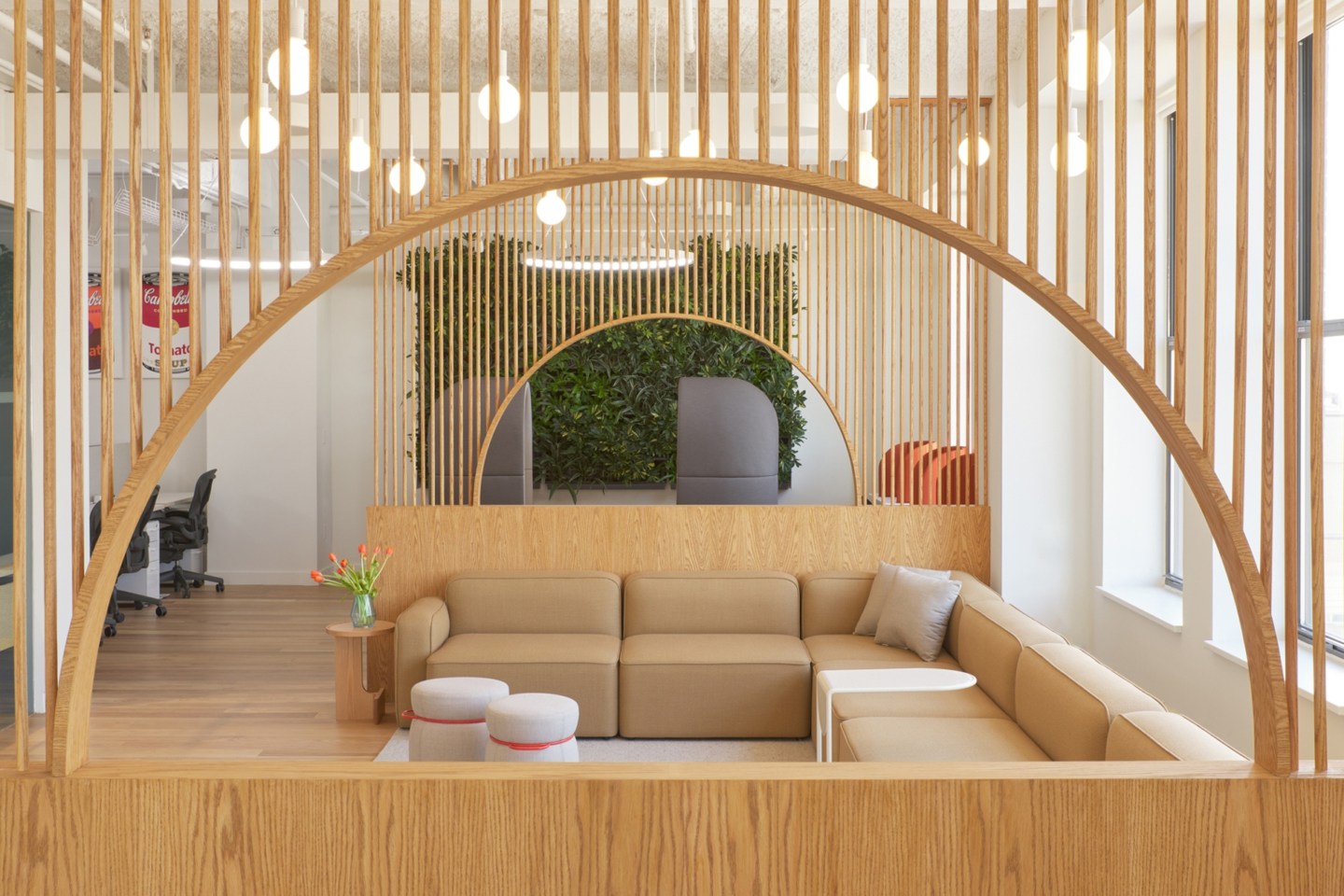
An office in downtown Manhattan looks like an average workplace at first glance, but there are some key differences.
The overhead lights are softer. There are several designated quiet rooms. And some spaces are warmer, while others are cooler. The headquarters of Understood, a nonprofit that provides resources to people and families who are neurodivergent.
It’s just one of many spaces popping up all around corporate America specifically designed with these employees in mind, workplace and design experts tell Fortune. And although this particular space may be more robust than other examples, an increased awareness about neurodivergent employees, along with widespread employer interest in new ways to boost employee retention, has led to a careful rethink among employers about office space.
“People are really aware of neurodiversity right now, and there’s a lot more literature and information about this,” Florencia Kratsman, interior practice leader at FXCollaborative, a U.S. architecture firm, tells Fortune. “Companies want to stay on top of that to attract their employees and make sure they are coming back.”
The changing workforce
There have always been neurodivergent people, but better education about how differences manifest and who it applies to has given rise to an increase in diagnoses over the past few years.
Neurodivergent employees often have different kinds of cognitive and motor abilities that impact the way they process information and their surroundings. The umbrella term includes things like ADHD, OCD, autism, and dyslexia. Back in 2000, one in 150 children were on the autism spectrum; by 2020, about one in 36 were diagnosed, according to a report from the U.S. Center for Disease Control. Around 15% to 20% of the U.S. population identifies as neurodivergent, according to a 2020 study.
People who are neurodivergent sometimes have sensory issues, and when it comes to the workplace, they can be affected by things like bright overhead lighting, loud coworkers, and cold office temperatures. That’s why neurodivergent-friendly changes to office spaces revolve around cutting down on the potential for sensory overload—when one’s sight, hearing, smell, touch, or taste becomes overstimulated.
Kratsman noticed a shift in demand for neurodivergent-friendly office spaces about a decade ago, pointing to particular interest from the tech industry in particular. Back then, a lot of tech companies were all-in on making services accessible to as many people as possible via “universal design,” she says, and hiring a larger proportion of neurodivergent talent than other industries. That meant that these tech companies were some of the first trying to think about how to engage workers with different needs.
“They were the people tapping into that earlier than anyone else,” Kraftsman says. “Beyond tech, [neurodivergent-friendly offices] has become a hot topic this year. People are becoming more aware of this, we’re just starting to see that become more evident.”
Working in interior design at an architecture business, Kratsman says she’s received an uptick in requests for accommodations from clients to eliminate anything that could be potentially overwhelming for neurodivergent workers. For example, clients are moving away from harsh lighting and bad office acoustics.
“People are more aware of noise than before—everything that has to do with the five senses, even with senses of smell, like when the lobby has a smell and you naturally relax,” Kraftsman says. “People are just being a lot more [considerate] of stimuli and creating different places.”
Over the last few years, the co-working industry has also seen increasing demand for spaces that accommodate neurodivergent employees. Ebbie Wisecarver, chief design officer at WeWork, says that in the past, their offices were more geared towards startup culture, and included things like ping pong tables and outdoor terraces with mini-golf. They still have those amenities, she says, but they’re also thinking more about things like acoustics, lighting levels, and seats upholstered with natural fibers for people with texture sensitivities.
“You have this extremely wide spectrum of individuals, and they want to exist in WeWork spaces,” she says. “We’re rethinking: what’s the palette in that room? What are the materials in that room? What’s the seating?” she adds. “Because [with] an individual that might be highly sensitive, you want to be able to make sure there’s a refuge for them.”
The neurodivergent-friendly office
All kinds of companies have made updates to their employee experience strategy with neurodivergent workers in mind, including EY, Goldman Sachs, and IBM. But the offices of Understood provide a fully realized, physical example of what a workplace can look like when those employees are prioritized.
When the non-profit signed a lease for an office in downtown Manhattan a few years ago, management solicited thoughts from workers about what they wanted from the space—about 40% of the organization’s staff identifies as someone who is neurodivergent or a person with disabilities.
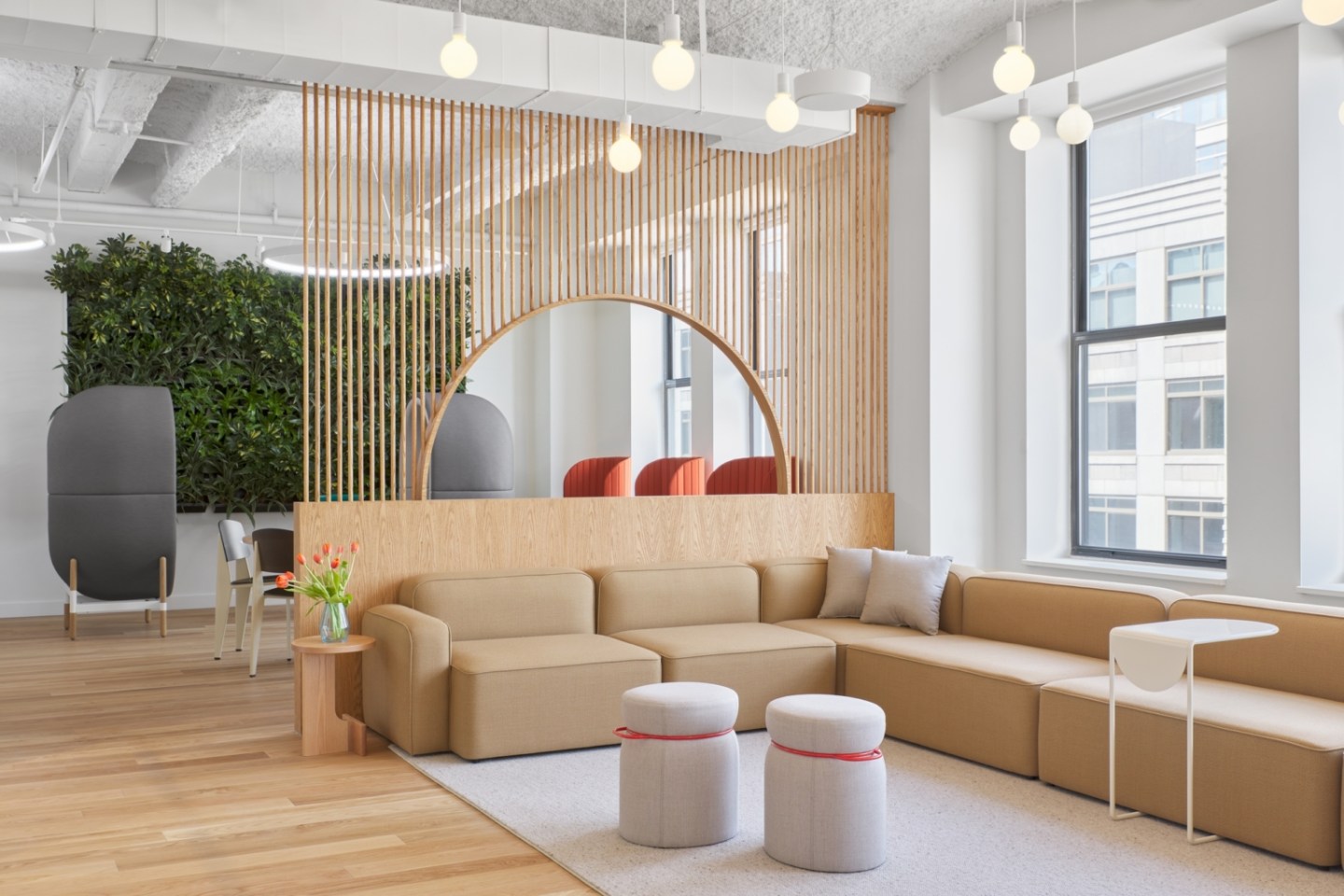
One side of the office has traditional white overhead lighting, while the other side has more muted yellow lighting. Throughout the day, the fixtures automatically adjust their brightness in response to the daylight. The office also has different zones with designated thermal controls, so employees can work in the temperatures they prefer.
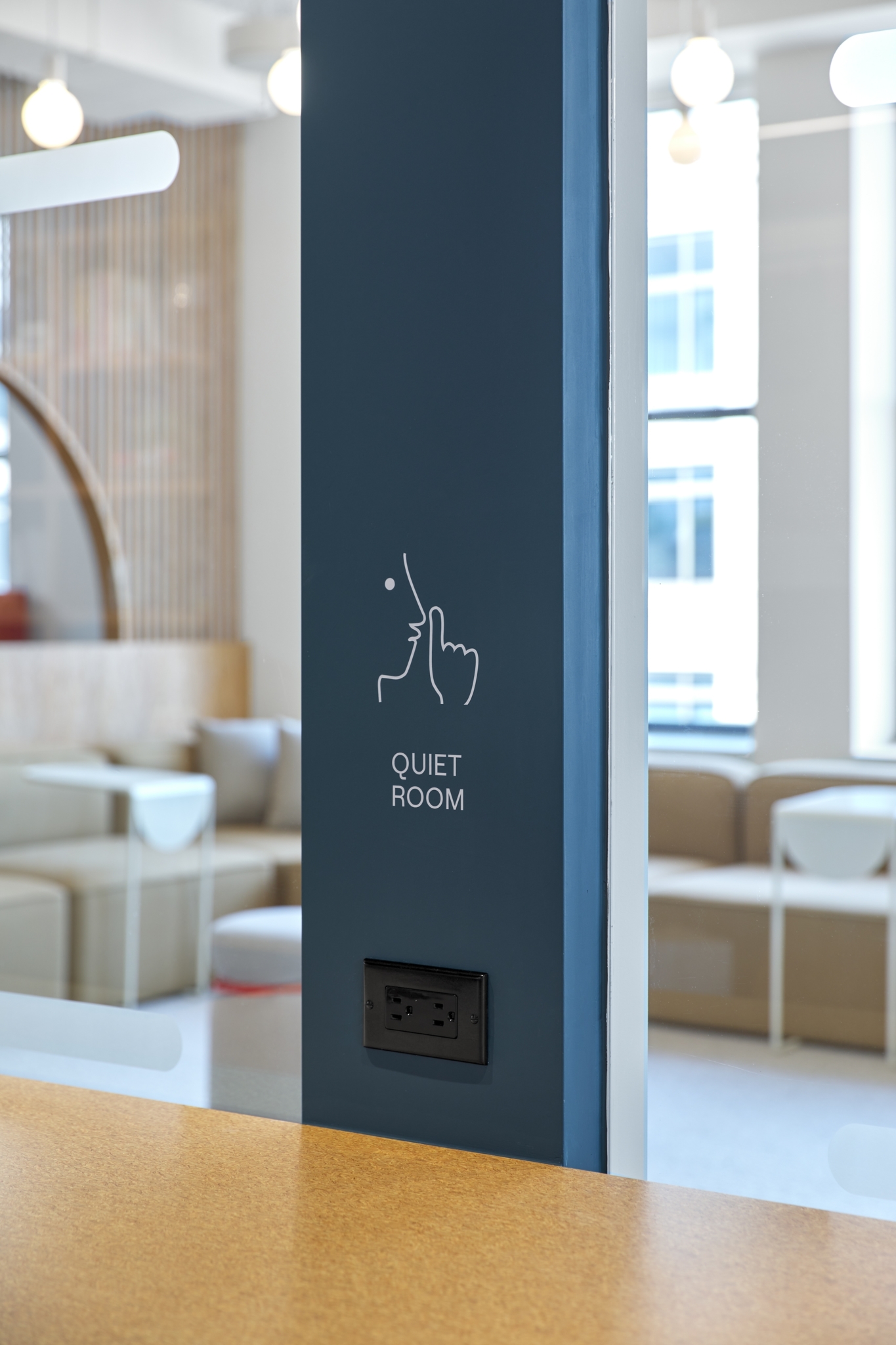
Understood’s office also has quiet rooms for employees who are distracted by coworker chit-chat, in which staffers are not allowed to speak or play noise. For people with hearing impairments, the floor has an assistive listening system that connects to cochlear implants; this technology transmits audio directly to their compatible receivers, allowing them to more easily listen to conversations, meetings, or presentations. Employees with visual impairment have access to the name of each room written in braille on the wall outside.
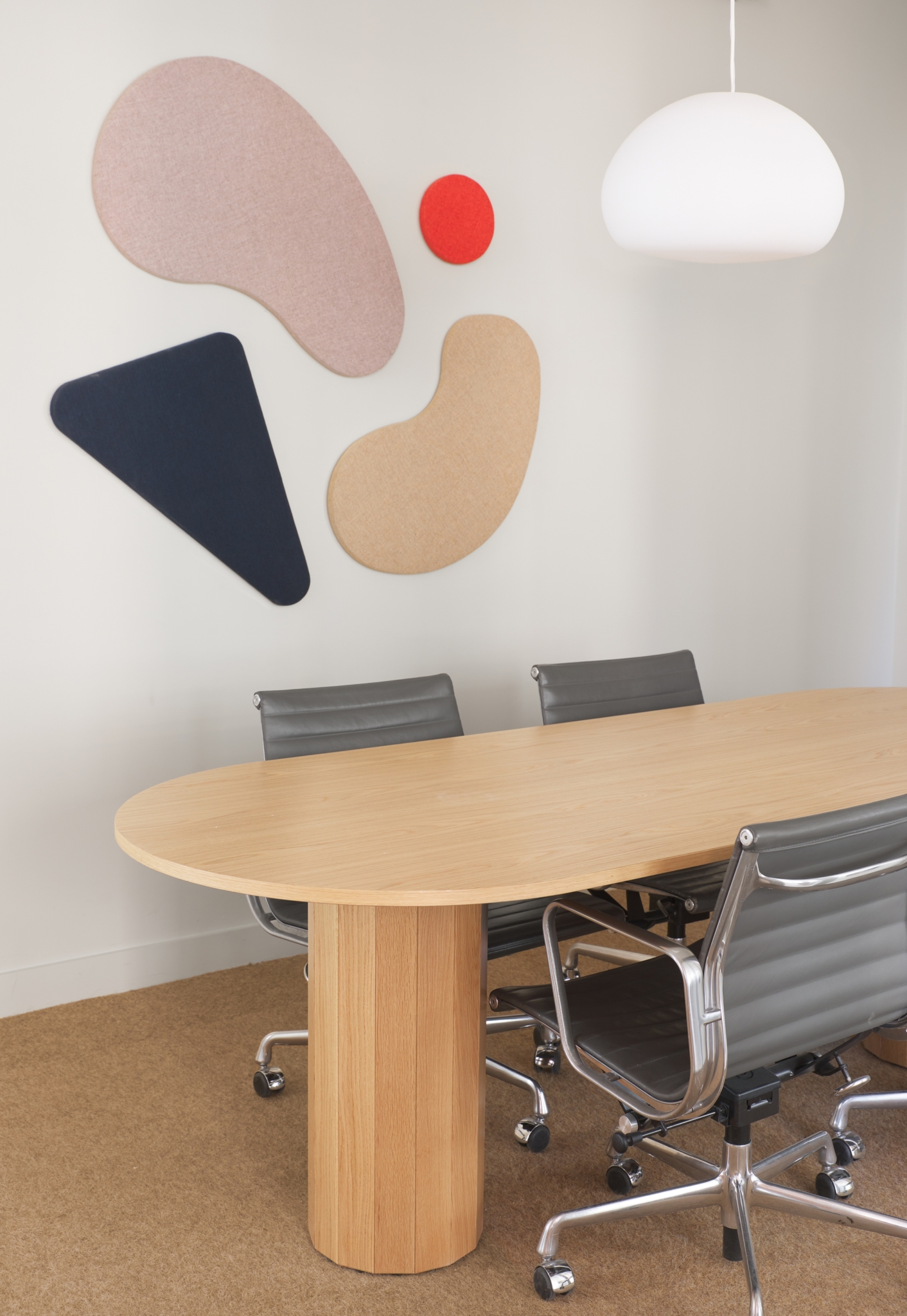
The office has a variety of tables and chairs to accommodate different body types, abilities, and working styles, including cushy white stools, linen-bound rolling chairs, plush elongated couches, and wooden chairs. The desks are also adjustable—employees can choose to work standing up or sitting down. When it comes to soundproofing, some rooms have squiggly and colorful chunks of foam hugging the inside walls to give them extra insulation. Some specific furniture, like grey loveseat pairs shaped like cocoons, provides a sound shelter for staffers who want to talk more privately.
All signs, documents, and presentations use a specific font that the nonprofit had specially formulated for neurodivergent people. The ligature marks are more defined, and spacing is a bit wider and clearer.
Although nearly every aspect of Understood’s office has been thought through in terms of its impact on neurodivergent workers, Friedman acknowledges this isn’t possible for all organizations. But half of workplace adjustments for people with disabilities can be implemented at zero cost to employers, and the typical price of a one-time accommodation is around $300, according to a 2023 report from the U.S. Department of Labor. Some low-cost examples include access to assistive tech tools, ergonomic keyboards, and noise-cancelling headphones.
“Some of this is just common sense in building a new space. Why wouldn’t you accommodate neurodiverse workers?” Friedman says. “It’s a movement that’s now becoming a reality.”
For companies that don’t know where to begin, or may not have the budget to have multi-zone thermostats, Friedman suggests starting with the little things which are often more about workflow than the workspace itself. These can include meeting recap notes, and sharing a set agenda before scheduled meetings, or sharing interview questions with neurodivergent job candidates ahead of the conversation.
Nathan Friedman, the chief marketing officer of Understood, adds that workspace adjustments must be meaningful to have an impact. Employers should understand who their staffers are and what needs they have to best optimize the space and create a better working environment.
“There’s this wide variety of types of organizations, says Friedman. “Each type needs something very specific and very different.”