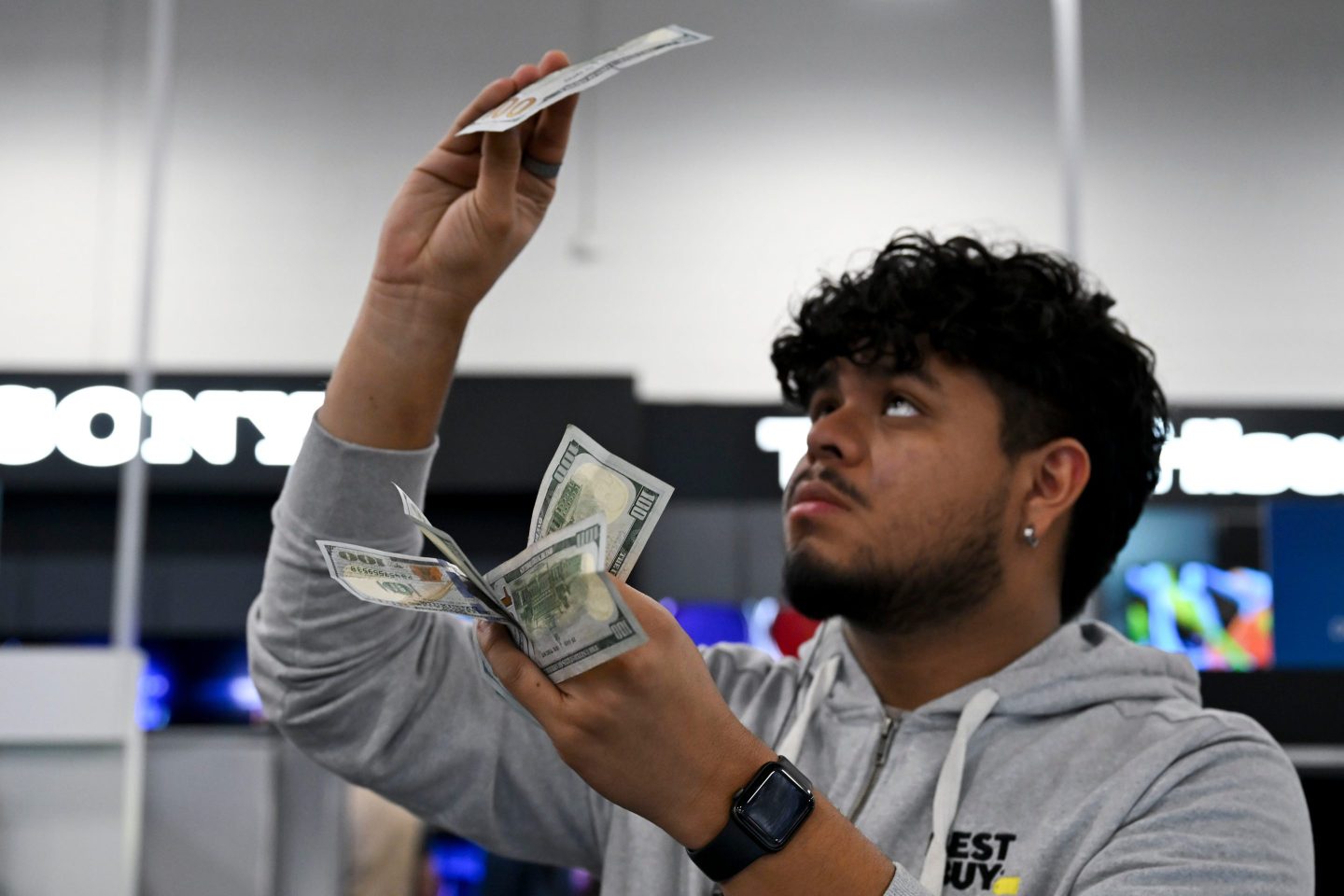
This holiday season, Americans will spend a record $128 billion on mobile purchases, according to Adobe. Behind this headline number lies a more significant story: retailers are quietly orchestrating a revolution against the hidden tax that’s been driving up consumer prices for decades—credit card processing fees.
U.S. merchants pay nearly $100 billion annually in credit card processing fees. That’s a 3-4% tax on almost every transaction, ultimately passed on to consumers through higher prices. It’s a tax that disproportionately impacts lower-income shoppers, who often pay these inflated prices with cash or debit cards, effectively subsidizing the rewards programs enjoyed by higher-income credit card users.
However, the dynamics of mobile commerce are changing this equation. Major retailers have discovered that the shift to mobile shopping opens new possibilities for bypassing traditional payment networks. When Starbucks allows customers to load money directly from their bank accounts, they save an estimated $130 million annually in processing fees. More importantly, their data shows customers actually spend more when using these direct payment methods, suggesting that eliminating credit card fees could boost both retailer margins and consumer purchasing power.
This pattern holds true across retail sectors. Data from the Bolt network—reaching over 80 million American shoppers across many verticals—shows fashion and apparel retailers reduced credit card adoption by 4% while increasing sales by 16% during the early holiday season (October 15 – November 15) year over year. The message is clear: Retailers can successfully transition away from credit cards while growing their business.
The implications extend far beyond retail profits. The current credit card rewards system creates a perverse cycle: Consumers chase reward points while accumulating high-interest debt that erodes their long-term spending power. By encouraging alternative payment methods, retailers are discovering they can help customers build more sustainable spending patterns while simultaneously reducing their own costs.
The evidence of this shift is emerging across the retail landscape. Major department stores are reimagining their physical spaces as financial hubs, blending shopping with banking-style services.
Early data from these experiments reveals a compelling pattern: Customers who adopt direct payment methods spend more per visit and return more frequently. These “financial touchpoints” represent a fundamental rethinking of the retail environment, transforming stores from pure shopping destinations into hybrid spaces that serve both commercial and financial needs.
These physical innovations coincide with the rise of digital alternatives to traditional credit. Buy Now, Pay Later services exemplify this trend, often integrating directly with bank accounts to reduce processing fees. Consumers approach these services differently than credit cards, choosing them for specific, planned purchases rather than routine spending.
Data supports this pattern of intentional use. Across the Bolt network, BNPL usage has surged specifically in high-value categories. Furniture, appliances, and equipment retailers have seen a 45% year-over-year increase in BNPL adoption, while consumer electronics retailers report an 18% rise. This segmentation helps consumers budget more effectively while giving retailers valuable insights into purchasing patterns.
The current credit card system essentially functions as a private tax collection mechanism, extracting billions from the real economy to fund rewards programs that primarily benefit the affluent. By developing alternative payment systems, retailers aren’t just protecting their margins—they’re potentially reshaping the distribution of consumer purchasing power.
Of course, credit card companies won’t surrender their fee income without a fight. They’re betting that consumers’ addiction to rewards points will outweigh any benefits from alternative payment methods. But the math is shifting. As mobile commerce grows and retailers get better at incentivizing direct payments, the convenience of phone-based transactions could finally break the credit card habit.
This holiday season’s mobile shopping surge could be the tipping point. Adobe Analytics projects that mobile will account for over 53% of online purchases, creating an unprecedented opportunity for retailers to introduce consumers to new payment methods. The retailers who succeed in this transition won’t just save on processing fees, they’ll also gain valuable direct relationships with their customers, free from credit card network intermediaries.
For consumers, the stakes are significant. A retail ecosystem less dependent on credit card fees could mean lower prices, better shopping experiences, and more sustainable spending patterns. The trade-off will involve sharing more direct financial data with retailers, raising important questions about privacy and security. However, the potential benefits are too large to ignore. Reducing credit card fees could inject billions back into the real economy, benefiting both retailers and consumers. As we head into another record-breaking holiday shopping season, keep an eye on how you’re being asked to pay. You might be witnessing the start of a payment revolution that changes retail forever.
More must-read commentary published by Fortune:
- The ‘Trump bump’ has survived tariff announcements—but will it survive the good, the bad, and the unknown in his cabinet?
- Demis Hassabis-James Manyika: AI will help us understand the very fabric of reality
- I worked with Steve Jobs. Here’s what he’d say about today’s leadership style
- The real reason Spain’s economy is bucking the trend of European decline
The opinions expressed in Fortune.com commentary pieces are solely the views of their authors and do not necessarily reflect the opinions and beliefs of Fortune.