
• Home
  • Latest
  • Fortune 500
  • Finance
  • Tech
  • Leadership
  • Lifestyle
  • Rankings
  • Multimedia
Retail

Walgreens’ frail quarter goes beyond the discretionary spending dips afflicting its competitors. It’s ‘just not very good at retailing,’ analyst says

Sasha Rogelberg
By
Sasha Rogelberg
Sasha Rogelberg
Reporter
Down Arrow Button Icon
Sasha Rogelberg
By
Sasha Rogelberg
Sasha Rogelberg
Reporter
Down Arrow Button Icon
March 29, 2024, 4:54 PM ET
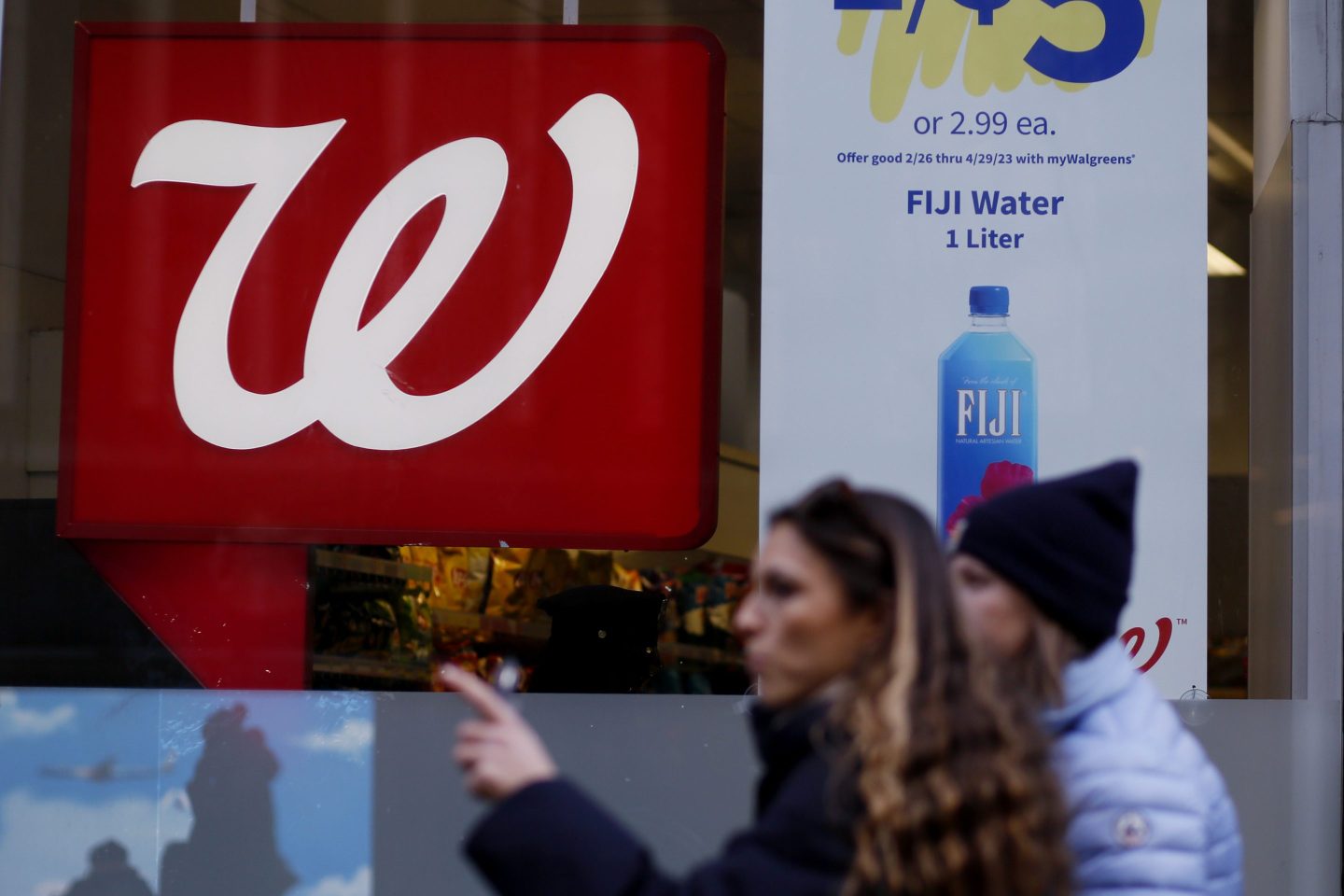
An out-of-focus person is point to their left and is standing in front of a window with the red and white Walgreens 'W' on it.
Walgreens lowered its earnings per share forecast owing to retail challenges, according to a second-quarter earnings report.Leonardo Munoz—VIEWpress/Getty Images

Pharmacy chain Walgreens posted better-than-expected earnings on Thursday, but analysts are not confident in its ability to recover from a challenging few years of decreasing demand for COVID vaccines and treatments and increased retail competition.

Recommended Video

Walgreens beat earnings estimates, posting a 6.3% sales leap year over year to $37.1 billion, as well as a 3.4% earnings per share bump of $1.20. But the rest of the report tells the story of a more fragile company: It reported a $13.2 billion operating loss—$12.4 billion of which was a noncash impairment charge, or write-off related to its primary care provider, VillageMD, which plans to shut down 160 unprofitable locations. The losses prompted Neil Saunders, managing director of GlobalData, to call the earnings period “another torrid quarter.”

“While these things are technical adjustments, they underline the poor strategic decisions Walgreens has made over the past few years and its various misadventures in health care,” Saunders wrote in a Thursday note. “With the focus of the business firmly on driving profitability under a new CEO, Walgreens has had to take a very big step back from operations that it used to see as central to its future.”

Walgreens anticipated some of its struggles, particularly including an earnings hit from its February sale of $992 million in shares of wholesale drug company Cencora, which pushed the company to lower the top end of its full-year adjusted earnings per share from $3.50 to $3.35. The company hopes to save $1 billion over the course of the year. CEO Tim Wentworth—who took Walgreens’ helm last October after a tumultuous period of staff walkouts over poor working conditions—instead attributes Walgreens’ future challenges to the retail side of the business, which has struggled because of consumers’ unwillingness to buy discretionary items.

Walgreens reported 4.7% sales growth on the pharmaceutical side of the business owing to rising inflation and drug costs, but a 4.5% total sales decline on the retail side. Deloitte’s March ConsumerSignals report indicates that discretionary spending intentions are still below overall spending intentions, which have ebbed and flowed since recovery from the pandemic.

“We count on folks to come in and to not only visit our pharmacies, but come in, buy impulse items, get last-minute items, get seasonal items,” Wentworth told Bloomberg TV on Thursday. “A lot of those things are purchases that you have to get the value equation right on or else they feel discretionary to folks.”

Competitor CVS is having similar struggles. It, too, announced scale backs on primary care initiatives last fall after rising drug prices and a lessened demand for pandemic treatments slowed store traffic. Bankrupt Rite Aid, another drugstore chain, also closed a combined 1,500 stores. Plus, a weak respiratory illness season meant fewer people were buying tissues and over-the-counter medicine.

Retail strategy changes

To be sure, Walgreens has taken bigger swings to attract cash-strapped customers. A Walgreens spokesperson told Fortune that the chain is “responding to these market dynamics by making investments in key value items, and focusing our capabilities to engage with customers in a very targeted way.” Walgreens introduced 37 new store-brand products last quarter and is using stockkeeping unit rationalization to determine which products are more appealing to consumers.

While customers are buying general merchandise at Walgreens for convenience, they are going elsewhere to find bargains, Saunders said. Walgreens has particularly been losing out in the beauty sector, where customers are willing to spend more money, but are turning to competitors like Target and Ulta, which offer larger selections and lower prices. Walgreens isn’t lagging in retail sales because of shoppers unwilling to spend money, Saunders asserted. It is losing money because consumers are going elsewhere for better deals and products.

“Basically, Walgreens is losing out because it is just not very good at retailing,” he said. 

But Wentworth doubled down on the importance of brick-and-mortar Walgreens, saying on Thursday that its customer service is what separates it from e-commerce giants like Amazon.

“We will beat Amazon because of the human interface that we offer in communities and neighborhoods,” he told CNBC.

Saunders told Fortune, however, that Walgreens is not known for its customer service, and because customers frequent Walgreens out of convenience, they often don’t require high levels of help.

“Walgreens’ view that this is an area of strength for the chain is a case of wishful thinking,” Saunders said.

Join us at the Fortune Workplace Innovation Summit May 19–20, 2026, in Atlanta. The next era of workplace innovation is here—and the old playbook is being rewritten. At this exclusive, high-energy event, the world’s most innovative leaders will convene to explore how AI, humanity, and strategy converge to redefine, again, the future of work. Register now.
About the Author
Sasha Rogelberg
By Sasha RogelbergReporter
LinkedIn iconTwitter icon

Sasha Rogelberg is a reporter and former editorial fellow on the news desk at Fortune, covering retail and the intersection of business and popular culture.

See full bioRight Arrow Button Icon

Latest in Retail

millennial
CommentaryConsumer Spending
Meet the 2025 holiday white whale: the millennial dad spending $500+ per kid
By Phillip GoerickeDecember 12, 2025
1 day ago
McDonald
RetailRetail
Lululemon CEO Calvin McDonald to step down as quarterly profit dips 13%
By Anne D'Innocenzio and The Associated PressDecember 12, 2025
1 day ago
Sarandos
CommentaryAntitrust
Netflix, Warner, Paramount and antitrust: Entertainment megadeal’s outcome must follow the evidence, not politics or fear of integration
By Satya MararDecember 12, 2025
1 day ago
InvestingMarkets
Retail investors drive stocks to a pre-Christmas all-time high—and Wall Street sees a moment to sell
By Jim EdwardsDecember 12, 2025
1 day ago
Five panelists seated; two women and five men.
AIBrainstorm AI
The race to deploy an AI workforce faces one important trust gap: What happens when an agent goes rogue?
By Amanda GerutDecember 11, 2025
2 days ago
Oreo
RetailFood and drink
Zero-sugar Oreos headed to America for first time
By Dee-Ann Durbin and The Associated PressDecember 11, 2025
2 days ago

Most Popular

placeholder alt text
Economy
Tariffs are taxes and they were used to finance the federal government until the 1913 income tax. A top economist breaks it down
By Kent JonesDecember 12, 2025
1 day ago
placeholder alt text
Success
Apple cofounder Ronald Wayne sold his 10% stake for $800 in 1976—today it’d be worth up to $400 billion
By Preston ForeDecember 12, 2025
1 day ago
placeholder alt text
Success
40% of Stanford undergrads receive disability accommodations—but it’s become a college-wide phenomenon as Gen Z try to succeed in the current climate
By Preston ForeDecember 12, 2025
24 hours ago
placeholder alt text
Economy
For the first time since Trump’s tariff rollout, import tax revenue has fallen, threatening his lofty plans to slash the $38 trillion national debt
By Sasha RogelbergDecember 12, 2025
20 hours ago
placeholder alt text
Economy
The Fed just ‘Trump-proofed’ itself with a unanimous move to preempt a potential leadership shake-up
By Jason MaDecember 12, 2025
18 hours ago
placeholder alt text
Success
At 18, doctors gave him three hours to live. He played video games from his hospital bed—and now, he’s built a $10 million-a-year video game studio
By Preston ForeDecember 10, 2025
3 days ago
Rankings
  • 100 Best Companies
  • Fortune 500
  • Global 500
  • Fortune 500 Europe
  • Most Powerful Women
  • Future 50
  • World’s Most Admired Companies
  • See All Rankings
Sections
  • Finance
  • Leadership
  • Success
  • Tech
  • Asia
  • Europe
  • Environment
  • Fortune Crypto
  • Health
  • Retail
  • Lifestyle
  • Politics
  • Newsletters
  • Magazine
  • Features
  • Commentary
  • Mpw
  • CEO Initiative
  • Conferences
  • Personal Finance
  • Education
Customer Support
  • Frequently Asked Questions
  • Customer Service Portal
  • Privacy Policy
  • Terms Of Use
  • Single Issues For Purchase
  • International Print
Commercial Services
  • Advertising
  • Fortune Brand Studio
  • Fortune Analytics
  • Fortune Conferences
  • Business Development
About Us
  • About Us
  • Editorial Calendar
  • Press Center
  • Work At Fortune
  • Diversity And Inclusion
  • Terms And Conditions
  • Site Map

© 2025 Fortune Media IP Limited. All Rights Reserved. Use of this site constitutes acceptance of our Terms of Use and Privacy Policy | CA Notice at Collection and Privacy Notice | Do Not Sell/Share My Personal Information
FORTUNE is a trademark of Fortune Media IP Limited, registered in the U.S. and other countries. FORTUNE may receive compensation for some links to products and services on this website. Offers may be subject to change without notice.